

You want a battery that fits cleanly, starts consistently, and doesn’t turn a routine replacement into a guessing game. This roundup focuses on AGM and standard replacement options for cars, trucks, SUVs, minivans, and auxiliary applications, with each pick judged by fit details, reserve power cues, and use-case match. Daily commuters, start-stop drivers, and anyone replacing a factory-size battery will get the most out of it. The right choice can feel as routine as a spare key, simple when the specs line up.
Quick Look At The Shortlist

ACDelco Gold AUX14-200 (88866185) Auxiliary AGM Battery

ACDelco Gold 94RAGM (88864542) AGM Group 94R Battery
ACDelco Gold 48AGM (88864541) AGM Group 48 Battery

MARXON Group 47 H5 L2 Car Battery 12v 60AH 660CCA AGM

Goodyear AUX14-AGM BCI Group Size 400 Auxiliary Battery
Platinum AGM Car Battery Group Size 140R H4 12V 50Ah

Interstate Batteries Group 78 Car Battery Replacement (M-78) 12V
More Details On Our Top Picks
That AUX14 size makes this ACDelco a specialist, not a catch-all replacement. Auxiliary AGM batteries like this usually sit in vehicles with extra electrical loads, so the fit matters more than broad compatibility talk.
The 200 CCA rating gives you a useful starting point for accessory and support roles, while AGM means absorbed glass mat construction, a spill-resistant design that keeps electrolyte held in place. The honest read is that this is a better match for a precise factory-style swap than for someone guessing at battery size.
Strong Points
- Auxiliary format fits niche vehicle needs instead of forcing a generic full-size battery into the wrong slot.
- AGM construction suits drivers who want a maintenance-free layout and steadier charge handling.
- 200 CCA gives you a clear starting-power figure for support-duty applications.
- ACDelco branding will feel familiar to owners cross-shopping OE-style replacement parts.
Things To Consider
- It’s not a primary engine battery, so it only makes sense for the correct auxiliary application.
- You’ll want to confirm the AUX14 footprint before ordering, because battery trays leave little room for guesswork.
- Maintenance-free AGM still benefits from clean terminals and secure mounting, especially in cars with cramped battery bays.
Feature Snapshot
Who It Suits Best
Drivers replacing a factory auxiliary battery in a vehicle that specifically calls for AUX14 sizing will get the cleanest fit.
Where A Sibling Pick Shines
ACDelco Gold 94RAGM fits better for anyone replacing a main starting battery in a start-stop sedan or crossover.
Compared with the AUX14 above, this one moves into main-battery territory with a full Group 94R footprint. That matters in start-stop vehicles, where the battery sees repeated cycling and needs to accept charge quickly rather than just sit there as a backup.
AGM, or absorbed glass mat, keeps the electrolyte trapped in glass separators instead of sloshing around, which helps with spill resistance and maintenance-free ownership. For commuters with lots of short trips, that layout is often the more sensible choice than a basic flooded battery.
What We Like
- Group 94R sizing matches many factory fitments without forcing a workaround.
- AGM construction suits start-stop driving and repeated charge cycles.
- Maintenance-free design keeps everyday ownership simple.
- ACDelco’s OE-style positioning makes it a comfortable pick for replacement-minded shoppers.
Worth Noting
- The size is specific, so measuring your tray and terminal orientation still matters.
- AGM batteries usually cost more than basic lead-acid options, so the value shows up in use-case fit rather than bare minimum spending.
- Short-trip drivers benefit most, while infrequent use can leave any battery under more strain.
Feature Rundown
Made For
This suits drivers replacing a Group 94R main battery in a vehicle with stop-start behavior and tighter factory fit requirements.
Swap It Out When
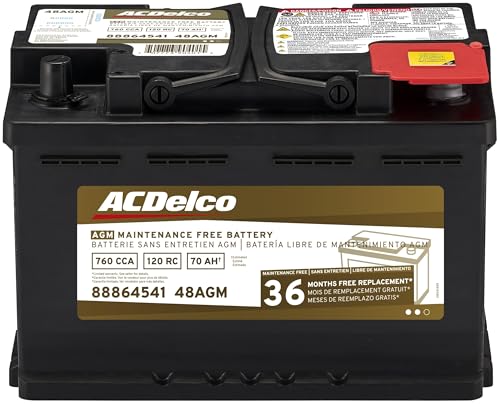
ACDelco Gold 48AGM is the better fit for vehicles that call for Group 48 sizing instead of 94R.
This one is the friendliest fit for a huge slice of modern cars, because Group 48 is a common factory battery size. For everyday use, that helps more than flashy numbers, since the real win is a clean replacement that drops into the intended tray without drama.
Like the 94R above, it uses AGM construction, so you’re still getting spill-resistant, maintenance-free behavior. The trade-off is simple: you’re paying for a better-fit battery format rather than chasing oversized cranking figures you may never need.
Upsides
- Group 48 size makes it a natural match for many sedans and crossovers.
- AGM design supports stop-start use and steady daily commuting.
- Maintenance-free ownership keeps routine upkeep minimal.
- 36-month coverage gives the listing a reassuring planning horizon.
Points To Note
- Group 48 fit is specific, so matching dimensions still comes first.
- Drivers with heavier electrical loads may need a battery with a different capacity profile.
- Battery trays with tight hold-down hardware can make exact dimensions just as important as group size.
Details At A Glance
Best Suited To
You get the most from this in a vehicle that specifies Group 48 and needs a straightforward AGM replacement.
Look Elsewhere When
ACDelco Gold 94RAGM suits drivers whose vehicle calls for Group 94R and a similar AGM setup.
MARXON gives you more of the useful numbers up front than the ACDelco picks above, which helps a lot in a fit-sensitive category. The 12V, 60Ah, and 660CCA figures make it easier to judge whether this battery lines up with a start-stop vehicle that needs a Group 47 or H5-style replacement.
The listed size, 9.53 x 6.89 x 7.48 inches, also matters in real life because battery trays rarely forgive loose matching. The honest read is that this appeals most to people who want spec clarity before they open the hood.
Bright Spots
- Detailed fit data helps narrow compatibility before ordering.
- AGM maintenance-free design suits daily driving and stop-start systems.
- 660 CCA offers a clear cranking figure for cold-morning confidence.
- Dimensions are stated plainly, which reduces fit guesswork.
Areas To Watch
- The listing is more data-driven than polished, so you need to read the fit info carefully.
- Terminal style and tray clearance still deserve a close check.
- Group 47 buyers should compare the size against the original battery, not just the label.
Core Details
Built With In Mind
This suits drivers who want a Group 47 AGM replacement with clear size and output figures for a start-stop vehicle.
Reach For A Different Pick When
Interstate Batteries Group 78 M-78 makes more sense for larger vehicles that need a higher-cranking replacement option.
This Goodyear is built for the smaller auxiliary-battery lane, not a full-size starting role. The 14Ah capacity and 200 CCA rating are modest on paper, but that’s exactly the point for vehicles that use a compact support battery and need a clean replacement shape.
Reserve capacity, or RC, tells you how long the battery can sustain a load under defined conditions, and 22RC is a straightforward number for this class. For most compact auxiliary swaps, the real value here is fit discipline, not brute force.
Reasons To Buy
- Compact auxiliary size fits niche battery compartments well.
- AGM construction supports maintenance-free ownership.
- 200 CCA gives you a usable starting-power reference for the category.
- Listed reserve capacity helps you judge endurance more clearly than a vague description would.
Small Caveats
- It’s sized for auxiliary use, so it won’t suit main engine-battery needs.
- Mounting position still needs attention, especially in tighter vehicle bays.
- Small-format batteries are unforgiving about terminal and tray matching.
Feature Card
Whose Shelf It Belongs On
Drivers replacing a compact auxiliary battery in a vehicle that asks for AUX14 or BCI Group Size 400 will get the cleanest match.
Another Choice May Suit
ACDelco Gold AUX14-200 is a smarter fit for shoppers who want a similar auxiliary format from ACDelco.
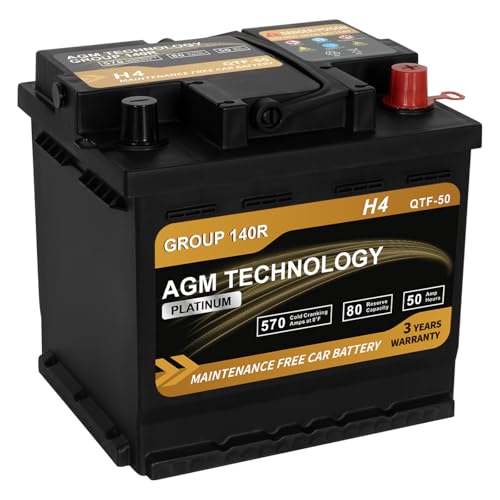
Daakmax gives you a fuller spec set than several picks above, and that helps in vehicles where the battery bay is already picky. The 140R H4 size, 12V format, 50Ah capacity, 570 CCA, and 80RC all point to a battery meant for a measured, fit-first replacement rather than a broad one-size solution.
For start-stop driving, the AGM design is the useful part, and the tapered terminals help confirm the physical connection style. You may find this especially sensible in a car where the original battery’s label already carried several fit clues and you want to stay close to factory sizing.
Highlights
- Multiple spec points make compatibility checks more straightforward.
- AGM construction supports repeated start-stop use.
- 80RC gives you a clear reserve-capacity figure for planning.
- Tapered terminal layout helps with vehicle-side matching.
Minor Gripes
- The fit language is precise, so you’ll want to compare it carefully with your original battery.
- Specs help, but tray height and hold-down hardware still need attention.
- It makes the most sense for owners who already know the 140R H4 format.
At A Glance
The Right Fit
This works best for drivers with a vehicle that explicitly calls for a 140R H4 AGM battery and a clear fit check.
Where A Sibling Pick Shines
ACDelco Gold 48AGM is the better match for vehicles that use Group 48 instead of 140R H4.
Interstate’s M-78 leans into straightforward replacement value for larger vehicle fitments. The 680 CCA figure stands out in this group, and that stronger cranking output is the detail that matters most for trucks, SUVs, and minivans that need a more muscular starting margin.
Reserve capacity is listed as 120 minutes in the source context, which gives you a useful picture of sustained support under load. For busy households with more driving cycles and accessory demands, this is the pick that feels the least delicate and the most ready for larger-vehicle life.
Best Bits
- 680 CCA gives it the strongest starting figure in this roundup.
- 120 minutes of reserve capacity supports longer accessory use than a bare-bones battery usually would.
- Group 78 fitment covers cars, trucks, SUVs, and minivans.
- Interstate’s mainstream replacement focus makes it easy to place in a standard maintenance plan.
Honest Caveats
- You still need a true Group 78 fit, because the size is specific.
- The higher-output setup makes the most sense in larger vehicles, not small compact cars.
- As with any replacement battery, keeping the tray clean and the terminals tight helps long-term reliability.
Core Details
Who Should Grab It
This fits drivers of larger vehicles who want a conventional replacement battery with stronger starting output.
Skip It When
ACDelco Gold 48AGM or MARXON Group 47 makes more sense for smaller cars that need a different tray size.
How To Choose The Right Value Car Battery
Start With The Fit Code
Battery group size is the first gate, not the last. Group numbers such as 48, 94R, 47, 140R H4, and 78 tell you whether the case, hold-down points, and terminals are likely to line up with your vehicle’s tray.
That matters more than headline power in most replacements. A battery that fits poorly can create installation headaches, even when the electrical specs look attractive on paper.
Match The Use Case To The Battery Type
AGM, short for absorbed glass mat, uses a glass separator to hold the electrolyte in place. That design suits start-stop vehicles, short-trip commuting, and cars that see repeated charging cycles.
Auxiliary batteries serve a different job. They support systems and accessories, so a compact AUX14-style battery belongs in the correct niche, not in a main engine position.
Read CCA And RC Like Working Numbers
CCA means cold cranking amps, the measure that shows how much starting strength a battery can deliver in cold conditions. Higher CCA helps larger engines and cold-weather drivers, while reserve capacity, or RC, shows how long the battery can sustain load under defined conditions.
For everyday commuting, both figures matter, but they serve different jobs. Strong CCA helps with the first turn of the key, while stronger RC helps with accessory use and longer idle periods.
Balance Size, Capacity, And Vehicle Demand
Ah, or amp-hours, gives a rough sense of storage capacity. A 60Ah battery and a 14Ah auxiliary unit do not live in the same world, even though both may use AGM construction.
That’s why the right pick depends on the vehicle, not just the brand. A larger SUV or minivan may benefit from a stronger Group 78 replacement, while a sedan with a factory AGM tray may be better served by a tighter fit in Group 48 or 94R.
Things Worth Knowing First
Mistakes Worth Dodging
One common slip is shopping by brand name alone. ACDelco, Goodyear, Interstate, MARXON, and Daakmax all speak to different fitment needs, so the group size still has to match the vehicle.
Another trap is ignoring terminal layout and tray height. A battery can look close enough online and still miss by a small but annoying margin in the garage.
The Upgrade Payoff
Higher-tier batteries usually cost more because AGM construction, higher reserve capacity, and tighter fit data are not bare-minimum materials. You’re paying for better alignment with start-stop systems, steadier charge handling, and a more specific replacement path.
That upgrade makes sense for commuters, family vehicles, and anyone who keeps a car for years. For an older vehicle with simpler electrical demand, a less expensive standard replacement can still be the smarter spend.
Closing Thoughts
The cleanest choice is the one that matches your tray, your terminals, and your driving pattern without forcing compromises. Group 48 and 94R suit many daily drivers, the AUX14 picks belong in auxiliary roles, and the Interstate M-78 brings stronger output for larger vehicles. Keep fit first, then use CCA and RC to separate the serious options from the merely familiar. That approach keeps the replacement simple, and that’s usually what you want.
