

A warm drink at mile 300 or spoiled groceries halfway through a camping week is the problem these units solve. Portable car refrigerators range from tiny thermoelectric desktop coolers to true compressor fridges that hit freezer temperatures off a 12-volt outlet. This list covers both ends of that spectrum, so commuters, van lifers, and weekend campers each have a clear match ahead.
The Leading Options At A Glance

BEICHEN 6 Liter Mini Fridge Cooler & Warmer

BEICHEN 6L Mini Fridge Thermoelectric Cooler & Warmer (White)
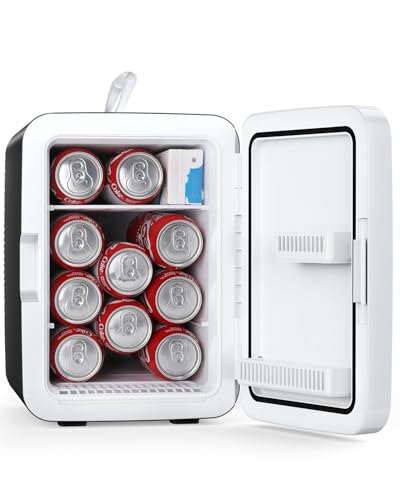
Antarctic Star Compact Mini Fridge 10L (Black)

BougeRV 12V Refrigerator 42 Quart

VEVOR 12V Car Refrigerator 10 QT with APP Control

BougeRV 12V Refrigerator CRPRO 30QT (Black)

BougeRV 12V Refrigerator CRPRO 30QT (Grey)

BougeRV 12V Refrigerator CRPRO VIP 30QT (Black)
A Breakdown Of The Leading Choices
This is the smallest unit here, sized for a nightstand rather than a trunk. The 6-liter cavity holds eight standard cans or four taller bottles, which covers a workday of drinks or a shelf of skincare. A thermoelectric system does the cooling, meaning there’s no compressor, no refrigerant lines, and almost nothing to wear out.
It runs from either a household outlet or a 12-volt socket, and the warming mode keeps lunch or baby bottles at serving temperature on short drives. Owners commonly report it stays quiet enough for a bedroom.
Useful Touches
- Dual cooler/warmer operation handles both chilled drinks and warm meals
- Removable compartments let you separate skincare from snacks without odor transfer
- AC and DC cords included means one purchase works at home and in the car
- Thermoelectric design draws modest power, easy on a vehicle’s battery
Things To Consider
- Thermoelectric cooling won’t reach true refrigerator temperatures in hot cabins, so perishables need care
- The tall, narrow interior limits wider containers like meal-prep boxes
Who Will Love This
Desk workers and skincare enthusiasts who want a personal chiller within arm’s reach.
A Better Fit Elsewhere
Campers needing real freezing should step up to the BougeRV 12V Refrigerator 42 Quart later in this list.
Mechanically this is a sibling of the first BEICHEN, same 6-liter footprint and thermoelectric heart, but finished in clean white and marketed toward vanity use. That matters more than it sounds: white blends into bedrooms and bathrooms where black gear tends to look industrial. The interior measures roughly 5.5 by 5.5 by 11 inches, tall enough for serum bottles standing upright.
You get the same AC/DC flexibility, so it can live on a dresser all week and ride along on road trips. One thing worth considering: check bottle heights before loading, since taller items can crowd the removable shelves.
A Strong Showing
- Neutral white finish suits vanities and shared spaces
- Tall interior accommodates upright cosmetic bottles
- Warming mode doubles its usefulness for bottles and leftovers
Softer Spots
- Shelf removal is your main tool against cramped packing, and frequent rearranging gets old
- Like its sibling, expect mild cooling rather than deep chill in summer heat
The Right Fit
Dorm dwellers and beauty-focused users who value looks alongside function.
Swap It Out When
Anyone prioritizing beverage volume over aesthetics will prefer the Antarctic Star 10L model coming up next.
The jump from 6 to 10 liters sounds minor until you’re packing for two people instead of one. Antarctic Star’s take on the desktop fridge adds a top carry handle and a removable interior shelf, and the whole unit weighs under nine pounds, light enough to shuttle between car and apartment without thinking about it.
Both power cords ship in the box: a wall adapter and a 12-volt vehicle lead. In most apartments you’ll find the footprint, about 9.8 by 12.8 by 13.9 inches, fits a desk corner or dorm shelf comfortably. It leans toward beverages and cosmetics rather than raw ingredients.
Everyday Perks
- 10-liter capacity covers a couple’s worth of drinks or a fuller skincare collection
- Carry handle makes car-to-desk moves genuinely easy
- Under-nine-pound weight keeps it portable despite the larger size
- Removable shelf adapts the layout to tall bottles or stacked cans
Honest Caveats
- Still thermoelectric, so don’t plan on ice cream or frozen goods surviving long trips
- Condensation inside is a commonly reported quirk; wiping the cavity dry now and then prevents odors
Quick Facts
Who It Suits Best
Students and apartment residents who want a mid-size personal fridge without compressor noise.
Reach For A Different Pick When
Road trippers hauling real groceries belong with the VEVOR 10-quart compressor unit reviewed below.
This is where the category shifts gears. Unlike the thermoelectric units above, the 42-quart BougeRV uses a compressor, the same basic technology as your kitchen fridge, compressed into a portable box. That’s what lets it swing between -4°F and 50°F, covering everything from chilled sodas to genuinely frozen meat on a week-long trip.
Noise sits around 45dB, comparable to a quiet conversation, and ECO versus MAX modes trade efficiency against pull-down speed. Three-level battery protection cuts power before it drains your starting battery, which matters when the engine’s off overnight.
Points In Its Favor
- True freezer capability down to -4°F for multi-day food storage
- Battery protection safeguards your vehicle’s electrical system
- ECO mode stretches power during long stationary stretches
- 45dB operation won’t dominate a camper or SUV cabin
Trade Offs To Consider
- At 42 quarts it demands serious cargo space and planning
- Compressor units cost more upfront than thermoelectric alternatives
Details At A Glance
Made For
Families and RV travelers who cook real meals away from hookups.
Where Another Pick Suits Better
Solo travelers with tight cargo space get more from the compact VEVOR 10-quart model next.
Compressor performance in a backpack-friendly size, plus app control you didn’t know you wanted until you’ve used it. VEVOR claims a pull-down from room temperature to -4°C in around fifteen minutes on MAX mode, and the phone app lets you adjust temperature without crawling into the back of an SUV.
The touch panel handles mode selection directly, and dual voltage support spans 12/24V DC and 110-220V AC, unusual breadth that covers international travel too. For couples on weekend trips, ten quarts translates to a day or two of fresh food and drinks without hogging the trunk.
Everyday Wins
- App control adjusts settings from the driver’s seat
- Fast MAX-mode chilling gets groceries safe quickly
- Wide voltage support covers vehicles, homes, and overseas outlets
- Compact 10-quart body slides into small cargo areas
Points To Keep In Mind
- Ten quarts fills fast; a family of four will outgrow it on longer trips
- App setup adds a step some users would rather skip entirely
Feature Snapshot
Right Fit For
Tech-comfortable solo adventurers and couples on two-to-three-day outings.
Another Choice May Suit
Groups needing double the food capacity should compare the BougeRV CRPRO 30QT below.
The CRPRO line reads like a checklist written by someone who camps rough. Four tie-down points along the sides let you strap the unit to a truck bed or van floor so it doesn’t become a projectile on washboard roads. A built-in storage compartment on the housing swallows cables and accessories, and it’s sized to hold BougeRV’s matching 266Wh power station for cordless runtime.
The temperature window runs from -8°F to 50°F, slightly deeper than the flagship 42-quart model, and triple-power input covers 12/24V DC plus 110V AC. Between the 30QT and 42QT, this one hits the sweet spot for most two-to-four-person setups.
Positive Points
- Four tie-down points secure the unit on rough terrain
- Storage bay keeps cords organized and supports add-on battery packs
- -8°F low end handles hard freezing for hunters and anglers
- No ice needed frees up space and eliminates meltwater mess
Less Ideal Details
- The storage compartment adds bulk to an already substantial unit
- Strapping hardware isn’t included, so budget for ratchet straps
Key Specs
Who Should Grab It
Overlanders and truck-bed campers who strap gear down before every drive.
Consider Something Else When
Pavement-bound families may find the plain 42-quart BougeRV simpler and roomier for their needs.
Same machine as the previous entry, different shell. Underneath the grey finish you’ll find the identical 30-quart compressor platform, -8°F to 50°F range, tie-down points, and accessory compartment. So why include it? Because color genuinely matters in shared rigs and rental vans where mismatched black boxes pile up, and grey hides dust and scuffs better on dusty trails.
Functionally nothing changes: dual DC input plus AC adapter, no ice required, and the same storage cubby for cables or a companion power station. Choose based purely on how it looks strapped beside your other gear.
Practical Advantages
- Grey finish conceals trail dust and scratches well
- Full CRPRO feature set including freeze capability and tie-downs
- Matches lighter-toned interiors in vans and SUVs
Small Limitations
- Identical weight and bulk to the black version, no size advantage
- Availability of this colorway can fluctuate seasonally, based on listing patterns
Whose Shelf It Belongs On
Van owners coordinating a lighter interior palette who want every feature of the black CRPRO.
Not Your Match When
Efficiency-focused off-gridders should skip straight to the CRPRO VIP version closing this list.
VIP stands for vacuum insulation panels, a construction method that insulates far better per inch than standard foam. The practical payoff: BougeRV states this unit can hold meat near -4°F for roughly 37 hours after losing external power, and annual consumption lands around 168kWh, gentle numbers for solar-powered setups.
An interior LED light joins the party, handy when you’re digging for dinner after dark. Capacity stays at 30 quarts with the familiar -8°F to 50°F span and the CRPRO storage compartment. For anyone running limited battery banks, the efficiency gain compounds every single night.
Where It Delivers
- Vacuum insulation dramatically extends passive hold time
- Low yearly energy draw suits solar and small battery systems
- Interior LED removes fumbling in dark campers
- Full freezer range retained despite efficient build
What To Weigh
- VIP construction typically carries a higher price than standard CRPRO units
- Vacuum panels are less tolerant of sharp impacts than foam, so handle with care during loading
Core Details
Best Suited To
Off-grid campers and solar users who count every amp-hour overnight.
Look Elsewhere When
Shoppers watching their budget closely get nearly identical core performance from the standard black CRPRO 30QT earlier in this roundup.
Factors To Weigh Before Choosing Portable Car Refrigerators
Compressor Versus Thermoelectric
This single choice defines the whole purchase. Compressor models reach genuine freezing temperatures and perform regardless of outside heat, but they weigh more and cost more. Thermoelectric units cool roughly 35-40°F below ambient temperature, stay silent, and run cheaply, yet they struggle in hot climates and cannot freeze anything. Match the technology to your food, not just your budget.
Size Against Vehicle Space
Measure your cargo area before ordering. A 42-quart box consumes real estate that a folded stroller or duffel bag might otherwise claim, while 6-liter desktop coolers fit beside a seat. As a rule of thumb, plan about one quart per person per day of travel for mixed food and drinks.
Power Draw And Battery Safety
Any unit left running with the engine off needs battery protection, a circuit that disconnects before your starting battery dies. Solar users should also compare rated consumption figures, since a fridge running eight hours nightly is often the largest single load in an off-grid setup.
Build For Your Terrain
Smooth highway miles forgive almost anything. Washboard forest roads do not, which is why tie-down points and secure latches matter more than styling once you leave pavement behind.
Key Considerations Across These Picks
Pitfalls Shoppers Hit
The classic error is buying thermoelectric expecting freezer results. The second is ignoring interior dimensions; tall bottles sometimes don’t fit shallow cavities. Check both before committing.
When Paying More Pays Off
Higher-tier compressor models buy faster pulldown, deeper temperature ranges, and better insulation. Frequent travelers recoup that through reliability; occasional users rarely notice the difference.
Closing Thoughts
Match the machine to the mileage. Desk users and skincare fans have solid, affordable options in the two BEICHEN units and the Antarctic Star, while anyone cooking real meals on the road belongs firmly in compressor territory, whether that’s the spacious 42-quart BougeRV or the efficiency-minded VIP. Measure your space, count your mouths, and the right pick becomes obvious fairly quickly. Safe travels and cold drinks ahead.
