

Once an engine passes 75,000 miles, its needs change. Seals harden, oil consumption creeps up, and deposits start building where they shouldn’t. The right oil slows all of that down, and the wrong one leaves you topping off between changes. This list covers eight options built specifically for aging engines, from full synthetics to a friction-reducing treatment you can pour into whatever’s already in the crankcase.
The Choices Worth Comparing

Lucas Oil Synthetic Blend High Mileage SAE 5W-20 Motor Oil

Pennzoil High Mileage 10W-40 Motor Oil, 5 Quart

K&N Motor Oil 5W-30 Synthetic High Mileage, 5 Quarts
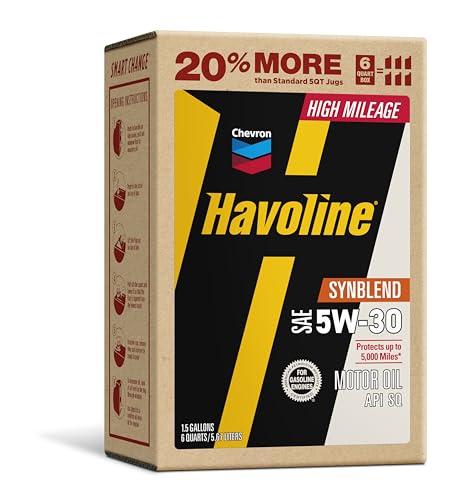
Havoline Motor Oil 5W-30 High Mileage Synthetic Technology, 6 Quarts

Castrol Edge High Mileage 10W-30 Full Synthetic, Pack of 2

Castrol GTX Full Synthetic High Mileage 0W-20, 5 Quart

K&N Motor Oil 0W-20 Synthetic High Mileage, 1 Quart

AtomOil Nano Technology High Mileage Oil Treatment, 16 Oz
A Breakdown Of The Leading Choices
A synthetic blend mixes conventional base stock with Group III synthetic components, and that middle path suits a lot of aging engines well. Lucas builds this 5W-20 around quality base oils plus detergents, dispersants, antioxidants, and corrosion inhibitors, with shear-stable viscosity modifiers meant to hold the grade through the whole drain interval.
In daily-driver terms, that means an oil that flows quickly on cold starts yet doesn’t thin out on the highway. Owners running 5W-20-spec vehicles past the 75k mark tend to find this a low-drama choice for routine changes.
Everyday Wins
- Blend of Group II and synthetic base stocks keeps cost sensible while adding thermal headroom over plain conventional oil
- Detergent and dispersant package helps suspend sludge so it drains out instead of settling inside the engine
- Shear-stable modifiers hold multi-grade viscosity across the oil-change interval
- Corrosion inhibitors protect internal surfaces during short trips and storage stretches
- Single-quart format makes partial top-offs easy without opening a big jug
Things To Consider
- Buying by the quart adds up fast for a full five-to-six quart change compared with jug packaging
- Blends generally resist heat less than the full synthetics further down this list
The Right Fit
Commuters with a 5W-20 engine who want dependable high-mileage protection without stepping up to premium pricing.
Where A Sibling Pick Shines
Drivers wanting maximum thermal stability for towing or hot climates will get more from the Castrol Edge High Mileage 10W-30 Full Synthetic.
Some older engines drink oil like it’s going out of style, and that’s the exact problem this thicker 10W-40 targets. Pennzoil formulates it for vehicles beyond 75,000 miles, with seal conditioners aimed at slowing leaks and reducing the consumption that comes with worn internals. The 10W-40 grade also gives tired bearings a slightly heavier film than thinner oils provide.
Noteworthy Benefits
- Seal-focused formulation helps curb the drips that show up on driveways as gaskets age
- Sludge-fighting additives keep damaging deposits from forming on internal parts
- Rated for modern turbocharged engines needing low-speed pre-ignition protection, a rare trait at this viscosity
- Five-quart jug covers most four-cylinder and many six-cylinder sumps in one purchase
Small Caveats
- 10W-40 is too thick for many late-model engines, so checking your owner’s manual first matters
- Cold-morning cranking can feel sluggish in freezing climates versus a 0W or 5W oil
At A Glance
Who Should Grab It
Owners of higher-mileage trucks and sedans that spec 10W-40 and have started leaving spots on the garage floor.
Swap It Out When
Your manual calls for 0W-20, in which case the Castrol GTX Full Synthetic High Mileage 0W-20 is the better match.
K&N built its name on filtration, and this full synthetic carries the same enthusiast orientation into lubrication. The company’s Synthamax additive technology pairs with a fully synthetic base to fight wear and support performance, which appeals to anyone who drives their aging car with some enthusiasm rather than gently.
Compared with the Lucas blend above, you’re getting a complete synthetic base here, so expect stronger resistance to breakdown under sustained heat. That’s the honest trade-off worth paying for when an engine sees highway speeds regularly.
Bright Spots
- Fully synthetic base stock resists thermal breakdown far longer than blends under sustained load
- Synthamax additive blend targets wear reduction to help preserve internal tolerances
- Formulated to keep higher-mileage engines performing closer to their original character
- Five-quart volume suits a complete do-it-yourself change
Points To Note
- Premium positioning means a higher outlay per change than mainstream brands like Pennzoil or Castrol GTX
- Availability can be spottier at local parts stores than the big-name alternatives
Who Will Love This
Weekend drivers and enthusiasts keeping a spirited older car healthy who want enthusiast-grade chemistry in the crankcase.
Another Choice May Suit
Budget-focused owners doing straightforward commuting get similar everyday coverage from the Lucas Oil Synthetic Blend 5W-20 at a friendlier spend.
Havoline’s Smart Change packaging solves a small but real annoyance: most cars need between five and six quarts, and buying two jugs leaves half a container gathering dust. Six quarts in one box covers nearly every common passenger vehicle in a single go. Underneath, Chevron’s synthetic technology formulation aims at the usual high-mileage culprits, sealing aging gaskets and cutting evaporative loss when the engine runs hot.
Well-Handled Touches
- Six-quart supply matches the capacity of most V6 and many four-cylinder engines exactly
- Seal and gasket conditioning additives help control consumption and weeping joints
- Lower evaporative loss at high temperatures than conventional oils, meaning fewer surprise top-offs midsummer
- 5W-30 remains one of the most widely specified viscosities for American-market vehicles
Less Ideal Details
- Six quarts is awkward storage if your car only takes five, leaving a spare liter on the shelf
- Synthetic technology sits below full synthetic in refinement, so extreme-duty users may prefer the K&N option
Quick Facts
Made For
Home mechanics who change their own oil and hate leftover containers cluttering the garage shelf.
Reach For A Different Pick When
Your engine burns oil badly enough to need a heavier grade, where the Pennzoil High Mileage 10W-40 fits better.
Here’s a detail most shoppers overlook: phosphorus, a standard anti-wear ingredient, gradually poisons catalytic converters. Castrol’s Phosphorus Replacement Technology swaps in an alternative chemistry to protect the emission system while still shielding the engine itself. On a car you plan to keep registered for years, that’s quietly valuable.
This advanced full synthetic also targets leaks, burn-off, and power-robbing deposits, the three complaints that define life past 75,000 miles. Two quarts per pack works well for staggered top-offs or smaller sumps.
What Stands Out
- Phosphorus Replacement Technology reduces a known catalyst contaminant, extending emission system life
- Advanced full synthetic base delivers strong resistance to leaks and oil burn-off
- Deposit control keeps power-robbing buildup off pistons and valves
- Two-quart packs suit both complete small-engine changes and gradual replenishment
Trade Offs
- Quart bottles mean more packaging waste than a single jug for a full change
- Cost per quart runs above the GTX line below, so budget shoppers may balk
Feature Snapshot
Right Fit For
Owners planning long-term ownership of a 10W-30 vehicle who care about passing emissions inspections years from now.
Not Your Match When
You want jug convenience for a six-quart change, where the Havoline Smart Change box handles it more neatly.
Most vehicles built in the last decade call for 0W-20, and finding a high-mileage version in a proper five-quart jug isn’t always easy. Castrol fills that gap with the same Phosphorus Replacement Technology found in the pricier Edge bottle above, wrapped in a full synthetic base tuned for engines past 75,000 miles. You give up a little of Edge’s flagship polish and keep the emission-friendly chemistry.
Points In Its Favor
- Full synthetic base with high-mileage additives addresses wear, leaks, and burn-off together
- Phosphorus Replacement Technology guards the catalytic converter against premature aging
- 0W-20 flows almost instantly on cold starts, reducing dry-start wear on winter mornings
- Five-quart jug matches typical sedan capacities without leftovers
Softer Spots
- Only correct for engines explicitly rated for 0W-20, never a substitute in thicker-grade motors
- Owners report the jug spout can dribble without a steady pour, so keep a rag handy
Core Details
Who It Suits Best
Owners of newer-ish 0W-20 vehicles crossing into high mileage who want full synthetic benefits without flagship pricing.
Consider Something Else When
You’d rather buy single quarts for occasional top-offs, where the K&N 0W-20 bottle below travels easier.
Older engines sip between changes, and a dedicated top-off bottle earns its shelf space fast. This single quart of K&N’s full synthetic 0W-20 carries the same Synthamax additive approach as the five-quart 5W-30 earlier in the list, just in the thin grade modern engines demand. Tossing one in the trunk beats scavenging for leftover jugs on a road trip.
Notable Upsides
- Full synthetic chemistry in the exact grade most late-model engines require
- Synthamax additives aim at wear protection and sustained performance in aging motors
- Single-quart format stores neatly in a trunk or glovebox-adjacent bin
- Handy for mixing with any compatible 0W-20 already in the crankcase
Details To Watch
- Buying seven quarts for a full change gets expensive versus the Castrol GTX jug
- Small bottles are easy to misplace in a crowded trunk, a minor but real annoyance
Whose Shelf It Belongs On
Drivers of 0W-20 vehicles who check their dipstick monthly and want a clean, compatible top-off on hand.
Look Elsewhere When
A complete oil change is the goal, since the Castrol GTX Full Synthetic High Mileage 0W-20 jug covers it in one buy.
Everything else on this list replaces your oil. AtomOil supplements it. This 16-ounce treatment pours nano-scale additives into whatever oil you’re already running, aiming to create boundary lubrication, a thin protective layer that keeps metal surfaces from touching directly. The maker also emphasizes thermal stability at high temperatures, relevant for engines that run hot in traffic or while towing.
Results vary by engine, honestly, and an additive won’t rescue a motor that’s mechanically worn out. As a supplement to fresh high-mileage oil, though, it’s a reasonable experiment for stubborn engines.
Real-World Strengths
- Nano-engineered additives target friction at the metal surface level rather than just thinning the oil
- Boundary-lubrication approach reduces direct surface contact in worn clearances
- Designed for thermal stability, useful in stop-and-go summer driving
- Works alongside your existing oil choice instead of forcing a brand switch
Factors To Consider
- Additives are a complement, not a fix, for mechanical problems like bad rings or a failing pump
- Overdosing beyond the recommended amount can alter viscosity, so measure carefully
Essential Details
Built With In Mind
Tinkerers with a hot-running older engine who’ve already settled on a good oil and want an extra layer of friction defense.
Skip It When
You simply need a proper oil change, because any of the full synthetics above does that job outright.
What Matters Most Before Choosing Oils For High Mileage Car
Match The Viscosity First
Your owner’s manual lists an approved viscosity range, and that number outranks every marketing claim. Thicker grades like 10W-40 suit engines with worn clearances and leaking seals, while modern 0W-20 engines need exactly that thin grade for proper oiling. Guessing wrong risks poor cold-start flow or inadequate film strength.
Understand Base Oil Types
Conventional oil comes straight from refined crude. A synthetic blend mixes in chemically engineered base stocks, and full synthetic is entirely engineered for stability. Each step up buys better heat resistance and slower breakdown, which matters more as engines age and run hotter.
Look For Seal And Emission Protection
Quality high-mileage formulas include seal conditioners that soften hardened gaskets, plus deposit control to keep sludge from forming. Chemistry that limits phosphorus also protects the catalytic converter, an expensive part no one enjoys replacing.
Buy The Right Quantity
A five or six-quart jug usually beats loose quarts for a full change, while single bottles earn their keep as top-offs. Matching the package to how you actually maintain the car saves money and shelf space alike.
Key Considerations Across These Picks
Wrong Turns To Avoid
The classic mistake is choosing thickness based on the car’s age alone instead of the manual’s specification. Another is pouring an additive into an engine that actually needs fresh oil, treating symptoms while skipping the cure. Skipping the viscosity check costs more than any bottle on this list.
What Separates Premium From Basic
Higher-tier synthetics justify their cost through base-stock purity and smarter additive packages, like phosphorus replacement that protects emissions hardware. Paying up makes sense for turbocharged engines, towing duty, or long-term ownership plans. For gentle commuting in a mild climate, a solid blend often covers everything you’ll ask of it.
Closing Thoughts
An aging engine rewards consistency more than anything else: regular changes, the right viscosity, and a formula designed for seals and deposits. Any of these eight options supports that habit, whether you lean toward a value jug or a premium synthetic. Match the grade to your manual, pick the package that fits your maintenance style, and your high-mileage car will keep earning its parking spot.
