

Seven is a tricky age for ride-on toys. Your child has outgrown the chunkiest preschool trikes but isn’t ready for the speed, weight, or hand-and-foot coordination a teen scooter demands. The right pick bridges that gap with manageable speed, a wheelbase that forgives wobbly steering, and controls small hands can actually squeeze. This roundup sorts six strong options by skill level and riding style, so you can match the scooter to your kid instead of the other way around.
The Essentials At A Glance

Gotrax KS1 Kids Kick Scooter, 3 Wheels
Gotrax KS3 Kick Scooter with Seat, 3 Wheels
Razor Crazy Cart Shift Electric Go Kart

Hiboy Q2 Lite Electric Scooter for Kids w/Seat

Gyroor Electric Scooter with Seat for Adults C1

Gotrax SK1 Foldable Electric Scooter, 3 Wheels
Why These Options Stand Out
The KS1 leans into the simplest path to confidence: a wide three-wheel stance that resists tip-overs, and a lean-to-steer deck (meaning the rider tilts the handlebars left or right with their body weight rather than turning a wheel) that trains balance without the need for sharp hand inputs. For a seven-year-old who has never really steered a scooter before, that body-weight response feels intuitive within a session or two. Compared to the KS3 later in this list, the KS1 skips the seat option and keeps the geometry lower, which shorter riders tend to prefer.
Storage is easy in an apartment hallway, and the frame stays light enough for a parent to carry one-handed. For most backyards and short sidewalk runs, this is a sensible place to start.
Notable Gains
- LED wheels stay visible in dusk conditions, helping neighbors spot your child at the curb.
- Lean-to-steer geometry builds balance skills that transfer to a two-wheel scooter later on.
- Wide deck gives growing kids room to shift stance without losing footing.
- Lightweight frame makes it manageable for adults to lift into a trunk.
Things To Consider
- Plastic-heavy construction can develop creak or flex after a year of hard use on rougher pavement.
- Height adjustability is limited, so taller kids may outgrow the handlebars before they outgrow the wheel size.
Key Attributes
Made For
First-time scooter riders who need forgiving handling and a low learning curve.
Where Another Pick Suits Better
Pick the Gotrax SK1 Foldable Electric Scooter instead once your child is ready for a throttle and a small electric assist.
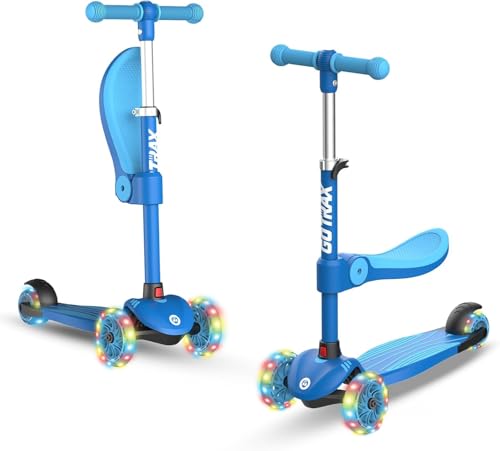
The KS3 takes the same lean-to-steer three-wheel platform as the KS1 and adds a removable seat, which sounds small but changes who can ride. A child who is still unsure about standing for long stretches can sit and scoot, then graduate to standing without learning a brand-new toy. The three LED wheels light up under motion, which is a small but real motivation boost for hesitant riders.
You can unscrew the seat once balance improves, turning it into a standard kick scooter. The trade-off shows up in the seat bracket, which adds a small amount of weight and bulk compared with the seatless KS1.
The Good Stuff
- Removable seat lets the scooter grow with the rider’s confidence.
- Light-up wheels add visibility for evening rides and a little extra fun factor.
- Wide deck keeps small feet planted during leans.
- Low step-through height suits riders who struggle to swing a leg over taller frames.
Trade Offs
- The seat adds weight, which can make carrying the scooter up stairs a chore.
- Steering precision is lower than two-wheeled scooters, so older kids seeking tricks may find it limiting.
Whose Shelf It Belongs On
Tots still building balance who want a longer runway before moving to a standing scooter.
Look Elsewhere When
The Hiboy Q2 Lite Electric Scooter for Kids fits better if your child is past the balance stage and wants throttle-based riding.
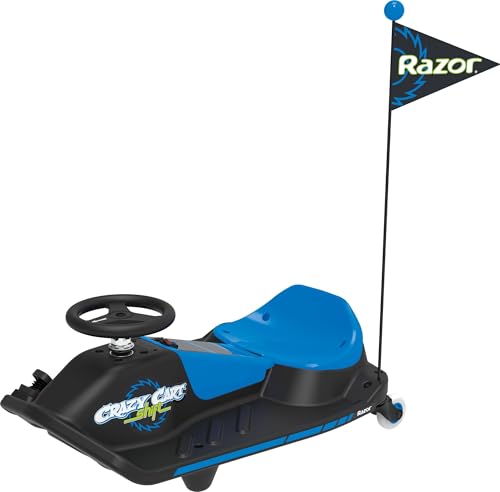
The Crazy Cart Shift is the wildcard in this roundup. It is technically a go-kart, not a scooter, but for a seven-year-old chasing speed and sideways action, it scratches an itch a kick scooter cannot. A 12V battery drives a simplified drift system, and a high/low speed switch lets parents dial back the chaos early on. Riders up to 120 pounds can climb in, which gives the cart a long useful life in a household with older siblings.
The honest read is that this is a driveway and cul-de-sac toy, not a sidewalk commuter. It needs a flat paved surface to do its thing.
Real-World Strengths
- Drift system engages automatically, so beginners get spin action without mastering a clutch.
- High/low speed switch lets parents cap top speed for newer riders.
- 120-pound rider capacity covers most elementary and middle school kids.
- Sturdy caster wheels hold up to repeated sideways slides on pavement.
Points To Keep In Mind
- Battery runtime is shorter than full-size ride-ons, so charging between sessions is the norm.
- Open driveway or empty parking lot is the realistic play space, not a sidewalk or park path.
- Footwells and caster wheels collect grit, so a quick wipe-down after drift sessions keeps things smooth.
Technical Highlights
Best Suited To
Seven-year-olds who want speed and drift action in a controlled outdoor space.
Swap It Out When
The Gotrax KS1 Kids Kick Scooter is the right call if your child needs exercise, balance building, or a sidewalk-friendly ride.
The Q2 Lite is the first true electric scooter in this lineup, and it does the most to grow with a child. A 100W brushless motor (a brushless motor uses electronic controllers rather than physical brushes to deliver power, which means quieter operation and less maintenance) drives three speed modes, a brake lever provides familiar bicycle-style stopping, and a removable seat lets shorter riders start seated and graduate to standing. The age range stretches from four to ten, which covers your seven-year-old with room on both sides.
Compared to the Gotrax SK1, the Q2 Lite leans more into traditional scooter geometry, with a slimmer deck and a taller stem. The seat is the real differentiator for hesitant riders.
What Earns Its Place
- Three speed modes let parents match output to skill level, starting slow.
- Removable seat helps kids who are not ready to stand for full rides.
- Hand brake gives a familiar stopping input that transfers to bikes later.
- Age range up to ten means the scooter does not get outgrown in one season.
Less Ideal Details
- Brushless motor is quiet but still requires a charging routine to avoid mid-ride cutoffs.
- Heavier than the kick-scooter options, which matters for stair-carrying in apartment buildings.
Right Fit For
Growing kids ages four to ten who want a true electric scooter with a parent-controlled speed cap.
Reach For A Different Pick When
Pick the Gotrax KS1 Kids Kick Scooter instead if your child is not yet ready for a throttle-based electric.
The Gyroor C1 is the odd one out: an adult-geared seated electric scooter with a 450W motor and a roughly 20-mile range. The honest reason it appears here is the shared-ride household. A parent who wants to cruise the neighborhood bike path while a child scoots alongside benefits from matching the kid’s pace, and a seated adult scooter lets you do that without huffing up a hill.
It is not built for a seven-year-old to ride, and the listing frames it as an adult product. Treat it as a companion piece, not a primary kid scooter.
Notable Upsides
- 450W motor handles neighborhood inclines without slowing the group ride.
- Long range covers a full afternoon of running errands or path riding.
- Seated design reduces fatigue on longer trips with kids in tow.
Small Caveats
- Listed as an adult scooter, so it is not sized or speed-limited for a child to operate.
- Larger footprint means storage planning is needed for apartment dwellers.
Feature Overview
Who Should Grab It
Parents who want to ride alongside their kid on a shared path or neighborhood loop.
Not Your Match When
Pick the Hiboy Q2 Lite Electric Scooter for Kids if the rider is the child, not the adult.
The SK1 takes the kid-friendly three-wheel formula and adds a small electric assist, with a top speed capped around 3.7 mph. That cap is the headline number for parents: it keeps the scooter firmly in plaything territory rather than commuter territory. The frame folds down for trunk trips or hallway storage, and an LED display on the stem shows remaining battery and mode at a glance.
Compared to the Hiboy Q2 Lite, the SK1 is slower and simpler, which is exactly the point for a first electric.
Positive Takeaways
- Capped top speed keeps new riders in a safe envelope during the first electric-scooter months.
- Foldable frame stows in a closet or car trunk without disassembly.
- LED display gives kids a clear read on speed mode and battery status.
- Three-wheel stance supports riders still building balance alongside throttle control.
Practical Considerations
- Top speed will feel sluggish to kids who have already ridden faster scooters, which can lead to boredom.
- Front-wheel assembly is required out of the box, so set aside time before the first ride.
Who Will Love This
First-time electric scooter riders who need a slow, stable, and compact starting point.
Consider Something Else When
The Razor Crazy Cart Shift fits better for a child craving speed and sideways fun over flat-out commuting.
What Matters Most Before Choosing Electric Scooters For 7 Year Old
Speed Limits And Skill Match
Speed caps are the single most important number on a kid’s electric scooter. A seven-year-old handling a 10 mph scooter on uneven sidewalk is a different proposition than the same child at 4 mph, where a stumble ends in a minor scrape rather than a road-rush situation. Three-wheel platforms with throttle limiters, like the Gotrax SK1, give parents a fixed number to point to. Kick scooters sidestep the question entirely by tying speed to the rider’s own push. Match the platform to the rider’s track record, not just the listed age range, since kids at the same chronological age vary widely in coordination and street awareness.
Wheel Count And Terrain
Three-wheel designs prioritize stability over agility, which is the right call for beginners or riders who still wobble on two wheels. They handle flat sidewalks, driveways, and park paths without complaint but can feel bulky on tight turns. Two-wheel scooters reward a more developed sense of balance and let older kids carve and lean into corners, but the learning curve is steeper. For most seven-year-olds, a three-wheel scooter is the safer first step, and a transition to two wheels can come a season or two later.
Weight Capacity And Growth Room
Manufacturers list a maximum rider weight for a reason, and the figure doubles as a useful proxy for build quality. A scooter rated to 110 pounds will outlast one rated to 55 pounds, even with a lighter rider, because the frame, deck, and stem are designed for more force. Look for at least a year of headroom past your child’s current weight if you want the scooter to last. Adjustable handlebar height adds another season of usefulness without replacing the whole unit.
Seated Versus Standing
Seats on kids’ scooters are not a gimmick. They give younger or less confident riders a way to cruise without the leg fatigue of constant kicking or the balance demand of constant standing. Most seated scooters in this category let you remove the post when the rider is ready, which is the ideal middle path. A child who fights standing fatigue on long rides will ride more, and more often, with a seat option in the box.
Where Shoppers Go Wrong And What The Higher Tier Buys
Hidden Buying Traps
The most common mistake is shopping by age range alone. A scooter rated for ages four to ten covers a wide span of sizes and skills, and a child at the bottom of that range will find the same scooter intimidating at the top. Read the maximum weight and handlebar height, not just the age window. Another trap is underestimating the value of replaceable parts: wheels, grips, and brake pads wear out, and a scooter with available replacement parts will outlast a sealed unit by a full riding season or more.
The Upgrade Payoff
Spending up usually buys three things: a stronger motor that handles small hills without slowing, a sturdier deck that resists flexing under hard landings, and longer battery life that survives a full afternoon of stop-and-go play. For a casual sidewalk rider, none of that matters much, and a budget pick will do the job. For a household that plans weekend rides, multi-child use, or longer commutes to a nearby park, the upgrade pays off in fewer charging interruptions and a frame that does not develop wobble after a year. The honest read is that the extra money goes mostly to longevity and power consistency, not flashy features your child will outgrow.
