

You want a scooter that gets you where you’re going without drama, and a 20 mph electric scooter hits that sweet spot between leisurely cruising and outright race machine. These models cover a real range of needs, from the daily commuter dodging traffic to the weekend explorer hitting park trails. The right pick comes down to how far you ride, the terrain you tackle, and how much you care about suspension and tire size. Here are five solid choices worth a look.
Your Options, Compared
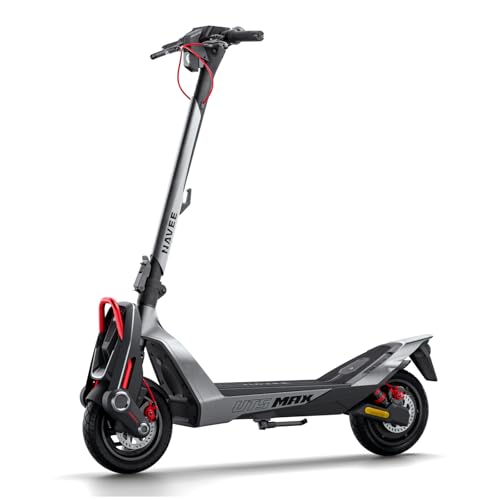
NAVEE UT5 Electric Scooter 25-43.5 mph, 51.6-74.6 Miles Range, 1638-2400W Peak

Segway Ninebot MAX G3 Plus Electric Scooter, 28 MPH, 56-Mile Range

Segway ZT3 Pro Electric Scooter, 24.9 MPH, 43.5-Mile Range, Dual Suspension

H-1 Pro Series Ace R350/R450 Foldable Electric Scooter, 20 mph, 25.6-Mile Range

NAVEE GT3/ST3/GT5 Series Electric Scooter, 20/25 MPH, 30-55.9 Miles Range
The Details Behind The Selections
The NAVEE UT5 line sits at the high end of the 20 mph electric scooter class, with configurations stretching well above that baseline for riders who want headroom. Built around a peak motor ranging from 1638 to 2400W, it tackles hills and rougher terrain without bogging down, and the dual suspension plus disc brake setup keeps things controlled when you push pace.
Battery range scales dramatically across the family, hitting 74.6 miles in the longest-range trim with a 716Wh pack and Flash Charge tech that fills the battery in roughly 2 hours. Off-road tires in 10″ or 12″ sizes give you real trail flexibility, and the frame supports adult riders comfortably. This is the pick when range anxiety would otherwise kill the joy of a longer ride.
The Good Stuff
- Peak motor output up to 2400W handles steep inclines and heavier riders without strain
- 74.6-mile max range in the top trim covers a full week of urban commuting
- Flash Charge technology drops full recharge time to about 2 hours
- Dual suspension absorbs cracks, gravel, and curb drops that punish rigid frames
- Off-road tire options in 10″ or 12″ sizes adapt to mixed-surface riding
Things To Consider
- Larger configurations are heavier and less practical for frequent carrying
- Higher-tier variants come at a premium over entry-level 20 mph models
- Owners commonly report that powerful regen takes some getting used to
Who It Suits Best
Long-distance commuters and weekend trail explorers who want one scooter that handles both worlds without compromise.
Consider Something Else When
Urban riders with short trips and tight budgets will find the Segway Ninebot MAX G3 Plus easier to live with day to day.
The Segway Ninebot MAX G3 Plus refines the commuting formula that made the MAX line famous, adding a 28 mph top speed and a 56-mile range from its 717Wh battery. Where the NAVEE UT5 pushes raw power, this scooter pushes polish: the SegRide Stability Enhancement System combines an 80mm trailing distance, curved handlebar, and tuned steering damping for confident high-speed handling.
Proprietary SegRange technology stretches every watt-hour, meaning ECO mode genuinely delivers those 56 miles rather than theoretical numbers. For daily commuters who log the same route five days a week, that consistency matters more than peak speed. The build quality feels like Segway’s usual standard, and the brand’s support network is a quiet advantage if something goes sideways.
A Few Highlights
- 56-mile range in ECO mode from the 717Wh battery covers most weekly commutes
- SegRide stability system delivers confident handling at 28 mph
- 28 mph top speed adds headroom for passing cyclists and merging into traffic
- Refined build quality backed by Segway’s established support network
Worth Noting
- Heavier than compact commuters, making stair carry less convenient
- Premium positioning means it costs more than basic 20 mph models
- Range claims depend on riding mode, terrain, and rider weight
Key Product Details
Right Fit For
Tech-focused commuters who want a refined ride, long range, and the backing of an established brand.
Look Elsewhere When
Riders seeking off-road versatility should consider the Segway ZT3 Pro, which handles rougher terrain more confidently.
The Segway ZT3 Pro strikes a practical middle ground between the Ninebot MAX G3’s commuter refinement and the NAVEE UT5’s off-road aggression. With a 24.9 mph top speed and a 43.5-mile ECO range, it covers the gap riders who split their time between pavement and park trails actually need. Dual suspension and a 1600W peak motor handle the rough patches without making the scooter feel oversized on city streets.
Flash Charge support means you’re not waiting around all day to top up, and the intuitive controls make it approachable for newer riders stepping up from entry-level models. UL certification (UL2272 for the electrical system and UL2271 for the battery) adds a layer of safety assurance that matters when you’re investing in a higher-power scooter. It folds down reasonably well for apartment storage, though it’s not the lightest option in this group.
Where It Excels
- 43.5-mile range in ECO mode handles multi-day commutes on a single charge
- Dual suspension smooths out potholes, gravel, and uneven pavement
- Flash Charge cuts downtime between rides
- UL2272 and UL2271 certification covers electrical and battery safety standards
- 1600W peak motor provides solid hill-climbing and acceleration
Trade Offs
- Heavier than compact commuters, so carrying upstairs gets old fast
- Real-world range drops noticeably in Sport mode on hills
- Larger footprint may not fit narrower storage closets
Best Suited To
Riders who split their week between city streets and weekend trail paths and want one scooter that handles both without specialization.
Skip It When
Strict urban commuters with short, flat routes will get more value from the lighter H-1 Pro Series Ace R350/R450.
The H-1 Pro Series Ace brings approachable pricing to the 20 mph class without stripping out the features that matter for daily use. A 350W or 450W brushless motor delivers 20 mph top speed, while 10″ self-sealing tubeless tires handle the small punctures that ruin a commute. The folding design collapses down for closet storage or stashing under a desk, which is a bigger deal than it sounds for apartment dwellers.
Range tops out at 25.6 miles in the R450 configuration, which covers most weekday commutes with margin to spare. The 264 lb weight capacity fits a wide range of adult riders, and the front drum and rear disc brake pairing offers balanced stopping without the maintenance headaches of hydraulic systems. For newer riders or anyone not chasing peak specs, this is a sensible entry point.
What Helps Most
- 20 mph top speed meets the class baseline without overcomplicating controls
- Self-sealing tubeless tires reduce roadside interruptions from small punctures
- Folding frame fits apartments, offices, and transit overhead bins more easily
- 264 lb weight capacity accommodates a wide range of adult riders
- Drum and disc brake combo delivers reliable stopping with low maintenance
Points To Keep In Mind
- 25.6-mile max range is shorter than higher-tier options for long-distance riders
- Lower motor wattage means steeper hills slow you down more noticeably
- No dual suspension, so rough roads transmit more vibration to the rider
Who Should Grab It
Newer riders and value-focused commuters who want a reliable 20 mph scooter without paying for features they won’t use.
Reach For A Different Pick When
Riders logging longer distances or tackling varied terrain will appreciate the extra range of the NAVEE GT3/ST3/GT5 series.
The NAVEE GT3/ST3/GT5 series rounds out the brand’s lineup with configurations tuned for typical urban riding rather than extreme performance. Top speeds of 20 or 25 mph cover the legal-and-practical sweet spot, while range scales from 30 to nearly 56 miles depending on the battery and motor combination you choose. The 1000 to 1638W motor range handles 22° inclines, which is more than most city hills demand.
A 265 lb weight capacity supports a wide range of riders, and dual suspension takes the edge off cracked pavement and curb cuts. Compared to its bigger sibling, the UT5 line reviewed earlier, this series trades outright power for portability and price, making it a more practical daily companion. Folding design helps with storage, and the 8-hour full recharge is manageable if you plug in overnight.
Reasons It Performs
- 20/25 mph top speeds hit the practical urban commuting baseline
- Range scales from 30 to 55.9 miles across the configuration family
- 22° incline climbing handles steep city hills without bogging down
- 265 lb weight capacity supports most adult riders comfortably
- Dual suspension reduces fatigue on longer rides over rough pavement
- Folding design stores more easily in apartments and offices
Honest Caveats
- 8-hour full recharge is slower than Flash Charge models in this roundup
- Lower-tier configurations lack the off-road tire options of the UT5 family
- Range varies significantly based on rider weight, terrain, and assist mode
Made For
Mixed urban riders who want solid range, reliable hill-climbing, and a scooter that folds for storage without the premium price tag.
Swap It Out When
Riders wanting maximum range and faster charging should step up to the NAVEE UT5 Ultra X/UT5 Max line reviewed above.
What Matters Most Before Choosing 20 Mph Electric Scooters
Range vs. Real Riding
Manufacturer range claims assume ideal conditions: flat ground, a lightweight rider, and ECO mode. Your actual mileage will likely be 60 to 80 percent of the listed number, especially if you encounter hills, wind, or carry a backpack. A scooter advertised at 40 miles may deliver 25 to 30 miles in mixed urban use, so overshooting your needs makes more sense than undershooting.
Motor Power and Hill Performance
Peak motor wattage tells you how well a scooter handles acceleration and inclines, but continuous (nominal) wattage matters more for sustained climbing. A 350W motor handles flat pavement fine but slows on steep grades. For hilly cities, look for at least 500W nominal, or 1000W+ peak for confident hill-climbing without drama.
Tire Size and Suspension
Tire diameter affects both ride comfort and obstacle clearance. Self-sealing tubeless tires reduce puncture worries, a real plus for commuters without roadside repair kits. Suspension matters more on larger tires and rougher terrain; if you stick to smooth pavement, a rigid frame with pneumatic (air-filled) tires often feels fine. For mixed surfaces, dual suspension pays off in reduced fatigue.
Weight, Folding, and Storage
Scooter weight ranges from about 30 to 65+ pounds. Folding mechanisms help, but a 50-pound scooter still feels heavy carried up three flights of stairs. Measure your storage spot (closet depth, elevator space) and consider whether you’ll be lifting it daily. Commuters on public transit especially benefit from lighter, more compact designs.
Key Considerations Across These Picks
Pitfalls Shoppers Hit
Range gets oversold. The biggest mistake is choosing a scooter based on the maximum range number without accounting for real-world conditions. Hills, cold weather, rider weight, and aggressive riding all cut range significantly. For example, if your commute is 8 miles each way, don’t pick the 20-mile model; pick something rated for 30+ to leave yourself margin.
Skipping tire and brake evaluation is another common miss. Tires affect ride quality and puncture risk, while brakes determine safety margins. Drum brakes need less maintenance but offer less power than hydraulic discs. Self-sealing tubeless tires cost more upfront but save headaches for daily riders.
When Paying More Pays Off
Premium models in the 20 mph class earn their price through better suspension, larger batteries, and refined control systems. A scooter like the Segway Ninebot MAX G3 Plus delivers stability engineering that cheaper models skip, which matters when you’re riding in traffic at higher speeds. If you ride daily, the upgrade typically pays back in comfort, safety, and longevity. For weekend-only use on short, flat routes, the budget tier makes more sense.
Frequently Asked Questions
How fast does a 20 mph electric scooter actually go?
Most 20 mph electric scooters reach their listed top speed on flat ground with a light rider. Heavier riders, hills, and headwinds reduce actual speed, and some models cap acceleration in lower modes. Expect to hit 18 to 20 mph in typical conditions, with some variation by model and battery level.
Are 20 mph electric scooters legal on public roads?
Laws vary by state and city. Many areas cap electric scooter speeds at 15 or 20 mph on bike lanes and roads, while others restrict them to private property or specific paths. Check your local regulations before commuting on public infrastructure, and always wear a helmet regardless of legal requirements.
How long does it take to charge a 20 mph electric scooter?
Standard charging takes 4 to 8 hours depending on battery capacity and charger output. Models with Flash Charge or fast-charging support can cut full recharge times to 2 to 3 hours. Larger battery packs naturally take longer, so consider your access to charging when selecting a model.
What is dual suspension on an electric scooter?
Dual suspension means both the front fork and rear deck have shock-absorbing systems, which reduces vibration and impact transferred to the rider. It matters most on rough pavement, gravel paths, and curb drops. Smooth city streets don’t require it as urgently, though even road commuters notice the comfort difference on longer rides.
How much maintenance does an electric scooter need?
Basic upkeep includes checking tire pressure, inspecting brake pads, tightening bolts, and keeping the battery charged between 20 and 80 percent for longevity. Tubeless tires need occasional sealant top-ups. Beyond that, electric motors and batteries are largely maintenance-free, though keeping the scooter dry and stored indoors extends its life significantly.
Wrap Up
The right 20 mph electric scooter depends on your actual routes, not just the spec sheet. Commuters logging 30+ miles daily need the Segway Ninebot MAX G3 Plus or the longer-range NAVEE configurations. Weekend trail riders benefit from the Segway ZT3 Pro’s dual suspension. Newer riders and value-focused shoppers will appreciate the accessible H-1 Pro Series. Match the scooter to your typical ride, not your wish-list ride, and you’ll get years of reliable service.
