

Thirteen sits in a tricky spot for ride-on gear. Big-kid scooters often feel cramped or sluggish, and adult models can carry speed and weight a young teen isn’t ready to handle. A scooter that fits a 13-year-old needs a balance: enough power to keep up with older siblings, sensible top speeds for neighborhood streets, and a build that won’t rattle apart after a season of daily use. This list covers five solid picks that span that range, from a four-wheel starter to higher-output commuter builds, so you can match the right scooter to the right rider.
The Shortlist At A Glance

COMLEROM Fast Electric Scooter With Seat
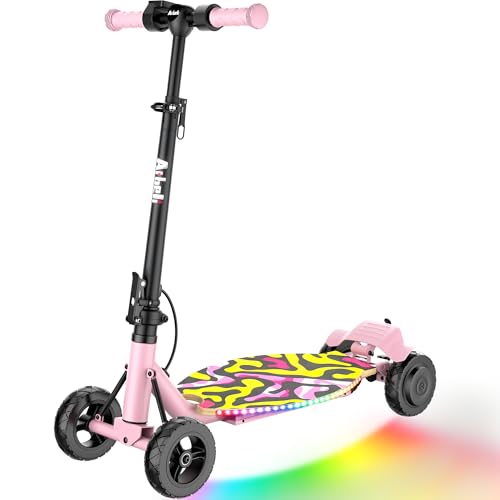
ARBELI 4-Wheel Electric Scooter for Kids 8+

Gyroor C1 Electric Scooter With Seat
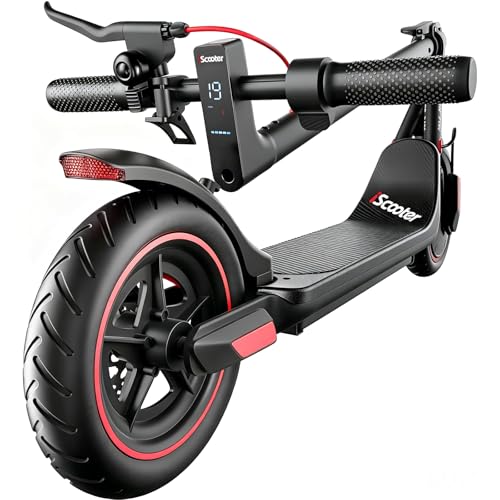
iScooter Foldable E-Scooter for Big Kids
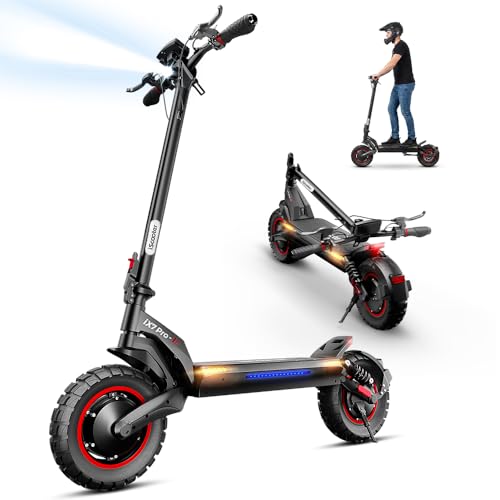
iScooter 2000W Off-Road Commuter Scooter
A Closer Look At Each Pick
The COMLEROM sits at the high-output end of this list, and it reads that way the moment you look at the spec sheet. A 6000W-rated motor (a motor rated for that much continuous power output) pushes top speeds far beyond what a 13-year-old should ever use, which is exactly why this pick earns a careful look from a parent’s perspective. The forged aluminum frame, shaped using a CNC machining process (computer-controlled cutting of solid aluminum), gives it serious weight at roughly 88 lb, and the long claimed range covers several days of school commutes without a top-up.
For a tall, confident 13-year-old who has outgrown kid-tier scooters, the COMLEROM offers room to grow into. Compared to the ARBELI below, this is a fundamentally different category of machine, heavier, faster, and built for open pavement rather than a starter rider.
The Practical Payoff
- High-output motor handles hills and heavier riders without bogging down.
- Long range means fewer mid-week charges for daily school use.
- Forged aluminum frame resists flex and feels planted at speed.
- Seated riding position reduces fatigue on longer trips.
Things To Consider
- Top speed and weight make this unsuitable for younger or less experienced 13-year-olds without direct supervision.
- At roughly 88 lb, it is not a casual carry, and storage in a small apartment can be a hassle.
- Tire and brake wear on a high-output scooter tends to be more frequent than on entry-level builds.
Feature Snapshot
Who It Suits Best
A tall, experienced 13-year-old with parental oversight, riding on open roads or long commutes.
Skip It When
The Gyroor C1 is a more measured fit for a younger or less experienced 13-year-old who still wants a seated scooter.
For a 13-year-old who is still finding their feet on two wheels, or for a parent who wants the gentlest possible entry into electric scooters, the ARBELI four-wheel design is hard to beat. The platform stays planted at low speeds, and the 10 mph cap removes most of the worry that comes with throttle-happy teens. It carries riders up to 176 lb, so a growing 13-year-old won’t outgrow the load rating quickly.
Where the COMLEROM above is a performance build, the ARBELI leans hard into stability and simplicity. Adjustable handlebar height (35″ to 39.4″) keeps the fit right through a growth spurt, and the 250W brushless motor (a motor with no internal brushes, so it runs quieter and needs less maintenance) keeps the noise down in quieter neighborhoods.
Strong Points
- Four-wheel layout adds confidence for new or cautious riders.
- 10 mph top speed feels sensible for sidewalks and cul-de-sacs.
- 176 lb capacity covers most 13-year-olds and their backpacks.
Worth Noting
- Top speed and 8.5-mile range can feel limiting for a teen who wants to ride alongside older siblings on faster scooters.
- Four-wheel scooters are wider, so navigating tight indoor storage can take some planning.
Made For
A cautious 13-year-old, or a younger rider approaching teen years, who values stability over speed.
Consider Something Else When
The iScooter foldable model is a smarter call for a 13-year-old who already has balance dialed in and wants something faster and more portable.
The Gyroor C1 lands in a useful middle ground for 13-year-olds who want more than the ARBELI’s entry-level pace but don’t need the COMLEROM’s highway-ready output. The 450W motor is rated to handle 10-degree inclines (a slope where elevation rises 10 feet over every 100 feet of horizontal distance), which covers most neighborhood hills without slowing to a crawl. The seated design changes the whole feel of the ride, taking pressure off legs and making longer trips to a friend’s house or the local park much more comfortable.
What stands out is the quiet operation. A brushless setup keeps acceleration smooth and unobtrusive, which matters on shared paths where noise carries. For a 13-year-old who is past the four-wheel stage but still wants a measured, comfortable ride, the C1 hits a useful sweet spot.
Useful Strengths
- Seated design reduces leg fatigue on longer neighborhood rides.
- Climbs modest inclines without bogging down.
- Quiet brushless motor is considerate on shared paths.
Honest Caveats
- Top speed sits well below the higher-output picks, so a teen chasing thrills will want to look elsewhere.
- Seated scooters can be harder to store vertically in tight closets or small entryways.
- Seat height adjustment range is worth checking against your rider’s inseam before committing.
Right Fit For
A 13-year-old who wants a comfortable, seated ride for suburban errands and park loops, without the bulk of a high-output build.
Look Elsewhere When
The COMLEROM is the better match for a teen who has outgrown modest speeds and needs serious range and power.
The iScooter foldable model earns its place on this list for one very practical reason: it disappears. The folding frame makes it easy to stash under a bed, lean against a hallway wall, or toss in the back of a car for a weekend trip. At 19 mph top speed and a 15-mile range from the 350W rated motor (500W peak), it covers a typical school commute with battery to spare, which is the actual use case most parents care about.
Compare that to the ARBELI’s four-wheel stability, and the trade-off is clear. This scooter assumes the rider has balance and basic control, then rewards them with portability. The companion app and LED display add a layer of ride data that older teens tend to appreciate, and the build is light enough that a 13-year-old can carry it up a flight of stairs without a parent’s help.
A Few Highlights
- Folding frame fits under beds, in closets, and in car trunks.
- 19 mph top speed handles school commutes comfortably.
- Light enough for a teen to lift and carry without help.
- App and LED display keep ride data visible at a glance.
Trade Offs
- 15-mile range means more frequent charging than larger commuter builds.
- Smaller wheels than the off-road iScooter below, so rough pavement transmits more vibration.
Best Suited To
A 13-year-old with a steady balance who needs a portable daily commuter for school and short neighborhood trips.
A Better Fit Elsewhere
The iScooter 2000W off-road model suits a 13-year-old who needs rougher-terrain capability and higher top speeds.
The iScooter 2000W sits at the top of the iScooter lineup and behaves like a different machine from the foldable model above. Dual-drive switching lets the rider toggle between single and dual motor (using one or both motors at once) depending on terrain, and the 10- or 11-inch off-road tires, paired with a dual-suspension setup, smooth out the kind of cracked pavement and gravel paths that stop smaller scooters in their tracks. Turn signals and a dual braking system (using both electronic and mechanical brakes for shorter stops) add a layer of road presence you don’t get on entry-level builds.
For a 13-year-old who has years of riding behind them and a parent comfortable with the output, this is the most capable scooter in the roundup. It is also the heaviest and the most expensive to maintain, so the upgrade only pays off when the rider actually uses the off-road capability.
What Pays Off
- Dual-motor setup handles steep hills and rough paths without strain.
- Off-road tires and dual suspension absorb vibration on uneven terrain.
- Turn signals improve visibility on busier streets and shared paths.
Factors To Consider
- Top speed range of 28-38 mph is far beyond what a 13-year-old should use without direct supervision.
- Heavier frame and bigger tires mean more effort when carrying or storing.
- Higher-output builds tend to need more frequent brake and tire inspections, which adds to ownership cost over time.
Who Should Grab It
An experienced, supervised 13-year-old who rides on mixed terrain and needs real off-road capability.
Reach For A Different Pick When
The iScooter foldable model is a more practical daily choice for a 13-year-old whose riding is mostly smooth pavement and short trips.
What Matters Most Before Choosing Electric Scooters For 13 Year Old
Matching Speed To The Rider
Top speed gets the headlines, but for a 13-year-old it is usually the wrong number to optimize for. The ARBELI’s 10 mph cap is genuinely appropriate for a younger or less experienced rider, while the higher-output picks open up speed ranges that demand parental judgment. Match the cap to the rider’s experience and the environment, not to what sounds impressive.
Weight And Portability In Daily Use
A scooter that lives in a garage is easy to choose. A scooter that needs to fold under a bed, ride up apartment stairs, or fit in a car trunk has a real-world weight ceiling. The iScooter foldable model is the lightest in this list, and that portability often matters more in daily ownership than a few extra mph of top speed.
Battery Range Versus Charging Routine
Manufacturers quote range under ideal conditions, so a stated 15 miles usually means closer to 10 in mixed riding. For a daily school commute, that gap matters. The COMLEROM’s long range buys charging flexibility, while smaller batteries reward a household that can plug in nightly without thinking about it.
Build Quality And Long-Term Wear
Welded frames, branded braking systems, and serviceable parts show up where manufacturers care about long-term ownership. Off-road builds like the iScooter 2000W carry more wear, and owners commonly report that brake pads and tires need attention sooner than on commuter models. Plan for that before the first ride.
Key Considerations Across These Picks
Mistakes Worth Dodging
Picking by top speed alone is the most common trap. A 13-year-old’s first electric scooter should fit their current skill, not a version of themselves two years from now. Skipping a test ride or a careful size check is another avoidable mistake. Handlebar height, deck width, and weight all change how a scooter feels, and a wrong fit is the fastest path to a scooter that sits unused in a closet.
Where The Extra Money Goes
Higher-tier models like the COMLEROM and the iScooter 2000W cost more because they pack stronger motors, longer-range batteries, and more durable frames. For riders who actually need that capability, the upgrade pays off in years of reliable use. For a 13-year-old riding short neighborhood trips, the money is often better spent on a mid-tier build that fits the real use case.
Frequently Asked Questions
What Is A Safe Top Speed For A 13-Year-Old On An Electric Scooter?
Most parents find 10 to 15 mph appropriate for neighborhood riding, with higher speeds reserved for supervised open-pavement use. Local rules also matter, since some areas cap scooter speeds on shared paths.
How Important Is Weight When Choosing A Scooter For A Teen?
Weight affects how easy the scooter is to carry, store, and maneuver at low speeds. A heavier scooter feels more planted but quickly becomes a hassle for a teen who has to carry it up stairs or load it into a car.
Do Electric Scooters For 13 Year Olds Need Regular Maintenance?
Yes, especially the higher-output models. Owners commonly report that brake pads, tires, and folding mechanisms all need periodic checks, and off-road builds wear through parts faster than commuter models.
Can A 13-Year-Old Safely Ride A Seated Electric Scooter?
Seated scooters like the Gyroor C1 are often easier on longer rides because they reduce leg fatigue, but the seat height and deck clearance need to fit the rider. A seat that is too high or too low creates balance issues regardless of age.
How Long Does A Typical Electric Scooter Battery Last Per Charge?
Range depends on motor size, rider weight, terrain, and temperature. Smaller commuter batteries deliver roughly 10 to 15 real-world miles, while higher-capacity packs can stretch well past that in ideal conditions.
Closing Remarks
The right scooter for a 13-year-old comes down to honest fit, real use case, and a clear-eyed look at where the bike will actually be ridden. Match the build to the rider, not the other way around, and the rest of the decision tends to fall into place.
