

Trunk space runs out fast the moment a family trip, a college move-in, or a camping weekend enters the picture. A rooftop carrier turns the unused real estate above your car into serious storage, and today’s soft-shell bags fold flat when you’re done with them. This list covers eight options that fit vehicles with or without roof racks, so you can match one to your car and your travel style without guesswork.
The Leading Options At A Glance

Asinking Car Rooftop Cargo Carrier Bag 15 Cu Ft

Sailnovo Aerodynamic Rooftop Cargo Carrier Bag 20 Cubic Feet
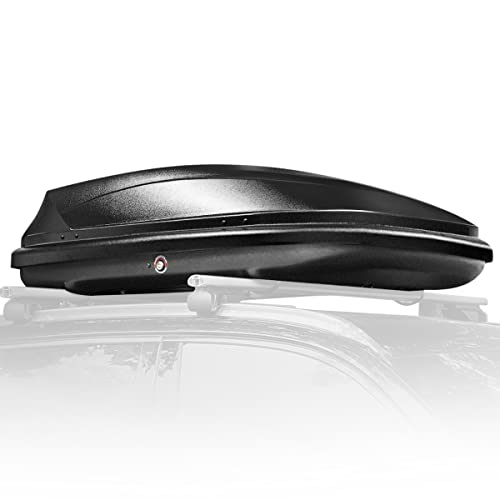
Auto Dynasty Hard Shell Roof Top Mount Cargo Carrier

Asinking Car Rooftop Cargo Carrier Bag 20 Cubic Feet

Asinking Car Rooftop Cargo Carrier Bag 21 Cubic Feet

Sailnovo Rooftop Cargo Carrier Bag 21 Cubic

Sailnovo Car Rooftop Cargo Carrier 21 Cubic Feet

Sailnovo Car Roof Bag 20 Cubic Feet
More On The Choices That Made The List
The 15-cubic-foot footprint makes this the smallest Asinking bag here, which is exactly why it earns a spot. Smaller bags sit lower on the roof, catch less wind, and stay within reach when you need to grab something mid-trip. Gravel-road drivers benefit most from the heavy 840D PVC fabric, a dense weave that resists abrasion better than thinner materials.
Installation works on bare roofs too, since the included door hooks clip to the door frame instead of requiring crossbars. That matters for sedans and older SUVs without rails.
What Makes Sense
- 840D abrasion-resistant PVC shrugs off gravel spray and tree branches on unpaved routes
- Widened velcro flaps over the zipper keep driving rain out of the main seam
- Six door hooks plus two extra straps give you backup attachment points if one loosens
- Luggage lock adds a basic deterrent at rest stops
- Anti-slip mat protects paint and stops the bag sliding under hard braking
Things To Consider
- At 15 cubic feet, bulky coolers and tents will crowd out suitcases faster than on larger picks
- PVC bags should be dried fully before storage, or mildew can set in over winter
Key Specs
Who It Suits Best
Couples or small families taking weekend trips on mixed pavement and gravel roads.
Where Another Pick Suits Better
Groups of five or more should look at the Sailnovo Car Rooftop Cargo Carrier 21 Cubic Feet, whose extra volume swallows six people’s luggage comfortably.
Where the Asinking above prioritizes toughness, this Sailnovo leans into shape. Its tapered, low-profile silhouette is built to slice airflow rather than fight it, and that shows up on long interstate hauls as less wind roar and steadier handling. The 20-cubic-foot interior measures roughly 51 by 39 by 17 inches, enough for four to six travelers’ bags.
Reinforced straps and an anti-slip mat hold it steady through lane changes and gusty plains driving. In our view, frequent highway travelers get the clearest benefit here.
Useful Touches
- Aerodynamic form reduces drag compared with boxier soft carriers, easing fuel penalty on long drives
- 20 cubic feet handles suitcases, sleeping bags, and a family tent together
- Anti-slip mat keeps the bag planted and shields the roof finish
- Reinforced strap points spread load stress across the fabric
Worth Noting
- Soft shells offer no lockable rigid shell, so valuables are best kept inside the cabin
- You may find the wide 39-inch depth eats mirror clearance on narrow garage ramps
Made For
Road-trippers logging multi-state highway miles who want quieter cruising than a tall boxy bag delivers.
Consider Something Else When
Off-pavement campers should weigh the Asinking 15 Cu Ft instead, since its heavier 840D fabric tolerates brush and gravel better.
This is the only hard-shell option on the list, and that changes the ownership math completely. A rigid box mounts permanently to crossbars, locks shut, and shrugs off rain without zipper maintenance. Auto Dynasty offers it in 11 and 12.7 cubic foot sizes, both compact enough for smaller crossovers.
The trade-off is commitment: unlike every soft bag here, it needs a roof rack with crossbars up to 13 inches wide, and it stays on the car unless you unbolt it. Commuters who leave gear mounted year-round tend to prefer this arrangement.
Where It Excels
- Rigid construction keeps contents dry and protected without relying on zippers or flaps
- 14-inch-wide opening accepts awkward items like strollers and duffel bags
- 110-pound load limit supports dense cargo such as tools or books
- Universal mounting fits crossbars up to 13 inches wide across most rack brands
Small Caveats
- Requires an existing roof rack, ruling out bare-roof sedans entirely
- Permanent mounting means garage-height checks become part of daily life
- Owners commonly report wind noise at highway speed unless loaded evenly
Quick Facts
Right Fit For
Rack-equipped commuters and small families who value security and all-season durability over folding convenience.
Not Your Match When
Bare-roof vehicle owners should pick any soft bag here instead; the Asinking 20 Cubic Feet model installs with door hooks alone.
Think of this as the middle child of the Asinking line: bigger than the 15-cubic-foot opener, lighter on extras than the 21-cubic-foot version below. The upgraded waterproofing targets downpour-level rain, with reinforced seams and a covered zipper doing the sealing work. Four door hooks handle rack-free cars, and a non-slip mat plus luggage lock round out the kit.
For most families, 20 cubic feet hits the sweet spot: four large suitcases still leaves room for soft bags.
A Favorable Mix
- Sealed, rip-resistant construction holds up through sustained heavy rain on long hauls
- Door-hook system installs on vehicles without racks in minutes
- Non-slip mat prevents paint scuffing during cornering and braking
- Folds into its included storage bag small enough for trunk stowage between trips
Points To Note
- Four hooks versus six on sibling models gives slightly fewer anchor points on very long roofs
- Zipper flaps need checking after wash cycles, as grit can work into the teeth over time
Who Will Love This
First-time rooftop-bag owners who want proven waterproofing without paying for maximum strap count.
Look Elsewhere When
Storm-chasing campers hauling serious weight should step up to the Asinking 21 Cubic Feet model and its ten reinforced straps.
Compared with the 20-cubic-foot Asinking just reviewed, this one adds volume and, more importantly, anchoring hardware. Ten reinforced straps against four is not a marketing footnote; more contact points mean the bag flexes less at speed and distributes load across the roof instead of concentrating it. The 900D PVC tarpaulin sits a step above standard denier counts, and high-frequency welding fuses every seam rather than stitching it.
That last detail matters because stitched seams are where cheap bags leak first.
Standout Benefits
- 900D PVC tarpaulin with welded seams keeps contents dry through multi-day storms
- Ten reinforced straps eliminate the flap-and-whistle problem common to lightly anchored bags
- Six door hooks cover both racked and bare-roof vehicles
- 21 cubic feet absorbs a week of gear for a family of five
- Anti-slip rubber mat and luggage lock ship included
Honest Caveats
- Full-size footprint demands a longer roof; compact hatchbacks may overhang slightly
- Strap management takes practice, and loose ends should be tied off to avoid drumming at speed
Details At A Glance
The Right Fit
Large households and storm-season travelers who want maximum holding power from a soft bag.
Another Choice May Suit
Drivers prioritizing quiet highways over raw capacity will prefer the Sailnovo 21 Cubic aerodynamic model reviewed next.
Sailnovo pairs its largest capacity with its slipperiest shape here. The streamlined profile trims wind resistance noticeably against conventional boxy bags, which translates into less drag-related fuel burn and fewer buffeting noises past 65 mph. Inside, 1000D PVC with sealed seams and extended zipper flaps forms the weather barrier.
For context, 1000D refers to the fiber thickness of the weave; higher numbers generally mean tougher fabric. Campers crossing open prairie country will appreciate what the shape does for stability in crosswinds.
What Pays Off
- Aerodynamic contour reduces drag versus standard rectangular soft carriers
- 1000D PVC coating withstands abrasion from straps, branches, and repeated packing
- Extended waterproof zipper flaps shield the main opening in heavy rain
- Sealed seam construction removes the usual stitch-hole leak path
Trade Offs
- The tapered shape narrows usable corners, so square coolers pack less efficiently than in the Asinking 21
- Light-colored interiors show dirt quickly and need occasional wiping out
Core Details
Built With In Mind
Efficiency-minded road trippers who log big mileage and dislike the drone of a slab-sided roof bag.
Skip It When
Shoppers wanting the deepest accessory bundle should choose the Asinking 21 Cubic Feet, which bundles ten straps and a lock.
This Sailnovo shares the brand’s 1000D PVC construction but drops the aggressive taper in favor of a straightforward rectangle. That shape choice pays off for families: the roughly 52-by-39-by-17-inch body packs rectangular suitcases edge to edge with almost no wasted air. Six people’s luggage fits without Tetris skills.
It also works on cars without racks, so a minivan and a bare-roof sedan can share one bag across different trips.
Noteworthy Benefits
- Boxy interior geometry maximizes packing efficiency for standard luggage shapes
- 1000D PVC tarpaulin stands up to years of seasonal use
- Installs on vehicles with or without existing roof racks
- 21 cubic feet covers school-move hauls as easily as beach weeks
Less Ideal Details
- The taller squared profile generates more wind noise than the aerodynamic Sailnovo reviewed earlier
- Wide 39-inch depth needs checking against sunroof openings on some vehicles
Perfect Match For
Multi-child families alternating between several vehicles who need one forgiving, high-capacity bag.
Reach For A Different Pick When
Night-driving campers gain more from the Sailnovo Car Roof Bag 20 Cubic Feet, whose reflective trim improves visibility after dark.
The standout detail on this closing pick is safety-oriented: a reflective velcro cover bounces light back from all directions, making the loaded bag far easier for other drivers to see at night. Anyone leaving a campsite late or driving unlit rural highways gets genuine peace of mind from that. Capacity lands at 20 cubic feet across a 51-by-39-by-17-inch frame, room for four to five suitcases plus camping gear.
A padlock, anti-slip mat, and fold-flat storage complete the travel-focused package.
Advantages To Know
- Reflective velcro cover improves nighttime visibility to surrounding traffic
- Soft PVC shell folds down small for off-season storage in a closet or trunk
- Padlock secures the zipper pull at trailheads and hotel lots
- Anti-slip mat protects roof paint through hundreds of miles of vibration
Factors To Consider
- One size only, so shoppers wanting a 12.7-cubic-foot compact option must look at the Auto Dynasty hard shell
- Velcro flaps collect lint and debris; a quick brush-out before each trip keeps them gripping
Product Snapshot
Whose Shelf It Belongs On
Campers and night-shift travelers who regularly drive dark roads with a loaded roof.
A Better Fit Elsewhere
Maximum-capacity packers should compare the Sailnovo 21 Cubic Feet model, which adds a cubic foot of headroom for growing families.
What Matters Most Before Choosing Car Rooftop Carriers
Match The Bag To Your Roof
Start with whether your vehicle has crossbars. Soft bags with door hooks install on nearly anything, while hard shells demand a rack rated for the load. Measure your roof length too; a 52-inch bag overhangs compact hatchbacks, and overhang shifts weight unpredictably in corners.
Denier And Seams Decide Durability
Fabric weight, expressed in denier (D), tells you how thick the fibers are. Anything from 840D upward handles years of seasonal use, and welded seams beat stitched ones because stitching leaves pinhole leak paths. Check zipper coverage as well; wide velcro flaps are your first defense against driving rain.
Capacity Honesty
Cubic feet figures assume clever packing. A 20-cubic-foot bag realistically swallows four large suitcases plus soft items, not eight. Families of five or more should lean toward 21 cubic feet; couples waste money on anything past 15.
Anchoring Beats Everything
More straps mean less flap, less noise, and less stress concentrated at single points. Six or more attachment points, paired with an anti-slip mat, separate comfortable long-distance picks from annoying ones.
Key Considerations Across These Picks
Wrong Turns To Avoid
The most common mistake is buying capacity your roof cannot carry. Oversized bags overhang windshields, block rear doors, and strain factory racks. Second mistake: ignoring installation style. Ordering a hard shell for a bare-roof sedan ends in a return shipment, so confirm crossbar compatibility before committing.
The Upgrade Payoff
Higher-tier bags spend their extra cost on three things: denser fabric, welded seams, and more straps. Those upgrades matter most for drivers facing sustained rain, gravel roads, or annual heavy hauls. Occasional summer users get perfectly good service from simpler models, so pay up only when conditions demand it.
Bottom Line
Every option here solves the same core problem: your car holds more than its trunk suggests. Rack-free owners should start with the Asinking or Sailnovo soft bags, while crossbar-equipped commuters have a genuine case for the Auto Dynasty hard shell. Match capacity to your typical passenger count, prioritize strap count for highway comfort, and whichever you choose, dry it thoroughly before storing. Your next road trip will thank you.
