

Roof-mounted bike carriers solve a problem every cyclist knows well: the trunk that won’t close, the wheels that spin loose, the frame scratched by a cheap strap-down setup. A good roof rack keeps your bike locked upright above the car, out of the way of tailgates and trunk space, ready for trailheads at dawn. The catch is that not all carriers treat your frame, your crossbars, or your patience equally. This list sorts eight solid options by mounting style, security, and everyday usability so you can match one to your car and riding habits without guesswork.
An Overview Of The Picks

Yakima FrontLoader Rooftop Bike Rack
Swagman Standard Fork Mount Roof Bike Rack

Thule UpRide Roof Bike Rack (20-29″)
Yakima Forklift Fork Mount Bike Carrier

ROAHTRIP Heavy Duty Car Roof Bike Rack

Thule ProRide XT Roof Bike Rack

Elevate Outdoor Frame Mount Roof Bicycle Rack

WUSILILU Universal Roof Mount Bike Rack
The Picks, Examined More Closely
The FrontLoader takes an upright approach: your bike rolls onto a sliding wheel tray and clamps at the wheel, never the frame. That matters most for anyone running odd crossbars, since Yakima builds it to accept round, square, factory, and aero bars straight from the box. No adapters, no drilling.
In daily use, the tool-free install means you can move it between vehicles in minutes, and the adjustable tray handles everything from a kid’s 20-incher to a long-wheelbase gravel rig. Disc brake rotors clear the tray too, which older clamp designs often don’t allow.
Features That Help
- Universal crossbar compatibility saves you from buying adapter kits for factory rails.
- The sliding wheel tray adjusts to different bike lengths, so one carrier serves the whole household’s fleet.
- Frame-free clamping protects delicate paint and thin-walled tubing during bumpy drives.
- Tool-free mounting makes swapping between two cars a five-minute job rather than a garage project.
Things To Consider
- Locks are sold separately, so budget for a locking skewer if you park in public lots.
- Owners commonly report the tray needs occasional re-tightening after rough gravel roads.
Key Specs
Who It Suits Best
Households with mixed bikes and unknown crossbars who want one carrier that adapts to everything.
A Better Fit Elsewhere
Riders with quick-release forks on a tight budget will find the Swagman Standard Fork Mount covers the basics for less.
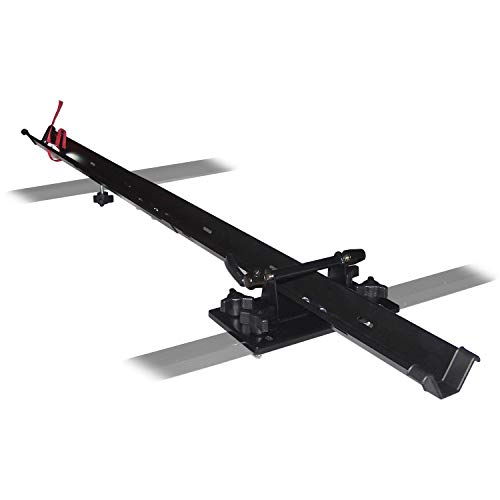
Fork-mount carriers ask more of you at loading time: the front wheel comes off and the fork drops onto a skewer mount. In exchange, you get the lowest, most wind-cheating profile of any style here, which matters on long interstate runs where roof noise gets old fast.
This Swagman unit targets 9mm quick-release forks specifically, the standard on most road and older mountain bikes. Swagman has built racks in British Columbia since the early nineties, and that heritage shows in a no-nonsense design with few parts to fail.
Where It Helps
- Fork mounting holds the bike rigidly, minimizing sway compared with wheel-clamp designs.
- The low profile cuts drag and wind whistle on highway trips.
- A simple mechanism means less maintenance and fewer things to break over years of use.
Small Caveats
- Thru-axle bikes need a separate adapter, so modern mountain bikers should check compatibility first.
- Removing the front wheel adds a step to every load, annoying in rain or a hurry.
- You’ll want storage space for the detached wheel inside the vehicle.
Right Fit For
Road cyclists with quick-release forks who value a quiet, stable ride over lightning-fast loading.
Swap It Out When
Anyone with thru-axle hubs or disc-brake clearance concerns will be better served by the Yakima FrontLoader’s universal tray.
Carbon frames change the calculus entirely. Clamp anything metal against those thin tubes and you’re gambling with a very expensive repair bill. The UpRide sidesteps the problem by hooking the front wheel itself, leaving the frame untouched from driveway to trailhead.
It carries bikes from 20 to 29 inches and up to 44 pounds, which covers e-bikes and heavy gravel rigs alongside standard road machines. Compared with the Thule ProRide XT later in this list, the UpRide trades some speed of loading for absolute frame protection, a trade worth making once you’ve seen what a careless clamp can do to carbon.
What Pays Off
- Zero frame contact makes it genuinely safe for carbon and painted-aluminum frames.
- The 44-pound capacity accommodates e-bikes that lighter carriers can’t legally or safely hold.
- Wheel-hook loading is quicker than fork removal yet gentler than frame clamps.
- The wide 20-to-29-inch range spans kids’ bikes through full-size 29ers.
Points To Note
- Premium pricing puts it above most upright competitors in this roundup.
- Some fenders and unusual tire widths may need a fit check before ordering.
Feature Snapshot
Made For
Owners of carbon or high-value frames who refuse to compromise on protection, whatever the trip length.
Where Another Pick Suits Better
Steel-frame commuters watching their budget get more practical value from the Elevate Outdoor frame-mount rack below.
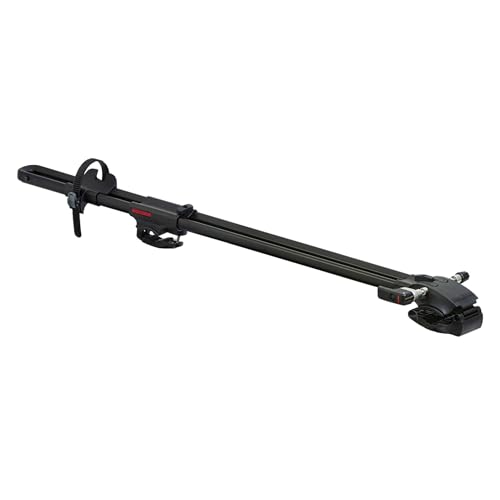
Where the Swagman keeps things bare-bones, the Forklift adds polish. The mirror-black finish and low-slung body keep wind resistance down, and like its sibling FrontLoader, it bolts to Yakima round, square, factory, and aero bars without extra hardware. One bike, mounted by the fork, held steady.
For drivers spending hours at highway speed, that streamlined shape translates into less noise and less fuel penalty than taller upright designs. It’s a focused tool rather than a flexible one, and it doesn’t pretend otherwise.
Useful Strengths
- Sleek low-profile form reduces drag and roof noise on long drives.
- Out-of-the-box fit across four crossbar styles removes compatibility guesswork.
- Fast tool-free installation suits riders who mount and remove the carrier weekly.
Less Ideal Details
- Fork-mount loading means wheel removal every trip, plus somewhere to stash that wheel.
- Single-bike capacity only, so growing families need multiple units.
Who Should Grab It
Solo road riders who drive far, care about aerodynamics, and already run compatible crossbars.
Another Choice May Suit
Households hauling several bikes at once should look at the WUSILILU universal upright instead of stacking multiple fork mounts.
Rest-stop anxiety is real when your bike sits on the roof of an unattended car. This ROAHTRIP carrier answers with a coiled steel cable and two keys, letting you loop the cable through a tire or frame before walking away. Security built in beats an afterthought add-on every time.
Loading uses a one-hand ratchet that pulls the wheel mount down over the tire, and dual ratchet base brackets keep everything planted en route. The whole unit collapses flat for garage storage, a small detail that matters once winter ends and the rack comes off the car.
Everyday Wins
- The included four-foot cable lock secures bike to rack during stops, no separate purchase needed.
- One-hand ratchet operation speeds up solo loading when the other hand holds the bike.
- Collapsible design stores flat on a garage shelf between seasons.
- Tire support arches suit kids’ bikes through pro-level machines.
Honest Caveats
- Ratchet mechanisms benefit from a drop of lubrication each season to stay smooth.
- Fit depends on having proper crossbars already installed on the vehicle.
Core Details
Who Will Love This
Families and group riders who stop frequently on trips and want lockable security included from day one.
Consider Something Else When
Carbon-frame owners prioritizing zero frame contact will prefer the Thule UpRide’s wheel-hook approach.
Most upright racks leave you guessing whether the clamp is tight enough. The ProRide XT removes the doubt with a torque limiter dial that clicks clearly once the soft claw pads reach proper tension. You feel it, you hear it, done. That feedback loop is why this model has such a loyal following among daily drivers.
Diagonal wheel straps add stability in transit, and the tool-free interface lets you switch the carrier between sides of the car depending on loading access. Against the UpRide, it loads faster and costs less, at the cost of light frame contact via padded claws.
A Strong Showing
- Torque limiter dial gives unambiguous confirmation that the bike is secured correctly.
- Soft claw pads grip the frame gently enough for most finishes.
- Diagonal wheel straps reduce wobble on washboard roads.
- Side-swappable mounting helps in tight garages or curbside loading spots.
Trade Offs
- Claw pads do touch the frame, so raw-carbon purists may still lean toward the UpRide.
- Pad surfaces collect road grime and deserve a wipe-down after dusty trips.
Best Suited To
Commuters and weekend racers who load alone, often, and want certainty their bike isn’t going anywhere.
Reach For A Different Pick When
Riders needing integrated anti-theft hardware out of the box will find the ROAHTRIP’s cable lock more convenient.
Not every bike needs premium treatment. A 25-pound commuter with a steel frame tolerates a straightforward clamp just fine, and this Rage Powersports-built rack delivers exactly that: powder-coated steel, an adjustable wheel tray with tire straps, and a locking frame clamp. Nothing fancy, nothing missing.
Because it mounts to an existing roof rack system, your vehicle’s footprint stays unchanged, so parking garages and drive-throughs remain non-events. For a second bike or a spare carrier, it’s hard to argue with the math.
Notable Upsides
- Powder-coated steel construction resists rust through wet winters and salty roads.
- Locking clamp adds basic security without buying separate hardware.
- Adjustable tray with tire straps fits varied wheel sizes.
- Keeps the vehicle’s dimensions identical, preserving parking convenience.
Room For Improvement
- The 25-pound capacity rules out e-bikes and heavier mountain builds.
- Requires an existing roof rack system, adding cost if you’re starting bare.
At A Glance
The Right Fit
Budget-conscious commuters with a single lighter bike and crossbars already on the roof.
Look Elsewhere When
E-bike owners exceed this rack’s limit and should step up to the Thule UpRide’s 44-pound rating.
Two locks beat one, and this WUSILILU upright carries both: one securing the rack to your crossbar, another locking the bike to the rack. Park downtown, grab lunch, come back to everything still attached. That dual-lock layout is rare at this position in the market.
The build mixes aluminum alloy, iron, and nylon with an oxidation-and-spray finish aimed at resisting rust and warping. Tire width tops out at 2.2 inches and the stand adjusts across 29 to 38 inches, covering most road, hybrid, and narrower mountain tires with a rear-wheel rest snap to boot.
The Upside
- Dual anti-theft locks protect both the carrier and the bike simultaneously.
- Alloy-and-iron construction with protective coating stands up to weather exposure year-round.
- Wide 29-to-38-inch adjustment range fits cars and SUVs alike.
- Rear wheel rest snap stabilizes the back end during transit.
Details To Watch
- The 2.2-inch maximum tire width excludes fat bikes and many plus-size tires.
- Multi-material construction deserves periodic bolt checks after long hauls.
Essential Details
Whose Shelf It Belongs On
Urban riders parking in public who want lockable security and broad vehicle compatibility in one package.
Not Your Match When
Fat-tire riders need a wider tray, pointing them toward the ROAHTRIP’s arch-based support design.
What Matters Most Before Choosing Car Roof Cycle Racks
Match The Mount To Your Bike
Three styles dominate: fork-mount, frame-clamp upright, and wheel-hook upright. Fork mounts hold steadiest but demand wheel removal every trip. Frame clamps load fastest yet touch your paint. Wheel hooks split the difference and are the only safe route for carbon frames. Start with your bike’s material and axle type, then work backward.
Know Your Crossbars First
Your existing roof bars decide half the equation. Round, square, factory, and aerodynamic profiles all exist, and not every carrier accepts all four. Measure your bar shape and check the fit list before falling for any single model. Buying a great rack that won’t bolt to your car helps nobody.
Weight And Tire Limits Are Real
Capacity numbers aren’t marketing fluff. A 25-pound ceiling quietly excludes e-bikes, and a 2.2-inch tire cap rules out fat bikes. Weigh your heaviest bike, measure its tires, and confirm both figures clear the rack’s limits with room to spare.
Security Deserves A Line Item
Rest stops happen. Some carriers include cable locks and keyed clamps; others sell them separately. Factor that into total cost, especially for city parking.
Key Considerations Across These Picks
Traps First Timers Fall Into
The classic error is ordering a rack before checking axle standards. Thru-axle hubs won’t sit in a 9mm quick-release mount without an adapter. The second slip is ignoring garage height; a bike on the roof adds roughly two feet, and low-clearance barriers don’t negotiate.
The Case For Spending Up
Higher-tier models buy torque feedback, frame-friendly materials, and integrated locks. Riders loading weekly, carrying carbon, or parking publicly recover that cost in convenience and peace of mind. Occasional summer users with a steel commuter rarely need the extras.
Bottom Line
Every rack here solves the same problem differently, and the right answer follows from your bike, your bars, and your parking habits. Carbon owners should shortlist the Thule UpRide, budget commuters the Elevate Outdoor, and security-minded urban riders the WUSILILU. Match the mount style to how often you actually load up, and any of these eight will serve you well for seasons of rides ahead.
