

Anyone who has hauled a propane cylinder loose in a trunk knows the sound of steel rolling around every corner. This roundup covers the cylinders, accessories, and carry solutions that keep fuel secure on the move, from a 40-pound workhorse to pocket-size canisters for camp stoves. Each entry is matched to a specific kind of traveler, so you can skip the guesswork and grab what fits your rig.
A Closer Look At The Lineup

Camco Cylinder Stabilizing Base for 20 lbs and 30 lbs Propane Tank

Flame King YSN-201 20-Pound Steel Propane Tank Cylinder, White

Flame King YSN401 Steel Propane Tank Cylinder 40 Lb, White
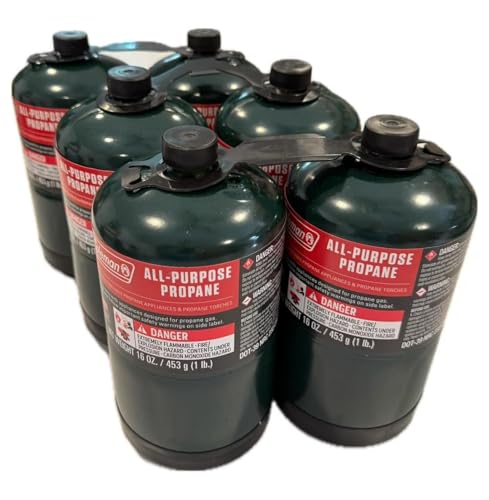
Boss Life Outdoors Propane Cylinders – 16 Oz (6 Pack)

Flame King 20LB Steel Propane Tank with Built-in Gauge
Flame King YSN230 20LB Steel Propane Tank with Gauge

samdew 20 lb Propane Gas Tank Bag with Stable Tabletop

Flame King 10LB Steel Propane Tank Cylinder with Type 1 OPD Valve
A Breakdown Of The Leading Choices
A rolling cylinder is the most common hazard in an RV propane bay, and this molded base addresses it directly. Flexible tabs grip standard 12-inch diameter 20 lb and 30 lb tanks, holding the cylinder upright over washboard roads and sharp highway exits.
Installation takes seconds: press the tank firmly into the base and you’re done, no straps or tools involved. The polymer shell measures 15 inches wide by 4½ inches tall with an 11⅝-inch inner diameter, sized to sit flat in storage compartments.
Where It Helps
- Flexible tab design hugs both 20 lb and 30 lb cylinders for a snug hold that survives bumpy travel days.
- Push-in setup means no hardware, no drilling, and no fumbling in a cramped bay before departure.
- Impact-tough polymer construction handles repeated loading cycles without cracking at the tabs.
- Low 4½-inch profile slides under most RV compartment shelving where taller restraints won’t fit.
Things To Consider
- The fit is diameter-specific, so non-standard or dented cylinders may not seat as tightly as intended.
- It stabilizes but doesn’t strap down; some owners add a secondary restraint for very rough terrain.
Who It Suits Best
RVers and trailer owners who store a spare cylinder in a compartment and want tip protection without permanent mounting.
Where A Sibling Pick Shines
Travelers who’d rather protect and dress up the whole tank should look at the samdew 20 lb Propane Gas Tank Bag, which covers the cylinder and doubles as a side table.
This is the benchmark 20-pounder most people picture when they think “grill tank.” High-grade welded steel construction, X-ray and hydrostatic testing, DOT approval, and a powder-coated white finish give it the credentials any refill station will accept without hesitation.
The Type 1 OPD valve matters more than it sounds. An OPD, or overfilling protection device, stops the fill automatically at 80 percent capacity, which most states require by law. Arriving pre-purged and vacuum-ready means the first fill is a straightforward swap at any exchange point.
The Practical Payoff
- X-ray and hydrostatic tested construction gives refill stations zero reason to turn you away.
- Type 1 OPD valve self-limits the fill level, meeting requirements across most states.
- Powder coating resists rust through years of patio storage and wet-season travel.
- Pre-purged interior saves you a purge step before the first fill.
Worth Noting
- It ships empty, so budget a stop at a filling station before first use.
- No built-in gauge, unlike the Flame King 20LB model with Built-in Gauge further down this list.
At A Glance
Made For
First-time tank shoppers and backyard grillers who want a compliant, no-frills 20 lb cylinder they can refill anywhere.
A Better Fit Elsewhere
Anyone who burns through fuel fast, running heaters or long cookouts, will get more mileage per trip from the Flame King YSN401 40 Lb cylinder.
Double the capacity of a standard grill tank changes the rhythm of ownership entirely. A week-long boondocking stretch that would drain two 20 lb cylinders leaves this one still working, which matters when the nearest refill station is fifty miles down the road.
Build quality matches the smaller YSN-201: welded high-grade steel, powder coating against rust, X-ray and hydrostatic testing, and an OPD valve that caps the fill safely. Like its sibling, it arrives pre-purged and ready for propane.
Benefits That Matter
- Twice the fuel of a 20 lb tank means half as many refill runs during extended trips.
- OPD valve prevents overfilling, satisfying the law in most states.
- Powder-coated welded steel shrugs off moisture and road grime season after season.
- Pre-purged and vacuum-ready, so the initial fill requires no extra prep.
Trade Offs
- The added weight makes loading into a vehicle a genuine two-person job for many people.
- Larger footprint demands dedicated storage space that compact cars rarely have.
- Ships empty, so plan the first fill before your trip starts.
Right Fit For
Extended-stay campers, off-grid cabin owners, and anyone running high-demand appliances like large heaters between refills.
Reach For A Different Pick When
Drivers with limited cargo room will find the Flame King 10LB Steel Propane Tank far easier to lift and stow while still covering fire pits and small heaters.
Sixteen-ounce canisters are the unsung heroes of car camping: light enough for a backpack side pocket, yet powerful enough to run a two-burner stove through a weekend. This six-pack arrives prefilled, which means breakfast happens ten minutes after you park.
Steel construction gives each canister real durability compared with thinner disposable options, and the standard valve threading works with portable stoves, tabletop grills, torches, and adapters alike. Made in the US, too, which some shoppers actively look for.
The Good Stuff
- Prefilled and ready to burn straight out of the box, no refill station visit needed.
- Six-canister multipack covers several trips before restocking.
- Steel bodies resist denting when tossed into gear bins.
- Compatible with stoves, tabletop grills, torches, and common adapter fittings.
Minor Gripes
- Per-ounce fuel cost runs higher than refilling a larger tank over time.
- Spent canisters need proper disposal, which some campgrounds handle better than others.
Quick Facts
Best Suited To
Backpackers, tailgaters, and emergency-kit builders who value grab-and-go convenience over bulk fuel economy.
Look Elsewhere When
Home grilling is your main use case, since the Flame King YSN-201 20-pounder delivers far cheaper fuel per cook.
Running dry halfway through burgers is a rite of passage nobody enjoys twice. The built-in gas meter gauge on this tank solves it by showing the actual fuel level at a glance, no hot-water trick or separate gauge accessory required.
Underneath the gauge sits the same proven platform as the YSN-201 earlier in this list: welded steel, powder coat, hydrostatic testing, and an OPD valve. You’re paying for the visibility upgrade on identical bones, and for frequent hosts that trade usually makes sense.
A Few Highlights
- Built-in meter shows remaining propane accurately, ending mid-barbecue fuel guessing games.
- OPD valve meets overfill-prevention rules across most states.
- Powder-coated welded steel body holds up to outdoor storage year-round.
- Pre-purged and ready for its first fill on delivery day.
Points To Note
- Arrives empty, so schedule a fill before the first cookout.
- The gauge adds a component that needs a quick visual check during routine tank inspections.
Feature Snapshot
Who Will Love This
Weekend hosts and big-family grillers who cook often enough that a fuel gauge pays for itself in avoided interruptions.
Skip It When
Occasional cooks who grill a handful of times a summer can save money with the plainer Flame King YSN-201 and check weight instead.
Functionally, the YSN230 overlaps heavily with the gauged Flame King above: same 20 lb capacity, same built-in meter, same welded steel and powder-coated shell. The difference is positioning within the brand’s catalog, where this model sits alongside grill connectors and hoses, making it a natural pairing for custom hose setups.
You still get the OPD valve that keeps fills legal in most states, plus a pre-purged interior ready for the first trip to the filling station. In practice, choosing between the two gauged models comes down to availability and current listing details rather than capability.
Useful Strengths
- Built-in gauge displays fuel level so you refill on your schedule, not the grill’s.
- OPD valve satisfies overfill-protection requirements nearly everywhere.
- Welded steel with powder coating stands up to seasons of patio exposure.
- Pre-purged, vacuum-ready interior simplifies the first fill.
Small Caveats
- Ships empty; factor in a fill stop before use.
- Near-identical to another gauged Flame King here, so comparison shopping is worthwhile before committing.
The Right Fit
DIY-minded grill owners building out custom hose and connector arrangements who want a monitored fuel source at the heart of the setup.
Not Your Match When
Portability drives your decision, because the Flame King 10LB Steel Propane Tank cuts carrying weight roughly in half for camping duty.
A bare steel tank looks industrial in an otherwise tidy camp kitchen, and this bag fixes that while adding function. Sized for standard 20 lb cylinders, it wraps the tank in fabric, hides scuffs and rust bloom from view, and gives the setup a finished appearance.
The clever part is the top surface, which firms up into a stable tabletop for a lantern, phone, or spice kit. Double zippers open wide enough to inspect the valve without removing the bag, and a side flap lets the hose pass through cleanly.
A Few Strong Suits
- Reinforced top converts the covered tank into usable table space at camp.
- Side storage pockets with flaps keep lighters and small tools within arm’s reach.
- Full-length double zipper allows quick valve checks without unbagging the cylinder.
- Hose pass-through flap means connections stay tidy and protected.
Honest Caveats
- This listing covers the bag only, so you’ll need a separate 20 lb tank.
- Fabric exterior collects dust and mud on dusty sites and needs occasional spot cleaning.
Core Details
Who Should Grab It
Car campers and glampers who want their propane setup concealed, organized, and doubling as a nightstand or prep surface.
Another Choice May Suit
RVers focused purely on preventing tip-overs in a storage bay will find the Camco Cylinder Stabilizing Base simpler and lower-profile.
There’s a sweet spot between a 16 oz canister and a 20 lb tank, and this 10-pounder occupies it nicely. One honest labeling note: the industry calls tanks like this both “10lb” and “11lb,” and the true capacity here is 10.51 pounds of propane, with Flame King rounding down for simplicity.
Construction follows the family formula: welded high-grade steel, powder-coated finish, X-ray and hydrostatic testing, DOT approval, and a Type 1 OPD valve. For overlanding rigs and trunk-based camp kitchens, halving the heft of a standard tank without dropping to disposables is the whole appeal.
Strengths Worth Knowing
- Roughly half the loaded weight of a 20 lb tank makes solo lifting and trunk loading realistic.
- Type 1 OPD valve keeps fills compliant in most states.
- Powder-coated steel resists corrosion through damp shoulder-season trips.
- Suits fire pits, portable heaters, grills, and overland cooking rigs equally well.
Where It May Fall Short
- Capacity won’t cover multi-day heater use the way a 40 lb cylinder would.
- Some exchange kiosks cater mainly to 20 lb sizes, so refills may require a fill station instead.
Key Specs
Whose Shelf It Belongs On
Overlanders, hatchback campers, and fire pit enthusiasts who want refillable capacity without the back strain of a full-size cylinder.
Swap It Out When
Basecamp setups running appliances for a week straight deserve the Flame King YSN401 40 Lb tank’s doubled runtime.
Choosing Between Car Propane Tanks: What Actually Counts
Match Capacity To Burn Rate
Fuel appetite varies wildly by appliance. A two-burner camp stove sips from a 10 lb tank all weekend, while a large outdoor heater drains a 20 lb cylinder in a single cold evening. Estimate your hours of use, then size up one tier rather than gambling on a mid-trip refill hunt. Frequent travelers benefit most from getting this right once.
Weight And Storage Reality
A filled 20 lb tank weighs around 40 pounds, and a 40 lb cylinder pushes past 70. Measure your trunk or RV bay before ordering, and be honest about who does the lifting. Accessories matter here too: a stabilizing base or fitted bag protects both the tank and whatever shares the space with it.
Compliance And Refill Access
Every refillable tank in this guide carries an OPD valve, the overfilling protection device that stops filling at a safe level and is legally required in most states. Stick with certified, tested cylinders so no station turns you away. Disposable canisters sidestep refills entirely but cost more per ounce over time.
Key Considerations Across These Picks
Traps First Timers Fall Into
The classic error is buying a tank that ships empty and discovering it the morning of the trip. Nearly every refillable option here arrives pre-purged but unfilled, so build a fill-station stop into day one. Another slip: grabbing a 40 lb monster for a sedan trunk, then realizing it doesn’t fit or can’t be lifted solo.
Why Top Tier Costs More
Gauged models command a premium because the built-in meter adds a component and assembly step to an otherwise simple cylinder. Larger capacities raise steel and testing costs as well. The upgrade earns its keep for anyone burning fuel weekly; casual seasonal users rarely notice the difference.
Closing Thoughts
The right choice comes down to how you travel. Daily RV life points toward the Camco base and a 40 lb cylinder; weekend grilling favors a gauged 20 lb tank; backpacking calls for the six-pack of 16 oz canisters. Match capacity, weight, and accessories to your actual routine, and any of these picks will serve you well for seasons ahead.
