

Coolant is the fluid your engine can’t live without, yet most drivers only think about it when a warning light appears or steam rolls out from under the hood. Picking the wrong formula can shorten water pump life, corrode aluminum heads, or leave you stranded on a cold morning. This shortlist covers concentrates and prediluted blends matched to Asian, European, domestic, and mixed-fleet vehicles, so you can top off with confidence instead of guesswork.
The Shortlist At A Glance

PEAK Global Lifetime Concentrate Antifreeze & Coolant 1 Gal

Recochem OEM European Vehicles Premium Antifreeze 50/50 Euro I Blue

PEAK OET Extended Life Blue Concentrate Antifreeze/Coolant 1 Gal

PEAK OET Extended Life Red/Pink Concentrate Antifreeze/Coolant 1 Gal

PEAK OET Extended Life Gold 50/50 Prediluted Antifreeze/Coolant 1 Gal

Shellzone 50/50 Pre-Diluted Antifreeze + Coolant 1 Gallon
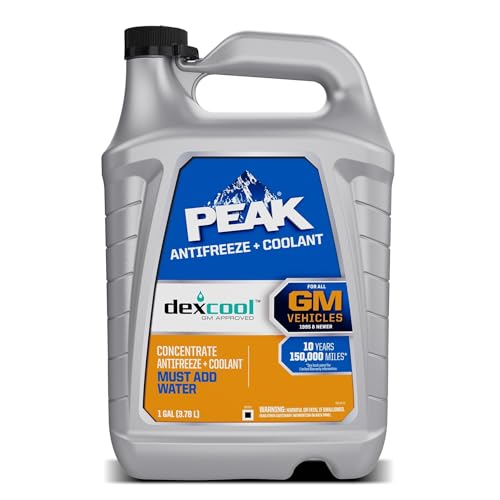
PEAK DEX-Cool® Antifreeze + Coolant for GM Vehicles 1 Gallon
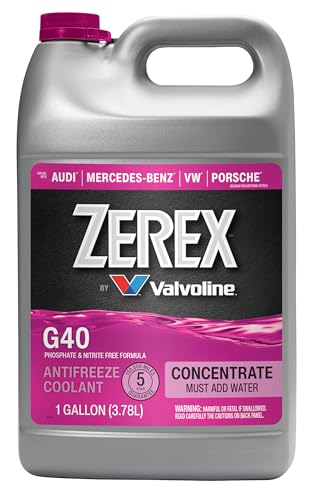
Zerex G40 Phosphate and Nitrite Free Concentrate Antifreeze/Coolant
More Details On Our Top Picks
One jug that works in nearly anything is the appeal here. PEAK built this concentrate around organic acid technology, an inhibitor system that guards metal surfaces without the silicate additives found in older green formulas. Because it’s designed to mix with whatever is already in your system, it suits households juggling several makes.
The trade-off is that a concentrate demands your own distilled water at a 50/50 ratio. In our view, that extra step pays off for anyone topping off multiple vehicles rather than stocking shelf space with four different colors.
Strong Points
- One bottle covers virtually any make, model, or year, which simplifies garage inventory
- Silicate-, borate-, nitrite-, and amine-free chemistry is gentler on modern aluminum components
- Organic acid inhibitors are formulated for long service intervals between changes
- Concentrate format lets you control dilution strength for very hot or very cold climates
Things To Consider
- You must supply distilled water and mix accurately; hard tap water invites mineral scale over time
- Owners of specific-color systems may prefer a factory-matched formula like the PEAK OET line below
Quick Facts
Who It Suits Best
Multi-car families and DIYers who want a single universal jug on the shelf instead of tracking colors per vehicle.
A Better Fit Elsewhere
Toyota or Lexus owners who want exact factory chemistry will get tighter spec matching from the PEAK OET Red/Pink Concentrate further down this list.
Where the PEAK Global above asks you to measure and mix, this Recochem arrives ready to pour straight into the expansion tank. It’s an ethylene glycol blend pre-diluted at 50/50, aimed squarely at European platforms that call for a blue extended-life formula. That matters because German cooling systems tend to run tight tolerances and aluminum-heavy construction.
A bittering agent is included, a safety touch worth noting if small children are ever around the garage. The honest caveat: blue Euro coolant isn’t interchangeable with the pink or violet formulas newer VWs and Audis demand, so check your cap label first.
What We Like
- Prediluted 50/50 means no measuring, no distilled water, no second-guessing ratios
- Free of silicates, phosphates, borates, nitrates, nitrites, and amines for cleaner long-term operation
- High-temperature aluminum protection suits turbocharged European engines that run hot in traffic
- Bitterant added to discourage accidental ingestion, a real plus in family garages
Minor Gripes
- Euro I blue specification won’t satisfy late-model vehicles requiring G12-style pink or purple chemistry
- Prediluted format means roughly half the jug is water, so cost per gallon of actual glycol runs higher than concentrates
Right Fit For
Owners of older BMW, Mercedes-Benz, and Volkswagen models whose manuals specify a blue extended-life antifreeze and who value pour-in simplicity.
Where A Sibling Pick Shines
Newer European cars needing silicate-enhanced organic acid tech should step up to the Zerex G40 at the end of this roundup instead.
Asian manufacturers lean heavily on blue extended-life coolant, and this PEAK OET concentrate mirrors that chemistry for Acura, Honda, Infiniti, Mitsubishi, Nissan, Subaru, and Suzuki applications. Unlike the universal PEAK Global opener, this one is tuned to a regional spec, which gives you closer parity with what the factory filled at the plant.
It ships as a concentrate, so budget ten minutes for mixing with distilled water before a drain-and-fill. Denatonium benzoate, a bittering agent, is baked into the formula as an ingestion deterrent.
Bright Spots
- Color- and chemistry-matched to common Japanese-market specifications, reducing mix-up risk during top-offs
- Rust and corrosion inhibitors protect radiators, water pumps, and heater cores across the whole loop
- Fully compatible with other extended-life coolants, handy for partial top-ups between full flushes
- Concentrate pricing typically stretches further per gallon than prediluted bottles
Small Caveats
- Requires accurate 50/50 mixing; sloppy ratios weaken freeze protection in northern winters
- Not intended for Toyota and Lexus red/pink systems, which need the separate OET variant
At A Glance
Made For
Subaru and Honda owners doing their own seasonal maintenance who want factory-blue chemistry without dealer-counter prices.
Swap It Out When
Your driveway holds a Toyota or Lexus, since the PEAK OET Red/Pink Concentrate carries the phosphate-enhanced package those engines expect.
This is the sibling to the blue OET above, retuned for Toyota-group engines. Lexus, Scion, and Toyota vehicles calling for a red or pink phosphate-enhanced formula are its home turf, and the phosphate component matters more than most shoppers realize: those inhibitors deposit a protective layer inside iron and aluminum passages that non-phosphate coolants simply don’t replicate.
Like its sibling, it’s a concentrate with denatonium benzoate included, so plan on mixing with distilled water. Camry and RAV4 owners commonly report clean, sludge-free reservoirs when sticking to the correct color, which is really the whole point of buying a spec-matched jug.
Upsides
- Phosphate-enhanced inhibitor package matches Toyota factory fill expectations
- Guards every cooling-system metal against rust and corrosion, including aluminum heads and radiators
- Blends freely with other extended-life coolants for emergency top-offs
Points To Note
- Concentrate format adds a mixing step some first-timers find fiddly
- Phosphate chemistry can leave deposits in hard-water regions if tap water is used instead of distilled
Who Will Love This
DIY Toyota and Lexus maintainers who follow the owner’s manual color code and want long drain intervals between services.
Consider Something Else When
Nissan or Subaru is the daily driver, because the PEAK OET Blue Concentrate carries the correct regional formulation for those brands.
Ford and Chrysler moved to gold hybrid organic acid technology, often shortened to HOAT, in recent years, and this prediluted PEAK OET matches it. Hybrid organic acid technology blends the long-life corrosion inhibitors of OAT formulas with a small dose of conventional additives, giving broader coverage across mixed-metal cooling loops.
Because it arrives at 50/50 strength, there’s nothing to measure: unscrew the cap, pour, done. F-150 and Ram owners doing a radiator drain in a driveway will appreciate that, especially compared with the mixing required by the two OET concentrates earlier in this list.
Reasons To Buy
- Prediluted 50/50 saves time and removes dilution errors entirely
- Gold HOAT chemistry aligns with current Ford and Chrysler factory requirements
- Corrosion protection spans all cooling-system metals, water pump included
- Compatible with other extended-life coolants for interim top-offs
Softer Spots
- Half the container is already water, so full-system fills consume jugs quickly
- Wrong choice for Asian or European specs; keep it to domestic applications
Feature Rundown
Who Should Grab It
Ram, F-Series, and Jeep owners who want a genuine pour-and-go top-off that still meets modern domestic specifications.
Reach For A Different Pick When
Your GM vehicle needs orange coolant, in which case the PEAK DEX-Cool option just ahead is the correct match.
Most coolants on this list chase one vehicle family. Shellzone goes the other direction with a low-silicate, all-purpose blend rated for both passenger cars and heavy-duty diesel engines, the latter with supplemental coolant additives, known as SCAs, added separately. That flexibility makes it a sensible shop-jug for anyone running a pickup alongside a commuter car.
Heat transfer and anti-foam performance are the headline attributes here; foam reduces how efficiently coolant pulls heat away from cylinder heads, so strong anti-foam behavior helps under towing loads. One caution worth flagging: low-silicate conventional chemistry generally calls for more frequent change intervals than the extended-life OAT picks elsewhere in this roundup.
Plus Points
- Covers both light-duty gasoline engines and heavy-duty diesels with SCA support
- Low-silicate formulation meets the aluminum protection needs of modern engines
- Anti-foam characteristics help maintain consistent heat transfer under load
- Prediluted 50/50 format keeps top-offs quick and error-free
Worth Noting
- Diesel use requires supplemental coolant additives purchased separately
- Conventional inhibitor package typically means shorter service intervals than OAT-based rivals
Core Details
Whose Shelf It Belongs On
Truck owners, farm operators, and small-fleet managers who value one versatile coolant over brand-specific bottles.
Another Choice May Suit
Strictly gasoline commuters get longer drain intervals from the PEAK OET Gold 50/50 reviewed just above.
GM has specified orange organic acid technology coolant since the mid-nineties, and pouring anything else into a Silverado or Malibu risks gelling and dropped inhibitor levels over time. This PEAK version targets all GM vehicles from 1995 onward that require that orange OAT chemistry, covering a huge slice of American driveways.
Protection extends across every cooling-system metal, aluminum included, which matters given how many GM V6 and V8 designs rely on aluminum heads and intake manifolds. A bittering agent is present, consistent with the rest of the PEAK line. The main limitation is narrow scope: unlike the Shellzone above, this jug has exactly one job, and it does that job well.
Standout Traits
- Matches the orange OAT specification GM has used across its lineup since 1995
- Rust and corrosion defense covers all system metals, including aluminum components
- OAT chemistry supports extended change intervals versus conventional green coolant
- Bitterant included as an ingestion deterrent
Honest Caveats
- Strictly a GM-specific product; useless for Asian or European applications
- Older GM diesels and certain heavy-duty applications may call for different chemistry, so verify your manual
The Right Fit
Chevrolet, GMC, Buick, and Cadillac owners performing their own flushes who want spec-correct orange coolant without a dealership visit.
Look Elsewhere When
Your household mixes Ford and GM vehicles, since the PEAK OET Gold 50/50 handles Ford and Chrysler while this stays GM-only.
Modern European engineering has moved past the blue Euro formula the Recochem covers earlier in this list. Zerex G40 uses silicated organic acid technology, or Si-OAT, a carboxylate-based inhibitor system with a measured silicate dose that late-model BMW, Mercedes-Benz, Porsche, and VW engines specify, along with older Audi and Volvo applications. Getting this wrong in a modern German engine can mean premature water pump failure, so the specificity earns its premium positioning.
It’s phosphate- and nitrite-free, shipped as a concentrate for dilution with distilled water. For owners of a 2018-plus VW Golf or a current BMW 3 Series, this is arguably the most important bottle in the entire roundup.
Highlights
- Si-OAT chemistry matches current European factory specifications where older formulas fall short
- Phosphate- and nitrite-free composition suits sensitive modern cooling hardware
- Carboxylate inhibitors are engineered for long engine life in cars and light trucks
- Concentrate format offers flexible dilution control
Room For Improvement
- Requires careful mixing with distilled water; incorrect ratios compromise freeze and boil-over margins
- Typically priced above mainstream universal coolants, reflecting the specialized inhibitor package
Technical Sheet
Who Should Grab It
Owners of current-generation BMW, Mercedes-Benz, Porsche, and Volkswagen vehicles who refuse to gamble on generic coolant.
Where Another Pick Suits Better
Drivers of older blue-spec European cars save money with the Recochem OEM Euro I Blue reviewed second in this list.
Choosing Between These Car Coolants Without Guesswork
Match The Chemistry, Not Just The Color
Coolant types break down into a few families: conventional green, organic acid technology (OAT), hybrid organic acid technology (HOAT), and silicated OAT. Each protects metals differently, and engines are engineered around one of them. Your owner’s manual names the required specification, and that single line of text should override everything else, including price and brand loyalty.
Concentrate Versus Prediluted
Concentrates cost less per gallon of active glycol and let you tune freeze protection, but they demand distilled water and accurate 50/50 mixing. Prediluted bottles remove every opportunity for error at the cost of paying for half a jug of water. First-time DIYers usually sleep better with prediluted; experienced wrenchers rarely mind the extra step.
Climate And Service Intervals
Extreme cold rewards a properly mixed concentrate, while hot climates punish weak anti-foam and poor heat transfer. Extended-life OAT formulas stretch drain intervals considerably compared with conventional low-silicate blends, which matters for high-mileage commuters who dread annual maintenance sessions.
Fleet Simplicity Counts Too
Households running three different badge logos face a real decision: stock three spec-matched jugs, or consolidate around a universal formula. Universal options trade some spec precision for shelf simplicity, and for lightly driven secondary vehicles that trade-off is often reasonable.
Key Considerations Across These Picks
Where Shoppers Go Wrong
The classic mistake is buying on color alone. Two pink coolants can carry completely different inhibitor packages, and mixing incompatible chemistries can cause additives to drop out of solution. Always confirm the specification in your manual before the funnel comes out.
The Case For Spending Up
Premium formulas like Zerex G40 cost more because their inhibitor chemistry is licensed to meet strict European OEM standards. On a $60,000 German sedan, that difference is cheap insurance against a water pump replacement that costs twenty times more.
Wrap Up
Coolant is unglamorous until the day it saves your engine, and the right jug depends almost entirely on what’s parked in your driveway. Match the specification first, decide between concentrate and prediluted second, and let brand loyalty come last. Any of these eight will serve you well in the right application, and checking your manual takes less time than reading this article did.
