

Faded dash bulbs are one of those problems you ignore until a night drive makes the speedometer unreadable. Swapping in LED car cluster lights fixes that for good, and most jobs take nothing more than a trim tool and twenty minutes. This roundup covers nine well-regarded options across white, blue, ice blue, and red, from mixed multi-packs to single-color socket kits. Whether you’re restoring an older truck or just want crisper gauge lighting, there’s a fit here for your dash.
The Shortlist At A Glance
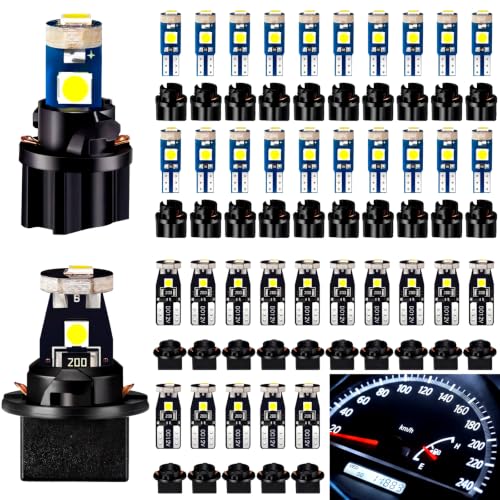
BBTO 40 Set T5 T10 LED Bulbs with Sockets (White)

WLJH Blue T10 194 LED Bulb with PC194 Twist Lock Socket

ecocstm 12 PCS T5 LED Bulbs, 74 73 37 2721 Instrument Cluster Light Bulb

ecocstm 12 PCS T5 LED Bulbs, 74 73 37 2721 Instrument Cluster Light Bulb
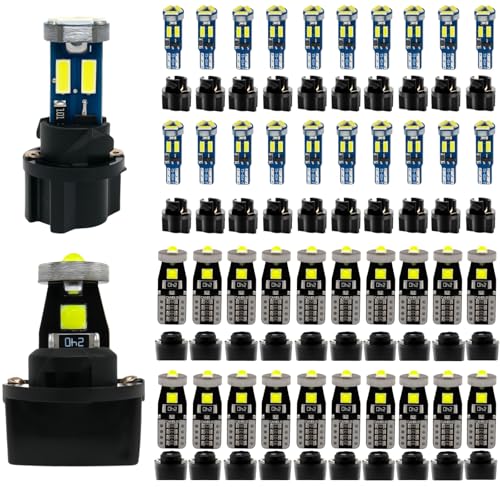
WLJH 40-Pack T10 T5 LED Bulbs with Twist Sockets, Polarity-Free, Dimmable

carleef 20PCS Car LED Dash Lights T5 Twist Lock Socket (Ice Blue)
carleef 20PCS Car LED Dash Lights T5 Twist Lock Socket (Blue)

carleef 20PCS Car LED Dash Lights T5 Twist Lock Socket (Red)
carleef 20PCS Car LED Dash Lights T5 Twist Lock Socket (White)
More Details On Our Top Picks
Older dashes rarely use just one bulb size, and that’s exactly where this 40-piece BBTO set earns its spot. It mixes T5 and T10 wedge bulbs with matching sockets, so a single purchase can cover your gauges, clock, dome light, door lamps, and license plate housing in one afternoon.
The non-polarity design means you won’t be pulling a bulb back out to flip it 180 degrees, which saves real time when you’re working hunched under a steering column. The dimmable behavior also plays nicely with factory dimmer wheels, something cheaper LEDs often get wrong.
Strong Points
- Both T5 and T10 sizes included, so mixed-socket dashes need only one order
- Non-polarity design removes the guesswork of flipping bulbs during install
- Dimmable output works with stock dash dimmers instead of fighting them
- Spares left over after a typical cluster job make future swaps painless
Things To Consider
- With 40 pieces to sort, labeling the bags before you start keeps small parts from wandering off
- Some older GM and Ford clusters use proprietary sockets these wedges won’t seat into
Quick Facts
Who It Suits Best
Anyone refreshing an entire older vehicle’s interior lighting in one project rather than replacing a single dead bulb.
A Better Fit Elsewhere
Shoppers who already know their dash takes twist-lock PC194 sockets will find the WLJH Blue T10 kit a more direct match.
Plenty of instrument panels, especially in domestic trucks and SUVs from the 2000s, hold their dash bulbs in printed-circuit twist sockets rather than plain wedge slots. This WLJH pack of ten pairs blue T10 bulbs with those larger PC194 twist-lock bases, so the bulb locks in and stays put against road vibration.
The blue tint gives a cool, modern readout look without washing out warning icons. One caution matters more here than anywhere else in this list: these are the bigger PC194 sockets, not the smaller PC74 type, so measure or check your cluster before ordering.
What We Like
- Genuine twist-lock bases resist the vibration that loosens push-in wedges over time
- Ten matched sets handle a full cluster plus indicator positions
- Blue output delivers that crisp aftermarket-gauge appearance many owners chase
Worth Noting
- Socket size confusion is the most commonly reported issue; confirm PC194 versus PC74 first
- Blue light reads slightly dimmer than white at equal wattage through dark gauge lenses
Right Fit For
Owners of vehicles with confirmed PC194 twist sockets who want a secure, color-matched dash refresh.
Where Another Pick Shines
If your cluster uses standard wedge slots instead, the BBTO 40-piece set covers T10 and T5 without any socket hunting.
T5 is the tiny base hiding behind most speedometer and odometer backlighting, and cross-referencing bulb numbers gets confusing fast. These ecocstm bulbs sidestep that by fitting a long list of equivalents, including 74, 73, 37, 2721, PC74, and PC37 designations, all in one twelve-pack.
Under the hood sits a 3030 SMD chip, a surface-mounted LED known for even, bright output in tight spaces. The carbon-fiber circuit board runs cool and resists flicker, which matters because a strobing gauge light at night is genuinely distracting. Installation is drop-in; if a bulb stays dark, rotating it 180 degrees reverses polarity and usually solves it.
Highlights
- Wide cross-compatibility list removes most bulb-number guesswork
- 3030 chips give bright, uniform illumination behind small gauge windows
- Carbon-fiber board dissipates heat well for stable long-term output
- Plug-and-play install needs no wiring or soldering
Small Caveats
- Polarity isn’t fixed, so expect to flip at least one bulb during a typical install
- Thick plug design may sit snugly in some worn or corroded sockets
At A Glance
Made For
DIYers servicing mixed-age vehicles where several different T5 bulb numbers appear across the same dashboard.
Swap It Out When
Drivers wanting a fixed polarity-free experience will prefer the WLJH 40-pack reviewed further down this list.
This listing shares its core engineering with the ecocstm pack above: the same 3030 SMD chips and the same heat-shedding carbon-fiber board. The difference comes down to availability and variant selection, since listings like this one rotate between colors and stock runs throughout the year.
In practice you’re choosing between two doors into the same product line. Grab whichever variant matches your dash color scheme and shows availability, because the brightness, stability, and drop-in T5 fitment carry over identically. Owners commonly report steady output with no delay on startup, which is what you want from a gauge backlight you’ll stare at every night commute.
Upsides
- Identical 3030 chip brightness to the sibling ecocstm listing
- Low operating temperature helps surrounding dash plastics age slower
- Energy-sipping draw puts minimal load on aging wiring harnesses
Points To Note
- Color options vary by listing run, so double-check the variant shown before checkout
- Like all T5 LEDs, seating depth differs slightly between vehicle brands
Best Suited To
Daily drivers who want proven T5 performance and aren’t particular about which ecocstm variant ships.
Consider Something Else When
For a guaranteed white multi-size assortment, the BBTO 40-set remains the safer basket for whole-interior projects.
First-timers tend to stall on two things: flipping bulbs to fix polarity and figuring out which size goes where. This WLJH 40-pack removes both hurdles. The non-polarity design lights up no matter which way it seats, and the mix of T10 and T5 bases covers nearly every small socket a passenger car carries.
The application list is genuinely wide, running from gauge backlights and warning icons to radio dials, gear shifter illumination, HVAC controls, vanity mirrors, and trunk lamps. That breadth turns a fiddly evening job into a straightforward remove-and-insert session, and the dimmable behavior keeps factory dimmer controls useful afterward.
Bright Spots
- Polarity-free bulbs eliminate the flip-and-retest loop entirely
- Covers dash, climate panel, shifter, mirror, and trunk positions in one kit
- Dimmable output preserves stock brightness adjustment
- Generous quantity leaves plenty of spares in the glovebox
Honest Caveats
- Exotic or luxury-cluster sockets outside the standard T5/T10 range still need adapters
- Sorting 40 bulbs by size before starting prevents mid-job confusion
Feature Snapshot
Who Will Love This
Beginners tackling their first dash-light swap who want maximum forgiveness and minimum troubleshooting.
Not Your Match When
Enthusiasts chasing a specific colored glow will get more satisfaction from the carleef ice-blue kit at position six.
Ice blue has become the signature shade of modern interiors, sitting cooler than standard blue without the harshness of pure white. This carleef twenty-pack brings that tone to T5, 37, and 74 positions using twist-lock sockets that anchor firmly once seated.
The build leans on fiberboard bulb bodies rated for high temperature and vibration, paired with hard plastic and copper-sheet bases for solid electrical contact. In daily terms, that combination targets the two things that kill cheap dash LEDs early: heat soak behind a sun-baked cluster and shake from rough pavement. Twenty units comfortably cover a full gauge cluster plus switchgear.
Reasons To Buy
- Ice-blue tone delivers a contemporary showroom look
- Twist-lock mounting holds firm against vibration
- Copper-contact bases support stable current flow over years
- Twenty-piece count suits complete cluster rebuilds
Softer Spots
- Cool-toned light can look out of place in classic or luxury cabins styled around warm amber
- Twist sockets require a quarter-turn technique some first-timers fumble
Core Details
The Right Fit
Customizers updating a daily driver toward a modern, cool-toned cabin aesthetic.
Another Choice May Suit
Purists keeping a vintage interior authentic should look at the carleef white version at number nine instead.
Standard blue is the workhorse of aftermarket dash lighting, echoing the factory look of countless 2000s-era sport compacts. This variant carries the same hardware as the ice-blue carleef kit: fiberboard bulbs, temperature- and vibration-resistant construction, and copper-sheet lamp bases inside hard plastic housings.
Where it earns its own slot is longevity behavior. The manufacturer emphasizes stable brightness across extended use, and the twist-lock format keeps contact pressure consistent, which is exactly what you want on a truck that sees gravel roads. Compared with the WLJH blue T10 kit earlier in this list, this one targets smaller T5-family sockets rather than the larger 194 bases.
Plus Points
- Classic blue suits sporty and OEM-plus interior themes
- Vibration-resistant build suits unpaved-road use
- Uniform light spread avoids hot spots behind gauge needles
Minor Gripes
- Deep blue tints can mute amber warning icons behind dark lenses
- Only fits T5/37/74-type positions, so larger T10 spots need a separate purchase
Whose Shelf It Belongs On
Commuters on rough routes who want a durable, color-consistent gauge glow that survives constant shaking.
Reach For A Different Pick When
Drivers needing both T5 and T10 coverage in one box will find the WLJH 40-pack more economical.
There’s a reason aviation cockpits and countless factory dashes went red: warm red light preserves your eyes’ dark adaptation far better than blue or white. Night drivers who find bright gauge lighting fatiguing often settle on red as the most comfortable long-haul choice.
This pack mirrors the other carleef entries spec-for-spec, with fiberboard bodies, high-temperature tolerance, and copper-contact twist-lock bases. The honest trade-off is legibility: red renders some multi-color icons oddly and can make certain fuel or temperature markings harder to parse at a glance. For pure nighttime comfort, though, few colors compete.
Positives
- Red output is gentler on eyes during extended night driving
- Same rugged twist-lock construction as the rest of the carleef line
- Warm tone flatters retro and military-inspired interiors
Areas To Watch
- Some dashboard icons lose contrast under deep red light
- Daytime visibility of red backlit gauges trails white alternatives
Who Should Grab It
Long-distance night drivers and anyone sensitive to bright cockpit glare who prioritizes comfort over flash.
Look Elsewhere When
Shoppers wanting maximum daytime gauge clarity will prefer the white carleef kit closing out this list.
White is the safe bet, and sometimes safe is exactly right. This final carleef variant keeps every structural advantage of its siblings, including the fiberboard bulb body, high-temperature rating, and copper-sheet twist-lock base, while producing clean neutral light that mimics a fresh factory installation.
Legibility is where white pulls ahead of every colored option here. Speedometer numerals, odometer digits, and warning icons all read crisply, day or night. You give up the personality of blue or the night comfort of red, but for a leased vehicle, a resale-minded restoration, or simply a dash that looks like it rolled off the line yesterday, white is hard to argue with.
Standout Traits
- Neutral white maximizes gauge readability around the clock
- Factory-matching appearance suits stock and resale-focused vehicles
- Twist-lock bases and copper contacts support years of steady service
- Twenty bulbs cover a full cluster plus auxiliary indicators
Trade Offs
- Bright white at full intensity can feel stark on very dark night drives
- Lacks the custom flair colored variants bring to modified interiors
Details At A Glance
Built With In Mind
Owners of stock or soon-to-be-sold vehicles who want dependable, factory-fresh gauge lighting without a custom look.
Where A Sibling Pick Shines
Drivers building a themed interior will get more enjoyment from the ice-blue carleef kit at position six.
What Matters Most Before Choosing Car Cluster Lights
Match The Base Before Anything Else
Every frustrating install traces back to one mistake: ordering the wrong bulb base. Pull a bulb from your cluster first and check whether it’s a T5 wedge, a T10/194 wedge, or a twist-lock PC194 or PC74 type. The WLJH blue kit exists precisely because PC194 owners kept buying the wrong size. Ten minutes with a flashlight beats a return shipment every time.
Color Changes More Than Looks
White maximizes legibility, blue and ice blue deliver a modern cabin feel, and red protects night vision on long drives. Your choice should follow how you actually use the vehicle. A delivery driver logging pre-dawn miles has different needs than someone building a show interior, and neither is wrong.
Count Your Sockets, Then Add Spares
Most clusters hide six to twelve bulbs, and a few die again within months. Multi-packs like the BBTO 40-set or WLJH 40-pack cost little more per bulb than singles and leave backups in the glovebox. Buying exact quantities is false economy in this category.
Polarity And Dimmer Behavior
Cheaper LEDs sometimes refuse to light until flipped 180 degrees, and some ignore factory dimmer wheels entirely. Non-polarity, dimmable designs such as the BBTO and WLJH sets remove both headaches, which matters most for first-time installers working in cramped footwell space.
Key Considerations Across These Picks
Traps First Timers Fall Into
The biggest slip is assuming all dash bulbs interchange. A T5 will not fill a T10 socket, and PC74 twist sockets reject PC194 bulbs despite looking similar. Photograph your existing bulb and compare it against listing photos before checkout. Second trap: skipping the polarity note. Standard LEDs sometimes arrive dark until rotated, which reads as a defect but isn’t.
Where The Extra Money Goes
Pricier kits buy better chip quality, copper rather than steel contacts, and heat-managed circuit boards. Those details translate into steadier brightness, less flicker, and fewer repeat replacements. For a vehicle you’ll keep five more years, spending up once usually costs less than swapping bargain bulbs twice.
Frequently Asked Questions
Are LED dash bulbs safe for my car’s electrical system?
Yes, quality LEDs draw far less current than the incandescent bulbs they replace. Just match the correct base and voltage rating for your vehicle.
Why does my new LED bulb not light up?
Many LEDs are polarity-sensitive, meaning current flows one direction only. Rotate the bulb 180 degrees in its socket and reinstall.
Can I mix bulb colors in one dashboard?
You can, though most people prefer consistency across the gauge cluster. Mixing works best when accenting separate zones like buttons or vents.
Do I need to disconnect the battery before installing?
It’s a sensible precaution on any electrical work, though these low-voltage swaps are generally low risk. Consult your vehicle manual for guidance.
How long do LED cluster bulbs typically last?
Well-built LEDs commonly outlast the vehicle itself thanks to low heat and solid-state construction. Heat and vibration are the main enemies, which is why build quality matters.
Closing Thoughts
Faded gauges are a small problem with an outsized effect on how a car feels every single drive. Any of these nine kits will fix it; the right one depends on your socket type, your color taste, and how much of the interior you plan to refresh. Check your existing bulb first, order once, and enjoy a dashboard that finally reads clearly after dark.
