

Dead batteries rarely wait for a convenient moment. You might be in a driveway before work, parked outside a trailhead, or trying to keep a weekend vehicle ready after a long stretch of sitting still. This roundup focuses on chargers and jump starters that fit those situations without loading you up with extra guesswork. You’ll see compact emergency kits, heavier-duty shop-style chargers, and smart maintainers for vehicles that spend more time parked than driven.
Quick Look At The Strongest Options
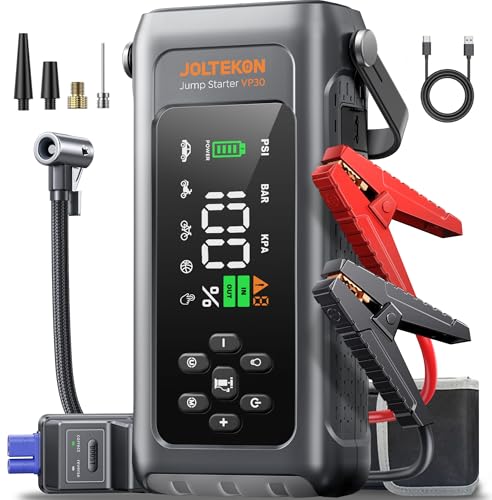
Joltekon Jump Starter with Air Compressor
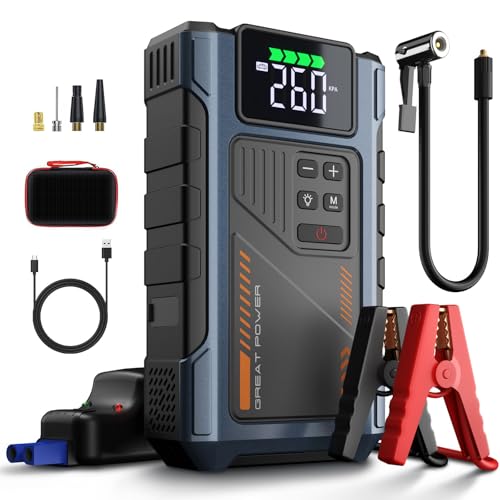
Geeneu Car Battery Charger Jump Starter

CRAFTSMAN 12A Car Battery Charger CMXCESM258

DeWalt DXAEC100 30 Amp Battery Charger
NEXPEAK NC215 15-Amp Battery Charger

PCHH 12V 24V Car Battery Charger Heavy Duty

PZ.P 15-Amp 12V/24V Smart Battery Charger
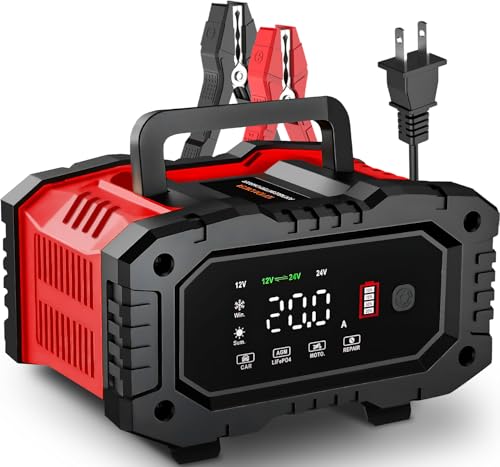
Huiaipaic 20-Amp Car Battery Charger

E-FAST Battery Charger 0-20A 12/24V
More Details On Our Top Picks
Drivers who want one emergency kit instead of three separate tools will notice the appeal here fast. A jump starter, tire inflator, pressure gauge, power bank, and lighting modes all sit in one portable shell, so the glove box or cargo bin stays less cluttered.
The trade-off is obvious, though, multi-function gear usually asks you to accept some compromise in size and simplicity. For weekend road trips, older cars, or a second vehicle that sits for days, that’s still a sensible bargain in space and convenience.
Strong Points
- 4500A peak output gives this unit enough muscle for a wide span of 12V emergency starts.
- The built-in compressor helps you deal with a soft tire without unpacking a separate pump.
- Pressure readout support makes tire checks faster on the shoulder or in a driveway.
- Light modes, including warning-style flashes, add visibility during dark roadside moments.
- The all-in-one layout suits compact storage, especially for commuters who keep gear in the trunk.
Things To Consider
- Combined tools are convenient, but they also mean you’re carrying more functions in one body.
- The product page does not spell out every measurement for the housing, so storage planning stays approximate.
- Keeping the pump hose and clamps tidy matters, since bundled accessories can tangle in a small bin.
Feature Snapshot
Who It Suits Best
You’re the right fit for this one if you want a roadside kit that can jump the battery and top off a tire without reaching for extra gear.
A Better Fit Elsewhere
Geeneu Car Battery Charger Jump Starter makes more sense for you if you want a similar all-in-one setup and prefer a slightly different capacity profile.
Geeneu follows the same emergency-tool idea as the Joltekon, but it leans a little more toward everyday roadside utility than a packed-out toolbox feel. You get jump-start support, tire inflation, pressure detection, a power bank function, and lighting, which keeps this useful in the glove box or cargo area.
The capacity note matters here, because the listed engine range is a bit narrower than the first pick, so the fit feels more personal-vehicle focused. For daily drivers and small-family use, that’s not a weakness so much as a sign that the product is aimed at common situations rather than oversized machines.
What We Like
- 4500A peak output gives it serious emergency-start presence for a portable kit.
- The air pump and pressure detection make it handy during routine tire checks.
- Built-in lighting helps after dark, whether you’re in a lot or on a shoulder.
- The battery-pack function gives your phone or accessories a backup charge source.
- Its compact role set fits drivers who want one emergency device that stays close at hand.
Worth Noting
- The engine-size rating is a touch narrower than the Joltekon’s, so larger rigs need closer scrutiny.
- Multi-function kits benefit from periodic top-ups, or they can sit forgotten in a trunk drawer.
- The listing leaves some details open, so you may want to double-check accessory layout before it arrives.
Core Details
Made For
You’ll get the most from this if your vehicle is a daily driver and you want a compact emergency kit that doesn’t feel overbuilt.
Swap It Out When
Joltekon Car Battery Jump Starter with Air Compressor suits you better if you want a similar all-in-one setup with a slightly broader listed engine span.
After the portable jump kits, this CRAFTSMAN unit shifts you into a more traditional garage role. A 12-amp charger and maintainer is a good fit for vehicles that sit through the week, seasonal machines, or batteries that need steady attention instead of roadside rescue.
The fully automatic, microprocessor-controlled behavior matters because it reduces the need to babysit the process, and that’s useful in a busy home garage. It’s less about tossing into a trunk and more about keeping a battery ready on a workbench or garage floor.
Highlights
- The 6V and 12V support makes it useful for a wide spread of garage batteries.
- Its maintainer role suits storage periods, so a weekend car doesn’t fade as quickly.
- Automatic voltage detection takes some of the setup pressure off you.
- Three charge-maintain modes give the charger a more flexible rhythm than simple trickle units.
- The CRAFTSMAN name will feel familiar to home-shop users who want a straightforward bench charger.
Small Caveats
- It’s more garage-bound than the jump starter styles above, so portability is limited.
- The unit focuses on battery care rather than emergency starting, so it fills a different job.
- Cord management matters in a crowded shop, especially near tool carts and tire stacks.
Details At A Glance
Who Should Grab It
You’re a strong match for this CRAFTSMAN if your cars, lawn gear, or garage batteries need ongoing care more than roadside rescue.
Another Choice May Suit
DeWalt DXAEC100 30 Amp Battery Charger makes more sense for you if you want a heavier shop charger with stronger starting output.
Once you move from a household charger to this DeWalt, the tone changes fast. A 100-amp engine-start mode, 30-amp charging, and 3-amp maintenance support point toward a garage or shop where you want more authority and less waiting around.
The alternator check is a useful extra for diagnosing whether the charging system is behaving properly, and that’s the sort of feature that helps in real driveway troubleshooting. The trade-off is size and commitment, because this kind of unit makes the most sense where it can stay put.
Reasons To Buy
- The 100-amp start mode gives you a stronger recovery option than the smaller maintainers here.
- Thirty amps of charging supports faster turnaround on larger batteries.
- The 3-amp maintain setting helps keep stored vehicles steadier between outings.
- Alternator checking adds a useful diagnostic layer for home mechanics.
- Its 12V battery support aligns with many cars, trucks, and garage vehicles.
Areas To Watch
- This is less of a grab-and-go item and more of a garage tool.
- Its feature set makes the unit feel overkill for simple top-off work.
- Storage space matters, because heavier chargers usually live best on a shelf or cart.
Technical Sheet
Built With In Mind
You’re the right fit if your garage sees regular battery work and you want a unit that feels more serious than a basic maintainer.
Look Elsewhere When
CRAFTSMAN 12A Car Battery Charger CMXCESM258 suits you better if you want a simpler charger for lighter maintenance jobs.
This NEXPEAK model sits in a sweet middle ground between the garage chargers and the emergency jump kits. Its big color screen gives you a clearer read on charge status, voltage, current, temperature, and mode, which helps when the charger lives on a bench and you want a quick glance instead of squinting at tiny indicators.
The 6.7-foot cord adds real day-to-day usefulness, especially in a garage where outlets rarely sit in the perfect spot. You may find the 15-amp charge rate especially helpful for vehicles and equipment that get regular use but still spend enough time parked to need a smart refresh.
Bright Spots
- The visual screen makes charging status easier to track in bright garages or daylight.
- 12V and 24V support broadens its role across cars, trucks, boats, and lawn equipment.
- LiFePO4 and lead-acid compatibility gives it broader battery coverage than simpler chargers.
- The longer cord adds flexibility for awkward outlet placement.
- Temperature compensation helps the charger adjust behavior in hotter or colder conditions.
Points To Note
- The screen and extra modes add useful detail, but they also add more to learn at first.
- Like most smart chargers, it makes more sense near a power outlet than in the trunk.
- Accessory and cable storage is worth planning for, especially in smaller garages.
Feature Rundown
Whose Shelf It Belongs On
You’ll like this most if you want a smart charger with a readable screen and more voltage flexibility than a basic maintainer.
Reach For A Different Pick When
PCHH 12V 24V Car Battery Charger Heavy Duty makes more sense for you if durability and heavier bench-style construction matter more than a display.
PCHH leans into heavier-duty construction, and that shows in the copper coil, metal, and ABS housing. For a garage that sees repeated use, that kind of build can feel reassuring, especially compared with the lighter-feeling smart chargers higher up the list.
The 0 to 15A automatic range, winter mode, and repair function make it a sensible maintainer for vehicles that sit through colder seasons. One thing worth considering is that the 12.2-pound weight makes this more of a shop fixture than something you’ll move around often.
Plus Points
- The heavier housing suits regular garage use and more rugged placement.
- 12V and 24V support works across a broad mix of vehicles and equipment.
- Automatic charging reduces babysitting during long maintenance sessions.
- Winter mode is practical for seasonal storage and cold mornings.
- Its repair function adds extra usefulness for batteries that need more than a simple top-off.
Softer Spots
- The 12.2-pound build is sturdy, but it also makes the unit less portable.
- It suits a fixed garage spot better than a small trunk or travel kit.
- The more rugged design may take up more shelf space than slimmer chargers.
Core Details
The Right Fit
You’re a good match for this PCHH if you want a sturdy charger that lives in the garage and handles regular maintenance.
A Better Fit Elsewhere
NEXPEAK NC215 15-Amp Battery Charger suits you better if a lighter-feeling unit with a screen and longer cord sounds more useful.
PZ.P takes the same smart-charger lane as NEXPEAK, but it trims the presentation back to the essentials. The 9-stage charging process and temperature compensation are the parts that matter most, because they support more careful battery care without making the unit feel complicated.
For motorcycles, lawn equipment, and weekend vehicles, that balance is easy to appreciate. The honest read is that the simpler presentation may suit you better than a feature-dense screen if you mainly want a dependable charger that just gets to work.
Best Bits
- 15A output gives it useful charging speed for routine garage tasks.
- 12V and 24V support widens compatibility across vehicle and equipment types.
- LiFePO4 and lead-acid support makes it more flexible than basic charger-only units.
- Automatic 9-stage charging keeps the process organized without extra input from you.
- Temperature compensation helps the charger adjust to seasonal changes.
Minor Gripes
- The feature set is practical, but the product page gives less visual guidance than screen-based models.
- It remains a plugged-in garage tool rather than something you toss in a vehicle door pocket.
- Accessory storage is still worth sorting out, since chargers tend to collect cables over time.
Feature Card
Built With In Mind
You’ll appreciate this most if you want a straightforward smart charger for mixed garage duty without a lot of extra screen-driven detail.
Where A Sibling Pick Shines
NEXPEAK NC215 15-Amp Battery Charger is the better fit if you want a large display and a longer cord for a busier workspace.
Huiaipaic pushes harder on charging output than the 15-amp models above, and that matters for bigger batteries or more urgent garage work. The 12V 20A and 24V 10A ratings, plus the 300W fast-charging note, point toward quicker turnaround in settings where waiting around feels like the wrong plan.
The desulfator function is worth a mention too, since sulfate buildup is a common issue in lead-acid batteries that sit idle too long. It’s still a garage tool rather than a carry-around gadget, but for truck, mower, and boat owners, the extra output can be the whole point.
What We Like
- Higher output gives it an edge for larger batteries and more time-sensitive charging jobs.
- 12V and 24V support keeps it flexible across several vehicle groups.
- Compatibility with LiFePO4 and lead-acid batteries makes the unit broadly useful.
- The desulfator function adds value for batteries that have sat idle for too long.
- Its automatic smart behavior reduces the need for constant checking.
Trade Offs
- Higher-output charging is useful, but it also makes the unit feel more serious than casual users may need.
- The listing is tuned toward larger battery jobs, so compact vehicle owners may not use every mode.
- Bench storage and cable organization matter more as the charger gets larger and more capable.
At A Glance
Perfect Match For
You’re the right match for this Huiaipaic if you want faster charging support for larger vehicles, boats, or equipment that sees real garage use.
Where Shoppers Go Wrong
PZ.P 15-Amp 12V/24V Smart Battery Charger fits better if you want a simpler smart charger and don’t need the higher-output profile.
E-FAST rounds out the list with a broad charging range and a feature set that covers charger, maintainer, trickle support, and pulse repair. That mix makes it attractive for general garage duty, especially for vehicles and equipment that need more than a one-note charger but don’t require the heaviest shop unit.
The 12V 20A and 24V 10A output gives it useful speed, while the 7-stage automatic process keeps the routine more structured than a basic plug-in charger. For home garages with several kinds of machines, that balance can feel like the right amount of capability without getting too specialized.
Reasons To Buy
- The charger covers several useful roles in one unit, which cuts down on separate tools.
- 12V and 24V support helps it work across more vehicle types.
- The 20A and 10A output levels support quicker charging than smaller maintainers.
- Pulse repair adds a helpful layer for batteries that need a little extra attention.
- Its automatic operation makes it easier to leave in place during a charging cycle.
Hidden Buying Traps
- The feature mix is broad, so you still need to match it to your actual battery chemistry.
- General-purpose chargers can tempt you to overbuy, especially if you only need simple maintenance.
- Like other garage units, it works best with a planned storage spot and tidy cable habits.
Core Details
Who It Suits Best
You’re a strong match if you want one charger for mixed garage work and prefer a broad, capable unit over a narrow specialist.
Skip It When
Huiaipaic 20-Amp Car Battery Charger suits you better if faster output and a more recovery-focused setup matter more than all-purpose flexibility.
How To Choose The Right Car Chargers For Car Battery
Match The Tool To The Problem
Start with the problem you want solved, because that sets the whole lane. A jump starter belongs in the trunk for dead-battery surprises, while a maintainer or charger makes more sense in a garage for vehicles that sit, seasonal equipment, or batteries that need regular attention.
Output matters too, but only after the use case is clear. Higher amp figures can shorten wait times, yet they also push you toward a larger, more committed unit, so a commuter with one sedan has different needs than someone maintaining a truck, mower, and boat.
Check Voltage, Chemistry, And Control
Battery voltage is the first filter, and it’s a simple one, 12V and 24V gear serve different fleets. Chemistry matters just as much, because lead-acid, AGM, GEL, and LiFePO4 each reward chargers that are built with those battery types in mind.
Smart controls change the experience in a good way. Automatic stages, temperature compensation, and maintainer modes reduce babysitting, which is a relief in a busy garage, but they also make the product less useful for someone who wants a very basic plug-in-and-wait setup.
Think About Storage And Daily Handling
A compact jump kit travels better than a heavy bench charger, and that difference shows up the moment you try to store it. If your setup lives in a trunk, look for a lighter shell and simple accessory storage, because loose clamps and hoses turn into clutter fast.
Cord length, screen visibility, and housing material matter more than they first seem. A longer cord helps in crowded garages, a readable display saves you from guessing in bright light, and a heavier metal-backed unit usually stays put better on a shelf or cart.
What To Weigh Before You Commit
Mistakes Worth Dodging
The most common slip-up is treating every battery tool as the same thing. A jump starter helps with a dead start, but it won’t replace a maintainer for a car that sits all winter, and a garage charger won’t help much when you’re stuck in a parking lot.
Another easy miss is ignoring battery chemistry. A charger can look impressive on paper, yet still be a poor fit for your battery type, so you want the voltage and chemistry support to line up before anything else.
The Case For Spending Up
Extra cost usually goes into output, smarter charging stages, and better displays or housings. That matters most for households with several vehicles, heavier batteries, or a garage setup that gets regular use instead of occasional emergency duty.
A higher-tier model also tends to bring better convenience, such as longer cords, stronger starting modes, or added diagnostics. For a weekend mechanic or anyone maintaining a truck, mower, and seasonal vehicle, that extra capability often feels justified, while a single daily-driver setup may not need it.
Closing Thoughts
You have a solid range here, from compact jump kits to sturdier garage chargers. The best match depends on where the tool lives, how often you need it, and whether your priority is roadside rescue or battery care between drives. Choose the one that fits your space and routine first, and the rest becomes much easier.
