

Keeping a vehicle battery healthy matters most when the car sits more than it drives, whether that means a weekend truck, a seasonal boat, or a commuter that spends nights in the driveway. The right maintainer keeps power ready without making you babysit the process, and the useful difference usually comes down to voltage match, battery chemistry support, and how much charging control you want. This roundup focuses on practical fit, so you can match the charger to the way you actually store and use your vehicle.
The Shortlist At A Glance

CRAFTSMAN CMXCESM258 12A Battery Charger & Maintainer

DeWalt DXAEC100 30 Amp Battery Charger

PCHH 12V 24V Heavy Duty Battery Charger

PZ.P 15-Amp 12V/24V Smart Battery Charger
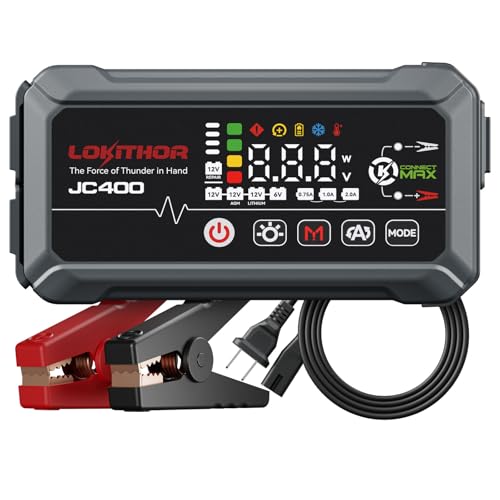
LOKITHOR JC400 2A Car Battery Charger and 2500A Jump Starter

VibeXtr 1.5A 6V/12V Car Battery Charger
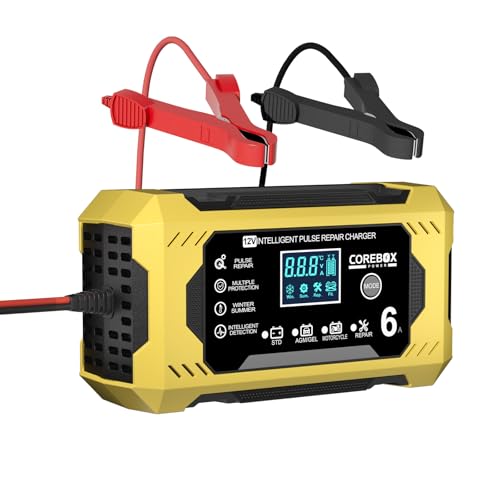
Corebox Battery Charger 6-Amp 12V Smart Charger

20Amp 12/24V Smart Car Battery Charger
TEMOLA 12V 6A Car Battery Charger
More Details On Our Top Picks
CRAFTSMAN’s CMXCESM258 sits in the middle of the pack in a useful way, with 6V and 12V support that fits many garage situations without feeling overly specialized. The microprocessor-controlled design matters because it can adjust charging behavior automatically, so you’re not standing over the unit while it works.
That makes it a sensible match for a commuter car that sits through the week or a weekend vehicle that needs regular top-offs. The honest trade-off is that it’s more about steady versatility than raw speed, so big recovery jobs belong with a stronger charger.
Strong Points
- 6V and 12V coverage suits more than one vehicle.
- Automatic control reduces guesswork during routine charging.
- Works well for maintenance on stored vehicles.
- Good fit for everyday garage ownership.
Worth Noting
- Charging pace is more measured than heavy-duty units.
- Best value comes from regular use, not emergency recovery.
- Like most chargers in this class, storage space near the battery matters.
Feature Snapshot
Who It Suits Best
You’ll appreciate this most for routine battery care in a home garage, especially around vehicles that spend time parked more than driven.
A Better Fit Elsewhere
DeWalt DXAEC100 suits you better if you want a stronger recovery tool for a busier garage and you value engine-start capability.
This DeWalt model is aimed at faster, more demanding garage work, and the 100 amp engine-start function gives it a very different personality from the CRAFTSMAN pick above. The 30 amp charging mode and 3 amp maintainer setting let you cover recovery and upkeep in one cabinet-sized unit.
The alternator check adds practical value for anyone maintaining an older vehicle or a truck that sees hard use, because it gives you more context than a simple charge indicator. Pulse-style conditioning is useful in theory for tired batteries, though results always depend on battery condition and age.
What We Like
- Engine-start mode gives it serious recovery range.
- 30 amp charging helps move larger batteries along faster.
- 3 amp maintain mode handles longer storage periods.
- Alternator check adds a useful diagnostic step.
- Good match for trucks, SUVs, and work vehicles.
Minor Gripes
- More charger than casual owner may need.
- Bulk and power range make it better for a dedicated garage spot.
- Older batteries may still need replacement rather than conditioning.
Details At A Glance
Who Should Grab It
You’ll get the most from this in a garage that handles trucks, older vehicles, or a vehicle fleet with mixed battery needs.
Where A Sibling Pick Shines
CRAFTSMAN CMXCESM258 is the softer fit for routine upkeep, especially for a smaller garage where you don’t need engine-start power.
PCHH is built for mixed-vehicle households, and the 12V plus 24V support makes it more flexible than the single-voltage models earlier in the list. Its heavier construction, with copper coil, metal, and ABS housing, suggests a unit meant to stay in the garage and work hard rather than travel often.
The two charging rates also matter in daily use, since you can choose a faster push or a gentler maintenance pace. One thing worth considering is the 12.2 lb weight, which gives it a sturdy feel but also makes it less convenient to move around frequently.
Highlights
- 12V and 24V support widens vehicle coverage.
- Two charging rates suit different recovery needs.
- Heavy build fits a stationary garage setup.
- Automatic charging takes pressure off routine upkeep.
Areas To Watch
- Weight makes it less pleasant to carry around.
- Best used from a dedicated storage shelf or bench.
- Heavy-duty feel can be more than you need for a simple sedan.
Core Details
Made For
You’re the best match for this if you keep multiple vehicle types at home and want one charger that can cover both 12V and 24V batteries.
Look Elsewhere When
PZ.P 15-Amp 12V/24V Smart Battery Charger suits you better if you want a lighter-feeling smart charger with more emphasis on staged control.
PZ.P leans into flexibility, with support for LiFePO4 and lead-acid batteries, plus 12V and 24V coverage for a wide mix of machines. The 9-stage charging process matters because staged charging means the unit moves through set phases instead of blasting current the same way from start to finish.
That kind of control suits owners who keep motorcycles, boats, lawn equipment, and vehicles in one place and want one charger to handle them calmly. Temperature compensation is a useful detail in hot garages or cold sheds, though the benefit still depends on proper battery connection and storage habits.
Reasons To Buy
- Works across LiFePO4 and lead-acid setups.
- 12V and 24V support adds practical range.
- 9-stage charging gives it more control than simpler models.
- Temperature compensation helps in changing garage conditions.
- Strong fit for mixed seasonal equipment.
Small Caveats
- More modes can feel unnecessary for very basic use.
- Best results come from matching the battery chemistry carefully.
- Less of a grab-and-go choice than smaller maintainers.
Feature Card
Who Will Love This
You’ll like this most if your garage holds a mix of battery chemistries and you want a smart charger with more than just basic maintain mode.
Another Choice May Suit
TEMOLA 12V 6A Car Battery Charger suits you better if you want a simpler 12V setup with a more straightforward digital interface.
LOKITHOR’s JC400 is the most multifunctional unit in this group, because it combines charging, maintaining, desulfation, voltage checking, and jump-start support in one compact body. That makes it useful for travel kits or tight garage shelves where you want fewer separate devices.
The trade-off is that a combo unit rarely feels as focused as a dedicated charger in one narrow job, though that won’t matter much for emergency-minded ownership. The LED lighting and compass are extra touches, but the real value is in having a battery tool that covers both routine upkeep and roadside backup.
Best Bits
- Combines charging and jump-start support.
- Very compact for the feature set.
- Useful for travel kits and roadside storage.
- Voltage detection adds everyday convenience.
- Multiple current settings help with lighter battery care.
Things To Consider
- Combo design can feel less specialized than a dedicated maintainer.
- Extra functions add complexity for first-time setup.
- Best stored where the accessories stay together.
Technical Sheet
Built With In Mind
You’re a strong match for this if you want one compact device for maintenance, emergency backup, and travel-ready storage.
Where A Sibling Pick Shines
DeWalt DXAEC100 is the better fit for a garage that values stronger charger output over portable all-in-one flexibility.
VibeXtr keeps things small and steady, which makes sense for a maintainer that’s meant to sit with a stored car, motorcycle, or lawn machine without drawing much attention. The 1.5A output is modest, but that modesty is the point, since it’s built more for upkeep than fast turnaround.
Temperature compensation and overcharge protection make it a sensible choice for garages that swing between hot afternoons and colder nights. You may find the slower pace too restrained for dead batteries that need real recovery, yet for routine maintenance it feels easy to live with.
Upsides
- Small footprint suits tight storage areas.
- Works as charger, maintainer, trickle charger, and desulfator.
- Temperature compensation adds climate-aware charging behavior.
- Good for preserving batteries between drives.
Points To Note
- 1.5A output is geared toward slow upkeep.
- Less suitable for rapid recovery work.
- Best kept near the vehicle you service most often.
Quick Facts
The Right Fit
You’ll like this most for a rarely driven car, a small motorcycle, or another vehicle that just needs quiet maintenance.
Reach For A Different Pick When
Corebox Battery Charger 6-Amp 12V Smart Charger is a stronger match if you want more charging pace without moving into a heavy-duty setup.
Corebox lands in a practical middle ground, with enough output to feel useful for routine charging and enough smart behavior to make winter storage less hands-on. The 8 protection features and temperature compensation are the sort of details that matter most when the battery sits through colder months or long vacation stretches.
Compared with the leaner VibeXtr, this one feels more like a garage fixture for owners who want a little more confidence around safety features. The trade-off is simple, though, because a more capable control set also means you’ll want to keep the setup tidy and follow the battery connection steps carefully.
Bright Spots
- 6A output is a useful middle ground for maintenance and charging.
- Eight protection layers add reassuring everyday control.
- Temperature compensation helps in winter storage conditions.
- Good fit for cars, motorcycles, and marine equipment.
Softer Spots
- Not as fast as larger chargers.
- Best kept in a regular storage spot with the cable coiled neatly.
- More features than a very simple maintainer.
At A Glance
Whose Shelf It Belongs On
You’re a good match for this if you want a dependable 12V maintainer for a seasonal vehicle or a garage that sees cold-weather storage.
Swap It Out When
PZ.P 15-Amp 12V/24V Smart Battery Charger suits you better if you need higher output and cross-voltage flexibility in the same setup.
YHCHKJ pushes hardest on charging strength, and the 20 amp ceiling puts it above the more modest maintainers in this roundup. It also covers 12V and 24V lead-acid, lithium, and LiFePO4 batteries, so it fits a garage with a wider spread of vehicles and equipment.
The one-button start keeps operation straightforward, which helps offset the more capable feature set. The catch is that this kind of charger makes the most sense when you actually need the extra output, because a simple commuter battery doesn’t always justify that much headroom.
Best Bits
- 20A output gives it strong charging headroom.
- 12V and 24V support broadens garage use.
- Works with lead-acid, lithium, and LiFePO4 batteries.
- One-button start keeps the process simple.
Honest Caveats
- More charger than a small sedan usually needs.
- Best suited to a garage that sees bigger batteries.
- Higher capability usually means more careful battery matching.
Core Details
Who It Suits Best
You’ll get the strongest payoff from this if you manage bigger vehicles, boats, or equipment that benefits from higher charging output.
A Better Fit Elsewhere
TEMOLA 12V 6A Car Battery Charger is the easier fit for basic household charging and lighter maintenance work.
TEMOLA keeps the formula straightforward, and that’s exactly what many garage setups need. The 12V 6A design, digital display, and pulse repair function give you a clean balance of visibility and routine maintenance without dragging you into a complicated menu system.
It’s especially practical for cars, motorcycles, boats, and lawn equipment that spend stretches parked between uses. The only real limitation is that it stays inside the 12V lane, so owners with 24V equipment need to look elsewhere.
Positives
- 12V 6A output suits routine maintenance well.
- Digital display makes charging status easy to read.
- Portable size works well in a crowded garage.
- Useful for several common battery types.
- Good fit for everyday charging chores.
Trade Offs
- 12V-only use keeps it out of 24V setups.
- Best for light to moderate maintenance rather than larger recovery jobs.
- Digital display is helpful, but it still needs a tidy connection setup.
Feature Rundown
Who Will Love This
You’ll like this most if you want a simple 12V charger for routine garage work and value a clear display over extra complexity.
Another Choice May Suit
YHCHKJ 20Amp 12/24V Smart Car Battery Charger suits you better if your garage needs more output and wider battery coverage.
How To Choose The Right Car Battery Maintainers
Voltage, Chemistry, And Match Quality
Start with voltage, because a 6V maintainer and a 12V unit serve different jobs. Some chargers in this list also handle 24V, which matters for heavier equipment and certain trucks, while chemistry support decides whether the unit works with lead-acid, AGM, gel, LiFePO4, or lithium batteries.
That match matters more than marketing language. A charger that fits your battery type and voltage range will usually feel easier to live with and less awkward to set up.
Charging Speed Versus Gentle Maintenance
A higher amp rating means more charging muscle, while a lower amp maintainer is better for batteries that mostly need to stay ready. A 1.5A or 3A unit suits a vehicle that sits for stretches, while 15A or 20A options make more sense for larger batteries or faster turnaround.
The trade-off is heat, size, and complexity. Faster output often brings a bulkier body and more careful battery matching, so the right choice depends on how often you actually need recovery power.
Features That Help In Real Garages
Temperature compensation is useful in garages that run hot in summer and cold in winter, because the charger adjusts for the environment instead of behaving the same way year-round. Reverse protection, auto shutoff, and multi-stage charging also reduce the amount of attention you need to give the unit during longer storage periods.
Those details are most valuable for seasonal vehicles, boats, and equipment that sit unused for weeks. For a daily driver, a simpler model can be enough, but garage owners with mixed storage needs usually benefit from more control.
Portability, Storage, And Everyday Fit
Weight and footprint matter more than they first appear. A compact charger works well in a travel kit or a cramped shelf, while a heavier unit often belongs in a permanent garage spot near the battery you service most often.
That’s the quiet part of the purchase: the best maintainer is the one you’ll keep reachable and use correctly. A tidy cable path, readable display, and straightforward controls can matter as much as raw output.
What To Weigh Before You Click
Common Shopping Slip Ups
One common mistake is choosing a charger by amp number alone. A high-output unit looks strong on paper, but it can be more charger than you need for a motorcycle battery or a seasonal sedan.
Another miss is ignoring battery chemistry. Lead-acid, AGM, gel, LiFePO4, and lithium all ask for different support, so the label on the battery should guide the choice before anything else.
Where The Extra Money Goes
Higher-tier models usually pay for more output, broader voltage support, and smarter charging stages. Temperature compensation, diagnostics, and multi-chemistry support also add cost because they make the unit more adaptable across changing conditions.
That upgrade tends to make sense in a garage with trucks, boats, or several battery types. For a single small car that spends long stretches parked, simpler coverage usually does the job without extra clutter.
Final Thoughts
You’ve got a wide spread here, from light-duty maintainers to serious garage chargers with jump-start support. The best match comes down to how your vehicle sits, what battery chemistry it uses, and whether you want steady upkeep or stronger recovery power. Choose the unit that fits the way you store and start your vehicle, and the routine gets much easier to manage.
