

Car battery kill switches make sense when you park for long stretches, run an RV or boat, or want a cleaner way to cut parasitic drain. They also help in daily drivers that sit through cold spells, short trips, or airport parking. The right pick depends on whether you want remote control, a top-post layout, or a simple physical cutoff with sturdy terminals. A good match feels almost invisible until you need it.
Quick Look At The Shortlist

FEITON Remote Battery Disconnect Switch 12V Battery Kill Switch 200A
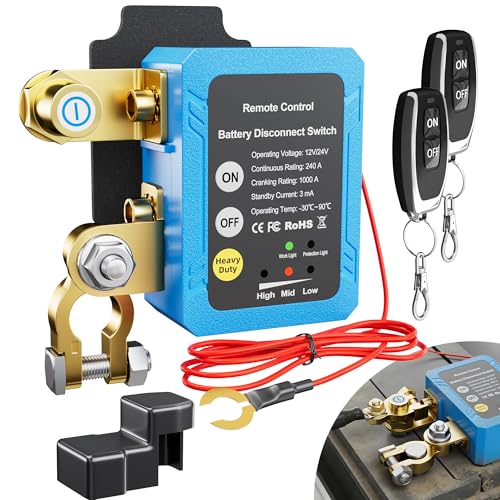
RVBOATPAT 12V 240A Remote Battery Disconnect Switch Kill Switch
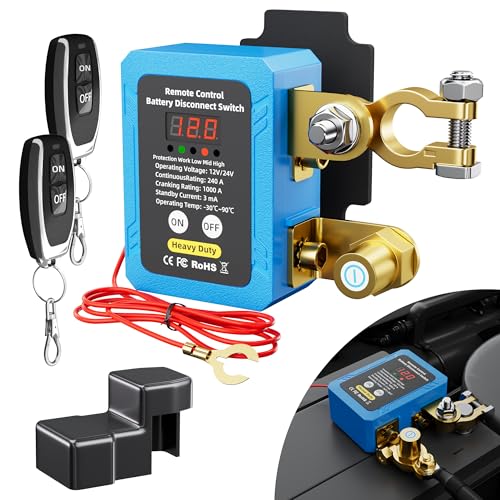
RVBOATPAT 240A Kill Switch 12V Remote Battery Disconnect Switch
RVBOATPAT Remote Battery Disconnect Switch 12V 240A Kill Switch

DNShorix Remote Battery Disconnect Switch 12v, Kill Switch for Car Truck

PTPUO Top Post Battery Disconnect Switch 12V, Car Battery Disconnect Switch

HINGTAI Car Battery Power Cut-Off Switch Breaker

TAINECTC Remote Battery Disconnect Switch 12V 140A with LED Voltage Display

DNShorix Remote Battery Disconnect Switch 12v, Kill Switch for Car Truck
FEITON’s setup leans toward convenience, especially for parked vehicles that still need occasional access without opening the hood every time. The dual remote approach gives you more flexibility than the purely manual options later in this list, and the higher starting current matters most on vehicles that need a firmer burst at startup.
The trade-off is that remote-cut systems usually ask more from installation and from your own habits, since a vehicle may need a short pause before restart after power is restored. That makes this a stronger fit for someone who wants remote control first and simple mechanical hardware second.
Strong Points
- Dual remotes make everyday use less fussy.
- 200A continuous handling suits many 12V vehicle setups.
- The 360A starting figure gives extra headroom for startup demand.
- Negative-terminal cutoff keeps the wiring approach straightforward.
- Useful for garage storage, commuting cars, and RV parking.
Things To Consider
- Remote systems add another layer to mounting and setup.
- Some vehicles may need a brief pause before restart after reconnecting power.
- Audio and electronic settings may need attention after a full disconnect.
Feature Snapshot
Who It Suits Best
You get the most from this model when you want remote battery control for a car, truck, or RV that sits unused for stretches.
Where A Sibling Pick Shines
PTPUO Top Post Battery Disconnect Switch 12V, Car Battery Disconnect Switch suits you better when you want a direct top-post setup with less remote complexity.
This RVBOATPAT model stays close to the practical middle ground. You get a 240A continuous rating at 12V, which is the sort of figure that makes sense for regular cars, trucks, and boats without drifting into specialty territory. Its low-voltage cut behavior is useful for parked vehicles that spend time sitting, because it helps the battery avoid deep discharge.
Compared with FEITON’s dual-remote setup, this pick feels more straightforward, which can matter in a busy garage or on a weekend trailer. The honest read is that it appeals most to someone who wants dependable remote cutoff without extra frills.
What We Like
- 240A continuous current suits a wide range of 12V vehicles.
- Remote operation keeps the battery area closed and tidy.
- Low-voltage cut behavior helps reduce parking drain stress.
- Works well for cars, trucks, and small watercraft.
Worth Noting
- Remote control convenience adds more parts to place carefully.
- The cutoff logic is useful, but it still depends on proper setup.
- Installation around the negative terminal needs a neat cable route.
Core Details
Who Will Love This
You’re a good match for this switch if you want a remote cutoff for a daily driver, utility truck, or boat without stepping up to more complex extras.
A Better Fit Elsewhere
TAINECTC Remote Battery Disconnect Switch 12V 140A with LED Voltage Display suits compact battery setups better when you want a smaller-capacity option with a display.
This version keeps the same 240A remote-switch idea but adds an LED voltage display, and that little screen changes how useful it feels in day-to-day ownership. Instead of guessing what the battery is doing, you can glance at the reading during storage checks, pre-trip routines, or after a long idle spell. That makes it a sensible fit for anyone who likes a bit more feedback from the system.
Compared with the simpler RVBOATPAT model just above, this one gives you more visibility, though it also adds another component that needs a clear mounting spot. In a crowded engine bay, that extra display may be the detail that matters most.
Highlights
- LED voltage readout adds useful status awareness.
- 240A continuous rating keeps it in the same capable class as the other RVBOATPAT unit.
- Remote cutoff helps limit battery drain during storage.
- Good fit for people who like quick visual checks before driving.
Small Caveats
- The display needs a visible, protected mounting location.
- Remote-control hardware still means more setup than a simple rotary switch.
- Bright sunlight or cramped placement can make small screens less handy.
Details At A Glance
Made For
You’ll like this most in a garage setup, trail vehicle, or boat where battery status matters as much as cutoff control.
Another Choice May Suit
RVBOATPAT 12V 240A Remote Battery Disconnect Switch Kill Switch is the simpler path for you if you want the same brand feel without the display.
The side-installation angle is the main reason this RVBOATPAT version stands apart. That layout can make life easier in tighter engine compartments or on vehicles where the battery area leaves little room for a straight-on mount. For a utility truck, ATV, or car with cramped access, that kind of flexibility matters more than flashy extras.
It keeps the same 240A remote cutoff idea, so the value here is mostly in the mounting approach rather than a different operating style. Compared with the FEITON unit, you give up dual remotes, but you gain a more adaptable installation path.
Upsides
- Side mounting opens up more placement options.
- Negative connection design fits familiar vehicle wiring.
- Anti-reverse connection protection helps reduce installation mistakes.
- Remote cutoff remains handy for storage and anti-drain use.
Areas To Watch
- More mounting flexibility can still require careful planning around cable length.
- Remote-control convenience is only as useful as the install location allows.
- The anti-contact design helps, but the wiring still deserves a slow, careful setup.
Spec Overview
Best Suited To
You get the most value from this one in a tight bay, small truck compartment, or ATV setup where side access is easier than a straight mount.
Look Elsewhere When
PTPUO Top Post Battery Disconnect Switch 12V, Car Battery Disconnect Switch fits you better if your battery setup already favors a direct top-post design.
DNShorix takes a smarter angle than the earlier remote units by tying cutoff behavior to battery voltage. That matters in a parked car that sees short errands and long idle periods, because the switch is trying to help before the battery gets too weak. You also get a clearer sense that this model is built around automatic behavior, not just manual cutoff.
Compared with the RVBOATPAT remote picks, this one may suit you better when you want the switch to do more of the thinking for you. The trade-off is simple enough, though: more logic usually means more to understand during setup.
Bright Spots
- Smart voltage logic adds a more automated layer of control.
- 240A rating keeps it in the same usable band as the larger remote models.
- Negative disconnect design works well for common vehicle layouts.
- Good fit for preventing drain in cars and trucks that sit between drives.
Points To Note
- Voltage-based behavior asks you to understand the trigger points before install.
- Remote and automatic functions make this more involved than a plain cutoff switch.
- A clean wiring path helps avoid confusion later on.
Feature Rundown
The Right Fit
You’ll appreciate this most if you park a car or truck for stretches and want voltage-aware automation rather than a purely manual cutoff.
Swap It Out When
RVBOATPAT 12V 240A Remote Battery Disconnect Switch Kill Switch is the safer choice for you if you want a simpler remote-only setup.
PTPUO shifts away from remote control and into a more direct top-post style, which can be a relief in a cramped engine bay. The angled swivel ends are the headline here, because they help the switch sit more naturally where straight hardware would crowd nearby components. In real use, that makes it better suited to owners who want a simple manual cutoff with better physical fit.
The removable knob is another practical touch, especially for vehicles that sit outside or in shared spaces. Compared with the remote picks above, this one asks for less electronic behavior and gives you a more hands-on feel, though it also gives up the convenience of remote operation.
Best Bits
- Angled swivel ends help in tight spaces.
- Top-post layout suits batteries that already use this style.
- Removable knob adds a simple layer of access control.
- 1000A cranking figure suggests solid startup tolerance.
- Good choice for straightforward manual battery isolation.
Softer Spots
- Manual operation means you must reach the switch.
- The top-post format only fits the right battery style.
- Removal and reattachment habits matter for daily convenience.
Feature Card
Whose Shelf It Belongs On
You get the best fit here when you want a manual disconnect for a vehicle with top-post terminals and limited room around the battery.
Reach For A Different Pick When
FEITON Remote Battery Disconnect Switch 12V Battery Kill Switch 200A suits you better if remote control matters more than direct-access hardware.
HINGTAI is the most material-focused option in the group, and that shows in how it’s positioned. The pure-copper contact path matters because copper is valued for low resistance and steady current flow, which is useful in a manual cutoff that you expect to use repeatedly. For owners who care more about a straightforward metal switch than remote extras, that clean approach has real appeal.
It stands apart from the remote models by staying simple, which can be a comfort in a work truck, boat, or RV supply setup. The trade-off is equally clear: you get a hard-wearing electrical path, but not the convenience of remote operation or a voltage display.
Reasons To Buy
- Pure copper construction supports steady conductivity.
- Manual cutoff keeps the design direct and easy to understand.
- Good fit for vehicles that see practical, repeated use.
- The breaker style suits users who prefer physical control over automation.
Minor Gripes
- No remote control, so access depends on where you mount it.
- The straightforward design offers fewer user-facing extras.
- Metal contact hardware still benefits from occasional visual checks.
Technical Sheet
Built With In Mind
You’ll get the most from this in a truck, boat, or RV where simple physical cutoff and steady conductivity matter more than remote features.
Where A Sibling Pick Shines
RVBOATPAT 240A Kill Switch 12V Remote Battery Disconnect Switch is a better fit for you if you want remote access and a voltage display in the same package.
TAINECTC is the lighter-capacity remote option here, and that narrower scope can actually be useful. The 140A rating paired with an LED voltage display makes sense for smaller battery setups where you want remote cutoff plus a quick visual check, not a bulky unit built for bigger loads. For compact cars or modest auxiliary systems, that balance can feel just right.
Compared with the 240A RVBOATPAT units, this one is more size-conscious and less overbuilt, which is exactly the point. The honest read is that it’s not the broadest fit in the lineup, but it suits its lane well.
What We Like
- 140A rating keeps the design aimed at smaller setups.
- LED voltage display gives quick battery feedback.
- Compact form should sit more easily in tighter spaces.
- Remote cutoff helps manage drain without direct battery access.
Trade Offs
- Lower current capacity limits it compared with the 240A picks.
- Display and remote parts still need a tidy install.
- Best fit depends on a battery size that stays within its stated range.
Core Details
Perfect Match For
You’re looking at a strong fit for compact cars or smaller auxiliary battery setups that need a remote disconnect without extra bulk.
Not Your Match When
RVBOATPAT 12V 240A Remote Battery Disconnect Switch Kill Switch is the wiser choice for you if your vehicle needs more current headroom.
This DNShorix version pushes the remote-switch idea a little further with a much lower standby draw. That detail matters more than it sounds like, because a kill switch meant to protect parked vehicles should avoid becoming another slow drain source. For commuters who leave a car sitting during work trips or airport stays, that lower standby figure is the part worth noticing.
Compared with the earlier DNShorix model, this one feels like the more refined option for owners focused on parking drain. The honest trade-off is that upgrade logic can add setup attention, but the payoff is a switch that better matches long idle periods.
Standout Traits
- Very low standby draw supports storage-friendly use.
- Smart voltage behavior helps the switch react to battery state.
- 240A class rating keeps it in the capable remote segment.
- Good fit for cars and trucks that sit unused for stretches.
Honest Caveats
- Automatic behavior rewards careful setup and a quick read of the instructions.
- Remote systems still need a neat mounting plan.
- The smarter feature set is more than a basic manual cutoff.
At A Glance
Who Should Grab It
You’ll like this most if your car or truck spends real time parked and you want the lowest-drain remote choice in this lineup.
Where Another Pick Suits Better
HINGTAI Car Battery Power Cut-Off Switch Breaker fits you better if you prefer a simple manual switch with pure copper contacts instead of automated control.
How To Choose The Right Car Battery Kill Switches
Match the control style to your routine
Remote switches help most when the battery sits in an awkward spot or you want power cutoff without opening the hood every time. Manual top-post or rotary styles make more sense for drivers who prefer simple hardware and don’t mind reaching the battery area.
That choice shapes the whole ownership experience. Remote convenience feels great in a garage or on a trailer, while a direct switch can feel more dependable for people who value plain mechanics over electronics.
Check current capacity against your vehicle
Continuous current is the number to watch first, because it tells you how much load the switch can support during normal use. Higher figures matter for larger vehicles, accessory-heavy setups, and systems that see bigger startup demands.
You don’t need the biggest number on the page just for the sake of it. A compact sedan, auxiliary battery, or weekend storage rig can fit a lighter model more cleanly, while trucks and RVs usually benefit from more margin.
Think about installation space and terminal type
Top-post batteries, side-mount layouts, and negative-terminal disconnects all point to different fits. The battery bay in a cramped sedan is a very different problem from the open compartment in a truck bed or boat console.
Measure access before you commit. A switch that looks great on paper can become annoying fast if the cable path is too short, the knob sits too close to a brace, or the display has nowhere sensible to live.
Choose features that solve a real problem
LED voltage readouts help when you want a quick check before driving after storage. Smart voltage logic helps when parked drain is the main concern, while dual remotes or removable knobs matter more for convenience and access control.
Extra features usually cost more because they add parts, wiring, and design work. The useful question is simple: does that feature answer a problem you actually have, or just add another thing to maintain?
Things Worth Knowing First
Hidden Buying Traps
Shoppers sometimes focus only on current numbers and miss fit, mounting style, or control method. That can leave you with a switch that looks strong but sits awkwardly in the battery bay.
Another common miss is forgetting the system around the switch, not just the switch itself. Audio presets, electronic memory, and restart habits may need attention after a full disconnect.
What The Higher Tier Buys
More expensive models in this category usually add remote control, voltage display, smarter cutoff logic, or better contact materials. Those parts matter because they can make the switch easier to use and more helpful in parked-vehicle situations.
You’ll feel the difference most in a daily driver that sits often, an RV that parks for weeks, or a boat that benefits from fast access. In simpler setups, a basic manual cutoff can still make plenty of sense.
Closing Thoughts
You have a solid spread here, from simple top-post hardware to remote switches with smarter voltage behavior. The best match comes down to how your vehicle is parked, how much room the battery area gives you, and whether you want a quick physical cutoff or a remote routine. FEITON and the two RVBOATPAT models suit remote convenience, while PTPUO and HINGTAI lean toward hands-on simplicity. Pick the one that fits your parking habits, and the rest tends to fall into place.
