

A good vehicle awning changes how you camp. Instead of huddling inside a tent or squinting through a windshield, you get instant shade at your tailgate, a dry spot to cook during a downpour, and a real living room that packs into a duffel. This roundup covers eight shelters built for SUVs, trucks, vans, and hatchbacks, from lightweight tailgate tents to bolt-on overland canopies.
The right choice depends on your rig and your habits. Weekend campers usually want something that sets up in minutes and stows small, while serious overlanders lean toward roof-rack mounted units with aluminum frames. Below you’ll find both styles, plus a few hybrid designs worth knowing about.
The Picks In Brief

Timber Ridge SUV Camping Tent

Timber Ridge SUV Camping Tent

HEYTRIP SUV Tailgate Tent with Poles & Stakes
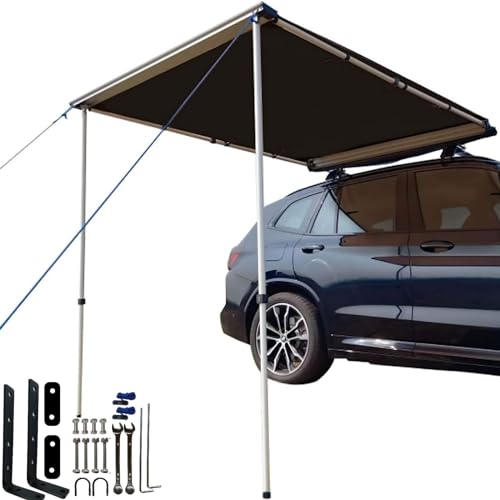
DANCHEL OUTDOOR Pull-Out Car Camper Awning 4.9×6.5ft Brown

ARB Canvas AWN 2500 X 2500 Fire Retardant Awning

UBOWAY Awning Sun Shelter for SUV Minivan Hatchback

Kelty Highroads Overlanding Shelter

Overland Vehicle Systems HD Nomadic 270 LTE Awning Driver Side
What Each Pick Brings To The Table
This is less an awning than a full annex that turns your SUV or van into base camp. The generous footprint sleeps up to five people or holds two air mattresses, and the tall center height means adults can walk around without stooping.
For families juggling kids, dogs, and coolers, that layout matters more than anything else. You keep the gear organized in one weather-resistant space instead of spreading it across three smaller shelters.
Useful Strengths
- The 13 x 10 foot layout gives a family genuine elbow room, not just sleeping bags packed shoulder to shoulder.
- An 87-inch center height lets you stand fully upright, which makes dressing kids and changing clothes far easier.
- A rainfly comes included, so wet-weather protection doesn’t require a separate purchase.
- A storage bag keeps the whole kit contained between trips.
Things To Consider
- Polyester construction needs to dry completely before storage, or mildew becomes a recurring chore.
- Setup takes longer than a simple pole-and-canopy awning since you’re pitching a full enclosure.
Key Specs
Who It Suits Best
Families of four or five who want a single spacious shelter attached to their vehicle rather than a separate tent site.
Where A Sibling Pick Shines
Couples traveling light will find the HEYTRIP SUV Tailgate Tent faster to deploy and easier to store in a crowded cargo area.
Same family, slightly different role. Where the first Timber Ridge entry reads as a group shelter, this variant suits pairs who split time between sleeping in the vehicle and lounging outside it. The khaki polyester shell blends into campsites nicely and shrugs off light weather.
You may find the screen panel especially useful in buggy conditions, since airflow stays strong while insects stay out. It’s the kind of setup that works well at drive-in campgrounds where you want privacy without giving up your car’s cargo space.
A Favorable Mix
- Weighs the comfort of home against the flexibility of car camping, letting you sleep in the vehicle and use the annex as a lounge.
- Weather-resistant fabric holds up across multi-night trips in mixed conditions.
- Rolls into its included bag compactly enough for most cargo areas.
Small Caveats
- Owners commonly report needing a second pair of hands for the fastest, tautest pitch.
- Five-person capacity claims assume tight quarters; realistic comfort sits closer to three adults.
Made For
Couples or small groups who car-camp regularly and value interior livability over minimal pack size.
Another Choice May Suit
Anyone wanting true shade rather than an enclosed room should look at the UBOWAY Awning Sun Shelter, which covers more ground with less fuss.
Most budget tailgate tents sag like wet laundry because they rely on soft, unstructured fabric. The HEYTRIP fixes that with steel support poles and stakes, giving the canopy a firm frame that resists wind better than floppy strap-on designs.
That structural approach makes it a smart first awning. Nothing bolts to your roof rack, nothing requires drilling, and the whole thing converts your open tailgate into a covered porch in minutes. Tailgating, beach days, and roadside lunch stops all benefit.
What Works In Its Favor
- Steel poles and included stakes create a rigid structure that won’t droop mid-afternoon.
- Waterproof fabric keeps the tailgate zone usable during light rain.
- No permanent mounting means any SUV, van, or crossover can use it.
- Quick deployment suits short stops where a roof-mounted unit would be overkill.
Points To Note
- Poles and stakes mean more parts to track and repack compared with a single-piece canopy.
- In sustained high wind you’ll want to re-tension guy lines periodically.
Feature Snapshot
The Right Fit
First-time campers and tailgate hosts who want structured shade without committing to roof hardware.
Swap It Out When
Overlanders running a roof rack full time will prefer the DANCHEL OUTDOOR Pull-Out Car Camper Awning for its permanent, faster-deploying design.
Small rigs need small awnings, and this DANCHEL unit is sized exactly for that job. At roughly 4.9 by 6.5 feet it throws about 32.5 square feet of shade, enough for a chair, a stove table, and a person standing under it, which suits the sides of compact 4×4 vehicles well.
The all-aluminum frame with reinforced welded joints is the headline here. Compared with the fabric-heavy HEYTRIP tailgate tent, this is a permanence play: mount it once to your rack, then roll it out in seconds whenever you stop.
Strong Points
- 420D oxford fabric carries a PU2000mm waterproof rating, so passing showers won’t end your break.
- The dark brown shell hides dust and stains, cutting cleaning time between trips.
- At around 17 pounds packaged, it won’t overload a small roof rack.
- Reinforced metal hinges handle repeated roll-out cycles without wobble.
Worth Noting
- Coverage is modest; a picnic table plus chairs will spill past the shaded edge.
- You’ll need a compatible roof rack and mounting points before anything else.
Details At A Glance
Best Suited To
Drivers of smaller 4x4s and crossovers who want permanent rack-mounted shade without the bulk of a large expedition awning.
Look Elsewhere When
Those wanting maximum coverage per dollar should step up to the Overland Vehicle Systems HD Nomadic 270 LTE, which spreads 65 square feet from a driver-side mount.
ARB builds equipment for expeditions, not parking lots, and this 2500 x 2500 canvas awning reflects that pedigree. The fire-retardant treatment meets US and Canada specifications, a detail that matters at organized events and certain campgrounds where flame resistance is expected.
Canvas itself is the material difference. Unlike lighter polyester shells, canvas feels denser, blocks glare more thoroughly, and tends to age into a rugged patina rather than wearing thin. The honest read is that you pay for durability and brand engineering here, and long-term overland travelers generally consider that trade worthwhile.
Features That Help
- Fire-retardant canvas meets US/Canada spec requirements for regulated venues and events.
- The 2500 x 2500 format delivers substantial shade for cooking and seating zones.
- Heavy-duty construction suits vehicles that see constant backcountry use.
Less Ideal Details
- Canvas absorbs water and must be dried thoroughly before storage to avoid mildew.
- Added weight and bulk demand a stout roof rack and careful load planning.
Whose Shelf It Belongs On
Expedition-oriented overlanders with heavy-duty racks who prioritize material toughness and compliance-ready materials above pack weight.
Reach For A Different Pick When
Weekend users who rarely leave paved campgrounds will find the Kelty Highroads Overlanding Shelter easier to live with day to day.
Nine pounds. That’s the entire weight of this shelter, and it compresses to roughly yoga-mat dimensions in its carrying bag. For hatchback travelers whose cargo space disappears the moment two duffels go in, that packability is the whole argument.
Coverage still lands around 60 to 70 square feet once pitched, which comfortably shades a couple of chairs and a cooler. The trade-off shows up in rough weather: a shelter this light won’t match the composure of the ARB canvas unit when gusts pick up, so stake it carefully and pick sheltered sites.
The Case For It
- Approximately 60-70 sq ft of shade from a package weighing just nine pounds.
- Carrying bag makes moving it between sites, or tossing it behind seats, effortless.
- Waterproof fabric handles sun showers and drizzle without drama.
- Fits SUVs, minivans, and hatchbacks without dedicated mounting hardware.
Factors To Consider
- Lightweight build means wind performance depends heavily on proper staking and site choice.
- Expect a learning curve on the first pitch; tensioning takes a try or two to get flat.
Core Details
Who Will Love This
Road trippers in hatchbacks and minivans who want real shade coverage but can’t spare cargo volume for a bulky kit.
Consider Something Else When
Campers who need an enclosed bug-proof room will be happier with the Timber Ridge SUV Camping Tent’s full annex design.
Kelty approached this shelter like a tent designer, not a rack-hardware company, and it shows. Adjustable sidewalls let you dial in privacy or airflow depending on conditions, and a large zippered entry turns the space into something closer to a room than a shade sail.
The aluminum frame keeps the structure stable, and UV protection plus rainproof fabric cover the weather basics. In practice this is the pick for van lifers who treat their vehicle as a mobile apartment and want an outdoor extension that adapts throughout the day.
Real-World Strengths
- Adjustable walls convert between open-air shade and enclosed privacy within minutes.
- Zippered entry adds security and insect control that plain canopies can’t offer.
- Aluminum framing provides dependable support season after season.
- Universal mounting fits vans, trucks, and SUVs on standard racks.
- Stuff duffel simplifies packing and keeps everything together in transit.
Potential Sticking Points
- More panels and zippers mean more upkeep; seams deserve a check before long trips.
- Full enclosure setup takes noticeably longer than rolling out a basic pull-out awning.
Right Fit For
Van dwellers and frequent car campers who want configurable living space rather than a fixed shade rectangle.
Skip It When
Minimalists chasing sub-ten-pound kits should stick with the UBOWAY Awning Sun Shelter instead.
This is the big swing in the lineup: a 270-degree wraparound awning delivering 65 square feet of coverage along the driver side of your rig. Reinforced oversized hinges and heavy-duty rafters do the work of traditional poles, so there’s essentially nothing to assemble at camp beyond swinging it open.
The 280G poly-cotton ripstop fabric uses heat-sealed seams to limit leaks, and a universal L-bracket mounts to most roof racks. Compared with the compact DANCHEL unit, this is the choice for people who live out of their vehicle for weeks at a time and never want to think about setup again.
Notable Gains
- Twist-and-lock deployment means no poles to carry, sort, or lose.
- Heat-sealed seams on 280G poly-cotton ripstop reduce seepage in steady rain.
- 65 sq ft wraps the driver side, shading both cooking and seating zones at once.
- Universal L-mounting brackets adapt across a wide range of roof racks.
- Stows in a durable PVC travel cover that protects the fabric between stops.
Trade-Offs To Consider
- Wraparound designs add meaningful weight; verify your rack’s load rating before mounting.
- Driver-side configuration only, so left-side campers should check orientation carefully.
The Numbers That Matter
Who Should Grab It
Full-time and long-route overlanders with sturdy roof racks who want maximum coverage with near-zero setup effort.
A Better Fit Elsewhere
Occasional weekenders without a heavy-duty rack will get more practical value from the HEYTRIP SUV Tailgate Tent.
What Matters Most Before Choosing Car And Truck Awnings
Match The Mount To Your Rig
Roof-rack awnings reward commitment. They deploy in seconds and stay put, but they need a rated rack, correct brackets, and awareness of added height in garages. Strap-on tailgate tents skip the hardware entirely, which suits leased vehicles and mixed-use daily drivers who only camp occasionally.
Size Against Your Actual Group
Manufacturers quote coverage generously. A “five-person” annex fits five sleeping bags tightly, while a 32-square-foot canopy shades one table realistically. Count chairs, coolers, and cook stations before choosing square footage, then round up one size.
Material Drives Lifespan
Polyester keeps weight down and dries fast; canvas blocks light and heat better but demands thorough drying before storage. Ripstop weaves resist tearing at stress points. Heavier fabric almost always means longer service life in sun-baked climates.
Weather Reality Check
Waterproof ratings such as PU2000mm describe how much water pressure fabric withstands before leaking. Higher numbers help in sustained rain, but seam construction matters just as much, since most leaks start at stitching rather than fabric.
Key Considerations Across These Picks
Wrong Turns To Avoid
The most common mistake is buying coverage you can’t carry. A 65-square-foot wraparound on a stock crossover rack creates handling problems and possible damage. Measure your rack, confirm load limits, and be honest about how often you’ll actually deploy the thing. Second slip: ignoring drying time, which quietly ruins fabric stored damp.
What Separates Premium From Basic
Higher-tier awnings spend money on frames and seams, not fabric alone. Welded aluminum joints, heat-sealed stitching, and oversized hinges survive hundreds of deployments that budget hardware won’t. Paying up makes sense once you’re camping monthly; for a handful of trips a year, simpler designs deliver nearly all the benefit.
Bottom Line
Pick based on how often you camp and what your vehicle can carry. Families get the most from the Timber Ridge annexes, light packers from the UBOWAY, and committed overlanders from the ARB or Overland Vehicle Systems units. Match the mount to your rack, respect the fabric care, and any of these eight will earn its place on your next trip.
