

Anyone who has wrestled a bike into a trunk knows the frustration: scratched paint, dropped seats, and a back seat that never folds down quite right. A roof rack ends that fight. This guide walks through eight well-regarded bicycle roof racks for car use in 2026, covering upright carriers, fork mounts, and even a suction-cup option for cars without crossbars, so you can match the right carrier to your vehicle and riding style.
A Snapshot Of The Selections

Yakima FrontLoader Rooftop Bike Rack
Swagman Standard Fork Mount Roof Bike Rack

ROCKBROS Suction Cup Bike Rack Aluminium Alloy

Thule UpRide Roof Bike Rack 20-29″
Yakima Forklift Fork Mount Bike Carrier
INNO INA389 Universal Mount Tire Hold II Roof Rack

Thule ProRide XT Roof Bike Rack

RockyMounts Tomahawk Upright Roof Bike Rack
The Strengths Of Each Pick
The FrontLoader takes an upright approach: your bike rolls onto a tray and clamps at the wheel, so the frame never gets touched. That matters if you rotate between aluminum, steel, and carbon bikes, since nothing rubs the tubes. Yakima builds it to mount on round, square, factory, and aero crossbars straight from the box.
For someone loading a bike before work every morning, the sliding wheel tray is the part you’ll appreciate most. It adjusts to different bike lengths without tools, and owners commonly report the whole install takes minutes once it’s dialed in.
The Practical Payoff
- No frame contact means carbon and painted finishes stay unmarked over years of weekend trips
- Tool-free mounting and removal lets you swap the rack between vehicles quickly
- Sliding tray accommodates a wide range of bike sizes without extra adapters
- Clearance designed around most disc brakes, so modern mountain bikes fit as-is
- Compatible with Yakima’s SKS lock cores for added theft deterrence when parked in town
Small Caveats
- Lock cores are sold separately, so budget for them alongside the rack itself
- Upright trays sit taller than fork mounts, which can matter in low garages
Key Specs
Who It Suits Best
Riders who own several bike styles and want one dependable carrier that handles all of them.
Where Another Pick Suits Better
Drivers chasing the lowest possible profile should look at the Yakima Forklift below, whose fork-mount design sits flatter against the roof.
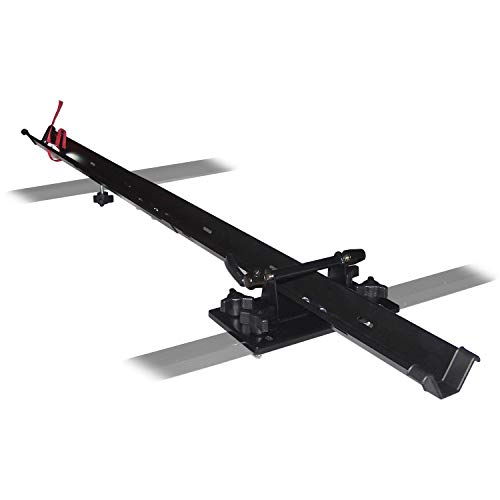
Fork mounts are the old-school answer to roof transport, and Swagman has been building them since the early days of the category. Instead of holding the whole bike upright, this unit clamps your front fork to a block while the rear wheel rides in a tray. The result is a very low, stable silhouette that barely notices headwinds.
It’s built specifically around 9mm quick-release skewers, the standard on road and older mountain bikes. Commuters who already know how to pull a front wheel will find the routine second nature within a trip or two.
The Case For It
- Sits lower than any upright carrier, reducing wind drag and garage-height worries
- Direct fork clamping holds the bike rock-steady on long highway runs
- Simple mechanical design means fewer parts to wear out or rattle loose
Points To Keep In Mind
- Removing the front wheel every time adds a step that upright racks skip entirely
- Not suited to thru-axle forks without separate adapters, so check your bike first
Made For
Road cyclists with quick-release forks who value a low profile and straightforward mechanics over one-step loading.
A Better Fit Elsewhere
Thru-axle owners will be happier with the RockyMounts Tomahawk later in this list, which grips the wheel instead of the fork.
No crossbars? That used to mean a full rack installation. ROCKBROS sidesteps the problem with suction cups bonded to an aluminum alloy frame, letting the carrier stick directly to a car’s roof panel. Sedans, coupes, hatchbacks, SUVs, and vans with reasonably flat roof surfaces are all fair game.
The quick-release mechanism speeds up mounting compared with bolted hardware. Just understand the physics: suction adhesion depends on surface condition, so clean glass-smooth panels and heavily curved roof edges are where this design struggles.
Useful Touches
- Attaches without crossbars, opening roof transport to bare-roof vehicles
- Aluminum alloy construction keeps weight down for easy handling
- Quick-release hardware makes setup faster than fixed-mount systems
Honest Caveats
- Oversmooth roof surfaces reduce suction grip, limiting which cars it suits
- Strongly sloped roof edges can affect stability on some body styles
- Cups need cleaning and inspection before every trip, an upkeep habit some owners skip
Quick Facts
Right Fit For
Weekend trippers driving sedans or SUVs with flat roofs who don’t want permanent rack hardware.
Consider Something Else When
Curved or glass panoramic roofs call for a conventional carrier like the Thule ProRide XT instead, which bolts to crossbars for predictable hold.
Where the Yakima FrontLoader avoids frame contact through its tray, the Thule UpRide does it with a single hook that grabs the front wheel. Nothing but rubber touches your bike, which is exactly what owners of fragile carbon frames want to hear. Bikes from 20 to 29 inches fit, up to a stated 44-pound limit.
Loading stays fast because there’s no wheel removal, and the hook design keeps the bike locked in place rather than resting loosely. For anyone transporting a race bike worth more than the car it rides on, that peace of mind justifies the premium positioning.
Where It Delivers
- Wheel-hook attachment leaves frames, forks, and finish completely untouched
- Handles bikes up to 44 lbs, covering most road, gravel, and hardtail setups
- Universal upright format loads quickly without removing wheels or adapters
- Fits the common 20 to 29-inch wheel range across bike types
- Secure clamping gives confidence on rough roads and long drives
- Suits carbon fiber constructions that dislike frame clamps
Things To Weigh
- Carries a higher price than comparable upright trays, a real factor for occasional users
- E-bikes and heavy downhill rigs may push past the stated weight ceiling
Who Will Love This
Owners of high-value carbon road or gravel bikes who prioritize frame protection above cost.
Look Elsewhere When
Fat-bike households should turn to the RockyMounts Tomahawk, whose wider tire capacity handles oversized rubber natively.
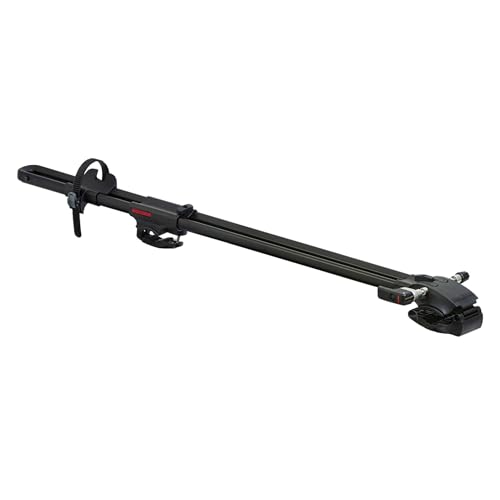
The Forklift is Yakima’s take on the fork-mount formula, wrapped in a sleek mirror-black housing with an intentionally low aerodynamic stance. Like the Swagman earlier in this list, it requires pulling the front wheel, but Yakima’s execution feels more refined and integrates neatly with the brand’s crossbar ecosystem.
It accepts round, square, factory, and aero bars without adapters, and the tool-free installation means the whole thing comes off in moments when you need bare roof. Daily drivers watching fuel economy tend to gravitate here, since the slim profile generates less drag than tall upright trays.
Key Advantages
- Low-profile shape cuts wind resistance versus upright carriers on highway commutes
- Tool-free mounting simplifies seasonal removal and vehicle swaps
- Broad native compatibility with four crossbar styles avoids adapter costs
Worth Bearing In Mind
- Front-wheel removal is required every trip, adding a minute or two of fiddling
Best Suited To
Commuters and road riders already running Yakima bars who want the flattest, quietest setup available.
Another Choice May Suit
Anyone unwilling to remove a wheel should choose the INNO Tire Hold II reviewed next, which secures the bike by its tires alone.
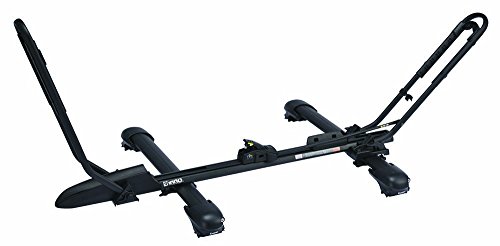
Most upright racks clamp somewhere on the bike. INNO’s Tire Hold II refuses to touch anything except rubber, securing the front and rear tires while leaving the frame, brake calipers, and fork alone. A rear ratcheting arm pulls everything snug, and the improved tire-size adjuster works without tools.
The universal mounting system covers square, round, aero, and most factory bars. Families sharing one rack across kids’ bikes and a carbon road machine will find the no-contact philosophy genuinely reassuring, and loading stays quick because nothing needs disassembling first.
Notable Upsides
- Grips both tires, protecting frames, calipers, and forks from clamp pressure
- Supports carbon fiber frames that other designs can stress
- Tool-free install across square, round, aero, and most factory bars
- Ratcheting arm tightens securely and doubles as a lock point
Practical Considerations
- Very narrow road tires may need a careful fit check in the wheel holders
- Ratchet mechanism benefits from an occasional wipe-down to stay smooth
Details At A Glance
Perfect Match For
Multi-bike households mixing delicate carbon frames with everyday riders’ machines.
Skip It When
Solo roadies who already ride quick-release forks may prefer the simpler, cheaper Swagman fork mount from earlier in the list.
Thule’s ProRide XT answers a question most racks ignore: how do you know the clamp is tight enough? Its torque limiter dial clicks clearly once proper tension is reached, removing guesswork from every load-up. Soft claw pads cushion the frame while diagonal wheel straps add stability at speed.
The tool-free interface also lets you switch the carrier from one side of the vehicle to the other, handy when a second rack joins the roof. Frequent highway travelers are the natural audience here, since the combination of clear feedback and strapped wheels pays off over hundreds of miles.
Positive Points
- Torque limiter dial gives visible confirmation of correct clamping force
- Diagonal wheel straps steady the bike against wind and vibration
- Side-swappable mounting adds flexibility as your rack collection grows
Less Ideal Details
- Clamp pads contact the frame, so ultra-delicate finishes deserve extra padding care
- Lightweight build means checking fasteners periodically through the season
Who Should Grab It
Regular long-distance drivers who want unambiguous feedback that their bike is secured correctly.
Reach For A Different Pick When
Carbon-frame purists uncomfortable with any frame contact should step up to the Thule UpRide, which grips only the front wheel.
Few upright carriers cover this much ground out of the box. The Tomahawk holds fat bikes, road machines, mountain bikes, downhill rigs, and even children’s bikes without buying accessories, gripping wheels from 20 to 29 inches and tires up to five inches wide. Frame contact is avoided entirely, echoing the approach of the Thule UpRide at a friendlier entry point.
It mounts to all common crossbar styles, so pairing it with whatever bars already live on your roof is rarely a problem. Households whose garage contains three different kinds of bikes will get the most mileage from this flexibility.
Positive Takeaways
- Accommodates fat, road, mountain, downhill, and kids’ bikes with zero add-ons
- Wide 20 to 29-inch wheel range plus 5-inch tire clearance future-proofs the purchase
- No frame contact protects carbon and painted surfaces alike
- Fits all major crossbar styles without extra hardware
- Value-oriented pricing relative to feature set
A Few Limitations
- Upright height can challenge covered parking structures, a common complaint with tray-style racks
- Owners report the arms benefit from periodic tightening checks after rough roads
Feature Rundown
Built With In Mind
Families and multi-discipline riders whose fleet spans fat tires, kid bikes, and everything between.
Swap It Out When
Drivers wanting the absolute lowest roofline for daily commuting may prefer the Yakima Forklift’s fork-mounted, wind-cheating form.
What Matters Most Before Choosing Bicycle Roof Racks For Car
Start With Your Crossbars
Every roof rack hangs off your car’s crossbars, the horizontal rails spanning the roof. Confirm their shape, whether round, square, aero, or factory-issued, before ordering. Several picks here, including the Yakima FrontLoader and INNO Tire Hold II, handle multiple bar styles natively, while others assume a standard system. Skipping this check is the fastest route to a return shipment.
Match The Attachment To Your Bike
Fork mounts like the Swagman and Yakima Forklift demand a removable front wheel and suit quick-release forks best. Upright trays keep both wheels on and load faster, which matters on busy mornings. Carbon frames deserve wheel-only contact designs such as the Thule UpRide or INNO Tire Hold II. E-bikes and fat bikes need explicit weight and tire-width allowances, so verify those numbers against your heaviest machine.
Factor In Height And Drag
Upright carriers add meaningful height, and low garages or parking decks punish forgetful drivers. Fork mounts sit flatter and cut wind noise, a real consideration for daily commuters tracking fuel use.
Think About Security
Lock cores, ratcheting arms, and locking skewers vary widely across these eight picks. Some include them; others sell them separately. Budget accordingly if you park in public lots.
Key Considerations Across These Picks
Traps First Timers Fall Into
Ordering a rack without confirming your crossbar shape tops the list of avoidable errors. Close behind: ignoring thru-axle versus quick-release fork standards, and forgetting that garage clearance shrinks once a bike sits on the roof. Measure first, then buy.
Where The Extra Money Goes
Premium models like the Thule UpRide spend their price on engineering details: torque feedback, frame-free contact, and refined clamping geometry. Occasional riders won’t feel those differences. Anyone hauling a costly carbon bike weekly will consider every dollar well spent.
Bottom Line
Roof transport rewards matching the carrier to your specific situation: your bars, your bikes, your parking habits. Riders with mixed fleets lean toward the RockyMounts Tomahawk or Yakima FrontLoader, while carbon owners find their answer in the Thule UpRide. Bare-roof cars have the ROCKBROS suction option. Whichever direction you go, measure your setup first and let your bike’s frame material make the final call.
