

Weekend rides shouldn’t start with a wrestling match in the driveway. The right rack gets your bikes onto the car in minutes and keeps them quiet at highway speed, whether you’re hauling a family fleet or a pair of heavy e-bikes. This guide sorts eight well-regarded carriers by hitch capacity, roof mounting, and trunk strap designs, so you can match one to your vehicle and riding habits without guesswork.
The Choices Worth Comparing
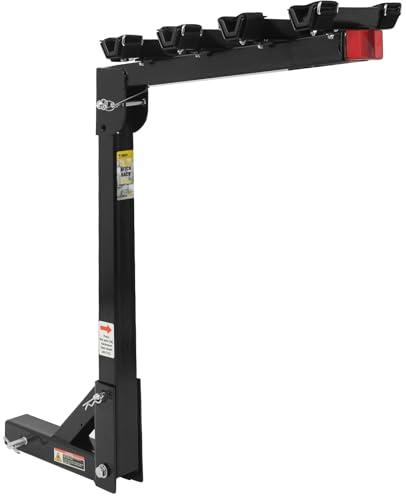
MaxxHaul 70210 Hitch Mount 4 Bike Rack

Yakima DoubleDown 4 Hitch Mount Bike Rack

Yakima FrontLoader Rooftop Bike Rack
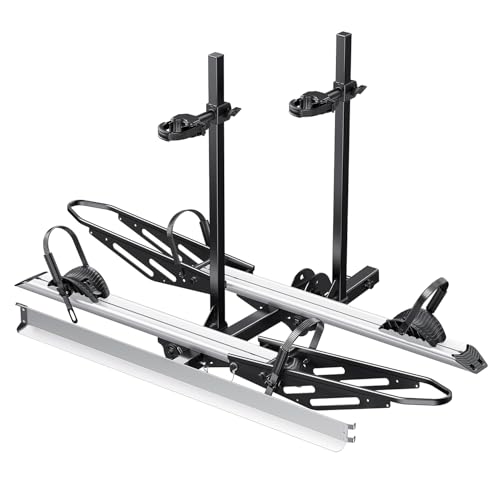
Young Electric Hitch Mount Bike Rack with Ramp

TANX 2-Bike Hitch Bike Rack for Ebikes 160 lbs

Young Electric Ebike Rack with Ramp 200 lbs

Allen Sports Deluxe+ 2-Bike Trunk Mounted Carrier
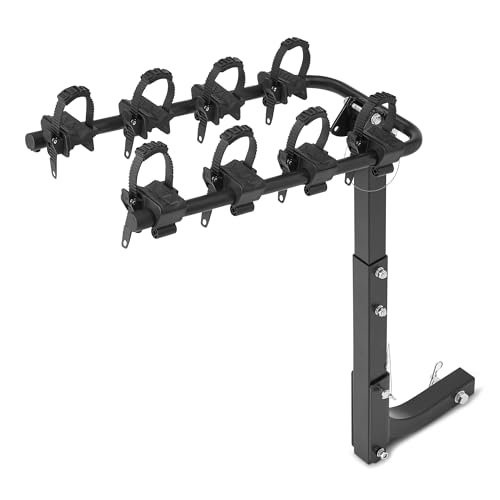
Amazon Basics 4-Bike Hitch Rack with 2″ Hitch
The Details Behind The Selections
A hitch mount rack slides into the square receiver tube at the back of your vehicle, and this one targets the most common 2-inch size found on trucks and SUVs. Four bikes ride on hanging arms rather than platforms, which keeps the unit lighter and simpler than the e-bike carriers later in this list.
The swing-down hinge matters more than people expect. With bikes loaded, you can pivot the whole assembly away from the tailgate and still reach groceries or camping gear, something fixed-arm racks force you to unload for.
Strengths Worth Knowing
- Carries up to four bikes within a 150-pound total limit, enough for a family of casual riders.
- Swing-down access means no unloading just to open the rear hatch.
- Powder-coated steel construction resists rust through wet-season driving.
- Adjustable cradles with hook-and-loop straps keep frames from clanking against each other.
- A built-in reflector improves visibility for night drives home from the trailhead.
Things To Consider
- Hanging-style arms contact top tubes, so step-through frames may need an adapter bar.
- Owners commonly report that checking strap tension after bumpy roads keeps everything secure.
Key Specs
Who Should Grab It
Households with standard-frame bikes and a 2-inch hitch who want dependable four-bike carrying without paying platform-rack prices.
Swap It Out When
E-bike owners should look at the Young Electric rack with ramp instead, since its 200-pound platform rating suits heavier machines far better.
Where the MaxxHaul locks you into a 2-inch receiver, the DoubleDown accepts both 1.25-inch and 2-inch hitches. That dual fit makes it an easy choice for anyone juggling a sedan and a truck, since one rack moves between vehicles without adapters.
Yakima built this as a tilting rear mount with folding arms and anti-sway cradles, so bikes stay separated and the whole unit tucks closer to the bumper when empty. One honest limitation: the 30-pound-per-bike ceiling rules out most e-bikes entirely.
What It Does Well
- Dual-receiver compatibility covers 1.25-inch and 2-inch hitches across cars, SUVs, and trucks.
- Anti-sway cradles reduce frame-to-frame contact on rough pavement.
- Folding arms shrink the profile for parking and garage storage.
- Handles road, mountain, and hybrid frames up to four bikes.
Small Caveats
- Non-standard frames such as step-through, BMX, kids’, and some full-suspension models require the separate TubeTop accessory.
- The 120-pound total rating trails the platform racks here, so heavy builds are off the table.
- Some owners note the tilt mechanism needs occasional lubrication to stay smooth.
Made For
Multi-vehicle households carrying conventional diamond-frame bikes who value one rack that fits whatever they drive that day.
Where A Sibling Pick Shines
Riders wanting roof-mounted carrying that never blocks the trunk should consider the Yakima FrontLoader below instead.
This one changes the equation completely: the bike rides upright on the roof, clamped by its front wheel, leaving trunks and hatches untouched. For sedan and hatchback drivers without a hitch, it’s often the cleanest path to bike transport.
The tray’s sliding wheel mount adjusts to different bike lengths, and disc-brake rotors clear the design without fuss. Installation is tool-free once the tower sits on the crossbar, and Yakima states it fits their round and square bars plus many factory and aero bars right away. In our view, that breadth of crossbar compatibility is the real selling point.
The Good Stuff
- No hitch required, opening transport to nearly any vehicle with roof rails.
- Tool-free mounting and removal make seasonal swaps painless.
- Sliding wheel tray accommodates varied frame sizes and wheelbases.
- Front-wheel clamp holds the bike independently of frame shape.
Points To Note
- Lifting a bike overhead takes some effort, a real factor for shorter drivers or taller SUVs.
- Lock cores are sold separately, worth budgeting for street parking.
- Rooftop carrying adds height, so garage doors and low branches demand attention.
Feature Snapshot
Right Fit For
Sedan, wagon, and crossover owners with existing crossbars who want secure single-bike carrying without touching the bodywork.
Another Choice May Suit
Drivers with a 2-inch hitch and two heavy bikes will find the Young Electric ramp rack far easier on the back.
An e-bike can weigh as much as two regular bikes combined, and lifting one onto a hanging rack is a genuine chore. This platform-style carrier solves that with a rolling ramp: you walk the bike up on its own wheels instead of deadlifting it.
Reinforced steel and aluminum construction supports two bikes at 100 pounds each, with fat tires and standard wheels both welcome. A patented anti-wobble structure at the hitch shank keeps the load from swaying into your bumper on rough roads, which owners of heavy setups tend to call out as the difference-maker.
The Case For It
- 200-pound total rating carries two full-size e-bikes comfortably.
- Included ramp turns loading into a walk-up task rather than a lift.
- Platform trays accept fat tires and standard wheels alike.
- Anti-wobble hitch design cuts sway and protects vehicle paint.
- Fits cars, SUVs, RVs, and trailers with a 2-inch receiver.
Less Ideal Details
- Platform racks are bulkier to store than folding hanging arms when not in use.
- The added weight makes solo installation onto the hitch a two-person job for some users.
Core Details
Who Will Love This
E-bike commuters and RV travelers who dread hoisting 60-plus-pound machines onto a carrier every trip.
Look Elsewhere When
Riders sticking with lightweight acoustic bikes and needing four-bike capacity get better value from the MaxxHaul 70210.
Sitting between the Young Electric units on capacity, the TANX platform carries two bikes up to 160 pounds combined while keeping the structure leaner. Road, mountain, and fat-tire builds up to 5 inches wide all fit the trays, which is generous territory for a mid-tier carrier.
The smart tilting mechanism earns its name twice over: it folds down when idle and tilts away from the vehicle when loaded, preserving tailgate access. You may find the lack of an included ramp noticeable next to the Young picks, so plan on a modest lift for each bike.
A Strong Showing
- Universal 2-inch hitch fit spans sedans, SUVs, trucks, and RVs.
- Trays handle tires up to 5 inches wide, covering most fat bikes.
- Tilting and folding design balances cargo access with compact storage.
- Platform layout keeps frames free of hanging-contact stress.
What To Weigh
- No ramp included, unlike the Young Electric models, so heavier e-bikes take muscle to load.
- Two-bike maximum limits group rides compared with the four-carriers earlier in this list.
Built With In Mind
Fat-tire and mid-weight e-bike riders with a 2-inch hitch who want platform stability and tilting access without the heaviest-duty price tier.
Reach For A Different Pick When
Riders whose bikes exceed 80 pounds each should step up to the Young Electric Ebike Rack, whose 100-pound-per-slot rating removes the doubt.
This is the sibling to pick 4, refined for serious e-bike duty. The V-groove ramp channels your front wheel straight up onto the deck, which helps enormously with wide fat tires that tend to wander on flat ramps. Steel-and-aluminum construction brings the rack itself to around 66 pounds, a sign of substantial build rather than a flaw.
Wheelbases stretch to 50 inches and tires up to 5 inches wide sit in patented cradles with enhanced grip, so long-wheelbase cruisers and chunky trail rigs both land securely. Compared with the TANX above, you trade a bit of portability for the ramp and higher per-bike ceiling.
Why It Works Well
- V-groove ramp guides fat tires predictably during loading.
- 100 pounds per slot covers virtually every consumer e-bike on the market.
- Patented anti-wobble hardware quiets the connection between rack and receiver.
- Foldable design reduces storage footprint between trips.
- Accepts mountain, standard, and electric bikes interchangeably.
Potential Sticking Points
- At roughly 66 pounds, moving the rack on and off the hitch alone is genuinely difficult.
- Owners commonly recommend storing it indoors to keep the ramp surface grit-free.
The Numbers That Matter
The Right Fit
Owners of two heavyweight e-bikes, especially fat-tire models, who load up frequently enough to justify the ramp investment.
Consider Something Else When
Apartment dwellers with limited storage may prefer the foldable Amazon Basics rack, which packs flatter when parked.
No hitch? No crossbars? A trunk-mounted rack straps to the back of the car itself, and Allen has refined this category for decades. The Deluxe+ carries two bikes up to 100 pounds total using individual tie-down cradles that separate the frames.
Compatibility stretches across sedans, hatchbacks, minivans, and SUVs, which makes it the most universal option in this roundup. The honest trade-off is paint contact: straps rest against body panels, so careful placement and periodic re-tensioning matter, particularly before long interstate runs.
Useful Highlights
- Works on vehicles with no hitch or roof rails whatsoever.
- Individual dual tie-downs hold each bike separately, reducing frame clash.
- Lightweight and compact enough to live in a trunk between uses.
- Suits weekend trips and longer road journeys alike.
Honest Caveats
- Straps contact painted surfaces, so padding checks before each drive are wise.
- Trunk access disappears while mounted, unlike swing-down or tilting hitch designs.
- Fit varies by vehicle shape, worth confirming against your specific model first.
Whose Shelf It Belongs On
First-time rack shoppers and occasional riders in apartments or rentals who want simple, storable transport without permanent hardware.
Skip It When
Anyone hauling e-bikes should pass entirely; the MaxxHaul 70210 offers far greater capacity at hitch-mount stability for similar money.
Closing out the list is the straightforward family workhorse: four bikes, 132 pounds total, powder-coated steel frame, and a folding design that flattens for garage shelves. Where the MaxxHaul swings down for cargo access, this one folds up for storage, a different answer to the same space problem.
An anti-rattle mechanism dampens the hitch connection, cutting the metallic chatter that plagues cheaper four-bike racks on expansion joints. Reinforced tie-downs secure each bike, and the 2-inch receiver fit covers most modern SUVs and pickups.
Standout Benefits
- Folds flat, making off-season storage realistic in tight garages.
- Anti-rattle design noticeably reduces noise and wobble on the move.
- 132-pound capacity suits four standard bikes or lighter hybrids.
- Powder-coated steel stands up to weather exposure between trips.
A Few Limitations
- No swing or tilt function, so the tailgate stays blocked while loaded.
- Hanging arms mean step-through frames may need a crossbar adapter.
Product At A Glance
Who It Suits Best
Families and group-ride organizers with standard bikes who want fuss-free four-up carrying and easy off-season storage.
Not Your Match When
Frequent tailgate users doing grocery runs with bikes aboard will appreciate the MaxxHaul’s swing-down hinge more.
Choosing Between These Bicycle Racks: What Actually Matters
Match The Mount To Your Vehicle
A 2-inch hitch receiver opens every door: hanging racks, tilting platforms, and heavy e-bike carriers all become options. Vehicles limited to 1.25-inch hitches narrow the field considerably, and cars with neither hitch nor crossbars point squarely toward trunk straps. Confirm what your vehicle offers before falling for any specific model.
Weigh Your Bikes Honestly
Standard road and hybrid bikes rarely exceed 35 pounds, so almost anything here carries them. E-bikes routinely hit 60 to 80 pounds, which immediately disqualifies hanging racks like the DoubleDown and pushes you toward the Young Electric platforms. Fat tires add a second constraint: verify tray width supports 4 to 5 inches before ordering.
Think About Loading Frequency
Loading a bike twice a year makes a little awkwardness tolerable. Weekly trailhead trips turn every extra pound of lift into a recurring tax. That’s where ramps, swing-down hinges, and tilting mechanisms stop being luxuries and start being the reason you actually use the thing.
Storage Reality
Platform racks weigh 40 to 70 pounds and occupy real garage floor area. Folding and hanging designs tuck into far less space. Apartment dwellers should treat storage footprint as a primary spec, not an afterthought.
Key Considerations Across These Picks
Traps First Timers Fall Into
The most common error is buying for today’s bike and forgetting tomorrow’s. Plenty of shoppers grab a lightweight hanging rack, then upgrade to an e-bike a season later and need a whole new setup. Check tongue weight limits too: a fully loaded rack changes how the rear of your vehicle handles.
What Separates Premium From Basic
Higher-priced carriers buy engineering, not just metal. Anti-wobble shanks, integrated ramps, tilting hinges, and wider tire clearance all cost money to design well. Paying up pays off when you load frequently or carry heavy bikes; for two annual beach cruises, a basic steel rack serves just fine.
Bottom Line
Eight racks, eight different problems solved. Families with standard bikes have solid choices in the MaxxHaul and Amazon Basics, while e-bike riders should head straight for the Young Electric ramp models. Trunk-only drivers get genuine convenience from the Allen Deluxe+, and the Yakima FrontLoader remains the elegant answer for roof-equipped cars. Measure your hitch, weigh your bikes, and the right pick becomes obvious.
