

Hauling bikes shouldn’t feel like a wrestling match in your driveway. The right hitch rack loads in minutes, holds steady at highway speed, and folds flat when the weekend is over. This roundup covers eight racks built for everything from a family of four pedaling beach cruisers to e-bike riders pushing 70-pound machines up lifted truck hitches. Each pick below fits a real situation: budget family haulers, fat-tire trail rigs, and premium platform designs that treat your frame gently.
A Closer Look At The Lineup
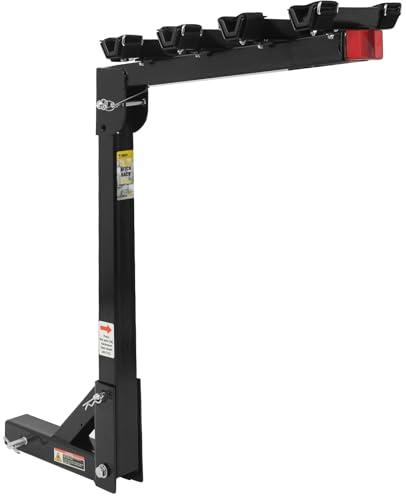
MaxxHaul Hitch Mount 4 Bike Rack 150 lb Capacity (70210)
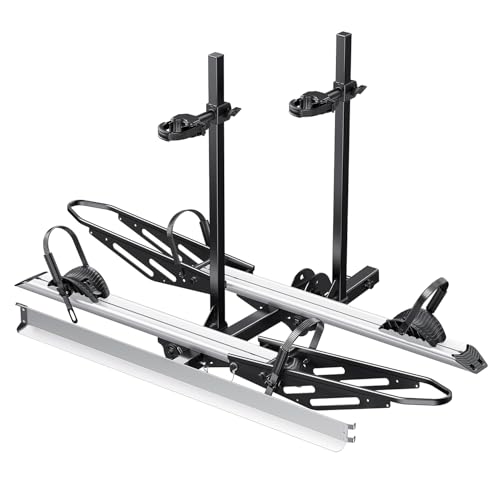
Young Hitch Mount Bike Rack with Ramp, 200 lbs for 2 E-Bikes

Young Electric Ebike Rack with Ramp, 200 lbs, Foldable
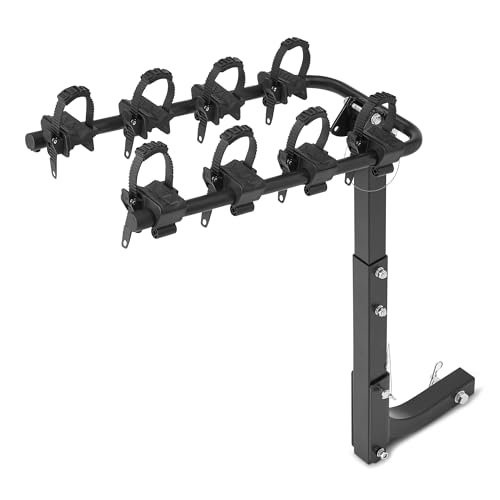
Amazon Basics 4-Bike Hitch Rack, 132-Pound Capacity

TRAILXPERT 2-Bike Tilting Hitch Mount Platform Rack, 160lbs

CRAVOT CyberRack EBike Rack for 2 Bikes, 200 lbs

Thule Outpace 2 Bike Hitch Rack

STUDTREX TrailV2 Plus EBike Rack, 200 lbs
A Breakdown Of The Leading Choices
This is the classic hanging-style rack, where bikes dangle from padded arms rather than sitting on trays. That design keeps weight low and cost reasonable, which matters when you’re moving four standard bicycles at once. A swing-down mechanism lets you reach the trunk without unloading anything.
The powder-coated steel build carries up to 150 pounds total, enough for four average adult bikes with room to spare. Families heading to campgrounds or rail trails will find the setup refreshingly simple.
Where It Excels
- Swing-down access means groceries stay reachable even with all four bikes loaded
- Powder-coated steel shrugs off rain, road salt, and years of garage storage
- Adjustable cradles with hook-and-loop straps keep frames from clanking together
- Fits any vehicle with a 2-inch receiver, from minivans to pickups
- Built-in safety reflector improves visibility in evening traffic
Small Caveats
- Hanging arms can scratch paint on carbon or delicate finishes; foam padding helps but isn’t foolproof
- Owners commonly report wobble on rough pavement unless straps are cinched snugly before every drive
Who It Suits Best
Households hauling three or four steel or aluminum bikes on weekend trips, especially those watching their budget.
A Better Fit Elsewhere
E-bike owners should look at the Young Electric Ebike Rack instead, since its ramp and tray design handles heavy battery-powered frames far more gracefully.
Platform racks hold each bike by its wheels, so nothing touches the frame. That single difference changes everything once your fleet includes e-bikes, which often weigh close to 100 pounds each thanks to motors and batteries. Lifting one onto a hanging rack is a two-person job; rolling it up this unit’s ramp is not.
Reinforced steel paired with aluminum keeps the structure strong without unnecessary heft, and it accepts both fat tires and standard widths. RV and trailer owners get a compatible option here too, which many car-only racks can’t claim.
What Helps Most
- Rolling bikes up the ramp spares your back on 80-pound e-bikes
- Wheel-holding cradles mean zero frame contact, so paint stays pristine
- Two-arm fixation and an anti-wobble structure reduce sway and bike-to-bike knocking on long drives
- Works with cars, SUVs, RVs, and trailers using a 2-inch receiver
Points To Note
- Platform units are heavier than hanging racks, so expect a workout during first-time installation
- You’ll want garage clearance behind the vehicle; folded platforms still protrude noticeably
Made For
E-bike commuters and touring couples who load heavy bikes alone and refuse to lift them ever again.
Reach For A Different Pick When
Riders carrying three or four lighter bikes will get more value from the MaxxHaul 70210, which costs less and moves a bigger group.
Think of this as the sibling of the Young rack above, tuned for people who park in tight spaces. The foldable design tucks the platform up against the vehicle when empty, so backing into a garage doesn’t require mental geometry. Its V-groove ramp guides wide tires straight into the wheel trays without steering corrections.
At roughly 66 pounds, the unit itself is substantial but manageable, and the steel-and-aluminum construction carries 100 pounds per bike. Tire widths up to 5 inches and wheelbases to 50 inches fit, covering most fat-tire e-bikes on sale today.
Strong Points
- Folding arms shrink the footprint dramatically for daily-driven vehicles
- V-groove ramp makes solo loading of 5-inch fat tires genuinely easy
- Patented anti-wobble hardware keeps heavy e-bikes steady against the bumper
- Generous 50-inch wheelbase tolerance accommodates long-tail cargo e-bikes
- Steel and aluminum blend balances strength with corrosion resistance
Things To Consider
- The 66-pound rack body takes some muscle to mount the first time; a second person helps
- Folded position still blocks some license plate visibility depending on your vehicle’s hitch height
Key Specs
Who Will Love This
Fat-tire e-bike riders who commute daily and need the rack to disappear between rides.
Swap It Out When
Anyone wanting theft-deterrent locking hardware out of the box may prefer the TRAILXPERT platform, which bundles a locking pin and safety strip.
Where the MaxxHaul leans rugged, this four-bike carrier leans sensible. The foldable steel frame stores flat against the garage wall between trips, and the anti-rattle hitch connection cuts down on that metallic clunking you hear from cheaper carriers over expansion joints. For families who ride a handful of times per month rather than every weekend, that combination covers the essentials.
Capacity sits at 132 pounds across four bikes, so keep heavier e-bikes off it and stick with standard pedal machines. Reinforced tie-downs secure each frame, and the whole thing bolts onto a 2-inch receiver without adapters.
Practical Pluses
- Foldable frame collapses for compact storage in crowded garages
- Anti-rattle design quiets highway noise considerably versus basic pin mounts
- Powder-coated steel resists rust through wet-season storage
- Four-bike capacity suits group rides and family camping runs
Room For Improvement
- 132-pound ceiling rules out most e-bikes; check individual bike weights carefully
- Hanging-style arms require alternating bike orientations to avoid handlebar collisions, which adds loading time
Product At A Glance
Best Suited To
Casual riding families with lightweight bikes who want dependable transport without paying for features they won’t use.
Another Choice May Suit
Heavier riders or anyone running electric assist should step up to the Young Hitch Mount Bike Rack, whose 200-pound rating absorbs battery weight comfortably.
The tilt function is the headline here. Pivot the loaded rack downward and your SUV’s tailgate opens fully, no unloading required. Anyone who has balanced a cooler on a bumper while bikes block the hatch will appreciate what that hinge does for tailgate picnics and grocery runs.
High-strength construction supports 160 pounds total, comfortably carrying a pair of mid-weight e-bikes or fat-tire mountain bikes with tires up to 5 inches. Padded clamps grip the wheels, and a locking hitch pin plus safety strip address the security worries that come with leaving expensive bikes attached outside a coffee shop.
Good Reasons To Consider
- Tilt-away access keeps the tailgate usable with bikes still mounted
- Anti-theft locking pin deters opportunistic grab-and-go theft at stops
- Built-in shock absorption softens bumps before they transfer to your frames
- Padded clamps protect rims and spokes during rough-road transport
Honest Caveats
- 160-pound total means two very heavy e-bikes could push the limit; weigh yours first
- Platform surfaces collect mud after trail days and need a hose-down before garage storage
Right Fit For
Mountain bikers and e-bike commuters with trucks or tall SUVs who open their tailgates constantly.
Not Your Match When
Riders needing maximum load headroom will find the CRAVOT CyberRack’s 200-pound rating a safer margin for heavyweight dual-battery setups.
Mixed fleets are where this rack earns its keep. A V-shaped front wheel cradle accepts skinny road tires and chunky fat tires alike, so a household running one commuter and one fat-tire cruiser doesn’t need separate carriers. The included ramp rolls each bike aboard, sparing your spine from hoisting a 90-pound e-bike twice per trip.
The vertical rod’s semi-enclosed connecting block and bolt-based assembly give the structure a planted feel, and the 50-inch wheelbase limit matches the Young Electric model above. Everything mounts to a standard 2-inch receiver.
Features That Help
- V-shaped cradle self-centers tires from narrow road bikes to 5-inch fats
- 200-pound split capacity handles two full-size e-bikes without strain
- Semi-enclosed connecting block adds rigidity against lateral sway
- Bolt system assembly feels more permanent than quick-clamp alternatives
Details To Watch
- Bolted assembly trades convenience for stability; removal between seasons takes tools
- No tilt mechanism is mentioned, so tailgate access likely requires unloading first
Quick Facts
The Right Fit
Garages and driveways holding different bike styles, where one flexible carrier beats owning two specialized ones.
Look Elsewhere When
Carbon-framed road bikes deserve gentler handling than wheel trays provide; the Thule Outpace grips the frame itself instead.
Every other rack here grabs wheels. The Outpace clamps the bike’s frame tube instead, with a moveable head that rotates, slides, and adjusts to seat tubes from 0.8 to 3.5 inches in diameter. That flexibility matters enormously for carbon frames, where clamp pressure and contact location determine whether paint survives the season.
It’s also the lightest, most compact platform here, carrying two bikes up to 110 pounds combined. Dual hitch compatibility sets it apart too: the same rack fits 2-inch and 1.25-inch receivers, handy when your household spans a truck and a small crossover.
What Stands Out
- Frame-clamping arm avoids wheel trays entirely, protecting carbon and painted finishes
- Rotating, sliding head finds a secure position on almost any tube geometry
- Accepts both 2-inch and 1.25-inch receivers without buying a second rack
- Compact, lightweight build is easy to lift off and stash in a trunk
Trade Offs
- 110-pound ceiling excludes most e-bikes; this is a pedal-bike specialist
- Frame clamps need correct positioning on unusual geometries, adding a minute to loading
Whose Shelf It Belongs On
Road cyclists and gravel riders with lightweight, expensive frames who value finish protection over raw capacity.
Consider Something Else When
Heavy e-bike owners should skip ahead to the STUDTREX TrailV2 Plus, whose ramp and 200-pound rating were built exactly for that job.
Loading angle is the quiet problem nobody mentions until their truck sits high. The TrailV2 Plus answers it with a 46-inch extended ramp, eight inches longer than the previous version, which flattens the climb enough that rolling a 90-pound e-bike up feels routine rather than risky. Lifted trucks and tall RV hitches are clearly the design brief here.
The Guide Kit adds repositionable support blocks and screw-mounted slopes ahead of the front trays, steering wider tires cleanly into place. Tilt, fold, and anti-theft locking round out a spec sheet that reads like a checklist of everything the earlier picks do individually.
Benefits That Matter
- Extended 46-inch ramp lowers the loading angle for lifted trucks and tall receivers
- Guide Kit’s support blocks and slopes align wide tires without guesswork
- Tilt and fold functions cover both tailgate access and garage storage
- Anti-theft hardware protects the rack and bikes during stops
- 200-pound capacity leaves comfortable headroom for two heavy e-bikes
What To Weigh
- Full feature sets bring added bulk; expect a longer first-time assembly session
- The Guide Kit components add small parts to track during installation and removal
Technical Highlights
Who Should Grab It
Truck and RV owners with raised hitch receivers who want one rack solving loading, access, and security at once.
Skip It When
Drivers of standard-height sedans will find the simpler Young Electric foldable rack easier to live with day to day.
What Matters Most Before Choosing Bicycle Car Racks
Match The Rack To Your Heaviest Bike
Weigh your heaviest bicycle first, batteries included. E-bikes routinely run 60 to 90 pounds, and exceeding a rack’s rating is the fastest way to bend arms or lose a bike on the interstate. Add 20 percent headroom above your total load for peace of mind.
Hanging Versus Platform
Hanging racks suspend bikes from padded arms: cheaper, lighter, and quicker to install, but prone to frame contact and bike-to-bike clatter. Platform racks hold wheels in trays, cost more, weigh more, yet eliminate paint damage entirely. Carbon frames belong on platforms or frame-clamping designs like the Thule.
Receiver Size And Vehicle Height
Most racks here need a 2-inch hitch receiver; measure yours before ordering anything. Vehicle height shapes ramp needs too, since a lifted truck turns a short ramp into a steep wall.
Storage Reality
Foldable designs matter for anyone parking in a garage nightly. A fixed platform protruding four feet changes how you back in forever.
Key Considerations Across These Picks
Where Shoppers Go Wrong
The classic error is buying for today’s bikes and ignoring next year’s e-bike purchase. Capacity ratings get exceeded quietly, and hanging racks get blamed for scratches that tray designs would have prevented. Measure the hitch, weigh the bikes, then shop.
When Paying More Pays Off
Higher-tier racks spend money on ramps, locking pins, tilting hinges, and thicker steel. Frequent riders recover that cost in saved time and avoided damage. Once-a-year campers rarely need it.
Bottom Line
Your bikes and your hitch tell you everything. Standard family cruisers point toward the MaxxHaul or Amazon Basics four-bike carriers, while e-bike owners should prioritize a ramp-equipped platform like the STUDTREX TrailV2 Plus or Young Electric foldable. Carbon-frame roadies have a clear answer in the Thule Outpace. Whichever direction fits, measure the receiver first and buy once.
