

You want a battery tester that tells you more than “looks fine” and more than a loose voltage number. The right tool helps you spot weak batteries, charging problems, and starter trouble before a cold morning or a long workday turns into a dead stop.
This shortlist focuses on car-friendly testers that fit different garages, from simple 12V checkers to heavier-duty analyzers with printouts and broader voltage support. You’ll see where each one fits best, along with the trade-offs that matter once the tool is in your hands.
A Quick Look At The Shortlist

OBDResource BR502 Battery Voltage Tester
Clore Automotive SOLAR Digital 12V Battery Tester

Battery Tender Battery Load Tester 026-0020

TOPDON BT600 Battery Tester with Printer
Veepeak 12V Car Battery Tester

TOPDON BT50 Car Battery Tester

ANENG 12V Car Battery Tester

BT90 PRO Battery Tester with Cloud Printing

VDIAGTOOL BT500 Battery Tester
More Details On Our Top Picks
The BR502 covers 6V, 12V, and 24V systems, so it fits a garage that handles more than a single family sedan. You also get CCA support from 100 to 2000, which helps make sense of battery size without guessing, and the internal resistance readout matters because rising resistance often shows a battery slipping before it fully gives up.
That wider range gives it more flexibility than a plain 12V checker like the Clore SOLAR, though it also makes the BR502 a little less stripped down. For daily use across cars, trucks, motorcycles, boats, or an SUV that sits for stretches, it looks like a sensible middle ground for someone who wants more than a voltage light but less clutter than a full shop console.
Strong Points
- Handles 6V, 12V, and 24V systems, which helps when your garage has mixed vehicles.
- Supports a wide 100 to 2000 CCA span, so it suits many starter batteries.
- Shows internal resistance, a useful clue when a battery starts aging unevenly.
- The broader format works well for weekend maintenance without forcing you into shop-level complexity.
Things To Consider
- It covers a lot, so you may spend a little more time learning the screen than with a basic 12V probe.
- Wide feature sets can feel busy in a small glovebox setup.
- The body style is better suited to organized storage than tossing loose into a trunk pouch.
Feature Snapshot
Who It Suits Best
You’re the right fit for this one if you maintain more than one type of vehicle and want a single tester that stays useful across them.
Where A Sibling Pick Shines
Clore Automotive SOLAR Digital 12V Battery Tester suits you better for a simple car-only setup where a slimmer 12V tool makes more sense.
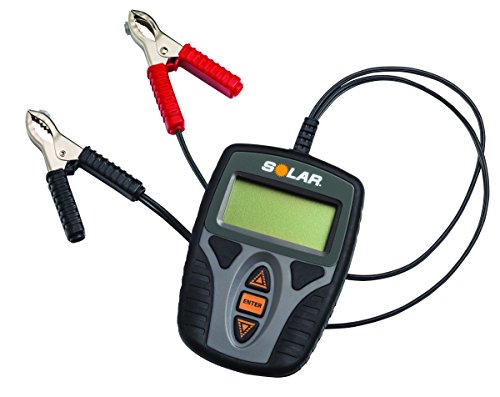
Some tools earn their place by staying focused, and this 12V tester does exactly that. The operating range of 7 to 15V and the CCA span from 40 to 1200 make it a practical fit for common car batteries, while the LCD display helps you read results in a bright driveway or a dim garage.
Compared with the BR502, it gives up multi-voltage flexibility, but that trade-off keeps the workflow simpler. You may find that appealing for routine battery checks on one family car, especially when you want a straightforward battery and system readout without overcomplicating the job.
What We Like
- Dedicated 12V focus keeps the learning curve modest.
- LCD output is easier to read in mixed lighting than a tiny analog dial.
- Supports common flooded, AGM, spiral, and gel-style batteries.
- The compact purpose-built approach suits regular garage checks.
Worth Noting
- It stays in the 12V lane, so it won’t cover the wider range that the OBDResource BR502 or VDIAGTOOL BT500 can handle.
- The narrower scope is fine for cars, less useful for a mixed-vehicle setup.
- Like most handheld testers, it benefits from tidy cable storage so the leads do not tangle in the drawer.
Technical Sheet
Who Should Grab It
You’ll get the most from this one if you mainly maintain one or two 12V vehicles and want a tidy, uncomplicated routine check.
Look Elsewhere When
TOPDON BT600 fits better for shop-style documentation, especially for someone who wants a built-in printer and a larger screen.
Load testing is different from a quick voltage glance, because it presses the battery under a real demand and shows how it behaves under stress. That makes this Battery Tender unit useful in a driveway before a trip, or in a shop bay when you want to check starter draw and get a clearer charging-system picture.
The rubber-insulated handle and color-coded clamps point to a more hands-on, garage-first design than the digital-only units above. For vehicles that use 6V or 12V starter batteries, especially trucks, boats, RVs, and ATVs, it gives you a more old-school style of confirmation that some people still prefer for trust and simplicity.
Highlights
- Performs actual load checks, not just a voltage snapshot.
- Covers 6V and 12V starter or deep-cycle batteries.
- Helps with starter draw and charging-system diagnosis.
- Color-coded clamps and insulated handle support easier handling in the garage.
Small Caveats
- It is more hands-on than digital analyzers, so the workflow feels less automatic.
- The clamp-and-handle setup takes a bit more storage room than slim pocket testers.
- It is not built around the broad multi-voltage coverage that the BT500 or BR502 brings.
Details At A Glance
Perfect Match For
You’re the best fit for this tester if you want direct load testing and work on vehicles where a hands-on garage tool makes sense.
Another Choice May Suit
Veepeak 12V Car Battery Tester suits you better for quicker digital readouts and a lighter routine check on a daily-driver battery.
The built-in printer changes how the BT600 fits into a busy garage, because you can hand someone a printout instead of explaining results from memory. That’s especially handy for a shop, a fleet yard, or a serious home setup where you want a paper trail for cranking and charging checks.
It also works across 12V and 24V systems, which puts it in a different lane from the simpler 12V-only Clore unit. The larger 3.5-inch screen should be easier on the eyes during repeat use, though the trade-off is a more involved tool than a basic handheld tester.
Reasons To Buy
- Built-in printer helps you keep a record without scribbling notes by hand.
- 12V and 24V support broadens its use beyond a single passenger car.
- 3.5-inch screen gives the interface more breathing room.
- Useful for cranking and charging-system checks in a more formal workflow.
- Fits technicians, fleet work, and home garages that value documentation.
Areas To Watch
- The printer makes it less compact than pocket-style testers.
- More features usually mean more setup time at the bench.
- For a simple family-car battery check, it can be more machine than you need.
Core Details
Built With In Mind
You’ll appreciate this most in a shop-like setting where records matter as much as the reading itself.
Skip It When
Clore Automotive SOLAR Digital 12V Battery Tester is the easier fit for a plain-vanilla driveway check and less clutter.
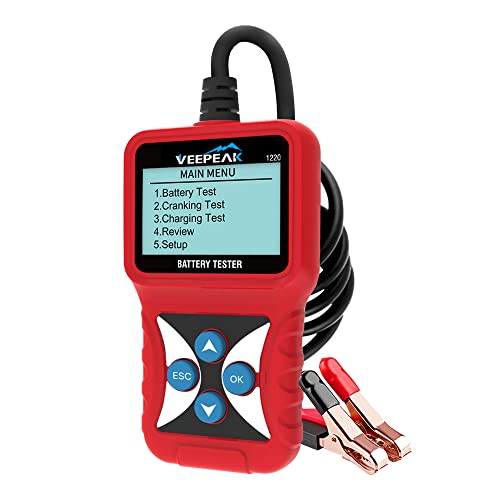
The Veepeak takes a very usable middle path, because it focuses on 12V vehicles while still covering battery health, charging checks, and cranking behavior. That makes it a sensible choice for someone who wants a clearer picture than a single volt reading, but doesn’t need the broader voltage spread of the BR502 or BT500.
Its readouts include state of charge, state of health, voltage, internal resistance, and CCA, which is the kind of mix that helps you decide whether a battery needs charging, replacement, or just closer attention. For commuters, weekend drivers, and anyone tracking a battery that has started acting tired, that information is more useful than a yes-or-no light.
Upsides
- Shows several battery-health clues in one place, not just raw voltage.
- Supports charging and cranking checks for a fuller battery story.
- Feels well matched to ordinary 12V car ownership.
- Useful for spotting a weak battery before a busy morning commute.
- The digital format is easier to follow than a bare analog meter.
Points To Note
- It stays in 12V territory, so it won’t cover the wider system spread of the BR502 or VDIAGTOOL BT500.
- Like any compact handheld, it rewards careful cable storage.
- For a printout-heavy workflow, the TOPDON BT600 is the more fitting step up.
Feature Rundown
Right Fit For
You’ll like this most if you want a digital 12V checker that stays practical for day-to-day maintenance.
Reach For A Different Pick
TOPDON BT50 Car Battery Tester suits you better if you want a similar digital approach with the stronger brand of a broader data review feature set.
The BT50 sits close to the Veepeak in everyday purpose, but it leans into a more guided experience for 12V battery and alternator checks. For home garages that want a neat digital workflow without jumping to the printer-equipped BT600, that balance can feel just right.
Its 100 to 2000 CCA range keeps it relevant for a broad spread of 12V batteries, and the cranking and charging focus helps you separate a weak battery from a charging issue. You may find that especially handy on cars that sit through the week and then need to prove themselves on Monday morning.
Standout Traits
- Gives you a clean digital path through battery, alternator, and cranking checks.
- Works with a wide 100 to 2000 CCA window.
- Fits the needs of many home garages without feeling overbuilt.
- The testing style is helpful when symptoms are vague and the cause is not obvious.
Room For Improvement
- It is still a 12V-only tool, so it won’t cover the broader work the BT500 or BR502 can handle.
- For paper records, the BT600 has a clearer edge.
- Compact testers like this do best when stored with the leads coiled neatly, not loose in a bin.
Feature Card
Whose Shelf It Belongs On
You’re a good fit for this one if you want a steady 12V analyzer that feels more polished than a bare-bones voltmeter.
Another Choice May Suit
ANENG 12V Car Battery Tester suits you better for a smaller, quicker check when the main need is a fast voltage and alternator readout.
ANENG keeps the shape of a quick-check tool, with an LCD display, LED indication, and a voltage indicator that make fast diagnosis feel less fussy. The approximately 0.01V accuracy is useful on paper, but the bigger real-world appeal is how quickly it can slot into a glovebox, a tool bag, or a compact garage drawer.
Compared with the Veepeak and TOPDON BT50, this one looks better suited to the person who mainly wants a fast voltage and alternator readout rather than a longer battery-health report. That makes it appealing for motorcycles, backup checks on a family car, and mixed vehicle ownership where space matters.
Best Bits
- Small footprint suits gloveboxes and compact tool kits.
- LCD plus LED cues make the reading process quick to understand.
- Works across cars, trucks, motorcycles, RVs, and several other vehicle types.
- Useful for fast alternator confirmation after a weak-start complaint.
Minor Gripes
- It looks more like a quick diagnostic helper than a deep battery analyst.
- For a fuller health picture, the Veepeak or BT50 gives you more context.
- Compact units like this are easy to lose track of unless you give them a fixed storage spot.
Quick Facts
Made For
You’ll like this most if you want a compact, fast-reading tester for ordinary 12V vehicles.
Swap It Out When
Battery Tender Battery Load Tester 026-0020 makes more sense when you want a direct load test instead of a simple digital voltage readout.
The BT90 PRO stands out because it goes beyond a simple result screen and adds cloud printing, which is helpful when you need a shareable record instead of a phone photo. That matters in fleet work, customer service bays, or any setup where you want proof that stays attached to an order ID and report trail.
It also brings a broad 6V, 12V, and 24V range, along with SOH, SOC, voltage, resistance, cranking, charging, and ambient temperature data. Compared with the BT600, it feels more data-heavy and more documentation-friendly, though the trade-off is a bit more capability than many casual home garages need.
Standout Traits
- Cloud reports make it easier to store, share, and revisit results.
- Works across 6V, 12V, and 24V systems.
- Includes SOH, SOC, voltage, resistance, and charging information in one workflow.
- Real-time ambient temperature helps keep reports tied to the surrounding conditions.
- Supports a wide battery range, which helps in mixed-use garages and fleet settings.
Honest Caveats
- It is more than a simple driveway checker, so casual users may not need all of it.
- Cloud reporting adds setup habits you need to keep consistent.
- For basic 12V work, the Clore SOLAR or ANENG tools are easier to live with.
Feature Rundown
Who Will Love This
You’re the right fit if documentation matters and you want a tester that behaves more like a shop instrument than a simple pocket tool.
Not Your Match When
Clore Automotive SOLAR Digital 12V Battery Tester makes more sense for straightforward one-car upkeep where cloud reports would just add extra steps.
The BT500 brings the broadest style coverage in this group, with 6V, 12V, and 24V support plus a CCA range that runs from 5 to 3000. That wide spread makes it a strong fit for a mixed garage, and the included SOH and SOC readings help you move past guesswork on battery condition.
It also supports common lead-acid formats such as flooded, AGM flat plate, AGM spiral, gel, and EFB, which is useful when your vehicles do not all use the same battery style. Compared with the BT90 PRO, it skips the cloud-print angle, so it suits someone who wants broad diagnostic coverage first and documentation second.
Plus Points
- Wide 5 to 3000 CCA range covers a large spread of battery sizes.
- Works with 6V, 12V, and 24V systems.
- Supports several common lead-acid battery styles.
- SOH and SOC readings help you judge condition with more context.
- Well suited to a garage that handles more than one vehicle class.
Softer Spots
- It is feature-rich enough that casual use may feel more involved than necessary.
- No cloud printing means the BT90 PRO has the edge for documentation-heavy work.
- With a tool this broad, organized storage and labeled cables help keep your setup calm.
Spec Overview
Built With In Mind
You’re the right fit for this one if your vehicles use different battery styles and you want one analyzer that can keep up.
Where Shoppers Go Wrong
ANENG 12V Car Battery Tester is the smarter choice for a compact, quick-read routine when broad coverage would be more than you need.
How To Choose The Right Battery Testers For Car
Match The Tester To Your Vehicle Mix
The first thing to weigh is voltage range, because that tells you how many vehicle types you can cover without switching tools. A 12V-only tester is plenty for most passenger cars, while 6V, 12V, and 24V coverage makes more sense for mixed garages, trucks, boats, or equipment with different electrical systems.
CCA support matters too, since CCA means cold cranking amps, the number used to describe how much starting current a battery can deliver. A narrow range can work fine for one car, but a broader range gives you room for older batteries, larger engines, and different battery sizes across the same household.
Decide How Much Detail You Actually Need
Some testers give you only voltage, and that can still be useful for quick checks. Others add state of charge, state of health, internal resistance, cranking tests, and charging-system checks, which gives you a fuller picture when a car starts acting flaky in cold weather or after long storage.
More data helps when you want to separate a weak battery from a charging issue, yet the trade-off is a tool that asks for more attention. For simple upkeep on one daily driver, a cleaner interface often feels better than a long list of numbers.
Think About How You’ll Store And Read It
Screen size, clamp style, and cable length affect day-to-day use more than many shoppers expect. A bigger screen, like the 3.5-inch panel on the TOPDON BT600, can be easier to read in a busy garage, while compact units fit gloveboxes and small tool drawers more naturally.
Printed reports or cloud records matter most when you work around fleets, customer handoffs, or shared vehicles. For private driveway use, a straightforward LCD model usually feels easier to keep, clean, and store.
Choose The Right Level Of Build And Workflow
Load testers and full analyzers serve different habits. A load tester presses the battery under demand, while a digital analyzer focuses on condition, resistance, and system behavior, so your choice depends on whether you want direct stress checks or a more guided electronic readout.
Heavier tools often bring better handles, stronger clamps, or recordkeeping features, but they also take more space and cost more to keep around. For most home garages, the sweet spot is the tool that matches your actual maintenance routine, not the one with the longest feature list.
Things Worth Knowing First
Common Shopping Slip Ups
One common mistake is choosing a tester with more voltage coverage than your vehicles will ever use, then paying for extra complexity you never touch. Another is overlooking how you’ll read the result, because a tiny screen or unclear symbols can slow down the whole job on a cold night.
It also helps to avoid pairing a very basic checker with a battery that already shows odd behavior. A simple voltage number can miss deeper trouble, while a model with resistance and cranking checks gives you a fuller read.
What The Higher Tier Buys
Higher-tier models usually spend money on better screens, broader voltage support, more battery chemistries, and data like SOH, SOC, and resistance. That extra capability makes sense for mixed fleets, shop use, or anyone who wants cleaner records and less guesswork.
You also tend to get better workflow features, such as built-in printing or cloud reports. For a single car in a home garage, those extras can feel unnecessary, but for repeated service work they make the tool easier to live with.
Closing Thoughts
The best fit depends on how much vehicle variety you handle and how deep you want to go beyond a simple voltage check. For a single car, the Clore SOLAR or ANENG tools keep things easy, while the BT90 PRO and BT500 make more sense when your garage handles mixed systems and you want richer diagnostics. Choose the one that matches your real routine, not just the longest spec sheet.
