

You want a charger that can sit quietly in the garage, keep a battery ready, and avoid the usual guesswork. That matters most for weekend cars, seasonal vehicles, motorcycles, boats, and anything that spends more time parked than running.
The right pick depends on voltage, battery chemistry, and how much control you want over charging speed. Some of these are simple maintainer-first units, while others add jump-start power or heavier-duty charging for larger vehicles.
Quick Look At The Shortlist

CRAFTSMAN 12A Car Battery Charger Maintainer 6V/12V CMXCESM258

PCHH 12V 24V Heavy Duty Car Battery Charger 0-15A

PZ.P 15-Amp 12V/24V Smart Battery Charger Maintainer
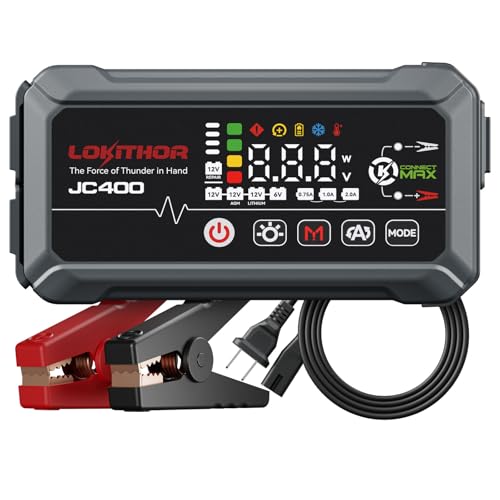
LOKITHOR JC400 2A Car Battery Charger 2500A Jump Starter

1.5A 6V/12V Car Battery Charger Maintainer Desulfator
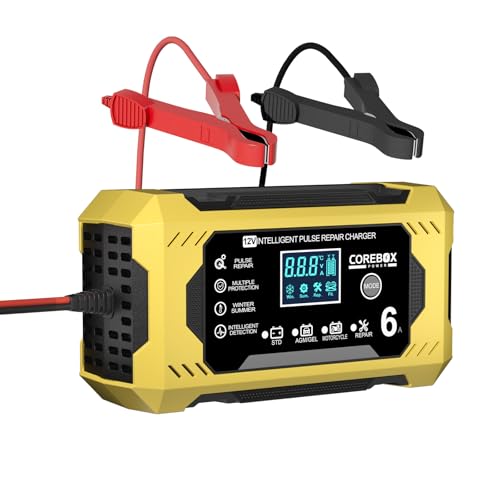
Corebox Battery Charger 6-Amp 12V Smart Trickle Charger

COREBOX Battery Charger 2-Amp 6V/12V Smart Trickle Charger

TEMOLA Car Battery Charger Automatic Trickle Charger 12V6A

AIYONFEI Car Battery Charger 12V 10Amp Smart Trickle Charger
More Details On Our Top Picks
CRAFTSMAN’s CMXCESM258 sits in the useful middle ground for a garage that handles more than one vehicle type. The 6V and 12V coverage, along with automatic voltage detection, makes it a calmer choice for routine upkeep than a more aggressive charger, especially for weekend cars or a stored motorcycle.
The 12-amp charge rate gives you more pace than a low-output maintainer, yet it still keeps the operation focused on battery care rather than a rush to power. That trade-off suits someone who wants one unit for periodic charging and maintenance, not a tiny specialist that only excels at long, slow topping off.
Strong Points
- Handles both 6V and 12V batteries, which helps when your garage covers more than one machine.
- Automatic voltage detection keeps setup simple for occasional use.
- The 12-amp output adds useful pace for batteries that need more than a gentle top-up.
- Its microprocessor-controlled behavior suits steady storage upkeep, not just emergency recovery.
Things To Consider
- It leans more toward general charging and maintaining than ultra-slow preservation.
- Shoppers with only a tiny maintenance need may find the 12-amp capacity more than necessary.
- Like most garage chargers, cord management and dry storage still matter after use.
Key Specs
Who It Suits Best
You get the most from this model when you keep a mix of 6V and 12V equipment in a home garage and want one dependable charger for upkeep.
Where A Sibling Pick Shines
AIYONFEI’s 12V 10Amp smart charger is the stronger fit for you if your focus stays on 12V batteries and you want a little more output.
PCHH moves more like a shop tool than a light maintainer, and that becomes useful fast for trucks, boats, or neglected batteries that need stronger attention. The 12V and 24V support widens the use case, so one charger can cover a broader garage without turning into a cluttered pile of adapters.
The heavier construction, including metal, ABS, and copper coil parts, suggests a more serious desktop presence, though that also means it’s not the sort of unit you’ll casually toss in a saddlebag. For owners who want an automatic program with a wider charging range, that extra bulk can be a fair trade.
What We Like
- 12V and 24V support covers a wider set of garage and workshop jobs.
- The 0 to 15 amp range gives you flexibility between faster charging and gentler maintenance.
- Metal, ABS, and copper coil construction point to a sturdier feel than lighter plastic-only designs.
- Automatic shutoff behavior helps keep routine charging less hands-on.
Small Caveats
- The heavier build suits a bench or garage shelf more than quick travel use.
- Its broader range can feel like extra capability for small battery upkeep.
- Storage matters here, since a larger unit usually asks for more space and tidier cable habits.
Feature Snapshot
Built With In Mind
You’re a better match for this unit if you maintain larger vehicles, heavier batteries, or a garage setup that calls for 24V support.
Another Choice May Suit
Corebox’s 2A 6V/12V smart trickle charger is easier to live with for smaller vehicles and lighter seasonal upkeep.
PZ.P is the fastest-feeling charger in this group on paper, with a 15-amp 12V mode and an 8-amp 24V mode. That makes it a strong match for owners who dislike waiting around while a battery crawls back to life, especially on cars, trucks, or equipment that sees irregular use.
The 9-stage charging process and temperature compensation add a bit of polish, because they point to a charger that does more than push current. The trade-off is that the feature set is broader than what a simple maintainer needs, so casual users may be paying for capability they won’t touch often.
Upsides
- High output gives you faster recovery than the smaller units in this roundup.
- 9-stage charging offers a more controlled path through the charging cycle.
- Temperature compensation helps the charger react to hot and cold conditions more sensibly.
- Works with both LiFePO4 and lead-acid batteries, which broadens its garage value.
Worth Noting
- The richer feature set makes it more than a simple keep-it-topped-up maintainer.
- Owners who only store one small car battery may not need this much output.
- Its broader capability usually comes with more setup attention than a basic plug-in maintainer.
Details At A Glance
Who Should Grab It
You’ll appreciate this one most in a multi-vehicle garage where speed and wider battery support matter more than a minimalist form factor.
Where A Sibling Pick Shines
The CRAFTSMAN CMXCESM258 is the calmer choice for mixed 6V and 12V upkeep when you want less emphasis on raw output.
LOKITHOR’s JC400 stands apart because it combines maintenance with jump-start power, so you’re not just keeping a battery healthy, you’re also carrying a backup for roadside moments. The smaller 2A charging modes make sense for upkeep, while the 2500A jump-start side gives it a broader rescue role for drivers who want one compact emergency tool.
That mix suits car owners with tight trunk space who still want a lot of utility in a single device. The honest read is that this kind of combo unit makes the most sense when your main concern is versatility, not the most focused charger-only experience.
Highlights
- Charger and jump starter functions reduce the number of separate tools you need to store.
- 6V and 12V support adds more flexibility than many compact emergency units.
- The 750mA, 1A, and 2A charging levels give you more control over upkeep.
- The added LED lights and compass suit roadside use in low-light conditions.
- Its compact role as both maintainer and rescue pack helps in smaller trunks.
Areas To Watch
- The combo approach brings more functions, so it is less focused than a charger-only pick.
- Owners who rarely need jump-start support may not use the extra capability often.
- Dual-purpose devices usually ask for careful storage and regular charging habits.
Core Details
The Right Fit
You get the most from this one when you want a charger and a roadside backup in the same compact tool.
Look Elsewhere When
PCHH’s 12V 24V heavy-duty charger suits you better if battery maintenance is the only job on your list.
VibeXtr keeps this one intentionally simple, and that helps it fit into the sort of garage where a battery just needs regular care instead of a full restoration routine. The 1.5A output is modest, but it gives you a little more pace than a very small 1A unit while staying friendly for long-term topping off.
Its repair mode and temperature compensation make sense for seasonal storage, classic cars, and weekend equipment that sits unused for stretches. You may find it especially practical when you want a low-draw charger that does not crowd the shelf or ask for a lot of attention.
Bright Spots
- 1.5A output offers a step up from tiny low-amperage maintainers.
- 6V and 12V support keeps it useful for older equipment and modern cars.
- Repair mode adds extra value for batteries that need more than routine upkeep.
- Temperature compensation helps it stay more appropriate across hot and cold seasons.
Points To Note
- The modest output is a fit for upkeep, not fast recovery on large batteries.
- Owners with heavier trucks may want more charging muscle than this unit offers.
- Like most compact maintainers, it rewards dry storage and tidy cable habits.
Technical Sheet
Whose Shelf It Belongs On
You’re the right match for this charger if you want a compact maintainer for a car, motorcycle, or stored weekend vehicle.
Swap It Out When
AIYONFEI’s 12V 10Amp model makes more sense for you if faster charging and a larger battery range matter more.
Corebox lands in a sweet spot for drivers who want more speed than a tiny maintainer without moving all the way into heavy-duty territory. The 6-amp output feels appropriate for a car battery that needs regular attention through winter storage or vacation gaps, and the 12V-only design keeps the focus tight.
The included protection set matters because chargers like this often live in garages where temperature swings and dusty shelves are part of daily life. The honest read is that it suits practical household use better than multi-voltage complexity, which is exactly what some garages need.
Best Bits
- 6A output gives you a clearer step up from smaller 1A to 2A maintainers.
- 12V focus keeps the product simple for standard car upkeep.
- Temperature compensation is useful for winter storage and hot-weather parking.
- Its maintainer and desulfator roles make it a better fit for seasonal care.
Minor Gripes
- It only serves 12V batteries, so it is narrower than dual-voltage picks.
- Owners with mixed garage equipment may need a second charger for other batteries.
- Like other shelf-stored units, it benefits from a dry, organized home base.
Feature Rundown
Perfect Match For
You’re a strong match for this charger if your garage centers on one standard 12V car and you want a practical maintainer with a little more pace.
A Better Fit Elsewhere
PCHH’s 12V 24V heavy-duty charger suits you better when your vehicles are larger or you need multi-voltage coverage.
This COREBOX model is the easy-going option in the group, built for smaller spaces and lighter maintenance jobs. Its 2A output keeps charging modest, which works well for motorcycles, stored cars, and seasonal equipment that benefits more from steady upkeep than quick recovery.
The 6V and 12V support makes it a flexible little shelf unit, and that’s useful if you keep older gear alongside a modern car. For most garages, the main draw is convenience, though the slower pace means it’s better suited to patient maintenance than larger batteries in a hurry.
Reasons To Buy
- Compact size makes it easier to store in tight garage or workshop spaces.
- 2A output is gentle enough for routine battery upkeep.
- 6V and 12V support broadens its usefulness for mixed vehicle types.
- It fits neatly into a simple maintenance routine for seldom-driven vehicles.
Areas To Watch
- The low output is slower than larger chargers in this lineup.
- It is less appealing for bigger batteries that need more recovery speed.
- Compact chargers still deserve clean storage, since tangled cords make reuse less pleasant.
At A Glance
Best Suited To
You’ll like this one most if you want a small maintainer for light-duty battery care and easy storage.
Where A Sibling Pick Shines
Temola’s 12V 6A charger is the stronger fit for you if you want more charging speed and a digital readout.
TEMOLA feels built for the person who wants a straightforward garage charger with a digital display to make status easier to read. The 12V 6A setup sits in a comfortable middle range, so it’s useful for regular car upkeep without drifting into bulky workshop territory.
Pulse repair support gives it a little extra appeal for batteries that need more attention than routine maintenance, though it still stays in the practical, home-garage lane. That balance makes it a sensible fit for daily drivers, stored motorcycles, and lawn equipment that sits between seasons.
Positives
- The digital display makes charging status easier to follow at a glance.
- 6A output gives you a useful step up from very small maintainers.
- Pulse repair support adds an extra layer of usefulness for neglected batteries.
- 12V focus keeps the charger aligned with common car and light-equipment use.
Softer Spots
- It stays focused on 12V batteries, so multi-voltage flexibility is limited.
- Owners who need rapid recovery for larger systems may want more output.
- Display-equipped chargers are handier when you keep the screen clean and visible.
Feature Card
Who Will Love This
You’re a good match for this charger if you want a readable, no-fuss maintainer for standard 12V garage use.
Skip It When
PZ.P’s 15-amp smart charger suits you better if you need more speed and broader charging coverage.
AIYONFEI closes the list with the strongest 12V-only charging pace in the group, which helps it stand out for larger car batteries and regular garage use. The 9-stage program and LED display give it a more complete feature set than a bare-bones maintainer, so you get both speed and visibility.
It works well for drivers who keep a car, motorcycle, or boat battery in regular rotation and want a charger that feels more substantial than the smallest models here. The trade-off is simple: you gain speed and output, but you give up the broader voltage flexibility of some other picks.
Best Bits
- 10A output gives it strong pace for a 12V maintainer.
- 9-stage charging adds more controlled battery care than basic single-mode units.
- LED display helps you follow the charging process more easily.
- Temperature compensation improves seasonal usefulness in a home garage.
- The 12V 2Ah to 150Ah range makes it fit a wide slice of common battery sizes.
Honest Caveats
- It only covers 12V batteries, so it won’t suit mixed-voltage garages.
- Owners with older 6V gear will need a different charger for that job.
- The faster pace is helpful, though it may be more charger than you need for tiny batteries.
Quick Facts
Whose Shelf It Belongs On
You’re the best fit for this charger if you want a 12V-focused unit with strong output and a clear display for routine upkeep.
Another Choice May Suit
PZ.P’s 12V/24V smart charger makes more sense for you if you need multi-voltage flexibility and faster overall recovery.
How To Choose The Right Battery Maintainers For Car Batteries
Match Voltage And Battery Type First
Voltage is the first filter that saves you trouble. A 6V/12V maintainer works for more mixed garages, while a 12V-only unit makes more sense for most modern cars and lawn equipment.
Battery chemistry matters just as much. AGM, lead-acid, GEL, LiFePO4, and other formats do not all want the same charging behavior, so the product page should clearly name the battery types it supports.
Think About Charging Pace Versus Storage Use
Output tells you how quickly a charger can recover a battery, but faster is not always better for long-term care. Lower-amp units are calmer for seasonal storage, while 6A to 15A models make more sense for batteries that need more recovery.
That balance matters in a real garage. A truck, boat, or neglected car battery can benefit from a stronger charger, while a motorcycle left parked for a month often only needs a gentler maintainer.
Look For Useful Controls, Not Just Bigger Numbers
Features like temperature compensation, automatic shutoff, and multi-stage charging help a charger behave more intelligently through seasonal swings. A digital display also helps because you can see charging status without guessing.
Those extras are most helpful in a busy garage where the charger may sit for days at a time. They also reduce the urge to babysit the battery, which is a small but real convenience.
Space, Storage, And Use Pattern Matter
Compact chargers suit small shelves, glove-box carry, or a packed workshop. Heavier units with metal housings and higher output usually feel more at home on a bench or garage floor.
Think about how often you’ll move the unit. A roadside combo like the LOKITHOR JC400 serves a different job than a slim maintainer like the COREBOX 2A, and that difference shows up fast once you start storing cables and moving equipment around.
What To Weigh Before You Click
Common Shopping Slip Ups
The biggest mistake is buying by output alone. A strong amp rating helps, but only when it matches your battery size and the type of upkeep you actually need.
Another common miss is ignoring battery chemistry. A charger that fits lead-acid batteries may not be the right match for LiFePO4, so the battery label should guide the choice.
Where The Extra Money Goes
Higher-tier models usually cost more because they add smarter charging stages, clearer displays, wider voltage support, or stronger housings. That extra engineering matters most when the charger stays in use for long stretches or serves several vehicles.
The upgrade pays off for households with trucks, boats, stored cars, or mixed battery types. For a single garage car that only needs light upkeep, a simpler unit often makes more sense.
Closing Thoughts
You have nine strong paths here, and the right one depends on how much speed, voltage flexibility, and storage convenience you want. CRAFTSMAN and COREBOX lean friendly and practical, PCHH and PZ.P stretch into heavier jobs, and LOKITHOR brings emergency value into the mix. For a standard garage, the sweet spot is usually the charger that matches your battery type first and adds only the extra features you’ll actually use.
