

Choosing the right Battery For Car matters most when your daily routine leaves little room for surprise. You want steady starts on cold mornings, enough reserve for accessories, and a fit that matches your vehicle’s tray and terminal layout. That’s especially true for commuters, family vehicles, and weekend rigs that sit unused for stretches. The picks below focus on AGM and jump-start options that make ownership easier in real use.
The Shortlist At A Glance

ACDelco Gold AUX14-200 (88866185) Auxiliary AGM Battery

ACDelco Gold 94RAGM (88864542) Group 94R AGM Battery
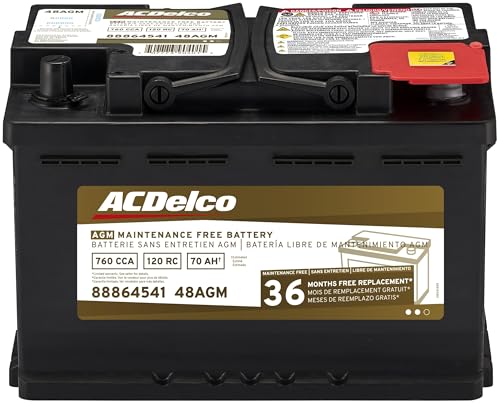
ACDelco Gold 48AGM (88864541) Group 48 AGM Battery

OPTIMA D51R YELLOWTOP Sealed AGM Battery
Goodyear 47-H5-AGM Group 47 AGM Battery

Povasee Jump Starter A30 5000A Portable Jump Box

Mighty Max Battery MM-G35 Group 35 AGM Battery

Weize Platinum AGM Group 49 H8 Battery

OPTIMA 34/78 RedTop Sealed AGM Starting Battery
More Details On Our Top Picks
The AUX14-200 fits the smaller support role that many newer vehicles need, rather than acting like the main starting battery. Its AGM build, or absorbed glass mat design, keeps the electrolyte held in the mat instead of sloshing around, which suits tucked-away installs and stop-start support. For drivers with compact engine bays or auxiliary electrical systems, that sort of layout tends to matter more than raw size.
The honest read is that this is a niche piece, not a universal swap. You benefit most when your vehicle calls for an auxiliary battery with a tight footprint and stable maintenance-free behavior, and you may find it unnecessary for a simple single-battery setup. Compared with the larger ACDelco Gold 94RAGM, this one is about fit and secondary support, not broad everyday coverage.
Strong Points
- AGM construction suits enclosed mounting spots.
- 200 CCA gives a clear spec anchor for auxiliary duties.
- Maintenance-free design reduces routine attention.
- ACDelco Gold positioning suits OE-style replacement needs.
Things To Consider
- It’s an auxiliary battery, so it won’t fit every starting-battery job.
- You still need to confirm group and terminal compatibility before ordering.
Core Details
Who Should Grab It
Drivers whose vehicle uses a dedicated auxiliary battery and needs a compact AGM format.
Where A Sibling Pick Shines
ACDelco Gold 48AGM fits better for a mainstream starting role in many standard sedans and crossovers.
Group 94R is the sort of battery shape that matters to you before the first bolt comes off. That fit-sensitive detail makes this ACDelco a sensible option for vehicles built around start-stop systems, where recharge acceptance and steady cycling matter more than flashy claims. The AGM format also suits drivers who want a sealed, low-maintenance setup under the hood.
Compared with the AUX14-200, this one plays a larger, more conventional role in the vehicle. The trade-off is simple, since you need to match the group size exactly, but the payoff is a better fit for many modern daily drivers that ask for regular cycling support. For commuting, school runs, and stop-and-go traffic, that profile makes sense.
Highlights
- Group 94R sizing narrows the fit to the right vehicles.
- AGM construction supports frequent charge and discharge use.
- Maintenance-free behavior keeps upkeep light.
- Works well for start-stop-equipped cars.
- ACDelco Gold branding suits OE-style replacement searches.
Worth Noting
- Group fit is strict, so measurement checks matter.
- It’s not the right match for vehicles that need a smaller auxiliary battery.
- Owners commonly still double-check tray space and terminal orientation.
Feature Snapshot
Made For
Drivers with start-stop vehicles that call for a Group 94R AGM battery.
A Better Fit Elsewhere
Goodyear 47-H5-AGM suits shoppers who want a 12V, 60Ah battery with a more flexible midsize fit.
This one sits in a very common sweet spot, because Group 48 shows up in a lot of mainstream vehicles that need a dependable under-hood battery. AGM construction helps keep the package sealed and maintenance-free, which is useful in daily driving where you don’t want extra fuss. For most sedans and crossovers with the correct tray size, it’s a straightforward replacement path.
Compared with the 94R version above, the main question is fit, not philosophy. You should still verify the group number and terminal layout, but once those line up, the 48AGM looks like a practical replacement rather than a specialist part. It’s steady, not flashy, and that’s exactly the point for many household vehicles.
What We Like
- Group 48 fit suits a wide range of common vehicles.
- AGM design keeps the battery sealed.
- Maintenance-free ownership fits busy schedules.
- 36-month coverage adds a sensible planning window.
Minor Gripes
- You still need to match the group size exactly.
- It’s built for standard replacement use, not specialty accessory loads.
Details At A Glance
Right Fit For
Drivers replacing a Group 48 battery in a typical sedan, hatchback, or crossover.
Swap It Out When
ACDelco Gold 94RAGM makes more sense for a vehicle that specifically calls for Group 94R sizing.
The YELLOWTOP line has a very different personality from the ACDelco batteries above, because it leans into dual-purpose use and accessory support. That makes it a strong match for vehicles with winches, lighting, audio upgrades, or other add-ons that ask for deeper cycling behavior. The sealed AGM format also helps keep ownership simple in mixed-use trucks and SUVs.
One thing worth considering is fit and use pattern, since this is less about ordinary commuting and more about loaded electrical demand. For seasonal rigs or vehicles that sit with accessories attached, the lower self-discharge reputation is part of the appeal. It’s a smart upgrade, though not the most sensible choice for a plain daily driver that only needs basic starting power.
Reasons To Buy
- Dual-purpose design supports starting and accessory use.
- AGM build fits sealed, maintenance-light ownership.
- 450 CCA gives a clear starting-strength reference.
- Versatile mounting helps in tighter vehicle layouts.
Softer Spots
- It makes more sense for accessory-heavy vehicles than for plain commuter cars.
- The special-purpose focus can be more battery than some drivers need.
Core Details
Built With In Mind
Drivers running accessories, modified trucks, or seasonal vehicles that need more than basic starting support.
Look Elsewhere When
ACDelco Gold 48AGM is the more ordinary fit for a standard family car with simple replacement needs.
The Goodyear 47-H5-AGM looks aimed at drivers who want a middle-ground battery with enough reserve to feel calm in daily use. Its 12V, 60Ah layout gives you a practical capacity story, while 680 CCA helps for colder starts and ordinary winter mornings. The multiple mounting positions are useful in real-world installs, especially in vehicles where the tray and cable path leave limited flexibility.
Compared with the OPTIMA YELLOWTOP, this one feels more balanced and less specialized. You give up the accessory-focused personality, but you gain a battery that suits a lot of midsize cars and crossovers without asking you to tailor the vehicle around it. For commuters who want something straightforward and sealed, that is a comfortable middle path.
Plus Points
- 60Ah capacity gives a useful everyday reserve profile.
- 680 CCA supports dependable cold-weather starts.
- 100-minute reserve capacity adds practical staying power.
- Multiple mounting positions help installation planning.
- Maintenance-free design keeps upkeep simple.
Small Caveats
- It still needs a correct Group 47 fit.
- Mounting flexibility excludes upside-down placement.
- You’ll want to verify terminal orientation before ordering.
At A Glance
The Right Fit
Drivers wanting a sealed Group 47 AGM battery for a daily-use car or crossover.
Reach For A Different Pick When
OPTIMA 34/78 RedTop suits you better when starting power matters more than balanced everyday reserve.
The Povasee A30 isn’t a replacement battery, it’s the backup you want in the trunk for a dead-start emergency. Its 5000A jump rating, dual USB output, and LED light make it more of a portable power tool than a garage fixture, which helps a lot on long trips or in a driveway without easy access to another vehicle. For drivers who want portable reassurance, that’s a useful combination.
You may find the unit especially handy if your vehicle sits for long stretches or you manage more than one 12V machine. The catch is simple, because this solves a different problem than the AGM batteries above, so it doesn’t replace proper battery maintenance or correct battery sizing. Compared with the Weize and OPTIMA picks, it’s about emergency recovery rather than ongoing cranking performance.
What We Like
- 5000A output gives strong jump-start headroom.
- Works as a power bank for small devices.
- LED light helps in dim parking areas.
- Compact portability suits glovebox or cargo storage.
Areas To Watch
- It’s not a substitute for a correct-fit car battery.
- You still need to keep it charged for emergency use.
- Storage habits matter more here than with a fixed battery.
Feature Rundown
Whose Shelf It Belongs On
Drivers who want a portable backup for dead batteries, road trips, and stored vehicles.
Another Choice May Suit
Goodyear 47-H5-AGM is better for shoppers who want a permanent under-hood battery with daily-driver behavior.
The MM-G35 is the kind of battery that makes sense for owners replacing a start-stop unit without changing the rest of the vehicle’s setup. With 55Ah capacity, 100RC reserve capacity, and 650 CCA, it gives you a tidy set of numbers for a standard Group 35 application. AGM construction also helps with sealed installation and a cleaner under-hood experience.
For most compact and midsize vehicles that specify Group 35, it reads as a sensible, not fussy replacement. The honest read is that it won’t impress anyone with exotic features, but that’s exactly why it works for ordinary commuting and school-run duty. Compared with the Goodyear 47-H5-AGM, this one is the tighter fit for drivers whose vehicle already wants Group 35.
Bright Spots
- Group 35 sizing keeps the fit straightforward.
- AGM design supports sealed, maintenance-light ownership.
- 100RC reserve capacity adds useful backup time.
- 650 CCA gives a clear starting-strength target.
Points To Note
- It only makes sense for vehicles that specify Group 35.
- Owners should still confirm terminal location before installation.
- It’s a straightforward replacement, not a specialty upgrade.
Quick Facts
Best Suited To
Shoppers replacing a Group 35 start-stop battery in a daily-use car.
Skip It When
ACDelco Gold 94RAGM is the better choice for vehicles built around Group 94R sizing.
The Weize Platinum AGM Battery leans bigger and stronger than the mid-pack Group 47 and Group 35 choices. With 95Ah capacity, 160RC reserve capacity, and 900 CCA, it’s aimed at vehicles that ask for serious starting strength and more stored energy for electrical loads. The listed dimensions and tapered terminals matter just as much as the numbers, because fit errors are where a large battery turns into a headache.
That’s why this one suits trucks, SUVs, and other vehicles with bigger electrical demand better than compact commuter cars. You’ll appreciate the self-discharge note for storage between uses, though the bigger point is simple, since this battery belongs in a vehicle that can actually use the extra output. Compared with the ACDelco Gold 48AGM, it feels like a step up in size and reserve, not just a swap-in replacement.
Standout Traits
- 95Ah capacity supports heavier electrical demand.
- 900 CCA gives strong starting headroom.
- 160RC reserve capacity helps during accessory use.
- Listed dimensions simplify fit checking.
- Tapered terminals help confirm orientation before purchase.
Room For Improvement
- Its size makes fit checks essential.
- The larger footprint may be awkward in tight engine bays.
- You’ll want to verify terminal position carefully.
Feature Card
The Right Fit
Drivers with larger vehicles or higher electrical demand who need a Group 49 H8 AGM battery.
Where Shoppers Go Wrong
ACDelco Gold 48AGM is the easier choice for vehicles that need a smaller, more common battery size.
RedTop is built around starting strength, and that focus shows up in the 800 CCA rating and dual SAE plus GM terminals. For hot rods, off-road builds, and hard-start vehicles, that kind of spec profile can be more useful than extra bells and whistles. The sealed AGM construction keeps the package maintenance-light, which helps when the engine bay already feels crowded.
Compared with the YELLOWTOP, this one is less about accessory-heavy flexibility and more about immediate cranking confidence. That makes it a cleaner fit for drivers who want a dedicated starter battery rather than a dual-purpose layout. The trade-off is plain, since its strengths are concentrated in start-up work, but that’s exactly the point for many modified vehicles.
Best Bits
- 800 CCA gives strong starting headroom.
- Dual SAE and GM terminals help with fit options.
- AGM design supports sealed, low-maintenance ownership.
- Versatile mounting helps in customized installs.
Honest Caveats
- It’s focused on starting, not accessory-heavy cycling.
- Fit still depends on the exact tray and terminal setup.
- Owners of plain commuter cars may find it more battery than needed.
Technical Sheet
Who Will Love This
Drivers who want a strong starter battery for a truck, SUV, hot rod, or off-road build.
Consider Something Else When
OPTIMA D51R YELLOWTOP is the better fit for accessory-heavy vehicles that need a dual-purpose battery.
How To Choose The Right Battery For Car
Start With Fit, Not Hype
Group size matters because the battery has to sit securely in the tray and line up with the hold-down hardware. Measure the space, check the terminal layout, and compare the vehicle manual before you think about output numbers. A great battery that does not fit is just an expensive object in a box.
Cold cranking amps, or CCA, describe how much starting power the battery can deliver in cold conditions. Drivers in colder climates usually benefit from a higher CCA figure, while warmer-climate daily commuters can often focus more on fit and reserve capacity. For a mixed-weather household car, a balanced number usually makes more sense than chasing the biggest label.
Match The Battery To The Job
AGM, which stands for absorbed glass mat, keeps the electrolyte held in glass mat separators instead of free-flowing liquid. That sealed build helps with low-maintenance ownership and cleaner installation, especially in vehicles with stop-start systems or tight engine bays. It also suits people who want less mess under the hood and fewer routine checks.
Dual-purpose models make sense for trucks, off-road builds, or vehicles with extra accessories like lighting, audio gear, or winches. Standard starting batteries fit ordinary commuting better, while high-reserve AGM batteries fit vehicles that sit longer or carry more electrical load. The right match depends on how hard your vehicle works between each drive.
Think About Reserve Capacity And Storage
Reserve capacity, often shown as RC, tells you how long a battery can support light loads before it runs low. That matters on road trips, in traffic, or in vehicles that run accessories while idling. Higher reserve capacity usually costs more, but it can be worth it for drivers who want more breathing room.
Storage habits matter too. Seasonal vehicles and emergency jump packs need a different mindset from daily drivers, because sitting unused changes the value of self-discharge resistance and portable backup features. The best choice is the one that matches your routine, not just the strongest-looking spec line.
Things Worth Knowing First
Mistakes Worth Dodging
A common misstep is focusing on CCA alone and ignoring group size, terminal placement, and battery height. That can leave you with a battery that sounds strong on paper but will not install cleanly. Another issue is choosing a starting battery for a vehicle that really needs a deeper cycling profile.
It also helps to check whether the vehicle calls for AGM or a conventional flooded design. Installing the wrong style can create avoidable hassle, especially in modern cars with start-stop systems or packed engine bays. A few minutes of checking beats a return trip later.
The Case For Spending Up
Higher-tier batteries often cost more because they use more complex internal construction, stronger cycling behavior, or larger reserve capacity. That extra structure can support better performance under accessory load, repeated starts, and harsher use patterns. You also see the difference in fit options, terminal layouts, and sealed construction.
Spending up makes sense for drivers with modified vehicles, winter starts, or daily commutes that punish the battery with stop-and-go traffic. For a simple weekend car that barely runs accessories, a more modest battery can be the smarter call. The key is paying for the work your vehicle actually asks the battery to do.
Closing Thoughts
The right Battery For Car choice comes down to fit, use pattern, and how much electrical demand your vehicle carries every day. ACDelco’s Group 48 and 94R batteries work well for common replacement jobs, OPTIMA’s YellowTop and RedTop options serve more demanding builds, and the Povasee jump starter gives you portable backup instead of a fixed install. Once you match the battery to the vehicle, ownership gets a lot simpler.
