

You want a charger that fits the way you actually keep vehicles alive, whether that means waking up a parked sedan, maintaining a weekend truck, or keeping lawn equipment ready between seasons. Some units are better for fast recovery, some are gentler for long storage, and a few do a little of both without turning the garage into a puzzle. The picks below focus on practical fit, not flashy extras.
Quick Look At Our Shortlist

Schumacher Electric Wheeled 10A Charger SC1446
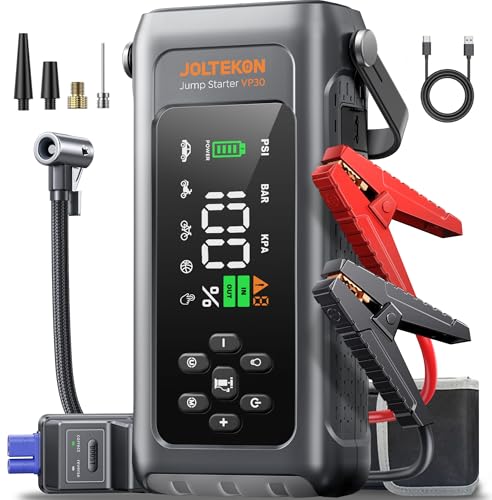
Car Battery Jump Starter with Air Compressor 4500A 150PSI

Schumacher Electric Wheeled 6A Charger SC1364

CRAFTSMAN 12A Charger CMXCESM258
DeWalt DXAEC100 30 Amp Charger

12-Amp Smart Battery Charger Lithium Lead-Acid

PCHH 12V 24V Battery Charger

PZ.P 15-Amp 12V/24V Smart Charger
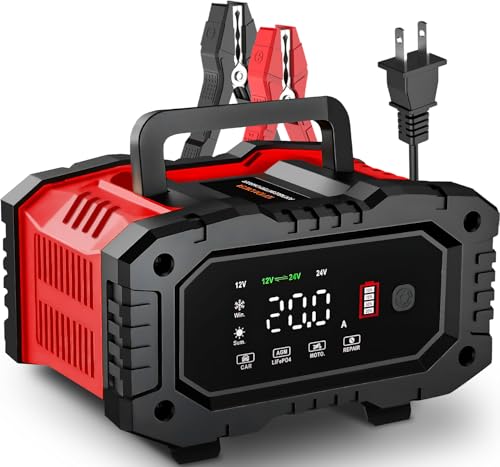
20-Amp Car Battery Charger 12V/24V
More Details On Our Top Picks
The SC1446 suits the kind of garage where a simple dial and a wheeled frame make life easier than a glossy screen. Its manual style suits older cars, tractors, and deep-discharge situations where some smart units can be too cautious to start. For a weekend mechanic, that direct control feels practical instead of fussy.
You give up automation here, so the trade-off is more attention at the charger and less hands-off convenience. Still, that same hands-on approach makes it useful for drivers who want a charger that behaves more like a shop tool than a gadget. The wheeled layout also helps in a crowded garage, especially beside the larger and more feature-heavy DeWalt and PCHH units.
Strong Points
- Manual operation suits older batteries and stubborn recovery jobs.
- Wheeled design makes shop movement less awkward.
- Its plain control style helps you stay in charge of the process.
- Good match for vehicles that sit for long stretches.
Things To Consider
- Hands-on charging means less automation than the smart models in this roundup.
- The larger frame needs more storage room than compact chargers.
- Best results depend on you paying attention during use, which some shoppers will like and others will not.
Feature Snapshot
Who Should Grab It
You benefit most here if you keep older vehicles, seasonal equipment, or rougher garage projects in rotation.
Where A Sibling Pick Shines
Schumacher Electric Wheeled 6A Charger SC1364 suits you better for gentler maintenance and less frequent charging work.
This one packs the most roadside utility into a single case, so it makes sense for drivers who want fewer separate tools in the trunk. Along with jump-starting, it adds an air compressor, gauge, flashlight, and warning light modes, which feels handy for long commutes or road trips. The honest read is that the feature set is broad, so storage and familiarity matter more than on a plain charger.
Compared with the Schumacher and CRAFTSMAN chargers above, this is less about garage maintenance and more about getting yourself moving again. The 4500A figure suggests serious starting headroom, while the 150 PSI compressor adds practical tire support for everyday driving. That extra versatility is useful, though it also means you need to keep the unit charged and ready before trouble shows up.
Highlights
- Combines jump-starting and tire inflation in one unit.
- Useful light modes help in roadside or low-light situations.
- Portable format works well in an emergency kit.
- Good fit for drivers who prefer one carry-anywhere tool.
Worth Noting
- More functions mean more to keep track of in the glove box or cargo area.
- The multi-tool setup asks for regular charging so it stays ready.
- Not the same kind of maintenance tool as a bench-style charger.
At A Glance
Made For
You fit this best if your priority is emergency readiness rather than routine battery maintenance.
A Better Fit Elsewhere
DEWALT DXAEC100 30 Amp Charger suits you better for garage work, since it focuses on charging and engine-start functions instead of roadside extras.
Where the SC1446 leans into tougher recovery, this SC1364 looks better suited to calmer, longer-term battery care. The 6-amp pace fits owners who keep a truck, boat battery, or seasonal vehicle in rotation and do not need constant high-output charging. In a home garage, that slower rhythm often feels easier to live with.
The wheeled body keeps the shop-friendly feel, though the lighter output means you should expect steadier work rather than quick turnaround. That trade-off makes sense for maintenance, storage charging, and regular top-offs, not for rushed rescue jobs. It’s a sensible middle ground for someone who values simplicity more than speed.
What We Like
- 6-amp output suits maintenance and routine charging.
- Wheeled design keeps it easy to move around a garage.
- Works well for vehicles that sit between uses.
- Less aggressive charging can feel more appropriate for ongoing care.
Softer Spots
- Slower output means recovery takes longer than with higher-amp chargers.
- The larger footprint asks for dedicated storage space.
- Not the pick for a driver who wants fast turnaround.
Details At A Glance
Who Will Love This
You suit this model best if your battery care happens in a garage, not on the shoulder of a road.
Consider Something Else When
PCHH 12V 24V Battery Charger is a better fit for heavier-duty work and faster charging demands.
The CRAFTSMAN unit stands out for flexible charging across common battery types, which matters in homes where one charger has to serve more than one vehicle. It supports 6V and 12V batteries, so it fits everything from smaller equipment to full-size cars with less fuss. For mixed garages, that broad compatibility usually matters more than raw speed.
Compared with the two Schumacher wheeled models, this one feels more like a universal household tool than a shop-specific recovery unit. Its 12-amp charge rate gives you decent pace without pushing into the more aggressive territory of the DeWalt or the 20-amp Huiaipaic model. That balance makes it a smart, low-drama choice for everyday ownership.
Upsides
- Handles both 6V and 12V batteries.
- Automatic operation suits casual use well.
- Good fit for homes with several battery types.
- 12-amp output keeps charging practical without feeling excessive.
Areas To Watch
- Less specialized than the higher-output shop chargers in this roundup.
- Drivers who want the most recovery punch may want a stronger model.
- Its usefulness depends on your mix of 6V and 12V gear.
Core Details
The Right Fit
You fit this model best if you want one straightforward charger for a household garage with mixed battery needs.
Reach For A Different Pick When
DeWalt DXAEC100 30 Amp Charger suits you better if fast charging and engine-start support matter more than flexibility.
The DeWalt brings the most garage-ready punch in this roundup, especially for vehicles that need both charging and starting support. Its 100-amp engine-start function, 30-amp charge rate, and 3-amp maintainer give you three useful roles in one case. For a busy driveway or a home shop, that kind of range saves time and shelf space.
Compared with the CRAFTSMAN and Schumacher units, this one leans harder into fast recovery and active use. The alternator check also matters because it gives you a way to spot charging-system trouble before you keep cycling a weak battery. The catch is that the bigger feature set is more than casual users may need, so this feels best for people who keep several vehicles moving.
Best Bits
- Combines charging, maintenance, and engine-start support.
- Alternator check adds useful diagnostic value.
- Well suited to garage use where speed matters.
- Good balance for owners who service multiple vehicles.
Points To Note
- The extra functions make it more involved than a basic maintainer.
- Casual users may not need this much output.
- Feels better as a shop tool than a grab-and-go option.
Feature Rundown
Built With In Mind
You suit this charger best if your garage sees regular battery work and you value speed with a diagnostic edge.
Swap It Out When
Schumacher Electric Wheeled 6A Charger SC1364 makes more sense for gentle maintenance and less aggressive charging.
Huiaipaic’s 12-amp charger tries to cover a lot of ground without becoming overly large, which suits garages that juggle lithium and lead-acid batteries. It supports both 12V and 24V charging, and that makes it useful for vehicles, boats, motorcycles, and yard equipment that do not all speak the same battery language. For mixed equipment owners, that flexibility can simplify storage a lot.
Unlike the more recovery-focused DeWalt, this one leans into smart charging and repair-oriented functions rather than engine-start muscle. The pulse repair feature suggests extra attention to battery maintenance, though that kind of function is best viewed as supportive rather than magical. The 12-amp pace feels solid for everyday charging, especially where one charger must serve a small collection of machines.
Reasons To Buy
- Works with lithium and common lead-acid battery families.
- 12V and 24V support broadens its usefulness.
- Smart charging makes routine upkeep less hands-on.
- Fits a garage with multiple small engines and vehicles.
Small Caveats
- Repair-style functions should be seen as maintenance support, not a cure-all.
- The feature set may feel busy to someone who only wants basic charging.
- Mixed-chemistry support matters most when your equipment list is varied.
Feature Card
Whose Shelf It Belongs On
You fit this charger best if your garage includes both modern lithium gear and older lead-acid equipment.
Look Elsewhere When
PZ.P 15-Amp 12V/24V Smart Charger suits you better if you want a more advanced 9-stage charging routine.
The PCHH model reads like the charger you keep in a garage that sees trucks, boats, and hard-working weekend equipment. Its 0 to 15 amp automatic range and 12V or 24V support give it room to handle more demanding charging jobs without turning every session into a manual process. The metal, copper-coil, and ABS construction also points toward a sturdier shop presence.
Compared with the CRAFTSMAN, this unit feels more rugged and more focused on heavier-duty maintenance. The auto shutoff and winter mode are practical touches for seasonal storage, especially in colder months when batteries sit longer between starts. The trade-off is size and weight, so it suits a fixed spot better than a carry-everywhere setup.
Positives
- Supports both 12V and 24V charging needs.
- Automatic operation reduces day-to-day attention.
- Heavy-duty build suits garage or workshop use.
- Winter mode adds useful seasonal flexibility.
- Good fit for larger vehicles and equipment.
Honest Caveats
- Its heavier build makes storage and moving less casual.
- Feels more like a dedicated garage unit than a travel charger.
- Best value appears when you actually need the stronger duty cycle.
Core Details
The Right Fit
You fit this charger best if your space handles heavier vehicles, seasonal machines, or a more permanent charging station.
Another Choice May Suit
CRAFTSMAN 12A Charger CMXCESM258 suits you better for a lighter, more general household setup.
This PZ.P charger takes a more refined route than the simpler maintainers in the list. The 9-stage charging process and temperature compensation matter because they suggest a more careful charging routine for varied conditions, which is useful in garages that see hot summers and colder storage months. It also supports LiFePO4 and lead-acid batteries, so you are not boxed into one chemistry.
Compared with the Huiaipaic 12-Amp unit, this one feels more deliberate and a little more polished in how it manages the charge cycle. That makes it attractive for owners who want a smart charger that can sit with motorcycles, lawn equipment, and boats without feeling too basic. The upside is control, while the trade-off is that some casual users may never use every mode.
Bright Spots
- 9-stage charging adds more controlled battery care.
- Temperature compensation helps it adapt to changing conditions.
- Works with LiFePO4 and lead-acid batteries.
- Good fit for multi-use garages with seasonal equipment.
Minor Gripes
- More modes can feel like more charger than a simple owner needs.
- It makes the most sense when you want precise battery care.
- The advanced feature set is less about speed and more about control.
Key Specs
Perfect Match For
You fit this charger best if you want a more advanced automatic unit for mixed battery care across a home garage.
Skip It When
Huiaipaic 20-Amp Car Battery Charger is the better fit when fast turnaround matters more than a slower, highly managed cycle.
Huiaipaic’s 20-amp model is the speed-focused option in this group, which makes it a strong match for larger garages and frequent charging jobs. It supports 12V and 24V batteries, handles LiFePO4 and lead-acid types, and includes maintainer and desulfator functions for more complete battery care. That mix gives you a lot of reach without moving into a full industrial setup.
Compared with the 15-amp PZ.P charger, this one leans harder into faster turnaround, especially for busy homes with trucks, motorcycles, and seasonal gear. The 300W charging output suggests a more assertive pace, which is useful when a battery has sat longer than it should. The trade-off is simple, more speed usually means you need to pay more attention to battery condition and compatibility.
Best Bits
- 20-amp output supports quicker charging sessions.
- Works across 12V and 24V setups.
- Handles both LiFePO4 and lead-acid batteries.
- Maintainer and desulfator functions add extra usefulness.
- Good fit for owners who cycle through several vehicles.
Trade Offs
- The higher-output design is more than a casual maintainer.
- Fast charging only makes sense when the battery and use case call for it.
- Best suited to a garage setting rather than travel use.
Technical Sheet
Who Should Grab It
You suit this charger best if speed and broad garage coverage matter more than a compact footprint.
Where A Sibling Pick Shines
PZ.P 15-Amp 12V/24V Smart Charger is the calmer choice for owners who want more measured charging and temperature compensation.
How To Choose The Right Battery Chargers For Car Battery
Match Output To The Job
Amperage tells you how much charging muscle a unit brings, and that matters more than many shoppers expect. A 3-amp maintainer suits long storage and gentle upkeep, while 12A, 15A, or 20A units fit faster recovery and more active garage use. Higher output helps when you keep several vehicles moving, but it can be more charger than a casual driver needs.
Voltage support matters just as much. A 6V and 12V charger works well for mixed household gear, while 12V/24V units make more sense for trucks, boats, and larger equipment. Read that pair together, because a strong amp rating means less if the voltage range does not fit your battery.
The best match is the charger that lines up with your actual routine, not the one with the biggest number on the page.
Choose The Right Charging Style
Manual chargers suit hands-on owners who want direct control, especially in older garages with batteries that sit deeply discharged. Automatic smart chargers do more of the decision-making for you, which is easier for everyday maintenance and seasonal storage. A maintainer keeps a battery topped up over time, while a standard charger focuses more on recovery after use or after sitting.
Some models also add repair or desulfator functions. Desulfation refers to pulsing current in a way that aims to reduce sulfate buildup on lead-acid plates, and it is most relevant on older batteries that have spent too long undercharged. That kind of feature is useful, but it should feel like a helpful extra rather than the main reason to purchase.
For most homes, the safest choice is the style you will use consistently without needing to relearn it each time.
Look At Battery Types And Vehicle Mix
Battery chemistry matters because not every charger serves every battery the same way. Lead-acid, AGM, GEL, SLA, and LiFePO4 each have their own charging expectations, and broad compatibility makes a charger more flexible in a mixed garage. That flexibility helps when one unit has to serve a car, mower, motorcycle, and boat battery.
Owners with one daily driver can keep things simple. A household with seasonal vehicles, farm equipment, or a small fleet usually benefits from broader compatibility and smarter charging stages. A charger that fits all of those jobs can save space and reduce clutter.
In short, your battery mix should steer the purchase more than the label on the front panel.
Think About Storage, Size, And Use Frequency
Wheeled chargers suit fixed garage spaces where movement matters more than portability. Compact jump starters work better in trunks and emergency kits, while heavier shop units make more sense near a workbench or outlet. The right form factor depends on where the tool will actually live.
Use frequency changes the equation too. Occasional users can lean toward simpler models, while people who recharge often usually benefit from clearer controls and faster output. A charger you can reach, lift, and understand in seconds is more useful than a more advanced unit you avoid using.
That’s the quiet test: the best charger is the one that fits your space, your battery mix, and your habits without asking for a performance every time.
Things Worth Knowing First
Hidden Buying Traps
One common mistake is matching a charger only to vehicle size and ignoring battery chemistry. That can leave you with a unit that looks capable but does not suit the battery inside the hood or equipment housing. Another slip-up is buying more amperage than your routine really needs, which can turn a simple maintenance job into overkill.
Storage also trips people up. A wheeled shop charger can be great in a garage and awkward in a crowded apartment storage closet, while a compact emergency unit is easier to stash but less suitable for regular maintenance. Keep the charger where you’ll actually reach it.
Why Top Tier Costs More
Higher-tier units usually add smarter charging stages, wider voltage support, and more specialized functions such as alternator checks or temperature compensation. Those details matter because they give you more control across different battery ages, climates, and vehicle types. You are paying for flexibility, not just faster output.
That upgrade makes sense for mixed garages, seasonal equipment, and owners who keep vehicles for the long run. For a single commuter car, a simpler automatic maintainer may be enough. The extra spend pays off when one charger needs to do several jobs well.
Closing Thoughts
The right charger depends on how you keep vehicles and equipment alive between uses. A manual unit like the Schumacher SC1446 suits hands-on recovery, while the DeWalt and Huiaipaic high-output models make more sense for faster garage work. For many homes, the CRAFTSMAN and PZ.P chargers land in the middle with a calmer, more flexible feel. Choose the one that fits your space, your battery mix, and how often you actually reach for it.
