

Coolant looks like a simple jug of colored liquid until you’re stranded on a shoulder with an overheating engine. The right antifreeze keeps aluminum heads, water pumps, and heater cores alive through freezing winters and stop-and-go summers alike. This roundup sorts eight solid options by vehicle type, chemistry, and how much mixing work you want to do yourself. Whether you drive a Toyota sedan, a German wagon, or a GM truck, there’s a match here for your garage shelf.
The Shortlist At A Glance

PEAK Global Concentrate Antifreeze and Coolant 1 Gal.

Recochem OEM European Vehicles 50/50 Coolant Euro I Blue

CarPlan Demon Cool 34 fl Oz Anti-Freeze & Coolant

PEAK OET Extended Life Blue Concentrate Antifreeze/Coolant

PEAK OET Extended Life Red/Pink Concentrate Antifreeze/Coolant

PEAK OET Extended Life Gold 50/50 Prediluted Antifreeze/Coolant
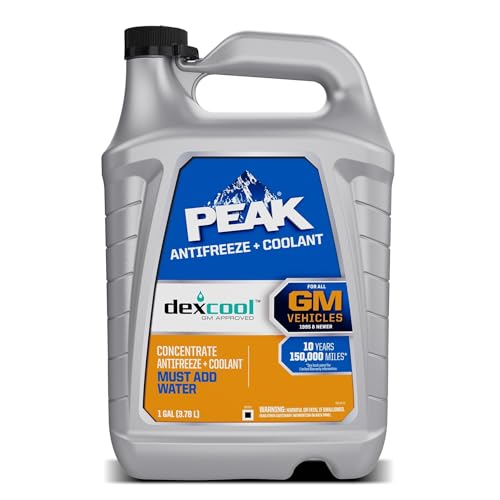
PEAK DEX-Cool® Antifreeze + Coolant for GM Vehicles
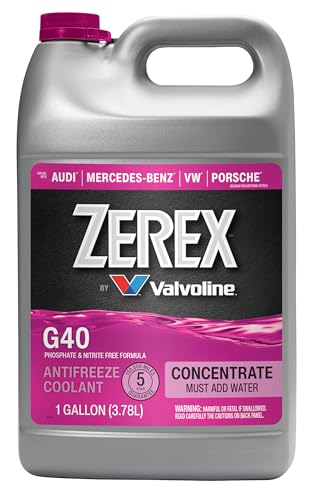
Zerex G40 Phosphate and Nitrite Free Concentrate Antifreeze/Coolant
More Details On Our Top Picks
Households with two or three different vehicles tend to accumulate half-empty coolant jugs, and this one aims to end that clutter. PEAK built its Global formula around organic acid technology, a corrosion-inhibiting approach where additives coat metal surfaces only where needed rather than blanketing the whole system.
The concentrate ships undiluted, so you mix it with distilled water at a 50/50 ratio before filling. That extra step buys flexibility: you control the freeze protection level for your climate. Because it’s designed to work regardless of what’s already in the system, it suits anyone who doesn’t know their current coolant’s chemistry.
Strong Points
- Works across makes, models, and years, so one jug covers a multi-car driveway
- Organic acid inhibitors guard cooling system metals against rust over long service intervals
- Concentrate format lets you dial in freeze protection for harsh northern winters
- Omits silicates, borates, nitrites, and amines, additives that can wear out water pump seals in some engines
Things To Consider
- You’ll need distilled water and a clean mixing container on hand before any fill
- Some owners prefer a vehicle-specific formula for factory-correct color matching during top-offs
At A Glance
Who It Suits Best
DIYers maintaining several different vehicles who want a single, forgiving coolant on the shelf.
Where A Sibling Pick Shines
Owners of a single Honda or Nissan will get tighter factory alignment from the PEAK OET Blue Concentrate later in this list.
European engines are famously picky about coolant chemistry, and the blue Euro I specification is a common requirement across older VW, Audi, and BMW platforms. Recochem packages this one prediluted at 50/50, meaning ethylene glycol already blended with water, ready to pour straight into the expansion tank.
The formulation skips silicates, phosphates, borates, nitrates, nitrites, and amines, a long exclusion list that matters because those additives can leave deposits in the narrow passages of euro cooling systems. High-temperature aluminum protection is the headline benefit, which is exactly where modern euro engines run hot. A bittering agent is included as well, a safety measure that discourages accidental ingestion given coolant’s sweet taste.
Bright Spots
- Prediluted, so no measuring or mixing before a top-off
- Built to the blue Euro I spec many German vehicles call for
- Guards high-temp aluminum components, the weak point in euro engines
- Bitterant added to reduce poisoning risk around kids and pets
Trade Offs
- Blue Euro I chemistry won’t suit newer VW and Mercedes models that moved to G12, G13, or Si-OAT formulas
- Always confirm your owner’s manual calls for this specific spec before pouring
Made For
Drivers of older Volkswagen, Audi, and BMW models whose manuals specify a blue silicate-free-of-additives European coolant.
A Better Fit Elsewhere
Newer BMW, Mercedes-Benz, Porsche, and VW owners should look at the Zerex G40 further down, which targets modern Si-OAT requirements.
Not every coolant job is a full drain and fill. Sometimes you’re staring at a low expansion tank on a used car with unknown history, and that’s precisely the scenario CarPlan built Demon Cool for. The brand markets it as a universal top-up that mixes with every color of antifreeze already sitting in the radiator.
The liter bottle suits glovebox or trunk storage better than a gallon jug, and it works in both petrol and diesel engines. That color-mixing tolerance is unusual; most coolants warn against blending different chemistries because gelling or additive dropout can follow. Owners commonly report reaching for this exact use case, roadside and driveway top-offs where flushing isn’t practical yet.
Reasons To Buy
- Blends with all existing coolant colors, removing guesswork on unknown systems
- Compact 1-liter size stashes easily in a trunk emergency kit
- Covers both petrol and diesel engines across brands
Minor Gripes
- A single liter goes fast in a full drain-and-fill, so larger jobs need multiple bottles
- Universal mixing is a convenience tool, not a substitute for eventually flushing to one proper coolant
Feature Snapshot
Right Fit For
Used-car owners and commuters who want a no-thought emergency top-up that won’t react with whatever’s already in the system.
Skip It When
Anyone doing a complete system flush should step up to a gallon of the PEAK Global Concentrate for better value per fill.
Honda, Acura, Nissan, Infiniti, Subaru, Mitsubishi, and Suzuki engines share a preference for a blue extended-life formula, and PEAK’s OET line answers that directly. Unlike the universal Global pick at number one, this concentrate is tuned specifically for Asian-market cooling systems and their metallurgy.
The extended-life inhibitor package guards every component in the loop, from radiator to heater core, against rust and corrosion. Denatonium benzoate, a bittering agent, is mixed in as an ingestion deterrent. Being a concentrate, it wants a 50/50 blend with distilled water, which seasoned DIYers handle in minutes. Compatibility with other extended-life coolants softens the risk of a partial mix during a top-off.
Upsides
- Vehicle-specific chemistry matched to major Asian brands’ requirements
- Extended-life inhibitors protect radiators, pumps, and heater cores between services
- Plays nicely with other extended-life coolants if a partial mix happens
- Bitterant included for safer handling around the household
Small Caveats
- Requires dilution with distilled water, adding one prep step before filling
- Toyota and Lexus owners need the red/pink variant instead, not this blue formula
Who Will Love This
Subaru and Honda owners doing their own cooling maintenance who want factory-aligned chemistry without dealer pricing.
Swap It Out When
Lexus, Scion, and Toyota drivers should reach for the PEAK OET Red/Pink Concentrate reviewed next, since those engines specify phosphate-enhanced coolant.
Toyota’s red/pink phosphate-enhanced coolant is one of the most recognizable fluids in the aftermarket, and this PEAK OET version mirrors that requirement for Lexus, Scion, and Toyota engines. The phosphate component is deliberate: it strengthens protection for the aluminum heads and radiators those engines favor.
Like its blue sibling above, this is a one-gallon concentrate meant for a 50/50 cut with distilled water, and it carries denatonium benzoate as a bittering agent. The inhibitor package addresses rust and corrosion across the whole cooling circuit. In our view, matching the exact color and chemistry your manual specifies beats any universal shortcut for long-term engine health.
Highlights
- Formulated for Toyota-family engines requiring red/pink phosphate-enhanced coolant
- Phosphate boosters reinforce aluminum component protection at high temperatures
- Compatible with other extended-life coolants, easing partial top-off situations
- Bittering agent reduces accidental-ingestion risk in home garages
Points To Note
- Concentrate means sourcing distilled water and mixing before every use
- Wrong-color swaps happen often; verify the pink requirement applies to your model year first
Quick Facts
Best Suited To
Toyota and Lexus owners who change their own coolant and want the correct phosphate-enhanced formula in the correct color.
Not Your Match When
Nissan, Subaru, or Honda drivers belong with the PEAK OET Blue Concentrate from the previous review instead.
Ford and Chrysler vehicles of recent years moved to a gold hybrid organic acid technology coolant, and this gallon arrives prediluted, so the usual measuring step disappears. Pop the cap, pour into the reservoir, done. For first-time DIYers that simplicity removes the most common mistake in coolant work: getting the dilution ratio wrong.
Hybrid organic acid technology blends long-life organic inhibitors with a smaller dose of conventional additives, aiming for fast initial protection plus extended service intervals. The formula also tolerates mixing with other extended-life coolants, useful when a previous owner’s history is murky. Corrosion and rust defense spans the entire cooling system, water pump included.
Plus Points
- Prediluted 50/50, eliminating mixing errors entirely
- Gold HOAT chemistry matches Ford and Chrysler specifications
- Hybrid inhibitors deliver both quick and long-haul corrosion defense
- Mixes safely with other extended-life coolants
Honest Caveats
- Less flexible than a concentrate for extreme climates needing custom ratios
- GM owners need the orange DEX-Cool formula below, not this gold one
Core Details
The Right Fit
Beginner DIYers with a Ford or Chrysler product who value a pour-ready jug over mixing accuracy.
Look Elsewhere When
Drivers wanting adjustable freeze protection for severe winters may prefer the concentrated PEAK Global option at the top of this list.
General Motors has specified orange organic acid technology coolant since 1995 under the DEX-Cool name, and this PEAK jug carries that designation for Silverados, Tahoes, Malibus, and everything else wearing a bowtie. Mixing a non-OAT fluid into a DEX-Cool system is a widely reported cause of sludge, so using the correct orange chemistry genuinely matters here.
The formula defends all cooling-system metals, with particular attention to aluminum, which dominates GM engine construction. Rust and corrosion inhibitors are built for long drain intervals, and denatonium benzoate is present as an ingestion deterrent. Compared with the gold Ford/Chrysler pick above, this one is purpose-narrower but deeper in its lane.
Standout Traits
- Correct orange OAT chemistry for GM vehicles from 1995 onward
- Aluminum-focused corrosion protection suits modern GM engines
- Designed for extended service intervals between coolant changes
- Bittering agent added for household safety
Softer Spots
- Strictly a GM-lane product; other makes should skip it
- Older pre-1995 GM classics may call for a different green formula altogether
Whose Shelf It Belongs On
GM truck and SUV owners logging towing miles or long commutes who want factory-spec orange coolant without a dealership visit.
Reach For A Different Pick When
Ford and Chrysler owners will find their match in the PEAK OET Gold 50/50 reviewed just above.
Zerex, Valvoline’s coolant arm, built the G40 around Si-OAT, a silicated organic acid technology that modern German engineering increasingly demands. BMW, Mercedes-Benz, Porsche, and VW platforms call for it, along with some older Audi and Volvo models. Where the Recochem blue pick earlier covered legacy euro specs, the G40 handles the newer generation.
The carboxylate-based inhibitor package omits phosphates and nitrites entirely, keeping deposits out of precision cooling passages. As a concentrate, it expects a distilled-water blend before filling. One honest note: euro coolant specs are unforgiving, so double-check your exact model’s requirement before committing a gallon to the system.
Best Bits
- Si-OAT formulation aligned with current BMW, Mercedes, Porsche, and VW requirements
- Carboxylate inhibitors support long engine life in cars and light trucks
- No phosphates or nitrites, protecting sensitive euro cooling passages
- Backed by a long-established Valvoline fluid brand
Room For Improvement
- Concentrate format adds a mixing step compared with prediluted rivals
- Overkill for domestic and Asian vehicles that don’t request Si-OAT chemistry
Details At A Glance
Perfect Match For
Enthusiast owners of late-model German vehicles who insist on spec-correct coolant for high-mileage engine longevity.
Where Another Pick Suits Better
Older VW and Audi models specifying blue Euro I fluid are better served by the Recochem OEM offering from earlier in this roundup.
What Matters Most Before Choosing Antifreeze
Chemistry Comes First
Color is a hint, not a rule. What actually matters is the inhibitor family: conventional green, OAT (organic acid technology), HOAT (hybrid), phosphate-enhanced Asian formulas, and Si-OAT euro blends each serve different metallurgy. Pouring the wrong family into a system invites gelling, seal wear, or accelerated corrosion. Your owner’s manual names the requirement; trust it over the liquid’s hue.
Concentrate Versus Prediluted
Concentrates cost less per finished gallon and let you tune freeze protection for brutal climates, but they demand distilled water and accurate 50/50 mixing. Prediluted jugs trade a little flexibility for zero-mistake convenience. First-timers usually do better starting prediluted.
Vehicle Age And Spec Drift
Manufacturers revise coolant specs over time, sometimes within the same nameplate. A 2010 Civic and a 2020 Civic may want different chemistry entirely. Confirm the exact model year before ordering anything.
Top-Up Or Full Service
A low reservoir calls for a compatible top-up like CarPlan Demon Cool. A milky, rusty, or overdue system deserves a full drain, flush, and refill with the correct formula rather than another splash of whatever’s handy.
Key Considerations Across These Picks
Traps First Timers Fall Into
Mixing incompatible chemistries tops the list, followed by topping off with tap water, whose minerals scale up inside the radiator. Skipping the manual check is the third classic error. All three are avoidable with ten minutes of reading.
When Paying More Pays Off
Premium euro formulas such as Zerex G40 cost more because their Si-OAT chemistry is engineered to strict OEM standards. For a Mercedes or Porsche, that premium is cheap insurance. For a basic commuter, a mainstream PEAK jug does the job without ceremony.
Closing Thoughts
The best antifreeze is the one your engine was designed around, plain and simple. Match the chemistry to your make, respect the dilution instructions, and flush on schedule rather than waiting for trouble. Any of these eight will serve you well in the right vehicle, and the few minutes spent confirming your spec today saves far more than a roadside tow later.
