

Skating on a budget used to mean sacrificing speed, range, or build quality. Today’s market tells a different story, with boards that handle daily commutes, weekend campus loops, and casual carving without draining your wallet. The picks below cover a useful spread, from a manual cruiser to a sub-$1,000 electric with serious pace, so you can match the board to your actual riding style rather than overspending on features you won’t touch.
A Fast Comparison Of The Options
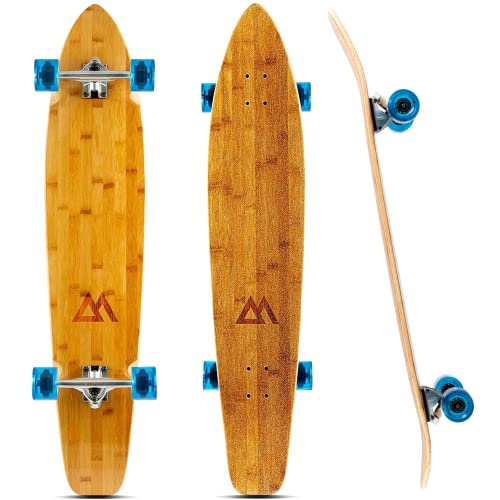
Magneto 44 inch Kicktail Cruiser Longboard Skateboard | Bamboo and Hard Maple Deck | Made for Adults, Teens, and Kids

Atom Longboards Atom All-Terrain Longboard – 39″, Woody

MEEPO Campus V3 Series/Envy Electric Skateboard with Remote, Top Speed Up to 29 Mph, 4 Speed Smooth Braking, Easy Carry Handle Design, Suitable for Adults & Teens

MEEPO Mini Series Electric Skateboard with Remote, Up to 26-32 MPH Top Speed, 11-24Miles Range,330 Pounds Max Load, 30-34 Inches Maple Cruiser for Adults and Teens, Mini5 MINI3 Max Edge Flow
The Details Behind The Selections
Opening the list with a non-electric board feels backwards in a roundup of Affordable Electric Skateboards, but hear the logic out. Plenty of shoppers land on this search thinking they want a motor and end up realizing a manual cruiser fits their actual route better, especially for short hops where charging and weight become daily friction.
The Magneto pairs a 44-inch deck built from bamboo and hard maple, a layered construction that gives the board noticeable flex without feeling noodle-soft. The included 70mm soft urethane wheels (urethane is the rubbery polymer that grips and rolls smoothly) handle rough pavement and small cracks far better than the harder small wheels on a typical popsicle deck. The shape, sometimes called a cruiser or kicktail board, has a slightly raised tail you can push down to lift the front wheels for tight turns or curbs.
Notable Upsides
- Layered bamboo and hard maple deck absorbs vibration from cracked sidewalks, so your feet and knees take less punishment on longer pushes.
- The 44-inch length lands in a sweet spot for shorter riders and teens who find 40-inch cruisers twitchy and full-size longboards unwieldy.
- 70mm soft urethane wheels roll over rough asphalt, gravel patches, and uneven brick without getting stuck the way harder wheels do.
- No motor means no charging routine, no firmware updates, and no worry about water or rain shorting electronics.
Things To Consider
- Manual power only, so hills and long distances take real effort compared to any electric on this list.
- The bamboo-topped deck tends to show scratches and scuffs faster than a painted maple board, something to expect after a season of regular use.
At A Glance
Who It Suits Best
New riders, teens, and anyone wanting a low-fuss cruiser for short commutes, campus loops, or weekend boardwalk sessions where a motor adds cost without adding value.
Consider Something Else When
You want motorized help on hills or longer routes, in which case the MEEPO Campus V3 brings that electric assist at a still-accessible price.
The Magneto above handles cracked sidewalks gracefully, but the moment the path turns to dirt, grass, or gravel, those 70mm wheels start fighting back. The Atom All-Terrain 39-inch changes that equation with much larger 100mm wheels and a wider truck stance (trucks are the metal axles mounted under the deck that hold the wheels) designed to keep the deck stable when the ground stops cooperating.
At 39 inches, the deck sits shorter than the Magneto, which makes it more responsive for carving but slightly less stable at speed. The Woody finish keeps the look understated, and the shorter wheelbase (the distance between front and rear wheels) lets you lean hard into turns without the board wandering. For a rider whose commute includes a park path, a dirt shortcut, or a gravel parking lot, this fills a niche nothing else on the list touches.
A Favorable Mix
- Oversized 100mm wheels roll over grass, gravel, and small roots that would stop a standard cruiser cold.
- The 39-inch deck stays short enough to sling under a backpack or carry onto a bus without a hassle.
- Wider trucks give you a planted feel when the surface gets loose, useful when you’re picking up speed on a downhill fire road.
Worth Noting
- The taller trucks raise the deck’s center of gravity, which makes low-speed balance trickier for first-timers compared to the Magneto.
- Heavier wheels and trucks add noticeable weight, so this is a board you carry less and ride more.
- Still manually powered, meaning the same hill-climbing limitations as any non-electric board.
Right Fit For
Riders whose routes mix pavement with dirt paths, students on campuses with grass shortcuts, and anyone curious about exploring light off-pavement terrain without going full mountain board.
Look Elsewhere When
Your priority is motorized speed and range on flat urban streets, where the MEEPO Mini Series offers a more direct path to that experience.
Now the category earns its name. The MEEPO Campus V3 sits in the entry-level electric tier, the part of the Affordable Electric Skateboards market where most first-time shoppers land. The compact 26.7-inch deck is shorter than the Atom above, which makes it more portable but also less stable at top speed, a trade-off MEEPO addresses with a 4-speed remote that lets you build up gradually instead of getting full torque on the first push.
The listed top speed reaches 29 mph, though for most new riders the lower two modes feel generous on campus paths. The integrated carry handle in the deck is a small touch that pays off every time you need to hop on a subway or carry it up three flights of stairs. For teens and adults dipping into electric for the first time, the smoother braking curve (the way the board slows when you pull the trigger) matters more than peak speed, and this one leans into that approach.
Noteworthy Benefits
- Four-speed remote lets beginners start at a walking pace and progress to faster modes as confidence builds.
- Built-in carry handle in the deck saves you from awkward underarm carries on public transit and stairs.
- Compact 26.7-inch deck fits inside a locker, under a desk, or in a small apartment closet without dominating the space.
Honest Caveats
- The shorter deck feels less stable at the upper speed range compared to longer boards like the MEEPO Mini Series below.
- Like most electrics, range depends heavily on rider weight, terrain, and selected speed mode, so advertised numbers are best-case scenarios.
- Battery care matters: storing the board in extreme heat or cold for long periods tends to shorten pack lifespan over time.
Quick Facts
Made For
Teens, college students, and first-time electric riders who want a portable, approachable board for short urban commutes without committing to a long, heavy deck.
Skip It When
You want maximum range and a longer deck for high-speed stability, where the MEEPO Mini Series steps in with a bigger battery and more confident footprint.
The Mini Series rounds out the list by pushing the short-deck electric idea further than the Campus V3, and it does so with a wider speed and range envelope that serious commuters tend to want. Where the Campus caps at 29 mph with a single configuration, the Mini covers 26 to 32 mph depending on the variant, paired with a range window of 11 to 24 miles that adapts to how aggressively you ride.
The 30 to 34-inch deck lands longer than the Campus, which gives the board more wheelbase stability at speed, a meaningful upgrade once you stop riding in beginner modes. The maple construction (maple here meaning layered hard-rock maple, the dense wood most performance decks use) holds up to the 330-pound max load, making this a realistic option for heavier riders who often get squeezed out of the budget tier. A practical kicktail returns for curbs and quick directional changes, the kind of small functional touch that separates a usable commuter from a flat electric plank.
Useful Highlights
- Range window of 11 to 24 miles covers most daily commutes and round-trip errands without mid-day charging.
- 330-pound max load opens the door for heavier riders who often find budget boards underbuilt.
- Maple deck paired with a functional kicktail handles curbs and tight carves better than flat electric decks.
Less Ideal Details
- Higher top speeds demand more protective gear, and full-face helmets become a smart investment once you leave beginner modes.
- Battery range claims vary widely with rider weight, hills, and mode selection, so the upper number only applies in ideal conditions.
- More powerful electronics and a longer deck add weight compared to the Campus V3, making it a less convenient carry for transit-heavy commutes.
Who Will Love This
Daily commuters, heavier riders, and speed-curious owners who want one electric that handles both neighborhood cruising and longer point-to-point trips without range anxiety.
Reach For A Different Pick When
You’re brand new to electric and want the gentlest learning curve, in which case the MEEPO Campus V3’s compact deck and lower-speed defaults are a more forgiving starting point.
What To Weigh Before Choosing Your Board
Start with your route, not the spec sheet. A rider covering two flat miles to a transit stop has different needs than someone doing ten hilly miles to a workplace, and the wrong wheel size or deck length will surface as daily friction long before any technical limit kicks in.
Match the drive system to your terrain. Hub motors sit inside the wheels for a quieter, lower-maintenance ride, while belt drives handle hills and quick acceleration more confidently but need occasional belt checks. If your route includes steep grades, prioritize torque and braking strength over peak top-speed numbers, since what gets you up a hill also gets you safely back down.
Consider weight, carry, and storage honestly. A heavier board with a longer deck rides better at speed, but becomes a real burden on stairs, buses, and small apartments. The compact picks in this list trade some high-speed stability for portability, and that trade is worth it for transit-heavy commutes.
Battery specs deserve healthy skepticism. Advertised ranges assume a lightweight rider on flat ground in the lowest mode, so real-world numbers often land 30 to 40 percent below the headline figure. Charging time, removable batteries, and replacement cost all shape the long-term ownership picture more than peak range claims.
Smart Shopping Notes For This Category
Pitfalls Shoppers Hit
The most common mistake is chasing top speed on the spec sheet. A 32 mph board sounds exciting until you’re on it for the first time, wearing inadequate gear, on a path with cross-traffic. Honest speed needs grow with skill, not before it. Another trap is ignoring wheel size: small hard wheels feel snappy on smooth pavement but punish you on anything rougher, and the cheapest boards often cheap out here.
Where The Extra Money Goes
Higher-tier Affordable Electric Skateboards tend to spend the budget on battery cells (more capacity and longer cycle life), better ESC tuning (the electronic speed controller that manages acceleration and braking smoothness), and stronger decks that resist cracking under repeated flex. The upgrade pays off when you ride daily, carry a heavier frame, or live somewhere with real hills, but a casual weekend rider may not notice the difference.
Frequently Asked Questions
Are Affordable Electric Skateboards safe for beginners? Most entry-level boards include multiple speed modes and smooth braking curves that let new riders build skills gradually. Safety depends more on protective gear and choosing appropriate speed settings than on the price tier.
How far can a budget electric skateboard really go? Manufacturer range numbers reflect ideal conditions: a light rider on flat ground in the lowest mode. Real-world range usually lands 30 to 40 percent below the advertised figure, especially on hills or in faster modes.
Can I ride an electric skateboard in the rain? Most boards in this price range are not fully waterproof, and water intrusion into the electronics or bearings is a common cause of long-term damage. Light drizzle on dry ground is usually fine, but standing water and heavy rain are best avoided.
How long does the battery last before replacement? Lithium battery packs typically deliver 300 to 500 full charge cycles before noticeable capacity loss, which works out to two to four years for most casual riders. Storage habits and climate affect this more than total mileage.
Do I need a helmet for riding an electric skateboard? A helmet is essential at any speed, and full-finger gloves, wrist guards, and proper footwear add meaningful protection. Faster boards deserve a full-face helmet, especially once you leave beginner modes.
Wrap Up
The right pick depends less on budget and more on what your actual week looks like. A casual cruiser, an off-pavement explorer, a beginner electric, and a performance commuter each earn their spot for different riders. Start with your real route, weight the trade-offs honestly, and the right board tends to make itself obvious.
