

Loading four bikes onto a car should not feel like a puzzle with missing pieces. Whether you are shuttling the family to a rail trail or hauling a crew to a weekend race, a good hitch rack saves your trunk space, your paint, and your patience. The eight options below cover every budget and bike type, from budget steel hangers to aluminum e-bike trays with a loading ramp.
A Fast Comparison Of The Options
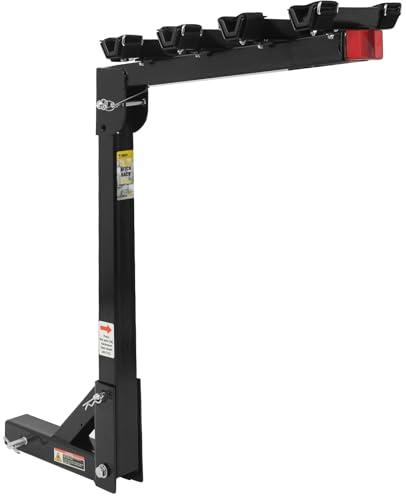
MaxxHaul Hitch Mount 4 Bike Rack 150 lb Capacity (70210)

Yakima DoubleDown 4 Hitch Mount Bike Rack
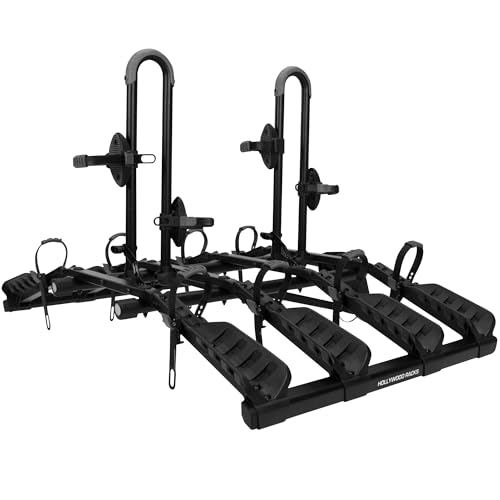
Hollywood Racks Destination 4 Hitch Bike Rack (Black)

Trimax RMBR4 Road-MAX 4 Bike Tray Rack
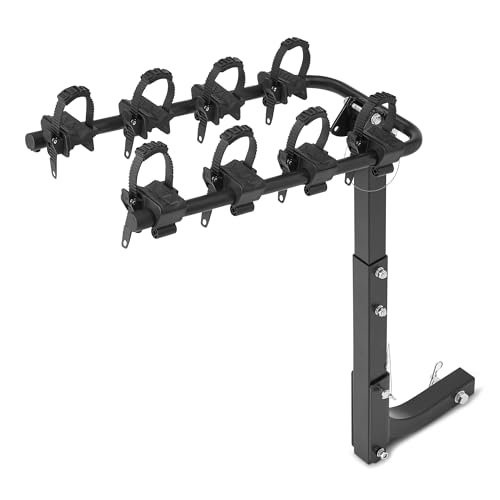
Amazon Basics 4-Bike Hitch Rack 132-Pound Capacity

YOUNG ELECTRIC 200LBS EZ-Fold Aluminum E-Bike Carrier with Ramp

Young 4-Bike Platform Style Carrier 160 lbs Total

DNYKER 180 Lbs 4-Bike Foldable Tilt Hitch Bike Rack
More Details On Our Top Picks
The MaxxHaul 70210 keeps things refreshingly simple. A powder-coated steel frame carries up to four bikes at a combined 150 pounds, sliding into any standard 2-inch hitch receiver on cars, trucks, SUVs, and minivans.
The swing-down mechanism is the reason families gravitate toward it. Pivot the loaded rack downward and you still reach the tailgate or hatch without unloading anything, which matters more than you’d think on grocery-stop ride days.
The Value In It
- Swing-down pivot lets you open the rear cargo area even with bikes mounted.
- Adjustable cradles with hook-and-loop straps hold different frame sizes without scratching paint.
- Powder-coated steel shrugs off rain and road grime season after season.
- Installs into a 2-inch receiver in minutes, no specialist tools required.
Things To Consider
- Steel construction means noticeable heft when lifting it on and off solo.
- Owners commonly report frame contact between tightly spaced bikes on bumpy roads, so padding tubes helps.
Key Specs
Made For
Families who want a dependable, no-frills four-bike carrier that leaves cargo space usable on trip day.
A Better Fit Elsewhere
Households juggling both 1.25-inch and 2-inch hitches will find the Yakima DoubleDown 4 far more flexible across multiple vehicles.
Dual hitch compatibility is this rack’s whole personality. It accepts both 1.25-inch and 2-inch receivers, so one purchase covers the sedan today and the pickup tomorrow. That alone settles it for anyone whose garage holds more than one vehicle.
Arms fold flat against the car when empty, and anti-sway cradles limit the clatter of bikes knocking together. The honest caveat sits in the fine print: a 30-pound cap per bike rules out most e-bikes, and step-through frames need the separate TubeTop adapter.
Key Advantages
- Works with both 1.25-inch and 2-inch receivers, rare at this level.
- Tilting rear mount swings bikes away for trunk access mid-trip.
- Folding arms tuck close to the vehicle for parking and storage.
Small Caveats
- 30 lb per-bike ceiling excludes heavier electric bikes entirely.
- Non-traditional frames require buying the TubeTop accessory separately.
Who Will Love This
Multi-car households carrying road, mountain, or hybrid bikes under 30 pounds each.
Swap It Out When
E-bike riders should head straight for the Young Electric EZ-Fold carrier, whose 100-pound-per-bike rating was built for exactly that job.
At roughly 42 pounds, the Destination 4 is one of the lighter four-bike carriers you can bolt behind an SUV. That figure sounds abstract until you’re wrestling a rack out of a garage at dawn before a long drive, then it feels like everything.
It uses a platform-style layout with padded holders that rotate a full 360 degrees, so sloped top tubes, women’s frames, and odd geometries all find a secure grip. Compared to the MaxxHaul’s hanging-arm approach, contact points sit lower and handle awkward frames more gracefully.
The Case For It
- About 42 pounds total, easy for one person to maneuver and store.
- Padded frame holders spin 360 degrees to fit nearly any frame shape.
- Platform layout reduces bike-to-bike contact versus hanging racks.
- Carries road, mountain, hybrid, and kids’ sizes without adapters for most styles.
- Suits cars, SUVs, trucks, and trailers alike.
Worth Noting
- Platform designs occupy more hitch length, which can matter on short-rear vehicles.
Feature Snapshot
The Right Fit
Long-distance travelers who value low weight and frame flexibility over rock-bottom pricing.
Reach For A Different Pick When
Shoppers prioritizing raw load capacity will get more headroom from the DNYKER’s 180-pound rating further down this list.
Tray-style carriers hold bikes by the wheels instead of the frame, and the Trimax Road-MAX leans hard into that advantage. Each bike rests upright on its own tray, secured by high-resistance wheel straps sized for essentially any rim or tire combination.
The locking attachment system clamps firmly into a 2-inch receiver, and the whole assembly folds down compactly enough that many owners stash it in a trunk between trips. Where the Yakima DoubleDown hangs bikes from arms, this one keeps them vertical and separated, which cuts sway dramatically on rough pavement.
Why It Works Well
- Wheel-mounted trays eliminate frame-clamp stress on carbon and thin-tube bikes.
- High-resistance straps accommodate all rim and tire sizes.
- Folding design shrinks storage footprint in trunks and garages.
- Locking attachment system adds theft deterrence at the hitch point.
Points To Note
- Tray racks typically carry a higher price than hanging-arm alternatives like the Amazon Basics unit.
- Loading requires lifting bikes slightly higher than hanging styles demand.
Core Details
Built With In Mind
Truck, van, and SUV drivers hauling premium or mixed-frame bikes on long highway runs.
Consider Something Else When
Occasional riders watching their budget will be happier with the MaxxHaul 70210’s simpler hanging design at a friendlier entry point.
Not every household needs a 150-plus-pound rating. The Amazon Basics rack covers four standard bikes within a 132-pound ceiling, which comfortably handles kids’ bikes, hybrids, and typical adult mountain bikes riding together.
Its standout attribute is the anti-rattle engineering. Wobble and road noise are the two complaints that plague cheap hitch racks, and reinforced tie-downs paired with a stabilizing connection address both directly. For a first rack, it removes most of the guesswork.
Notable Gains
- Anti-rattle stability keeps highway trips quiet and hitch wear minimal.
- Powder-coated heavy-duty steel frame stands up to weather exposure.
- Folds for compact off-season storage in a shed or garage corner.
Some Limits To Know
- 132-pound total means less headroom for heavier setups than the Young or Trimax options.
- Designed around a 2-inch hitch only, so smaller receivers need another pick.
- Steel build adds meaningful weight during installation and removal.
Right Fit For
First-time rack owners with standard bikes who want quiet, stable transport without overspending.
Where A Sibling Pick Shines
Anyone needing dual hitch compatibility across vehicles gets more mileage from the Yakima DoubleDown 4 instead.
E-bikes break ordinary racks. At 50 to 80 pounds apiece, hoisting one onto a hanging carrier is a two-person ordeal, which is precisely why this Young Electric exists. An integrated loading ramp lets you walk each bike up into position, and the 100-pound-per-slot rating absorbs the heaviest commuter builds.
Aluminum keeps the carrier itself manageable despite the strength, and universal tire holders accept fat tires up to 5 inches wide. On unpaved approaches to trailheads, the anti-wobble structure holds bikes steady without the knocking you’d brace for on lesser trays.
A Strong Showing
- 200-pound total rating, 100 pounds per slot, built specifically for e-bikes.
- Included ramp turns a brutal lift into a simple walk-up load.
- Aluminum construction resists corrosion while trimming overall weight.
- Universal tire holders fit tires up to 5 inches, covering fat bikes too.
Honest Caveats
- Two-bike capacity only, so larger groups need the brand’s four-slot model below.
- Tray carriers demand more rear clearance than compact hanging racks.
Essential Details
Who Should Grab It
E-bike commuters and RV or trailer owners tired of deadlifting 60-pound machines onto flimsy arms.
Not Your Match When
Four-rider families on conventional bikes should look at the Young 4-Bike platform carrier instead, which doubles the slot count.
This is the four-slot sibling to the e-bike carrier above, rated at 40 pounds per bike and 160 pounds total. That per-slot figure matters: unlike the Yakima’s 30-pound ceiling, it tolerates heavier hardtail builds and battery-equipped city bikes within limits.
Soft padded hooks slide down over the vertical frame tube, and a locking hitch pin plus tightener secures the whole unit to a 2-inch receiver. Fold it up when parked, tilt it back when the tailgate needs opening, and rely on the rear safety reflector for visibility after dusk.
A Few Strong Suits
- 40 lb per-bike rating exceeds most hanging racks in this price range.
- Fold-up and tilt-back functions handle parking and cargo access in one mechanism.
- Padded hooks protect paint while gripping varied frame diameters.
- Locking hitch pin deters theft and quiets hitch movement.
- Rear safety reflector improves nighttime visibility in traffic.
Details To Watch
- Platform length extends well past the bumper, worth measuring on shorter vehicles.
- Owners commonly note that strap adjustment takes a few trips to dial in.
Quick Facts
Whose Shelf It Belongs On
Minivan and SUV families mixing adult and teen bikes who want platform stability at a mid-range cost.
Another Choice May Suit
Riders with true e-bikes pushing 60 pounds each should stay with the Young Electric ramped two-bike carrier for its higher per-slot rating.
An 180-pound ceiling gives the DNYKER real breathing room among hanging-style racks, sitting above the Amazon Basics’ 132 and the MaxxHaul’s 150. Four average bikes plus a heavier hardtail fit without doing math in your driveway.
Foam-padded hooks pair with a double-locking setup meant to keep bikes planted on washboard gravel, and the fold-flat design tucks against the vehicle when idle. In practice, expect the same trade-off as other hangers: adjacent bikes may touch on rough stretches unless you stagger handlebars and pedal positions deliberately.
What Stands Out
- 180-pound total rating tops most comparably priced four-bike hangers.
- Foam-padded hooks guard paint across mixed frame sizes.
- Folding tilt design frees the tailgate without unloading bikes.
Factors To Consider
- Hanging layout means occasional bike-to-bike contact on rough roads.
- Straps and pads deserve a quick check before long trips, as with any fabric-contact design.
- As a newer listing, long-term durability reports are thinner than for established brands here.
Who It Suits Best
Value-minded households running a mix of standard and slightly heavier bikes on paved routes.
Look Elsewhere When
Rough-terrain travelers wanting zero frame contact will prefer the Trimax Road-MAX tray system despite its higher commitment.
What Matters Most Before You Load Up
Hitch Size And Vehicle Fit
Measure your receiver before anything else. Most racks here need a 2-inch receiver, though the Yakima DoubleDown also accepts 1.25-inch units common on crossovers. Confirm your vehicle’s tongue-weight rating supports the combined rack-and-bike load.
Hanging Versus Tray Design
Hanging racks suspend bikes from the top tube by their frames, keeping costs and weight low but allowing some contact between bikes. Tray racks grip the wheels, protecting carbon frames and eliminating sway at a higher price. Match the style to your bikes’ value and frame shapes.
Weight Ratings Done Right
Read the per-bike limit, not just the total. A 160-pound rack capped at 30 pounds per slot cannot take a modern e-bike, while the Young Electric’s 100-pound-per-slot rating welcomes them. Weigh your heaviest bike first, then buy headroom.
Access And Storage Habits
Swing-down and tilt mechanisms decide whether you open the tailgate on trip day or unload everything first. Folding designs matter equally at home, since a folded rack slides behind garage shelving where a rigid one blocks a parking spot.
Key Considerations Across These Racks
Wrong Turns To Avoid
The classic error is buying for today’s bikes and forgetting next year’s. Kids grow, e-bikes arrive, and a 30-pound-per-slot ceiling suddenly stings. Skipping the receiver measurement ranks second, since a 1.25-inch hitch renders most of this list unusable until an adapter enters the picture.
When Paying More Pays Off
Higher-tier racks buy aluminum construction, ramps, locking hardware, and per-bike ratings north of 60 pounds. Frequent riders towing expensive frames recover that premium quickly in avoided damage and faster loading. Two trips a year rarely justifies the jump, and a solid steel hanger serves that rhythm well.
Closing Thoughts
Four bikes on one hitch comes down to matching three numbers: your receiver size, your heaviest bike’s weight, and how often the rack leaves the garage. Families on standard bikes have excellent affordable options in the MaxxHaul and Amazon Basics, while e-bike owners owe themselves a ramped tray. Measure once, choose honestly, and the Saturday ride starts smoother from here on.
