

Sciatica has a way of making every chair feel like the wrong chair. Sitting aggravates the nerve, and most stock car seats and office chairs do nothing to soften the pressure on your tailbone, hips, and lower back. The right cushion can change that, redistributing weight and easing the compression that turns a 30-minute drive into an ordeal.
Below are five options that target sciatic pain from different angles, from dense memory foam seat pads to lumbar supports and a cervical pillow that rounds out full-spine alignment for anyone whose pain travels upward. Each one is matched to a specific kind of daily sitter: long-haul drivers, desk-bound workers, and people who need sciatic relief beyond the seat.
The Shortlist At A Glance
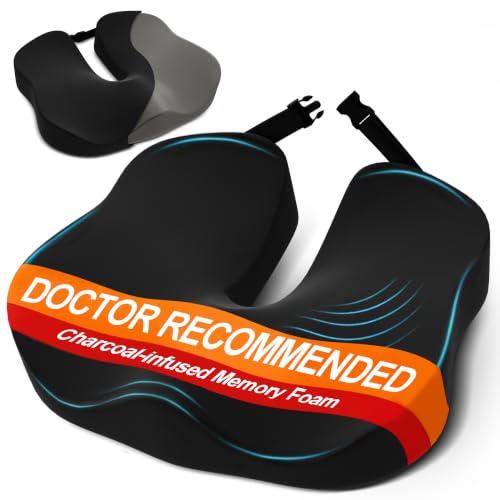
Comfidur Charcoal Memory Foam Office Chair Cushion
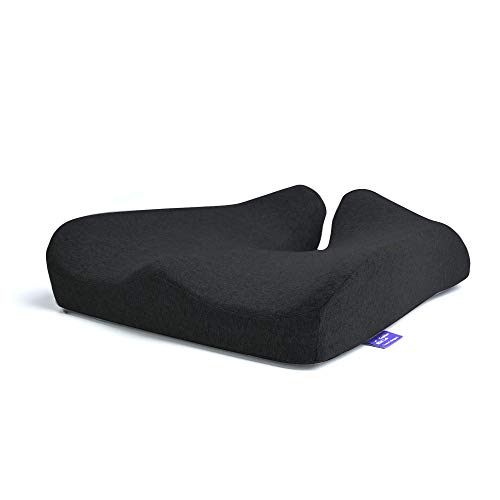
Cushion Lab Pressure Relief Seat Cushion (Black)
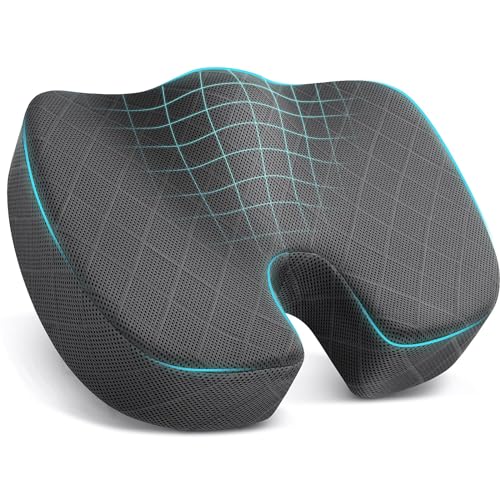
TushGuard Memory Foam Seat Cushion (Grey, Large)
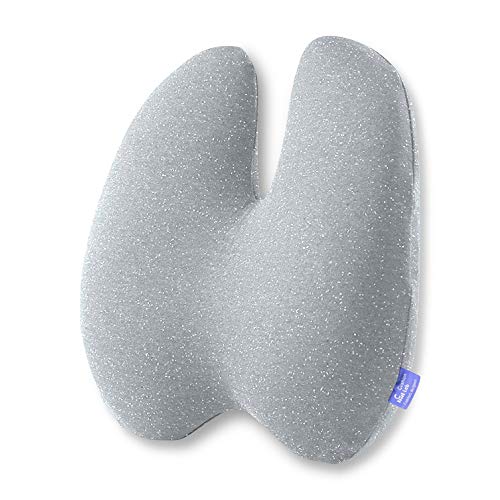
C CUSHION LAB Extra Dense Lumbar Pillow (Grey)

C CUSHION LAB Extra Dense Ergonomic Cervical Pillow
The Details Behind The Selections
The Comfidur cushion leans on a denser foam formulation than most budget pads, with charcoal infusion intended to help with odor control over time. The non-slip base and adjustable strap keep it planted on office chairs, dining seats, and car buckets alike, so the relief you find at your desk can travel with you to the driver’s seat.
For sciatica, the dense feel matters more than plush softness. A firmer base holds your pelvis level, which in turn keeps pressure off the sciatic nerve where it runs under the glutes. The washable cover is a quiet win for hot commutes or shared workspace chairs, and the charcoal layer is a small but real touch for anyone sensitive to smells after long days sitting.
Everyday Wins
- Charcoal-infused foam aims at odor control during long sitting sessions.
- Adjustable strap keeps the cushion from sliding on leather car seats.
- Washable cover handles sweat and spills without losing shape.
- High-density base supports pelvic alignment, the real lever for sciatic relief.
Worth Noting
- The charcoal infusion is mild; the foam is the main event, not the charcoal itself.
- Firmer than pillow-soft alternatives, so first-time users may need a day to adjust.
Feature Snapshot
Right Fit For
Commuters and hybrid workers who split time between a desk chair and a car seat and want one cushion that handles both without losing shape.
Consider Something Else When
The Cushion Lab Pressure Relief Seat Cushion suits you better if you sit for full eight-hour stretches and want a more sculpted, contoured surface for hip cradling.
Cushion Lab takes a different approach than Comfidur, using an extra-dense memory foam that the brand’s in-house ergonomists shaped into a contoured cradle for thighs and hips. The patented shape is the headline feature, and it targets the exact pressure points that flare up sciatic pain during long sits.
You’ll notice the difference mostly in how your legs feel after a few hours. By lifting the thighs and tilting the pelvis slightly forward, the contour takes strain off the lower back and reduces the tingling that sciatica often causes down one leg. It’s a strong match for a home office setup, and it fits most car seats too, though taller users may want to double-check the dimensions before ordering.
Notable Gains
- Contoured shape holds thighs in a neutral position to ease lower back strain.
- Extra-dense foam resists the flattening that ruins cheaper cushions in months.
- Versatile enough for office chairs, dining seats, and car use.
- Cradling design helps reduce the leg numbness that often tags along with sciatic flare-ups.
Trade Offs
- Higher density means more weight to carry between chairs and vehicles.
- The contoured shape sits higher than a flat pad, so seatbelt geometry in some cars can feel different.
Made For
Full-time desk workers and remote employees who log six to ten hours a day and need serious pressure redistribution, not just a soft topper.
Look Elsewhere When
The TushGuard Memory Foam Seat Cushion in grey is a smarter fit for broader frames or anyone who wants a larger, flatter surface without the sculpted contour.
TushGuard’s large-format cushion brings a familiar U-shaped cutout to a roomier platform, with pure memory foam that softens under body heat and molds to your shape. The non-slip rubber bottom keeps things steady, and the cover unzips for easy washing, a small touch that pays off during summer drives or shared desk rotations.
For sciatica specifically, the U-shaped hollow design is the meaningful detail. That cutout takes direct pressure off the tailbone and coccyx (the small triangular bone at the base of the spine), which is often the trigger point for nerve pain when you sit. You may find the larger footprint a better match if you’ve felt cramped on standard-size cushions in the past.
What Helps Most
- U-shaped coccyx cutout removes pressure from the tailbone during long sits.
- Large surface area suits broader frames and big office chairs.
- Non-slip rubber base holds position even on slick leather or vinyl seats.
- Removable, washable cover handles everyday wear without fuss.
Small Caveats
- Pure memory foam softens more in warm cars, which can feel less supportive on hot days.
- Larger footprint may overhang smaller car seats or compact office chairs.
Key Specs
Who Will Love This
Wider-framed users, big-and-tall shoppers, and anyone who has felt squeezed on standard seat cushions and wants more usable surface area.
A Better Fit Elsewhere
The Comfidur Charcoal Memory Foam Office Chair Cushion is a tighter, more portable alternative for daily commuters who hop between cars and desks.
The lumbar pillow from C Cushion Lab isn’t a seat cushion at all, which is exactly why it earns a place on this list. Sciatica rarely lives in the hips alone. When your lower back collapses into a slouch, the nerve gets pinched upstream, and no seat pad can fully fix that. This pillow fills the curve of your lumbar spine to keep the chain aligned.
The patented multi-region design splits the support into lower, mid, and upper-mid sections, so the pillow follows the natural shape of your back rather than pushing against it. A securing strap lets you mount it on an office chair, plane seat, or car seat, and depending on your chair geometry, the firm density can take a few sessions to feel natural before you settle into it.
Good Reasons To Consider
- Multi-region contour supports the lower, mid, and upper-mid back together.
- Extra-dense foam holds its shape through long drives and full workdays.
- Strap-mounted design fits office chairs, car seats, sofas, and airplane seats.
- Targets the upstream cause of sciatic pain rather than just the seat pressure.
Room For Improvement
- Strap length can run short on deeply contoured car seats with side bolsters.
- Firm density may feel pushy for users who prefer a softer backrest feel.
Feature Card
Best Suited To
Long-haul drivers, frequent flyers, and desk workers whose sciatic pain starts in the lower back and radiates downward rather than from the tailbone itself.
Skip It When
Your pain is concentrated under the tailbone, since the Cushion Lab Pressure Relief Seat Cushion addresses the seat surface more directly than a back pillow can.
The cervical pillow rounds out this list as a sleep-side companion rather than a seat solution. Sciatica doesn’t clock out when you lie down, and a misaligned neck during sleep can keep your spine torqued for hours. This pillow uses a contoured shape with a head basin and neck ramp to hold the cervical curve in a neutral position through the night.
Side sleepers get extra help from the raised cheek support, which keeps the head level when the pillow would otherwise tilt. The CertiPUR-US certified foam (foam tested for content and emissions by an independent lab) and organic cotton cover signal attention to material quality, which matters for anyone with sensitivities. It’s a worthy add-on if your sciatic pain worsens after restless nights on a flat pillow.
Useful Highlights
- Contoured neck ramp supports the natural cervical curve during sleep.
- Raised cheek zone helps side sleepers maintain level head alignment.
- CertiPUR-US foam and organic cotton cover for material-conscious shoppers.
- Supports full-spine recovery, which complements daytime seat cushions.
Points To Note
- Firm feel takes a few nights to adapt to, especially for stomach sleepers.
- Contour shape may feel too high for users used to flat, low-profile pillows.
Whose Shelf It Belongs On
Back and side sleepers whose sciatic pain flares in the morning and anyone building a full-spine setup that pairs a daytime seat pad with overnight neck support.
Reach For A Different Pick When
Your pain is purely a sitting-surface issue, in which case the TushGuard Memory Foam Seat Cushion or the Comfidur cushion solves the problem without changing how you sleep.
What To Weigh Before Picking A Sciatica Cushion
Start with where the pain actually lives. If it concentrates under the tailbone when you sit, a seat cushion with a U-shaped coccyx cutout or a contoured hip cradle addresses the pressure point directly. If the pain starts in the lower back and radiates down, a lumbar pillow that holds the spine upright prevents the upstream slouch that triggers the nerve. Picking the wrong zone wastes money even on a good cushion.
Density beats softness for sciatica. Plush pads feel nice for a week, then compress into a flat board that does nothing for nerve pressure. High-density foams, like the extra-dense options from C Cushion Lab and Comfidur, hold their loft for months and keep supporting your pelvis long after cheaper foams give up. Aim for foam that rebounds when you press a thumb into it rather than a surface that stays dented.
Watch the mounting and dimensions. A cushion that slides around the seat forces you to brace with your legs, which can worsen sciatic pain in the long run. Non-slip bases and adjustable straps solve this on most chairs, but car seats with deep side bolsters (the raised edges that hug your hips) can challenge even the best strap systems. Measure your seat pan (the flat bottom portion of a chair where you sit) before ordering a large-format cushion like the TushGuard to avoid overhang.
If you sleep poorly on a flat pillow, your sciatica is likely being aggravated overnight too. A cervical pillow keeps the head and neck aligned while the body rests, which complements any seat cushion by preventing the spine from stacking crookedly for eight hours. For chronic pain, the best results usually come from treating the daytime and nighttime surfaces together.
Key Considerations Across These Picks
Where Shoppers Go Wrong
The most common mistake is buying the softest cushion on the shelf. Plushness feels like relief for the first hour, then turns into a hammock that lets the pelvis tilt backward and pinches the sciatic nerve worse than a hard chair. Dense foam is the safer bet, even if it feels firm at first. Another pitfall is ignoring the back support entirely. A seat cushion alone helps, but a slumped lower back undoes the benefit within minutes. Pairing a seat pad with a lumbar pillow is the move that most shoppers skip.
What Separates Premium From Basic
The higher-tier cushions in this category earn the price through foam density, contoured shaping, and mounting hardware that holds position over time. Cheaper pads use standard memory foam that flattens in a season and a thin non-slip backing that gives up on leather seats. Premium options add patented contours, multi-region lumbar support, and straps designed to survive real car seats. For daily sciatica sufferers, the upgrade usually pays for itself in fewer replacements and longer-lasting relief.
Frequently Asked Questions
Do seat cushions actually help with sciatica?
A well-designed seat cushion helps by reducing direct pressure on the tailbone and promoting a neutral pelvic position. Relief varies by individual, but a dense foam pad with a contoured shape is a reasonable starting point.
How thick should a sciatica cushion be?
Most effective sciatica cushions sit between three and four inches thick when uncompressed. Thinner pads often bottom out under body weight, while thicker pads can push you too high relative to armrests and steering wheels.
Can I use the same cushion in my car and at my office?
Yes, most seat cushions in this roundup are portable enough to move between vehicles and chairs. Look for a carrying handle and a strap to make daily transfers easier.
How long does a memory foam sciatica cushion last?
A high-density foam cushion typically holds its supportive shape for one to three years of daily use. Lower-density foams may flatten within a few months, especially in warm cars.
Do I need a lumbar pillow if I already have a seat cushion?
A lumbar pillow helps if your pain starts in the lower back. A seat cushion alone addresses tailbone and hip pressure, but the two often work best together for full-spine support.
Wrap Up
Sciatica cushions aren’t a one-size-fits-all product, and the right pick depends on where your pain sits and how you actually use your chairs day to day. Start with the zone, choose dense foam, and match the mounting to your car or office seat. From there, the right cushion is the one that fits your routine and stays in place long enough to do its job.
