

Picking a first electric ride for a tween means balancing three things at once: speed they will not outgrow in a month, weight they can actually maneuver, and safety features a parent can stand behind. Most off-the-shelf adult scooters overwhelm a 10-year-old, while pure toddler models bore them by the second weekend. This shortlist focuses on scooters sized for the 9-12 age range, with enough adjustability to last a couple of growth spurts, and clear braking systems any parent can trust.
The Shortlist At A Glance

COMLEROM Electric Scooter with Seat, 52 mph, 50 Miles Range

Hiboy JoyHaul Electric Scooter for Kids, Ages 4-10, 9.3 MPH, UL 2272

Gyroor Electric Scooter with Seat for Adults C1 450W Motor 20 Miles

escoone Kids Electric Scooter, 150W, Adjustable Handlebar, 3 Safe Speeds
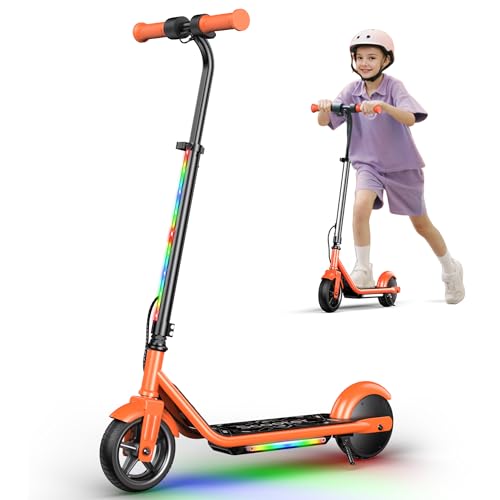
escoone Kids Electric Scooter, Ages 6-12, 150W, One-Button Control
Inside Each Recommended Option
Most kids’ scooters treat a 10-year-old like a beginner forever. The COMLEROM flips that script with a forged aluminum frame and a 6000W motor (a motor rated at 6000 watts, meaning very high peak power output) aimed squarely at daily commuting rather than driveway loops. In real-world use, that translates to long, flat pavement handling and enough torque to hold speed up moderate grades. The seated geometry is a nice fit for a tween who still has shorter legs, and the listed 50-mile range means parents are not scrambling to charge every night.
That said, the 88-pound net weight makes it closer to a moped than a toy, and 52 mph top speed is genuinely excessive for a 10-year-old, so adult oversight is non-negotiable. The honest read is that this works best for a tween transitioning into a teen who needs something commuter-grade.
The Good Stuff
- Forged aluminum-alloy frame with CNC (computer-machined) components, lighter and more corrosion-resistant than a basic steel chassis
- 50-mile listed range covers a full school week of short trips on one charge
- Seated riding position reduces fatigue on longer neighborhood rides
- Recyclable aluminum construction appeals to households watching their footprint
- 6000W motor handles inclines and heavier riders without bogging down
Things To Consider
- 88-pound weight is a two-person carry for any parent loading it into a trunk
- Top speed is far beyond what a 10-year-old should ride without strict supervision
- Forged components can be pricier to repair if a fork or stem takes a hard hit
Who It Suits Best
Older tweens and early teens who are graduating past toy-grade scooters and want genuine commuter hardware under a parent’s watchful rules.
Where Another Pick Suits Better
The Hiboy JoyHaul fits a true 10-year-old far better if safety caps, lighter weight, and UL 2272 certification (an electrical and fire-safety standard for personal e-mobility devices) matter more than outright power.
Where the COMLEROM assumes a confident teen rider, the Hiboy JoyHaul leans into the actual 10-year-old experience. The 9.3 mph cap is brisk enough to feel exciting but slow enough that a parent jogging alongside is realistic. UL 2272 certification covers the battery and electrical system against the fire and shock risks that worry most households, which removes one of the bigger anxiety points for first-time electric-scooter families.
The seat opens up the scooter to kids who are still working on long balance runs, and the under-seat storage bag is a small but appreciated touch for hauling snacks or a small water bottle. Multi-color LED (light-emitting diode) running lights add visibility for evening driveway sessions, and that safety angle tends to matter more to parents than any spec sheet.
What It Does Well
- UL 2272 electrical safety certification gives parents a verified baseline
- Capped 9.3 mph top speed fits neighborhood sidewalks and cul-de-sacs
- Built-in seat supports riders who tire out before the battery does
- Under-seat bag keeps small essentials from bouncing out of pockets
- LED light strips improve low-light visibility around driveways and parks
Worth Noting
- Ages 4-10 range means a tall 10-year-old may already be near the size ceiling
- Slower top speed can feel tame within a season of riding
Feature Snapshot
Made For
Families with a 10-year-old who still benefits from a seated ride and capped speeds, especially when a younger sibling will inherit the scooter next.
Skip It When
Choose the escoone K2 Pro three-speed model if your tween is ready to graduate to higher top-end speed and a clear digital display.
The Gyroor C1 is a middle ground between the Hiboy’s playground character and the COMLEROM’s raw muscle. The 450W motor delivers quiet, low-vibration acceleration that is rare in this price tier, and the 15.5 mph top speed is brisk without being reckless. Compared to the Hiboy, this one is built for a longer ride, with a 20-mile listed range that can swallow a school commute plus an after-school loop without recharging.
It carries UL 2272 certification, which puts it in a small group of seated scooters that pass the same battery safety standard as the kid-focused Hiboy. The seated posture is genuinely comfortable for an extended session, though taller tweens may find the deck tighter than expected.
Well-Handled Touches
- 450W motor runs quieter than most high-wattage alternatives, ideal for early-morning neighborhood use
- Seated design reduces wrist and shoulder fatigue on longer rides
- UL 2272 certification covers the battery system for parental peace of mind
- 20-mile range covers a multi-stop school day comfortably
Trade Offs
- Seat and frame geometry skew toward adult proportions, so smaller 10-year-olds may feel stretched out
- Higher listed weight can make storage in a small apartment awkward
Best Suited To
Riders sitting at the upper end of the 10-year-old range who want something they will not outgrow by the next school year.
Consider Something Else When
The Hiboy JoyHaul is a friendlier first scooter if a younger sibling will share the same garage space.
Of all the kids’ scooters on this list, the escoone K2 Pro three-speed model does the best job of growing with a child. The handlebar adjusts in height, and the three speed modes (3, 6, and 10 mph) let a parent start a brand-new rider at walking pace and unlock more speed as confidence builds. The 150W motor is modest by adult standards, but for a 10-year-old, that restraint is the point, since it limits the consequences of a sudden throttle twist.
The dual brake system pairs a hand lever with a rear-fender press, which is reassuring for parents watching from the porch. The magnetic charging port is a small but practical upgrade: a magnet snaps the cable in place, so kids cannot damage the plug by yanking the cord.
Advantages To Know
- Three discrete speed settings match a child’s actual skill progression, not just their age
- Adjustable handlebar height extends usable life through growth spurts
- Dual braking system gives both a hand lever and a foot press for redundancy
- Magnetic charging port reduces wear from daily plug cycles
- Colorful deck and stem lights add visibility in dusk conditions
Points To Note
- 10 mph top speed may feel limiting to athletic tweens within a few months
- Smaller wheels handle sidewalk cracks less smoothly than the Hiboy’s larger-diameter tires
Quick Facts
Perfect Match For
First-time scooter owners who need a forgiving machine with room to grow into a faster setting.
Look Elsewhere When
Pick the escoone single-button two-speed model if your tween only needs the basics and you prefer a stripped-down control layout.
The single-button escoone is a deliberate simplification of the K2 Pro above. Two speed modes (6 and 10 mph) replace the three-step ladder, and the 154-pound load capacity handles most 10-year-olds with room to spare. For households tired of feature creep, the streamlined control layout is the appeal: a child learns one button, then rides.
Same magnetic charging and dual brake setup as its sibling, so you are not trading safety for simplicity. Where the three-speed escoone offers a learning curve, this one assumes a rider who already knows the basics.
Real Benefits
- One-button start removes the guesswork for younger or less coordinated riders
- 6 and 10 mph modes cover both sidewalk cruising and faster park-loop runs
- 154-pound load capacity outlasts a typical tween growth curve
- Magnetic charging port keeps the connection simple for daily top-ups
Honest Caveats
- No lowest 3 mph mode, so brand-new riders may need to start on the slower setting without a true crawl speed
- Lower 150W motor output will struggle on steeper hills with a heavier child
Feature Card
Who Should Grab It
Families with a tween who has outgrown a balance bike or kick scooter and wants electric power without a steep learning curve.
Another Choice May Suit
Step up to the Gyroor C1 if your 10-year-old is tall enough to need a seated, longer-range commuter-style ride.
What Matters Before Choosing an Electric Scooter for a 10-Year-Old
Speed Caps and Skill Match
Top speed is the most overlooked number on the box. A scooter that hits 15 mph sounds thrilling in the listing, but a 10-year-old reacting to a curb at that speed needs reflexes they simply have not built yet. Capped speeds between 6 and 10 mph match most tweens’ reaction time without turning the sidewalk into a hazard zone. The honest read is that the highest setting on a three-mode scooter is rarely the right place to start.
Braking, Not Just Throttle
Dual braking setups (a hand lever plus a rear-fender press) are worth the modest price premium for younger riders. Parents can teach hand braking first, then introduce the rear-fender brake as a backup. Single-brake scooters work fine for older teens, but redundancy matters when a child is still learning how a curb feels at speed.
Adjustability and Growth Room
A scooter that fits a child perfectly in April will be too small by October. Adjustable handlebar height is the single most useful growth feature, since deck length rarely changes between models. Weight capacity tells you how long the frame will hold up under growing riders, and a 150-pound rating is a comfortable margin for most 10-year-olds.
Weight, Portability, and Storage
Scooters in this category range from roughly 20 pounds on the kids’ side to 88 pounds on the adult end. Lighter scooters are easier to carry up apartment stairs and store in a closet, while heavier seated models need a garage corner or shed. Parents who plan to load the scooter into a car trunk will feel every extra pound, so factor in how often the ride actually leaves the home.
Key Considerations Across These Picks
Mistakes First-Time Buyers Make
Skipping the safety certifications is a common slip up. UL 2272 covers the battery and charging system against the electrical and fire risks that worry most households, and skipping that stamp to save a few dollars is rarely worth it. Another trap is buying for the age on the box without checking the listed height range, since a tall 10-year-old can outgrow a 4-10 model within months. Match the scooter to current measurements first, then look at age.
Where the Extra Money Goes
Higher-tier models like the COMLEROM and Gyroor C1 buy longer range, more powerful motors, and seated comfort. For most 10-year-olds, those upgrades are overkill, and a 150W escoone handles everyday neighborhood riding with no complaints. The honest read is that stepping up makes sense once a tween is actually commuting, not just cruising the driveway, so the upgrade payoff shows up around age 12-13 rather than at 10.
Frequently Asked Questions
What speed is safe for a 10-year-old on an electric scooter?
Most parents find 6 to 10 mph to be a sensible range for neighborhood sidewalks and park paths. Slower settings are useful for the first few weeks of practice before unlocking higher speeds.
Are electric scooters safe for 10-year-olds?
Models with UL 2272 certification, dual braking systems, and capped top speeds are the safest choices. Adult supervision, a properly fitted helmet, and avoiding busy streets remain essential regardless of certification.
How long does the battery last on a kids’ electric scooter?
Most kids’ electric scooters in this category offer 40 to 60 minutes of continuous ride time on a full charge, depending on terrain and rider weight. A full overnight charge typically restores the battery for the next day.
Can a 10-year-old ride an adult electric scooter?
Some tweens can handle smaller adult models, but adult scooters are heavier, faster, and harder to maneuver than a child needs. A purpose-built kids’ scooter is almost always the safer starting point.
What features matter most for a 10-year-old’s electric scooter?
Speed-limiting modes, dual brakes, adjustable handlebar height, and a manageable total weight matter more than raw power or range. Those features track a child’s real skill development rather than just the spec sheet.
Final Verdict
The right electric scooter for a 10-year-old depends less on horsepower and more on fit. The Hiboy JoyHaul and both escoone models offer the safest starting point, with capped speeds and adjustability that track a tween’s growth. The Gyroor C1 and COMLEROM step up to longer-range, seated commuter builds for older or taller riders ready to move past the basics. Match the scooter to the child in front of you, and the rest tends to take care of itself.
