

Sleeping in the car sounds romantic until your hip meets the seatbelt buckle at 2 a.m. That’s where a dedicated car mattress earns its keep, turning a folded back seat or an open trunk into something closer to an actual bed. Whether you’re a festival camper, a long-haul road tripper, or a parent surviving a multi-day drive, the right pad changes everything about how you wake up. This list covers both camps: foam pads that roll up like yoga mats and inflatable beds shaped to fill the gaps around your car’s contours.
A Side-By-Side Look

CYMULA Memory Foam Camping Mattress Pad Roll Up
HAITRAL Car Bed Inflatable Travel Sleeping Mattress

Onirii Inflatable Car Air Mattress Back Seat Bed

OGERY Self-Inflating Sleeping Pad, 3″ Memory Foam

Selectico Extra Thick Supportive Foam Camping Mattress
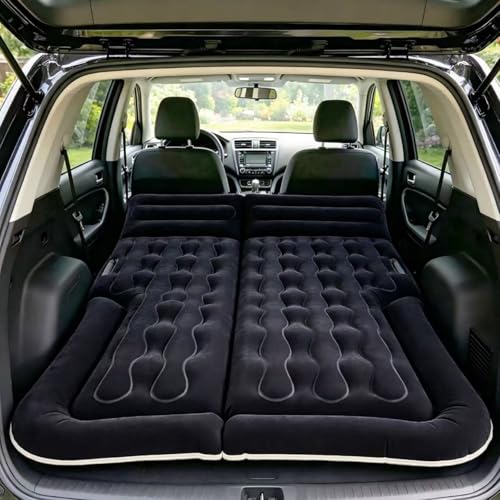
Eooqi Inflatable Car Air Mattress SUV Sedan Truck Minivan

ISWEES SUV Air Mattress with Electric Pump (Black)
More Details On Our Top Picks
Foam beats air when the surface underneath is unforgiving, and this CYMULA pad leans on exactly that advantage. The core combines high-elasticity memory foam with a denser support layer, so hard trunk floors and tent ground don’t press through by morning. A carbon fiber element in the foam is there to absorb sponge odor, which matters more than you’d think in a sealed car cabin.
The non-slip bottom keeps it planted on smooth floors, and the whole thing rolls up for storage between trips. For anyone alternating between car camping and guest-bed duty, that dual role is the real draw.
Features That Help
- Memory foam conforms to your body instead of pushing back like an air chamber does
- Dense support sponge suits bare floors, so it doubles as a guest bed indoors
- Breathable cover works across seasons rather than trapping summer heat
- Roll-up format stores easily in a trunk without stealing cargo space
Small Caveats
- Foam pads weigh more than inflatables, so hauling it to a distant campsite takes some effort
- You may find the rolled diameter bulky in smaller sedans once packed
Key Specs
Who It Suits Best
Side sleepers and anyone whose lower back complains after a night on an inflatable will get the most from this pad.
Another Option To Weigh
The OGERY Self-Inflating Sleeping Pad suits backpackers better, since its self-inflating three-inch design packs tighter than CYMULA’s rolled foam.
Where the CYMULA pad trades portability for cushioning, this HAITRAL bed goes the other way: light, foldable, and quick to deflate through its bleed valve. The flocked PVC oxford surface gives it a soft, fabric-like feel rather than the sticky plastic touch cheaper air beds have. Two pillows come in the box, which saves you a separate purchase for occasional use.
It’s sized to handle children, adults, or a pet stretched across the back seat, making it a sensible pick for family road trips. Deflation is the pleasant surprise here; open the valve, press the air out, fold, done. In most cars the setup takes minutes, not an evening.
Useful Strengths
- Folded weight stays low enough to stash behind a seat between stops
- Velvety PVC oxford top feels warmer and softer against skin than bare vinyl
- Two included pillows cover the basics for couples or kids
- Bleed valve makes packing down fast at a rest stop
Points To Keep In Mind
- No pump appears in the package based on the listing, so plan your inflation method ahead of time
- Air beds lose firmness overnight as temperatures drop; a top-up before bed helps
- PVC needs careful drying before storage to avoid mildew smells
The Right Fit
Families road-tripping with kids or a small dog who want a simple, stowable back-seat bed will be well served here.
Consider Something Else When
Anyone wanting a complete kit out of the box should look at the Onirii Inflatable Car Air Mattress, which bundles a pump and travel extras.
This is the option for people who don’t own a single piece of camping gear yet. The box includes an air pump, two air pillows, a foot pier for filling the front-seat gap, a neck pillow, a sleep mask, earplugs, and even a repair patch. Compared to the HAITRAL bed’s leaner package, Onirii hands you a full sleep system on day one.
The bed itself weighs roughly 2.5 kg and folds flat, and the flocking on the sleeping surface keeps it comfortable in warm weather. A universal SUV orientation means it fits most rear seats without custom shaping. First-time car campers rarely need to buy anything else.
What Pays Off
- Everything arrives together: pump, pillows, mask, earplugs, and repair pad
- About 2.5 kg total weight keeps it easy to move between vehicles
- Flocked surface sleeps cooler than plain PVC in summer
- Foot pier fills the awkward front-seat gap where phones and elbows vanish
Honest Caveats
- Inflated volume depends on your car’s rear-seat shape, so fit varies by vehicle
- More accessories mean more pieces to keep track of and repack
At A Glance
Made For
Road trippers renting or borrowing a car, or anyone building a camping kit from scratch, gets the best value from this bundle.
Swap It Out When
Drivers who already own a pump and prefer less clutter may prefer the simpler HAITRAL Car Bed instead.
Self-inflating means open the valve and the foam expands, drawing air in on its own; no lung work, no pump. OGERY builds that convenience around a three-inch memory foam core, which is genuinely thick padding for this category. On uneven tent ground or a lumpy trunk, that extra depth keeps your body suspended rather than bottoming out.
It sits between the pure foam CYMULA pad and the air beds on this list: easier to carry than rolled foam, far more supportive than a thin air chamber. Campers who split time between the car and the trail are the natural audience, and in our view it’s the most versatile single purchase here.
What It Does Well
- Valve-driven self-inflation removes the need for any pump at all
- Three inches of memory foam cushions hips and shoulders on hard surfaces
- Elevates your body clear of cold, damp ground in tent setups
- Works across camping, hiking basecamps, and vehicle sleeping alike
Things To Consider
- Self-inflation takes patience; a breath or two into the valve speeds it up
- Thicker foam means a bulkier rolled profile than minimalist backpacking pads
Quick Facts
Who Will Love This
Campers who refuse to sacrifice sleep quality but still want gear that travels light enough for mixed trips.
Reach For A Different Pick When
Stationary car campers with plenty of trunk space may find the thicker Selectico Extra Thick Foam Mattress more comfortable for the money.
Selectico takes a different engineering stance from the memory foam picks above. Its 3.5-inch build stacks two layers: a high-resilience foam top for softness over a high-density base for structure. The stated goal is avoiding the sinking sensation some memory foam users report, and heavier adults tend to notice that difference first.
A travel bag comes included, which solves the storage question that rolled foam usually leaves open. Side sleepers, who put concentrated pressure on one shoulder and hip, generally benefit most from the firmer foundation. You may find it warmer than air options too, since foam doesn’t chill the way inflated chambers can on cold nights.
The Case For It
- 3.5 inches of layered foam gives more depth than most pads in this price bracket
- Dual-layer design resists the sink-through feel common with single-memory-foam pads
- Travel bag makes transport and garage storage straightforward
- High-density base holds up well under larger body weights
Less Ideal Details
- Foam holds moisture, so thorough drying after damp trips protects the layers long-term
- Bulkier to store than any inflatable on this list once unrolled
Whose Shelf It Belongs On
Heavier adults and side sleepers who found thinner pads bottoming out will appreciate the structured support here.
Look Elsewhere When
Vanlifers short on storage should consider the OGERY Self-Inflating Pad, whose valve design packs down slimmer than fixed foam layers.
Eooqi thinks about the whole sleeping environment, not just the mattress. Alongside a wavy-surface bed that fits most SUVs, sedans, and hatchbacks, the kit adds an eye mask, earplugs, two window screens, and a large carry bag. Those window screens are the standout: they darken the cabin and let airflow through, which street parkers and rest-stop sleepers will value immediately.
The wavy topography gives the surface a firmer, more stable feel than flat air chambers, limiting the roll-toward-the-middle effect couples know well. Against the Onirii bundle, Eooqi swaps the pump-and-pillows approach for privacy and light control instead. Different problem, same goal.
The Practical Payoff
- Window screens create a darker, ventilated cabin for overnight parking
- Wavy surface design keeps sleepers supported and stable through the night
- Universal sizing spans SUVs, sedans, hatchbacks, trucks, and minivans
- Eye mask and earplugs round out light and noise control
- Large carry bag keeps the whole kit in one place
Small Limitations
- Window screens need correct placement to seal properly, which takes a try or two
- Air construction still requires periodic firmness checks on multi-night trips
Product Snapshot
Right Fit For
Urban overnight parkers and rest-area sleepers who need darkness and privacy as much as cushioning.
Not Your Match When
Shoppers prioritizing a bundled pump should choose the Onirii Inflatable Car Air Mattress, which includes one in the package.
Families with small children should read this section twice. ISWEES builds its back-seat bed around a honeycomb internal structure that supports the spine more evenly than single-chamber designs, then adds two footrests and a headboard to close off the door-handle side. Most notably, the configuration includes child protection meant to stop kids sliding into the front row, a detail no other pick on this list addresses.
An electric pump handles inflation, two pillows come standard, and the bed adapts to back seat, side seat, or trunk positions. The honest trade-off is complexity: more chambers and parts mean a longer setup than the HAITRAL’s simple single bed. For parents, that extra minute buys real peace of mind.
What Helps Most
- Honeycomb chamber layout distributes weight for better spinal alignment
- Child-protection barrier reduces the risk of kids falling toward the front row
- Headboard shields heads from door handles on bumpy roads
- Electric pump inflates the bed without manual effort
- Two footrests extend the usable sleeping length in larger cabins
Trade Offs To Consider
- Multi-chamber assembly takes longer to inflate and pack away than single-piece beds
- Fit depends heavily on your vehicle, so measure the rear cabin before committing
Feature Rundown
Who Should Grab It
Parents camping or road-tripping with young children in SUVs and minivans will find the safety-focused layout worth the setup time.
Skip It When
Solo travelers who want the fastest possible pack-down will get along better with the lighter HAITRAL Car Bed.
Choosing Between Car Mattresses Without Regret
Foam Or Air?
This is the fork in the road. Foam pads, like the CYMULA and Selectico options, never puncture and insulate better in cold weather, but they’re bulky and heavier. Air beds compress to almost nothing and shape themselves to your cabin, though they demand a pump and lose some firmness as nighttime temperatures fall. Match the format to how often you’ll actually use it.
Know Your Vehicle First
Rear seats vary wildly between a compact sedan and a three-row SUV, and most listings state general compatibility rather than exact dimensions. Measure your folded-seat area and check whether the bed includes gap fillers for the front footwells. A great mattress that doesn’t span the footwell gap becomes a frustrating compromise within one night.
Weight Capacity And Sleeper Profile
Couples sharing a bed, or larger adults sleeping solo, put very different loads on a mattress than a solo side sleeper. Dual-layer foam and honeycomb air chambers hold their shape under sustained weight far better than single-bladder designs. Solo travelers can prioritize packability instead.
Setup Speed And Storage Reality
Ask yourself where the mattress lives between trips. Trunk-space-limited drivers should favor self-inflating or inflatable formats; garage-shelving owners can enjoy thick foam freely. Faster setup also matters at rest stops, where fifteen minutes of pumping feels very different from opening a valve.
Key Considerations Across These Picks
Mistakes Worth Dodging
The most common error is ordering without measuring the rear cabin, then discovering the bed floats over a footwell gap. The second is ignoring the pump situation entirely; several kits ship without one. Also skip storing any inflatable damp, since trapped moisture leads to mildew odors that are nearly impossible to remove.
When Paying More Pays Off
Higher-priced models typically buy thickness, smarter internal structures, or complete accessory bundles. Three-plus inches of foam or honeycomb chambers translate directly into fewer pressure points by morning. Occasional users can stay budget-tier; anyone sleeping in the car weekly will feel the upgrade every single night.
Bottom Line
Every option here solves the same problem differently: foam pads reward comfort-first campers, air beds reward space-conscious travelers, and family-focused kits add safety touches worth paying for. Start with your vehicle’s measurements and your typical trip length, then narrow from there. Whichever direction you go, a proper night’s sleep on the road is a modest investment with outsized returns. Safe travels and sweet dreams wherever you park.
