

E-bikes are heavy, awkward to lift, and too valuable to toss in a truck bed unprotected. A proper hitch-mounted carrier solves that problem once and keeps solving it every weekend you ride. This roundup covers eight carriers built around real e-bike weights, fat tires, and loading ramps, so you can match one to your vehicle and riding habits without guesswork.
The Picks In Brief
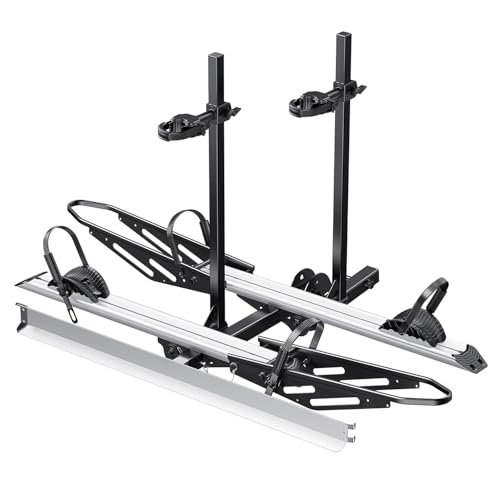
Young Hitch Mount Bike Rack with Ramp, 200 lbs for 2 E-Bikes

WEIZE 2 E-Bike Rack Hitch Mounted with Lock

Young Electric Ebike Rack with Ramp 200 lbs 2-Bike

Wildroad 60″x24″x14″ Hitch Cargo Carrier – Bike Rack Set

Young Hitch Mount Single Bike Rack with Ramp, 100 lbs

CyberRack E2 Hitch 2 E-Bike Rack with Ramp

PAULINN Ebike Rack for Tow Hitch, Heavy Duty 2 Bike

Hitch-Mount Bike Rack for Ebike Heavy-Duty
The Details Behind The Selections
Loading two 80-pound e-bikes by hand is how backs get hurt, and this Young Electric carrier attacks that problem directly with an included ramp. The reinforced steel-and-aluminum frame carries up to 200 pounds total, split evenly at 100 pounds per bike, which covers most commuter and mid-drive e-bikes comfortably.
The two-arm platform uses patented wheel cradles plus an anti-wobble structure, so bikes stay put instead of clanking against your SUV on rough pavement. For anyone hauling to trailheads regularly, that stability matters more than any other spec here.
Benefits That Matter
- 200-pound total capacity handles two full-size e-bikes without strain
- Included ramp means you roll bikes on rather than dead-lifting them
- Anti-wobble structure reduces sway and paint contact on bumpy roads
- Fits standard 2-inch receivers on cars, SUVs, RVs, and trailers
- Steel-and-aluminum construction resists flex under repeated heavy loads
Things To Consider
- A loaded two-bike platform adds noticeable rear weight, so check your vehicle’s tongue weight rating first
- Owners commonly report the unit needs periodic bolt checks after long highway runs
Key Specs
Who It Suits Best
Couples or families who regularly transport two heavier e-bikes behind an SUV or truck.
Where A Sibling Pick Shines
Riders carrying just one bike will find the Young single-bike model lighter and easier to store between trips.
Where the Young rack above focuses on raw strength, the WEIZE leans into security and convenience. Its key locking device cinches tight into a 2-inch receiver for a wobble-free install, and the same lock secures the rack itself when parked, a genuine advantage at hotel stops or trailhead lots.
The smart tilting mechanism lets you reach tailgate or trunk space even with bikes mounted, and the whole assembly folds flat for storage. Capacity tops out at 160 pounds across two bikes, with room for tires up to 5.5 inches wide, among the fattest clearances in this list.
Positive Takeaways
- Keyed lock deters both rack theft and loosening on the road
- Tilting design preserves access to your trunk or hatch
- Accommodates fat tires up to 5.5 inches wide
- Folds down compactly for garage storage between rides
Small Caveats
- Low step-through frames need a separately purchased top cross-bar adapter
- 160-pound ceiling leaves less headroom than 200-pound rivals for two heavyweight builds
Made For
Commuters and weekend riders who park in public lots and want their rack locked down while they’re away from the car.
Swap It Out When
Anyone hauling two 90-plus-pound e-bikes should look at the CyberRack E2 instead, since its 200-pound rating offers more margin.
This second Young Electric entry shares the brand’s steel-and-aluminum DNA but refines the loading experience with a V-groove ramp that guides wheels straight up the incline. At roughly 66 pounds, the rack itself is substantial, which signals durability more than portability, so plan on leaving it mounted or storing it near the garage door.
It fits tires up to 5 inches wide and wheelbases up to 50 inches, covering most fat-tire e-bikes sold today. The patented anti-wobble hardware and enhanced grip surfaces keep everything steady, and the foldable design trims its profile when not in use.
What Works In Its Favor
- V-groove ramp makes solo loading of 70-pound e-bikes realistic
- Handles wheelbases up to 50 inches, fitting long-tail cargo bikes
- Heavy steel-and-aluminum build holds up to seasons of outdoor mounting
- Foldable arms reduce garage clutter when removed
Points To Note
- The 66-pound rack weight makes frequent removal a two-person job for many owners
- Five-inch tire clearance trails the WEIZE’s 5.5-inch maximum slightly
Feature Snapshot
Right Fit For
Fat-tire e-bike owners who load alone and want a ramp that forgives imperfect alignment.
Another Choice May Suit
Riders needing wider-than-5-inch tire clearance will get more flexibility from the WEIZE rack reviewed earlier.
Not everyone needs a dedicated e-bike platform year-round, and the Wildroad plays both roles. The tall-fence basket works as a 60-by-24-by-14-inch cargo carrier for camping gear, coolers, or groceries, then converts to bike-rack duty with just two bolts. The adjustable attachment accommodates standard, fat-tire, and electric frames.
That versatility comes with rules worth knowing before ordering. The rack cannot fold while bikes are loaded, and mixing extra cargo with mounted bikes isn’t supported, so it’s either bikes or gear on any given trip. Campers who alternate between hauling equipment and shuttling bikes will find that trade-off easy to live with.
A Strong Showing
- Two products in one: swap between cargo basket and bike rack quickly
- Tall fence walls keep loose gear contained on gravel roads
- Adjustable mount accepts standard, fat-tire, and electric frames
- Only two bolts separate the two modes, no toolbox marathon required
Less Ideal Details
- No folding while bikes are mounted, so storage takes more space
- Cargo and bikes can’t be combined on the same trip
- Conversion requires removing bolts, slower than tilting designs
Who Should Grab It
Weekend campers and road-trippers whose hauling needs change trip to trip.
Reach For A Different Pick When
Daily e-bike commuters will find faster loading with the CyberRack E2’s purpose-built platform and ramp.
Solo riders don’t need to pay for, lift, or store a two-bike platform, and this single-arm version of the Young design proves it. The reinforced steel-and-aluminum build carries one e-bike up to 100 pounds, using the same patented wheel cradles and anti-wobble structure found on its bigger sibling.
The practical difference shows up in daily use: less overhang behind your bumper, easier parking, and a lighter unit to handle when installing. You still get the included ramp, so rolling a heavy e-bike aboard stays a one-person job. In our view, this is the quiet value play of the whole list for single-bike households.
Notable Upsides
- 100-pound single-bike rating covers nearly all consumer e-bikes
- Shorter footprint improves ground clearance and parking ease
- Ramp included, matching the loading ease of pricier two-bike units
- Anti-wobble cradles protect both bike and vehicle finish
Worth Noting
- One-bike limit means a second rider needs a different solution entirely
Quick Facts
Who Will Love This
Solo commuters and recreational riders transporting one e-bike behind a truck, trailer, RV, or SUV.
Consider Something Else When
Households with two riders should step up to the Young 200-pound dual-bike rack at the top of this list.
The CRAVOT CyberRack E2 earns its spot by being hard to fault on paper. The updated 2-inch platform includes a V-shaped front wheel cradle that accepts a wide spread of tire sizes, and the vertical rod connection adds stability where cheaper racks tend to flex. Total capacity sits at 200 pounds, split 100 per bike.
It folds for storage, ships with a loading ramp, and clears tires up to 5 inches wide with wheelbases reaching 50 inches. Compared with the Young Electric models earlier in this list, the E2’s main edge is that V-cradle front end, which grips narrow road tires and chunky fat tires alike without swapping parts.
Where It Delivers
- V-shaped front cradle adapts to mixed tire widths without adapters
- 200-pound total rating matches the strongest racks here
- Folding platform simplifies off-season storage
- Reinforced vertical rod connection limits sway under load
Details To Watch
- Five-inch tire maximum falls short of the WEIZE’s 5.5-inch clearance for oversized rubber
- Platform-style loading takes slightly longer than arm-hook designs for some users
Core Details
Whose Shelf It Belongs On
Households running one fat-tire e-bike and one standard bike who want one rack to handle both.
Look Elsewhere When
Riders with extra-wide 5.5-inch tires will get a cleaner fit from the WEIZE rack covered above.
Fresh paint jobs and carbon accents deserve better than bare metal hooks, and PAULINN clearly agrees. This folding two-bike rack layers silicone mat hooks over beam protection covers, a double barrier against scratches that most competitors skip. The J-hooks slide along a perforated vertical frame for a snug fit across bike sizes, while a D-pin stops upward hook movement over bumps.
Capacity matches the leaders at 200 pounds, and the folding mechanism tucks the arms away when the rack comes off the 2-inch receiver. For anyone who just invested serious money in a new e-bike, that scratch-conscious engineering is the deciding detail.
Useful Strengths
- Silicone-padded hooks plus beam covers protect expensive finishes
- D-pin retention keeps hooks from lifting on rough roads
- Adjustable J-hooks fit a broad range of frame sizes
- Folding arms shrink the rack for storage and reversing clearance
Potential Sticking Points
- Hook-based loading means lifting the front wheel onto the rack, unlike ramp-equipped platforms
- Padding inserts may shift over time and need occasional repositioning, based on commonly reported owner feedback
Best Suited To
Owners of newly purchased or premium-finish e-bikes who prioritize paint protection above all else.
Not Your Match When
Riders who want roll-on loading should choose the Young Electric ramp rack instead of lifting wheels onto hooks.
The XtraEzzy closes this list with the highest capacity figure of the bunch: 300 pounds across two bikes, enough for two heavyweight e-bikes with batteries, racks, and accessories attached. Tire clearance runs to 5.5 inches, tying the widest in this roundup, and wheelbase support spans 38 to 51 inches, covering everything from folding e-bikes to long-tail cargo haulers.
Like the Wildroad earlier, it’s a convertible: the platform folds down into a large hitch cargo carrier when bikes stay home. That dual identity plus the generous weight ceiling makes it the pick for riders whose gear collection keeps growing. The trade-off is bulk; expect a substantial unit to wrestle during installation.
Useful Highlights
- 300-pound total capacity leads this entire list
- 5.5-inch tire clearance fits the fattest e-bike rubber
- 38-to-51-inch wheelbase range accepts unusual frame lengths
- Converts to a large cargo carrier for non-cycling trips
Trade Offs To Consider
- Heavy-duty construction translates to a heavier rack that’s harder to remove solo
- Folding into cargo mode still requires unloading bikes first
The Numbers That Matter
The Right Fit
Owners of two large, fully accessorized e-bikes who also want occasional cargo-hauling capability from the same hitch.
Skip It When
Lightweight solo setups are better served by the compact Young single-bike rack, which costs less effort to handle.
What Matters Most Before Choosing Electric Bike Carriers
Match Capacity To Your Actual Bikes
Weigh your e-bikes with batteries installed, then add accessories like baskets or child seats. A rack rated 200 pounds total gives 100 pounds per side, which suits most setups, while two fully loaded cargo e-bikes push toward the XtraEzzy’s 300-pound ceiling. Exceeding a rating risks hitch damage and unstable handling.
Confirm Receiver Size And Vehicle Limits
Every rack here mounts to a 2-inch hitch receiver, the standard on trucks and larger SUVs. Smaller crossovers sometimes carry 1.25-inch receivers, so verify yours before ordering. Also check your vehicle’s tongue weight rating, because a loaded platform concentrates significant mass behind the rear axle.
Loading Style Changes Daily Life
Ramp-equipped platforms let you roll a 70-pound e-bike aboard, which matters enormously for solo riders or anyone with back concerns. Hook-style racks like the PAULINN require lifting wheels into place. Tilting mechanisms preserve trunk access, a feature you’ll appreciate more than expected on road trips.
Storage Reality Between Trips
Folding designs and lighter single-bike units earn their keep in garages where space runs short. Measure your available wall or floor space, then compare it against folded dimensions before committing to a heavy-duty platform.
Key Considerations Across These Picks
Traps First Timers Fall Into
The most common mistake is buying for today’s bike and forgetting tomorrow’s upgrade. A 160-pound rack feels generous until a second, heavier e-bike joins the household. Shoppers also overlook tire width, discovering too late that 4.8-inch fat tires won’t sit in cradles sized for narrower rubber. Measure both numbers first.
What Separates Premium From Basic
Higher-tier carriers spend their budget on ramps, anti-wobble hardware, locking mechanisms, and padded contact points. Those features translate directly into easier loading, quieter highway miles, and protected paint. Paying up pays off most for frequent users; occasional riders can happily start simpler.
Bottom Line
The right carrier comes down to three honest questions: how many bikes, how heavy, and how often. Two-bike households with standard e-bikes have strong options throughout this list, while solo riders save money and effort with the compact Young single. Whichever direction fits, measure your hitch, weigh your bikes, and the rest falls into place naturally.
