

A good hitch rack turns any SUV, truck, or minivan into a trailhead shuttle. The catch is that the market is crowded with lookalikes, and the difference between a smooth trip and a rattling, scratched-frame headache usually comes down to capacity, tilt mechanics, and how well the rack grips your tires. This list covers both budget-friendly tube racks and heavy-duty platform carriers built for e-bikes, so you can match the rack to what you actually ride.
Your Options, Compared
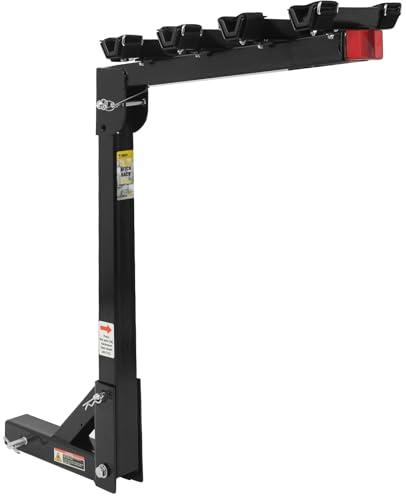
MaxxHaul Hitch Mount 4 Bike Rack (70210)

Retrospec Lenox 2-5 Bike Rack Hitch

TANX Fat Tire Ebike Rack 2-Bike 160 lbs

Young Electric Ebike Rack with Ramp 200 lbs
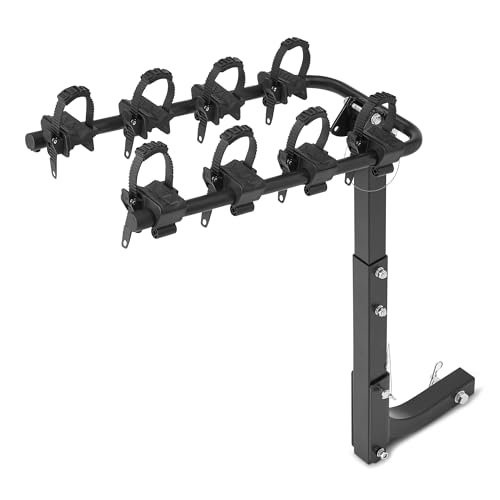
Amazon Basics 4-Bike Hitch Rack

TRAILXPERT Tilting Platform Rack 2-Bike 160lbs

Young Foldable Platform Bike Rack 80 lbs

STUDTREX TRAILV2 2-Bike Rack with Ramp
More On The Choices That Made The List
This is the classic hanging-style carrier: bikes hang from adjustable cradles on a powder-coated steel mast rather than sitting on wheel trays. With a 150-pound total rating spread across four bikes, it suits a household where everyone rides standard road or mountain bikes under roughly 35 pounds apiece.
The swing-down mechanism is the reason families keep coming back to this style. You can lower the loaded rack to reach a hatchback’s cargo area without unloading anything, which matters more than you’d think on camping trips.
What Makes Sense
- Carries four bikes at once, enough for a whole family’s weekend gear in one trip
- Swing-down access lets you open the tailgate without removing bikes first
- Adjustable cradles with hook-and-loop straps hold different frame shapes securely
- Powder-coated steel construction shrugs off rain and road grime season after season
- A built-in safety reflector improves visibility for night driving
Things To Consider
- Hanging designs mean frame contact, so carbon bikes may need extra padding at the cradles
- Owners commonly report that spacing gets tight with four full-sized bikes loaded
Who It Suits Best
Households with three or four steel or aluminum bikes and a 2-inch hitch receiver who want one affordable carrier for everything.
Where A Sibling Pick Shines
Riders with heavier e-bikes should look at the TANX Fat Tire Ebike Rack instead, since its platform trays handle far more weight per bike.
The Lenox sits in the sweet spot between bare-bones tube racks and pricier platform carriers. Its foldable steel frame collapses flat against the vehicle when empty, so it can stay mounted without swallowing your entire garage wall.
Compared with the MaxxHaul above, this one trades some carrying flexibility for convenience: fewer bikes, but an anti-rattle adapter that keeps the hitch connection quiet on rough pavement. That detail alone changes the ownership experience on long highway drives.
Why It Works Well
- Folds down flat when not in use, saving garage and driveway space
- Anti-rattle adapter reduces the clunking noise cheaper racks are known for
- Tie-down cradles and straps secure bikes while cushioning the frame finish
- Steel build holds up well to repeated loading cycles for casual riders
Small Caveats
- Hanging cradles still touch the frame, worth padding for delicate paint jobs
- You’ll want to check strap tension periodically, as vibration can loosen them over long hauls
Made For
Weekend cyclists with one or two standard bikes who want dependable transport without paying platform-rack prices.
Swap It Out When
Anyone hauling fat-tire or electric bikes will be better served by the TRAILXPERT Tilting Platform Rack, whose trays accept wider tires outright.
Platform racks carry bikes by their wheels instead of the frame, and that single design choice is why e-bike owners gravitate here. A typical e-bike weighs 50 to 70 pounds, far too much to lift onto a hanging cradle comfortably, and its battery housing often doesn’t fit standard frame hooks anyway.
The TANX rates 160 pounds across two bikes and accepts tires up to 5 inches wide, covering most fat-tire and electric models on the market. Its tilting mechanism drops the whole deck down for trunk access even with bikes loaded.
A Few Strong Suits
- 160-pound capacity handles two heavy e-bikes without strain
- Wheel-holding trays eliminate frame contact entirely, protecting expensive finishes
- Wobble-free hitch connection keeps the ride stable at highway speed
- Smart tilting design preserves cargo access on SUVs and trucks
- Fits any standard 2-inch receiver across sedans, SUVs, trucks, and RVs
Points To Note
- Lifting a 60-plus-pound e-bike onto the deck takes two people unless you add a ramp
- Platform racks are bulkier to store than folding tube styles like the Retrospec Lenox
Key Specs
Right Fit For
E-bike commuters and fat-tire riders who load up weekly and want zero frame contact during transport.
Consider Something Else When
Solo loaders struggling with heavy lifting should step up to the Young Electric Ebike Rack with Ramp, which includes a ramp for rolling bikes aboard.
Loading a 70-pound e-bike onto a raised platform by yourself is the single worst part of e-bike ownership. Young Electric solves it directly with a V-groove ramp that lets you roll each bike up into position, no deadlifting required.
The spec sheet backs the ambition: 200 pounds total, 100 per bike, tires up to 5 inches wide, and wheelbases reaching 50 inches. Steel-and-aluminum construction keeps the rack itself at a reported 66 pounds, substantial but manageable for occasional removal.
Where It Excels
- Included V-groove ramp makes solo loading of heavy e-bikes realistic
- 200-pound total rating covers the heaviest consumer e-bikes on sale today
- Patented anti-wobble hardware keeps the deck steady over bumps
- Steel and aluminum blend balances strength against overall weight
- Folds for storage when the riding season winds down
Trade Offs
- At 66 pounds, the rack itself is a two-person job to install the first time
- It occupies meaningful garage depth even folded, unlike slimmer tube racks
Feature Snapshot
Who Will Love This
Solo e-bike riders with heavy bikes and a 2-inch receiver who refuse to throw out their back every Saturday.
Another Choice May Suit
Riders with lighter standard bikes don’t need this much rack; the Young Foldable Platform Bike Rack covers two conventional bikes at a friendlier weight.
Not everyone needs a 200-pound platform rig. For a family doing a handful of trips a year, this four-bike hanging rack from Amazon Basics covers the basics competently: a 132-pound capacity, reinforced tie-downs, and a foldable frame that tucks away between outings.
Against the MaxxHaul 70210, the trade is clear. You give up some per-bike headroom and the swing-down feature, and gain anti-rattle stability hardware plus a simpler, lighter package. For occasional use, that exchange favors plenty of households.
The Value In It
- 132-pound capacity carries four average bikes for group rides and camping trips
- Anti-rattle design cuts down on noise and hitch wear during travel
- Powder-coated steel frame resists rust through wet seasons
- Folds flat for compact storage in a garage corner
Less Ideal Details
- No swing-down access, so plan to unload before opening the tailgate
- Heavier e-bikes exceed sensible limits for a hanging design like this
Quick Facts
Who Should Grab It
Budget-conscious families with lightweight bikes who take a few trips per season rather than every weekend.
Reach For A Different Pick When
Regular tailgate access matters more than price, and the swing-down MaxxHaul 70210 becomes the smarter buy.
Security is where this TRAILXPERT earns its spot. Alongside the usual padded clamps and hitch pin, it adds an anti-theft locking pin and a safety strip, details that matter once your bikes sit on a rack outside a coffee shop or trailhead lot.
Capacity lands at 160 pounds across two bikes with room for tires up to 5 inches wide, matching the TANX on paper. The difference shows up in the protection package: built-in shock absorption and theft-deterrent hardware make it the more street-smart option of the two.
Real-World Strengths
- Locking hitch pin deters opportunistic theft when parked in public
- Padded clamps grip bikes firmly without marring rims or frames
- Shock-absorbing elements reduce bounce on washboard roads
- Tilting deck keeps rear cargo reachable with bikes mounted
- Handles e-bikes and fat-tire setups up to 5-inch rubber
Details To Watch
- Locking mechanisms benefit from a drop of lubricant a couple of times a year
- No loading ramp included, so heavy e-bikes demand some muscle
Core Details
Whose Shelf It Belongs On
Urban riders and anyone leaving bikes mounted while grabbing food or supplies mid-route.
Look Elsewhere When
Solo e-bike loaders should pick the STUDTREX TRAILV2 instead, since it bundles a ramp with similar security features.
Here’s the entry point into platform-style carrying without the e-bike-grade heft. At 40 pounds per bike and 80 total, this Young rack targets conventional road, hybrid, and mountain bikes, the kind most people actually own.
It shares DNA with the bigger Young Electric model earlier in this list, including the foldable platform layout and 2-inch receiver fit, scaled down for lighter loads. Smaller cars and crossovers pair naturally with its footprint.
Reasons It Performs
- Platform trays carry bikes by the wheels, sparing frames from clamp pressure
- 80-pound rating fits two standard bikes with comfortable margin
- Foldable design trims storage needs in tight garages
- Works across small cars, SUVs, pickups, and RVs with 2-inch receivers
Worth Bearing In Mind
- Most e-bikes will push past the 40-pound per-bike limit, so check your bike’s weight first
- Straps and trays deserve a quick inspection after winter storage
The Right Fit
Riders with two lightweight bikes and a smaller vehicle who want frame-free carrying on a modest budget.
Not Your Match When
Electric bike owners should move up to the TANX Fat Tire Ebike Rack, whose 160-pound rating leaves proper headroom.
The TRAILV2 reads like a checklist of everything riders ask for: a loading ramp, tilt and fold functions, a locking hitch pin, a wheel lock, and a 170-pound capacity split across two bikes. Few racks at this level bundle all of it.
Compared with the Young Electric ramp rack, you trade 30 pounds of capacity for a locking wheel system and slightly broader vehicle coverage, including RVs. Fat tires up to 5.0 inches fit fine, and the ramp keeps solo loading civilized.
What It Does Well
- Included ramp makes rolling heavy e-bikes onto the deck straightforward
- 170-pound total supports two substantial electric bikes
- Anti-theft hitch and wheel locks secure both rack and bikes together
- Tilt function preserves trunk access, fold function eases storage
- Accommodates fat tires up to 5.0 inches wide
Potential Sticking Points
- More moving parts mean more items to check before long trips
- Feature-heavy designs typically cost more than simple two-bike hangers
The Numbers That Matter
Built With In Mind
E-bike riders who park in public areas and want ramp-assisted solo loading plus real theft deterrence in one unit.
Skip It When
Shoppers hauling four standard bikes on a tighter budget will find the Amazon Basics 4-Bike Hitch Rack a more sensible match.
What Matters Most Before Choosing Car Bike Rack Hitches
Match The Rack To Your Bikes
Weigh your heaviest bike before shopping. E-bikes routinely run 50 to 70 pounds, which rules out most hanging racks rated around 33 pounds per bike. Fat-tire owners also need to confirm tire clearance, since many tube-style cradles top out near 3 inches while platform trays commonly accept 5-inch rubber.
Hanging Versus Platform
Hanging racks cost less and weigh less, but they grip your frame tubes. Carbon frames and odd-shaped e-bike downtubes often don’t cooperate. Platform racks hold wheels instead, adding weight and cost while protecting the bike itself. Daily riders tend to prefer platforms; seasonal users do fine with hangers.
Access And Storage
Swing-down and tilting mechanisms let you reach the trunk with bikes mounted, a genuine quality-of-life feature on road trips. Folding designs matter just as much at home, where a permanently mounted rack shouldn’t dominate the garage.
Key Considerations Across These Picks
Traps First Timers Fall Into
The most common mistake is buying for today’s bike and forgetting tomorrow’s. Plenty of shoppers grab a cheap hanger, then upgrade to an e-bike a year later and start over. Check your hitch receiver size too; nearly every rack here assumes 2 inches, and adapters add wobble.
What Separates Premium From Basic
Higher-tier racks pay for ramps, locking hardware, anti-wobble engineering, and higher weight ratings. Those features earn their keep once bikes get heavy or get left unattended. Lighter bikes and private driveways rarely justify the spend.
Bottom Line
Pick the rack that matches your heaviest bike, not your lightest one. E-bike owners should shortlist the Young Electric ramp rack or the STUDTREX TRAILV2, families with standard bikes will be happy with the MaxxHaul or Amazon Basics, and security-minded urban riders have the TRAILXPERT waiting. Measure your hitch, weigh your bikes, and the right choice becomes obvious.
