

Anyone who has popped a hood on a cold morning knows the stakes. The right antifreeze keeps your radiator from freezing in January, boiling over in July, and corroding quietly the whole time between. This roundup covers eight options that handle those jobs well, from universal concentrates to vehicle-specific formulas and one clever leak-detection dye that saves you a diagnostic bill.
The Shortlist At A Glance
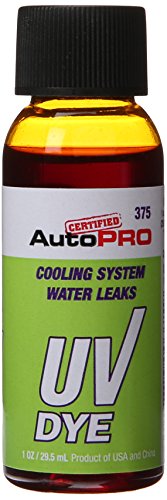
A/C Pro UV Leak Detection Dye for Radiators, 1 Oz

PEAK Global Lifetime Concentrate Antifreeze and Coolant, 1 Gal.

PEAK OET Extended Life Blue Concentrate Antifreeze/Coolant, 1 Gal.

PEAK OET Extended Life Red/Pink Concentrate Antifreeze/Coolant, 1 Gal.

PEAK OET Extended Life Gold 50/50 Prediluted Antifreeze/Coolant, 1 Gal.
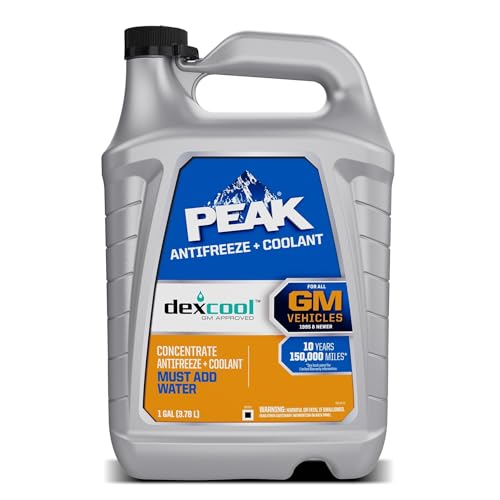
PEAK DEX-Cool Antifreeze + Coolant for GM Vehicles, 1 Gallon
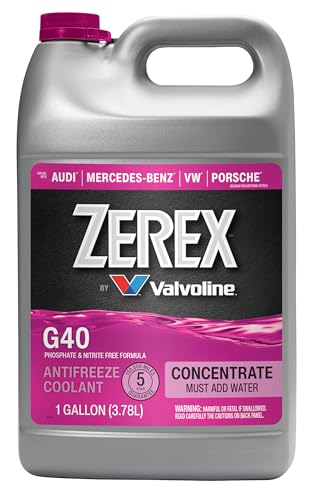
Zerex G40 Phosphate and Nitrite Free Concentrate Antifreeze/Coolant

Zerex American Vehicle 50/50 Ready-to-Use Antifreeze Coolant
More Details On Our Top Picks
A slow coolant loss with no visible puddle is one of the most frustrating problems in home auto care. This one-ounce bottle of ultraviolet dye from A/C Pro goes into your cooling system, circulates with the antifreeze, and marks any escape point so a UV light makes it glow. One bottle handles a single application.
The honest read is that this is a diagnostic tool, not a repair. It works alongside whatever coolant you already run, which pairs naturally with the PEAK concentrates reviewed below. Compatibility spans all antifreeze types except GM’s DEX-COOL, so 1996-and-newer GM vehicles sit this one out.
Bright Spots
- Pinpoints hidden leaks in radiators, hoses, and connections without guesswork.
- Works with every common antifreeze chemistry except DEX-COOL systems.
- Suits all makes and models, so one bottle serves a multi-car household.
- Small footprint stores easily in a glovebox or toolbox until needed.
Things To Consider
- You’ll still need a UV light to spot the glow, an extra purchase many people forget.
- Single-application sizing means repeat inspections require another bottle.
Who Should Grab It
Home mechanics chasing a mysterious coolant drop who want answers before replacing parts blindly.
Where A Sibling Pick Shines
Once the leak is fixed, PEAK Global Lifetime Concentrate is the better next step for refilling a mixed-fleet garage.
Households with two or three different vehicles rarely want four different jugs of coolant on the shelf. PEAK’s Global Lifetime concentrate sidesteps that problem by claiming compatibility regardless of make, model, year, or what’s currently in the system. That flexibility is why it anchors this list.
Chemistry-wise, it relies on organic acid technology, a corrosion-inhibiting approach where additives protect metal surfaces gradually rather than depleting quickly like older silicate formulas. Being a concentrate means you dilute it with distilled water yourself, typically half and half, which adds a step but lets you control the mix ratio precisely.
Reasons To Buy
- One jug covers every vehicle you own, simplifying garage inventory.
- Organic acid inhibitors protect aluminum radiators and heater cores over long service intervals.
- Concentrate format lets you adjust the water ratio for severe climates.
- Free of silicates, borates, nitrites, and amines, gentler on seals and water pumps.
Minor Gripes
- Requires mixing with distilled water before use, unlike prediluted options such as the Zerex American Vehicle 50/50 later in this list.
- Vehicle-specific formulas may still be the safer call under warranty terms.
Quick Facts
Made For
Multi-vehicle households and budget-minded DIYers who want a single reliable coolant for everything in the driveway.
Swap It Out When
Your owner’s manual names a specific OEM formula, in which case the PEAK OET line below matches factory chemistry more closely.
Asian manufacturers specify their own coolant chemistries, and using the wrong one can shorten water pump life. This blue concentrate from PEAK’s OET line targets exactly that gap, recommended for Honda, Acura, Nissan, Infiniti, Mitsubishi, Subaru, and Suzuki applications calling for a blue extended-life formula.
Unlike the universal PEAK Global above, this one trades broad coverage for tighter factory alignment. It also ships with denatonium benzoate, a bittering agent added industry-wide to discourage accidental ingestion, worth knowing if small children are around the garage.
Standout Traits
- Matches the blue extended-life spec most Asian brands require.
- Rust and corrosion protection extends to every cooling-system component.
- Blends safely with other extended-life coolants during top-offs.
- Extended-life formulation stretches the interval between full changes.
Softer Spots
- Concentrate form means a mixing step before it goes in the radiator.
- Not intended for domestic or European vehicles, limiting its shelf role to Asian-brand homes.
Feature Snapshot
Right Fit For
Honda, Nissan, or Subaru owners doing their own drain-and-fill who want factory-aligned chemistry without dealer pricing.
Consider Something Else When
You drive a Toyota or Lexus, since the red/pink PEAK OET variant further down matches that phosphate-enhanced spec instead.
Same OET family as the blue bottle above, different color code and different driveways. This red/pink concentrate is aimed squarely at Toyota, Lexus, and Scion vehicles specifying a phosphate-enhanced organic acid formula, the pink fluid Toyota dealers charge a premium to install.
Phosphates, for context, are mineral-based corrosion fighters that work especially well against hard-water scale, which matters in regions with mineral-heavy tap water. Owners commonly report this version being a straightforward swap during a standard radiator flush, though the concentrate still needs diluting first.
Plus Points
- Factory-matched for Toyota-family phosphate-enhanced requirements.
- Corrosion inhibitors shield the radiator, water pump, and heater core alike.
- Mixes freely with other extended-life coolants for emergency top-offs.
- Bittering agent included as an ingestion deterrent.
Points To Note
- Needs distilled water and correct ratios, a hurdle for anyone wanting pour-and-go simplicity.
- Color alone isn’t a guarantee of fit, so checking the manual remains essential.
At A Glance
Who Will Love This
Camry, Corolla, and RX owners handling their own maintenance who’d rather not pay dealership fluid prices.
Another Choice May Suit
Nissan and Subaru households get better factory alignment from the blue PEAK OET concentrate covered earlier.
Not everyone wants to measure and mix on a driveway in July heat. This gold formula arrives prediluted at a 50/50 antifreeze-to-water ratio, so the jug pours straight into the cooling system. Ford and Chrysler vehicles calling for gold hybrid organic acid technology are its intended audience.
Hybrid OAT blends conventional and organic acid inhibitors, aiming for fast initial protection plus long-term staying power. Compared with the concentrates earlier in this list, you give up ratio control but gain speed and eliminate mixing errors, which is where many first-timers go wrong.
What We Like
- Pours directly into the system with zero measuring.
- Hybrid inhibitor package balances quick and lasting corrosion defense.
- Compatible with other extended-life coolants for interim top-ups.
- Removes the dilution mistakes that plague novice coolant changes.
Small Caveats
- Fixed 50/50 ratio offers less tuning for extreme hot or cold climates than a concentrate.
- Gold spec doesn’t cover GM orange or Asian blue/pink systems.
Core Details
Who It Suits Best
F-150 and Ram owners who value convenience and want a no-measure fill during routine cooling service.
Reach For A Different Pick When
Your GM truck needs orange DEX-COOL chemistry, which the dedicated PEAK DEX-Cool option next up handles properly.
GM’s orange DEX-COOL system is famously particular, and pouring a generic green coolant into a Silverado can cause sludging issues owners have reported for years. This PEAK offering is built specifically for GM vehicles from 1995 onward that require orange organic acid technology, closing that risk window.
Protection here covers all cooling-system metals including aluminum, the material most modern GM radiators and heads use. Like the other OET bottles, it carries the denatonium benzoate bittering agent, and it plays nicely with other extended-life coolants should a partial top-off ever be unavoidable.
Highlights
- Correct orange OAT chemistry for 1995-and-newer GM applications.
- Aluminum-safe corrosion protection across all cooling metals.
- Long service life typical of OAT formulations reduces change frequency.
- Blends with other extended-life coolants when needed.
Worth Noting
- Strictly a GM-focused product, useless shelf space in non-GM garages.
- Older pre-1995 GM models expecting green coolant aren’t the target here.
Whose Shelf It Belongs On
Chevrolet, GMC, Buick, and Cadillac owners committed to proper DEX-COOL maintenance intervals.
Look Elsewhere When
You run a Ford or Chrysler product, where the gold PEAK OET prediluted jug matches the specified hybrid formula.
European engines are the most demanding in this category, and BMW, Mercedes-Benz, Porsche, and Volkswagen all specify silicated organic acid technology, often shortened to Si-OAT. Zerex G40 delivers exactly that in a concentrate, and it also suits certain older Audi and Volvo applications.
Being free of phosphates and nitrites matters because those additives can react poorly with the alloys and gasket materials German engineers design around. Zerex, a Valvoline brand, has a long track record in OEM-approved coolants, which gives this bottle credibility beyond the label. Expect a higher price point than the domestic options, the usual trade-off for Euro-spec chemistry.
Strong Points
- Si-OAT formulation meets BMW, Mercedes, Porsche, and VW requirements.
- Phosphate-free and nitrite-free composition protects sensitive European alloys.
- Carboxylate inhibitors support long engine life in cars and light trucks.
- Backed by a brand with deep OEM coolant experience.
Honest Caveats
- Concentrate requires careful dilution, and Euro systems are unforgiving of wrong ratios.
- Typically costs more than domestic-market alternatives on this list.
Technical Sheet
Best Suited To
European car owners who follow factory service schedules and refuse to compromise on specified chemistry.
Not Your Match When
Your domestic sedan takes a ready-to-use formula, making the Zerex American Vehicle 50/50 the simpler companion piece.
For a first coolant change, nothing beats opening a jug and pouring. This Zerex formula comes premixed at 50/50 and targets Ford, Chrysler, and General Motors vehicles specifying an orange extended-life organic acid formula, overlapping with the PEAK DEX-Cool pick but arriving fully diluted.
Silicate-free and phosphate-free construction keeps deposits off water pump seals and radiator tubes, a durability point that shows up over years of ownership rather than days. In our view, this is the gentlest entry point on the whole list for someone nervous about getting coolant service right.
Upsides
- Ready-to-use 50/50 mix eliminates all measuring and dilution.
- OAT chemistry suits Ford, Chrysler, and GM orange-spec engines.
- No silicates or phosphates means cleaner internal passages over time.
- Valvoline-backed formulation with a strong OEM heritage.
Room For Improvement
- Orange OAT spec won’t fit Asian blue/pink or European Si-OAT systems.
- Prediluted format costs slightly more per finished gallon than concentrate.
Details At A Glance
The Right Fit
Beginner DIYers servicing an American-brand car or truck who want foolproof, pour-straight-from-the-jug simplicity.
Where Another Pick Suits Better
Experienced wrenchers comfortable with dilution can save money per gallon using the PEAK Global Lifetime concentrate instead.
What Matters Most Before Choosing Antifreeze Car Radiators
Match The Chemistry, Not Just The Color
Coolant color hints at its inhibitor family, but the owner’s manual is the real authority. Organic acid technology, hybrid OAT, and silicated OAT each protect different alloys differently, and mixing families can cause gel or deposits. Confirm the specification printed in your manual before anything else.
Concentrate Versus Prediluted
Concentrates cost less per finished gallon and let you tune the ratio for harsh winters, while prediluted jugs remove human error entirely. First-time changers usually do better with 50/50 products; experienced hands with distilled water on hand can stretch a concentrate further.
Corrosion Protection And Materials
Aluminum radiators, heater cores, and water pumps dominate modern engines, and the wrong inhibitors pit or erode them over time. Formulas excluding silicates, phosphates, or nitrites exist precisely because certain engines suffer with them. Long-interval OAT chemistry also means fewer full drains across your ownership.
Diagnostics Before Refills
Losing coolant repeatedly signals a leak, not just low fluid. A UV dye kit like the A/C Pro option above turns a mystery into a visible answer, potentially saving a radiator or head gasket from running dry. Fix first, then refill with the correct formula.
Key Considerations Across These Picks
Traps First Timers Fall Into
The biggest mistake is buying on color alone, since several unrelated chemistries share similar hues. The second is topping off a DEX-COOL system with generic green coolant, a combination widely reported to cause sludge. Always verify the manual’s named specification, and never open a hot radiator cap.
What Separates Premium From Basic
Higher-priced options like Zerex G40 buy exact OEM chemistry alignment, which matters most on European and turbocharged engines with tight tolerances. For a basic commuter with a simple green-coolant spec, a well-rounded concentrate does the job at lower cost. Spend up when your manual demands it, not before.
Closing Thoughts
Coolant is cheap insurance compared with a warped head or a cooked radiator, and every option here earns its place for a specific vehicle family. Start with your owner’s manual, match the chemistry it names, and keep a jug of the right formula on the shelf. Your engine will repay the attention for years.
