

Keeping a battery healthy is a lot easier than reviving a dead one, and that matters whether your vehicle sits for days or stays busy all week. The right charger can handle a commuter car, a weekend motorcycle, a lawn mower, or a backup boat battery without turning the garage into a guessing game. This roundup focuses on automatic chargers, maintainers, trickle chargers, and a few multi-function options that make ownership simpler. You’ll see where each one fits, and where another pick may suit you better.
Quick Look At The Shortlist

CRAFTSMAN 12A Charger & Maintainer CMXCESM258

PCHH 12V 24V Heavy Duty Charger

PZ.P 15-Amp 12V/24V Smart Charger

CRAFTSMAN 15A Charger & Maintainer CMXCESM162
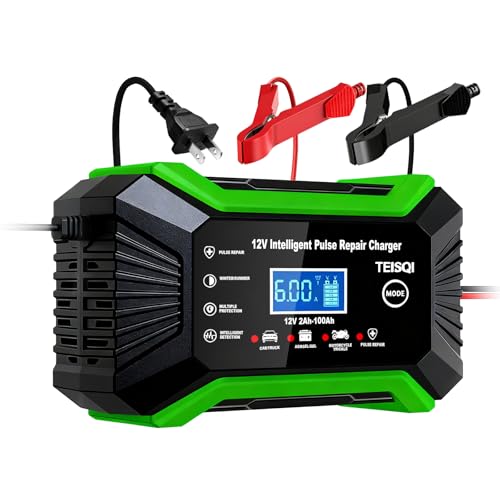
TEISQI 12V 6A Smart Battery Charger
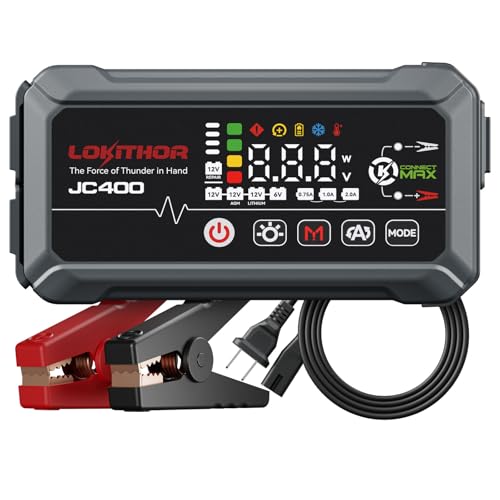
LOKITHOR JC400 2A Charger and Jump Starter

VibeXtr 1.5A 6V/12V Charger

COREBOX 2-Amp 6V/12V Smart Charger

FOXWELL BC521 2-in-1 Charger and Tester
More Details On Our Top Picks
That 12-amp ceiling gives this CRAFTSMAN a more confident feel than the lighter maintainers lower on the list. In a home garage, that matters because you can cover routine upkeep and still have a charger that feels ready for a neglected sedan battery or a weekend toy.
The 6V and 12V support broadens its reach, and the automatic behavior takes some pressure off the setup process. You may find the trade-off is simply size and output, since this kind of charger is more substantial than a tiny tender, but that’s the point of the CMXCESM258.
Strong Points
- Handles both 6V and 12V batteries, so it fits more garage setups.
- The 12-amp charge rate suits vehicles that need more than slow maintenance.
- Automatic operation helps reduce guesswork for routine charging.
- Works well as a steady every-day unit for a car, truck, or seasonal vehicle.
Small Caveats
- It’s more charger than minimalist maintainer, so it may feel bulky on a packed shelf.
- The stronger output is useful, but it’s more than some small-battery users need.
Feature Snapshot
Who It Suits Best
Home garage users who want one charger that can handle both routine maintenance and more demanding top-ups will get the most from this model.
A Better Fit Elsewhere
COREBOX Battery Charger 2-Amp 6V/12V Smart Trickle Charger for Car is the lighter choice for basic maintenance on a battery that stays in good shape most of the year.
The PCHH feels aimed at bigger jobs, and its 12V and 24V support makes that clear right away. For a truck, boat, or a garage that sees several battery sizes, the extra range is useful without forcing you into a separate charger for every task.
The copper coil, metal, and ABS casing point toward a sturdier build than the lighter plastic-bodied options in this roundup. The trade-off is weight and footprint, so you’ll probably want a fixed spot for it rather than tucking it into a drawer.
What We Like
- Supports 12V and 24V batteries, which helps in mixed-vehicle garages.
- Automatic charging and maintenance reduce the need to babysit the process.
- Two charging rates give you a faster mode and a gentler upkeep mode.
- The sturdier housing suits regular use in a workshop or garage.
Points To Note
- At 12.2 lb, it’s not the easiest model to move around often.
- The heavier build makes it less handy for glovebox storage or travel.
- Its size makes the most sense where it can stay plugged in and ready.
Core Details
Who It Suits Best
You’ll get the most from this charger in a garage with trucks, boats, or 24V equipment that needs one heavy-duty unit instead of several smaller ones.
A Better Fit Elsewhere
CRAFTSMAN 12A Car Battery Charger & Maintainer CMXCESM258 is the easier carry for typical car-only maintenance and less frequent battery work.
This PZ.P model leans into faster charging and wider battery chemistry support, which gives it an edge for mixed fleets. Compared with the simpler CRAFTSMAN units, it looks better suited to a shop that wants one charger for LiFePO4 and lead-acid batteries alike.
The 9-stage process is more involved than a basic maintainer, and that usually means a smoother handoff between charging phases. The catch is that more modes can feel like more charger than some casual owners need, but for a motorcycle, truck, or lawn mower lineup, it’s a smart fit.
Highlights
- Works with both LiFePO4 and lead-acid batteries.
- 12V 15A and 24V 8A output gives it a strong charging range.
- 9-stage automatic charging adds structure to the process.
- Temperature compensation helps the charger react better to hot or cold conditions.
- Good fit for mixed garages with cars, boats, and powersport gear.
Areas To Watch
- The extra feature set may feel busy for someone who only wants basic maintenance.
- It makes the most sense where battery types actually vary.
Technical Sheet
Who It Suits Best
Owners with a mix of LiFePO4 and lead-acid batteries, especially across cars, boats, and powersport equipment, will get the most from this one.
A Better Fit Elsewhere
TEISQI 12V 6A Smart Battery Charger is simpler for a single 12V car or motorcycle that only needs steady upkeep.
Step up to this CRAFTSMAN when the CMXCESM258 feels a little too modest for your routine. The 15A charge rate gives you more headroom for a 12V battery that’s been sitting longer than you planned, while still keeping 6V support for older gear.
It stays close to the straightforward feel of the smaller CRAFTSMAN model, which helps if you want power without a steeper learning curve. For most garages, that balance is the real appeal, since it doesn’t ask you to juggle a pile of settings just to get started.
Best Bits
- 15A output gives it more charging muscle than the 12A CRAFTSMAN.
- Works with both 6V and 12V batteries.
- Fits well in garages that want a stronger general-purpose charger.
- Automatic handling keeps routine use fairly simple.
Worth Noting
- The stronger output only matters when your battery work is more demanding.
- It still makes the most sense as a garage tool, not a travel accessory.
At A Glance
Who It Suits Best
This is a solid fit for you if you want one garage charger with a bit more pace than a standard maintainer.
A Better Fit Elsewhere
PCHH 12V 24V Heavy Duty Charger is the better match for mixed 12V and 24V equipment in a busier workshop.
The TEISQI keeps the focus on 12V ownership, which makes it easier to place than the dual-voltage units above it. That narrower scope can actually help, since you’re not paying attention to features you may never use on a car, motorcycle, mower, or marine battery.
The 6A output sits in a comfortable middle ground, quick enough for regular upkeep but not so aggressive that it feels oversized for a weekend vehicle. The built-in temperature compensation is a nice touch for seasonal storage, especially in a garage that gets cold in winter and warm in summer.
Reasons To Buy
- 12V focus keeps the unit straightforward for common vehicles.
- 6A output gives it a practical middle pace for upkeep.
- Temperature compensation helps it adapt to changing garage conditions.
- Works across cars, motorcycles, mowers, and marine-style use cases.
Minor Gripes
- Single-voltage design limits how broadly you can use it.
- It’s less flexible than the dual-voltage CRAFTSMAN and PCHH options.
Details At A Glance
Who It Suits Best
You’ll like this most if your garage centers on 12V vehicles and you want a simple charger that doesn’t feel oversized.
A Better Fit Elsewhere
PZ.P 15-Amp 12V/24V Smart Charger is the stronger pick for mixed-battery owners who need more power and wider compatibility.
The JC400 stands apart because it isn’t only a charger, it’s also a jump starter, and that changes the value story. For roadside use or a compact emergency kit, that combination matters more than raw charging speed, especially compared with the pure chargers higher up.
Its 6V and 12V support, plus the 750mA, 1A, and 2A charging modes, give it a flexible but small-scale feel. The honest read is that it suits light maintenance and emergency support better than large garage loads, so it’s more pocket-sized utility than shop anchor.
Upsides
- Combines charging, maintenance, and jump-start capability in one unit.
- Multiple current settings help it adapt to different battery needs.
- 6V and 12V support keeps it useful across older and newer vehicles.
- Compact enough to make sense in a roadside kit.
Trade Offs
- The 2A ceiling is modest next to the larger standalone chargers.
- It makes more sense as an emergency helper than a heavy shop unit.
- The extra functions add flexibility, but also more to learn.
Feature Card
Who It Suits Best
Roadside-minded owners who want one compact tool for charging and emergency starts will get the most from the JC400.
A Better Fit Elsewhere
CRAFTSMAN 15A Charger & Maintainer CMXCESM162 is the better garage-first choice when charging speed matters more than jump-start utility.
The VibeXtr is the quiet, low-current option in this group, and that makes it easy to live with for long-term storage. Compared with the stronger-output picks, it’s less about speed and more about staying on top of a battery that spends a lot of time parked.
Its 6V and 12V support, plus the desulfator function, give it more usefulness than a bare-bones tender. The trade-off is obvious, though, because 1.5A is still modest, so you’ll like it most for small-battery upkeep, classic cars, or weekend machines that don’t need a big push.
Bright Spots
- Small 1.5A output suits gentle, steady maintenance.
- Works with both 6V and 12V batteries.
- Temperature compensation helps in hotter or colder garages.
- Desulfator function gives older batteries a more attentive charge profile.
Softer Spots
- The light output is not the right fit for faster charging needs.
- It makes the most sense for upkeep, not heavy recovery work.
Core Details
Who It Suits Best
This is a sensible pick for smaller batteries and seasonal vehicles that sit for stretches rather than working every day.
A Better Fit Elsewhere
FOXWELL BC521 2-in-1 Battery Charger and Tester suits someone who wants battery health checks before starting the charge.
The COREBOX stays close to the basics, and that’s not a bad thing when you want a charger you can leave on a shelf without thinking twice. Its 2A output is modest, which makes it a calm fit for routine upkeep rather than a tool you reach for to rescue a battery in rough shape.
Because it supports 6V and 12V batteries, it still covers a useful spread for home garages and seasonal equipment. Compared with the VibeXtr, it feels similarly restrained, but the COREBOX reads more like a simple maintenance piece for people who value uncomplicated storage and straightforward use.
Plus Points
- Works with both 6V and 12V batteries.
- 2A output is steady and gentle for upkeep.
- Easy to store in a drawer, shelf, or small toolbox.
- Fits everyday maintenance on vehicles that sit for a while.
Room For Improvement
- The low output is not built for faster charging jobs.
- It’s less flexible than higher-output dual-voltage options.
Quick Facts
Who It Suits Best
You’ll appreciate this most if you want a low-drama maintainer for a battery that doesn’t need much intervention.
A Better Fit Elsewhere
PCHH 12V 24V Heavy Duty Charger is the better match for larger vehicles and heavier garage routines.
The FOXWELL BC521 takes a more diagnostic route, and that makes it stand out from the rest of the list. Before you start charging, you can check battery condition, cranking output, and alternator behavior, which is especially useful in a driveway where you’re trying to separate a weak battery from a charging-system issue.
Its 5A automatic charging and 8-stage process keep it useful after the checks are done, so it’s not just a meter that sits in a drawer. That combination is especially handy for someone who wants fewer guesses and a clearer starting point, though the extra insight adds complexity you may not need for a very simple maintenance routine.
What We Like
- Battery testing and charging in one unit saves you from guessing.
- Checks battery health, cranking, and alternator output before the charge.
- 8-stage charging adds a more structured maintenance flow.
- Works across AGM, GEL, EFB, and flooded 12V lead-acid batteries.
- Good fit for owners who want troubleshooting help built into the tool.
Honest Caveats
- The diagnostic feature set makes it more involved than a plain maintainer.
- It’s focused on 12V lead-acid use, so broader battery needs call for a different pick.
Feature Rundown
Who Should Grab It
This fits you best if you want a charger that doubles as a troubleshooting tool for a 12V vehicle.
Another Choice May Suit
VibeXtr 1.5A 6V/12V Charger is the calmer option for basic storage maintenance without the diagnostic extras.
How To Choose The Right Car Battery Trickle Chargers
Match Output To The Way You Use The Vehicle
Charging current, measured in amps, tells you how much electrical push the unit can deliver. A 1.5A or 2A maintainer suits storage and gentle upkeep, while 5A, 6A, 12A, or 15A models make more sense for batteries that need a stronger recovery or faster turnaround. In a busy garage, that difference saves time and avoids the frustration of waiting on a tiny charger to do a larger job.
Confirm Voltage And Battery Chemistry First
Voltage support is the first filter, because a 6V charger won’t solve a 12V job and a 12V-only unit won’t cover older equipment. Battery chemistry matters too, since some units work only with lead-acid variants like AGM, GEL, SLA, or flooded batteries, while others also support LiFePO4. The cleanest match is the charger that fits the battery you actually own, not the battery you hope to own later.
Think About Storage, Space, And Portability
A heavy unit can be a strength or a nuisance. The 12.2 lb PCHH makes sense on a bench or cart, while the smaller COREBOX or VibeXtr models fit a shelf, cabinet, or roadside kit more comfortably. For someone who moves between a garage and a driveway, a lighter charger usually feels easier to live with.
Look For Built-In Smarts That Save Guesswork
Automatic charge control, temperature compensation, and multi-stage charging help the charger adapt instead of forcing you to babysit it. A 9-stage model or a charger with repair and desulfation modes can be useful for neglected batteries, though those extras add complexity. For straightforward monthly upkeep, a simpler maintainer is often enough, and that honesty keeps you from paying for features you won’t use.
A Quick Reality Check Before You Commit
Common Shopping Slip Ups
A frequent mistake is matching the charger to the vehicle label instead of the battery type and voltage. Another is choosing a low-amp maintainer for a battery that needs a faster recovery, which turns a small task into a long wait. People also overlook storage space, then end up with a heavy unit that never gets used because it’s awkward to retrieve.
The Upgrade Payoff
Higher-tier models usually cost more because they do more than send current into a battery. You’re paying for wider voltage support, extra charge stages, better temperature handling, diagnostic checks, or even jump-start help in the case of the LOKITHOR JC400. For a garage with several vehicles, that extra flexibility can be worth it, but a single weekend car may be perfectly happy with a simpler charger.
Closing Thoughts
The right charger depends on your garage, not on the loudest feature list. A basic 2A maintainer can be enough for a stored car, while a 15A or dual-voltage unit makes life easier for mixed vehicles and bigger batteries. If you want fewer surprises, the FOXWELL BC521 and the stronger CRAFTSMAN models give you more room to grow. The best match is the one that fits your battery, your space, and how often you actually use the vehicle.
