

You want a battery tester that tells you more than “voltage looks fine.” The right tool helps you spot weak cells, check cranking health, and make sense of charging problems before a cold morning or a long trip turns into a no-start moment. That matters for daily commuters, weekend mechanics, and anyone keeping a truck, boat, RV, or motorcycle ready to go.
This roundup focuses on battery load testers for car use with practical range, useful displays, and real-world fit. You’ll see simple analog-style choices, more advanced analyzers, and a couple of models that go beyond the driveway with printer output or broader voltage support.
Quick Look At The Shortlist

OBDResource BR502 6V 12V 24V Battery Tester

Battery Tender 12V 6V Battery Load Tester 026-0020

TOPDON BT600 12V 24V Battery Tester with Printer
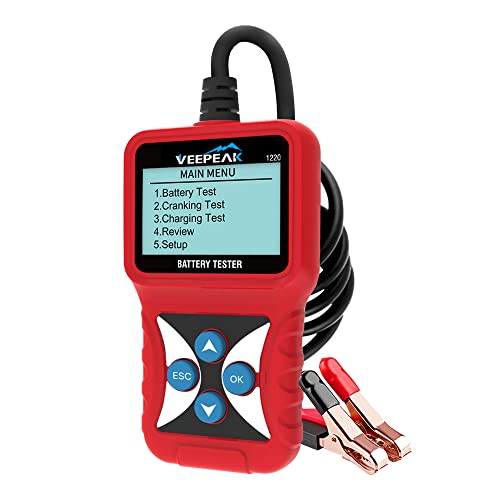
Veepeak 12V Car Battery Tester 100-2000 CCA

TOPDON BT50 12V Battery Tester 100-2000 CCA

KAIHENG 6V 12V Battery Load Tester with Voltmeter

VDIAGTOOL BT300 6V 12V Battery Tester 5-3000 CCA

VDIAGTOOL BT500 6V 12V 24V Battery Tester 5-3000 CCA

KAIHENG 6V 12V Battery Load Tester with Voltmeter
More Details On Our Top Picks
The BR502 stands out for range, since it covers 6V, 12V, and 24V batteries alongside a broad 100 to 2000 CCA window, with CCA meaning cold cranking amps, the measure tied to starting strength in cold weather. That makes it a sensible match for a garage that sees cars, SUVs, boats, motorcycles, and a few odd jobs in between.
The trade-off is that broad coverage often comes before polish, so you may care more about its readings than about a fancy interface. For a mixed-vehicle household, though, that’s usually the right trade. It keeps one tool in reach instead of a drawer full of niche gear.
Strong Points
- Handles 6V, 12V, and 24V batteries, which helps you cover more vehicles with one tool.
- Checks internal resistance, a useful clue when a battery still shows voltage but feels weak under load.
- The 100 to 2000 CCA span suits many everyday automotive setups.
- Works across cars, trucks, marine gear, motorcycles, and SUVs, so storage stays simpler.
Things To Consider
- It’s built for diagnosis first, not for a flashy screen or printer output.
- Multi-voltage tools can feel a little more technical than basic one-button checkers.
- You’ll want to keep the clips clean and the leads stored neatly, since that helps any clamp-style tester last longer.
Feature Snapshot
Who It Suits Best
You’ll get the most from this pick if your driveway or garage holds more than one kind of vehicle and you want a single tester for them all.
A Better Fit Elsewhere
TOPDON BT600 suits you better if you want a 3.5-inch screen and built-in printer for clearer records after each check.
This Battery Tender model keeps things plain and useful, with fixed load checks for 12V and 6V batteries plus help for starter-motor draw and charging-system diagnosis. That mix makes sense for someone who wants a classic garage tool rather than a screen-heavy analyzer.
Its rubber-insulated handle and color-coded clamps are small but meaningful touches, especially in a home shop where the tool may move from bench to vehicle a lot. Compared with the BR502, it’s less about broad chemistry coverage and more about direct load testing.
What We Like
- Load testing at 100 amps for 12V and 50 amps for 6V gives you a familiar, easy-to-read setup.
- Starter-motor draw checks add useful context when a vehicle cranks poorly.
- Color-coded clamps help keep hookups more orderly in a dim garage.
- The insulated handle makes the tool easier to move and store between uses.
Softer Spots
- It focuses on core load testing rather than a deep feature set.
- Owners who want digital memory or printed records will likely want a more advanced pick.
- The fixed approach is handy, though it leaves less room for detailed diagnosis than the TOPDON BT600.
Core Details
Who Will Love This
This suits you best if you want a straightforward tester for a home garage and don’t need a screen full of extra data.
Swap It Out When
VDIAGTOOL BT300 is the better fit when you want a wider diagnostic spread, including more detailed battery and charging information.
The BT600 feels aimed at the person who wants more than a pass-or-fail result, because it pairs 12V and 24V support with a 3.5-inch screen and built-in printer. That printer matters in a shop or fleet setting, since paper records are still handy for a service bay or a customer handoff.
Compared with the simpler Battery Tender unit, this one leans harder into documentation and guided diagnosis. The trade-off is obvious, though, since extra hardware usually means a tool that feels less casual and a bit more workbench-focused.
Highlights
- The built-in printer helps you keep a paper trail for battery checks and follow-up service.
- A 3.5-inch display gives the readings more room, which helps when you’re working fast.
- 12V and 24V support makes it useful for a broader set of vehicles and equipment.
- Cranking and charging tests give you a fuller picture of what’s going wrong.
- Its diagnostic style suits technicians who want organized output instead of bare numbers.
Worth Noting
- The printer adds convenience, but it also adds another part to keep clean and supplied.
- It’s more tool-room than glovebox, so storage takes a little more planning.
- For simple weekend checks, the extra capability may feel like more than you need.
Details At A Glance
Best Suited To
You’ll appreciate this most if you work around vehicles often and want printed results you can keep with the job.
Look Elsewhere When
OBDResource BR502 is the easier fit for mixed personal vehicles when you want broader voltage coverage without the printer hardware.
Veepeak keeps the focus on 12V systems, which makes it easier to match with the battery setups most cars and light recreational vehicles use. That narrower scope can actually help, because you’re not sorting through extra voltage modes you may never touch.
Its readout centers on state of charge, state of health, voltage, internal resistance, and CCA, so you get a compact but meaningful snapshot. In plain terms, that helps you decide whether a battery needs charging, is still serviceable, or is getting close to replacement.
Bright Spots
- Tracks the main battery health figures in one pass, which saves a lot of second-guessing.
- Internal resistance readings help reveal batteries that look okay on paper but sag under demand.
- Its 12V focus keeps the workflow clean for common car and truck use.
- The charging and cranking checks add context beyond a single voltage number.
Areas To Watch
- It does not cover 6V or 24V systems, so mixed fleets will need another tool.
- The narrower voltage range is the big compromise versus the BR502 and BT500.
- As with many compact testers, careful clip placement helps keep the results steady.
Feature Rundown
Whose Shelf It Belongs On
This suits you best if your vehicles are mostly 12V and you want a clear, no-drama diagnostic tool.
A Better Fit Elsewhere
VDIAGTOOL BT500 makes more sense for mixed fleets, since it adds 6V and 24V support without giving up broad battery analysis.
The BT50 lands in that useful middle ground where the feature set feels serious, but not overbuilt. It handles 12V batteries from 100 to 2000 CCA and adds cranking and charging checks, which gives you enough depth for most home garage diagnostics without pushing into shop-only territory.
That balance is what makes it a strong fit for DIY work on cars, SUVs, trucks, and motorcycles. Compared with the Veepeak, it sits in a similarly focused lane, though TOPDON’s broader data review style tends to appeal to people who want a little more context from each check.
Reasons To Buy
- 12V coverage matches the most common automotive battery setups.
- Cranking and charging checks help separate a weak battery from a charging problem.
- Its CCA span gives it room to handle many everyday vehicles.
- The format suits frequent use without feeling oversized.
Small Caveats
- It stays within 12V territory, so it won’t replace a broader multi-voltage tester.
- Compared with the BT600, you give up the printer and the larger display setup.
- For very casual use, it may offer more data than you’ll look at every time.
Technical Sheet
Made For
You’re the right fit for this one if you maintain several 12V vehicles and want a compact tool with enough detail to be useful.
Another Choice May Suit
TOPDON BT600 suits you better if printed records matter, especially in a shared garage or service-minded setup.
This KAIHENG tester keeps the design old-school in a useful way, with a fixed 100 amp load for 12V and 50 amp load for 6V plus a voltmeter. For many garage checks, that’s enough to tell you whether a battery is simply tired or whether the charging system deserves attention.
The copper clips with rubber grips should feel familiar to anyone who has used clamp-style shop tools before. Compared with the more feature-rich TOPDON units, this one stays simpler and easier to store, though that simplicity also leaves less room for deeper diagnosis.
Plus Points
- Fixed load ratings make the setup straightforward for quick checks.
- The included voltmeter adds a second point of reference during diagnosis.
- Rubber grips on the clips help the tool feel steadier in hand.
- Its lower-key format suits a basic home garage or small workshop.
Points To Note
- It’s a more manual experience than a digital analyzer, so reading it takes a little more attention.
- The simpler layout is useful, but it gives you less interpretive help than the VDIAGTOOL BT300.
- Clamp-style tools benefit from clean contact points, so upkeep matters more than it looks at first glance.
Core Details
Built With In Mind
This is a solid fit for you if you want a simple load tester with a voltmeter and don’t need a digital menu system.
Where A Sibling Pick Shines
Veepeak 12V Car Battery Tester 100-2000 CCA is the better match if you want health, resistance, and charging data in a more guided format.
The BT300 broadens the lane with a 5 to 3000 CCA range and support for both 6V and 12V batteries. That wider spread makes sense for people who check a mix of vehicles, especially motorcycles, cars, trucks, ATVs, and boats, because one tester can stay useful across more jobs.
It also checks internal resistance, SOC, SOH, ripple, and charging or cranking performance, which is a lot of detail for a handheld unit. The honest trade-off is that you’ll need to be willing to read more data, but that’s exactly why it works so well for more serious DIY work.
Best Bits
- The 5 to 3000 CCA span gives it unusually broad reach for a consumer-style tester.
- SOC and SOH readings help you separate current charge from overall battery condition.
- Ripple checks add another clue when a charging issue feels hard to pin down.
- It handles a lot of vehicle types without forcing you into separate tools.
- The data set is deep enough for careful troubleshooting.
Minor Gripes
- The expanded data set takes more attention, so casual users may not use every line of it.
- It stops at 12V, unlike the BT500, so it won’t cover 24V systems.
- More diagnostic depth also means a steeper learning curve for first-time users.
Quick Facts
Right Fit For
This is a strong match if you want deep battery data and regularly work across several vehicle types.
Not Your Match When
Battery Tender 12V 6V Battery Load Tester 026-0020 suits you better if you want a simpler, more familiar load-test layout.
The BT500 is the broadest VDIAGTOOL option here, because it adds 24V support to the 6V and 12V coverage while keeping the wide 5 to 3000 CCA range. That matters for mixed garages and job-site use, where a single tester needs to move between a car, a truck, and something a bit larger without becoming the limiting factor.
It also covers several lead-acid styles, including flooded, AGM flat plate, AGM spiral, gel, and EFB, which is handy because battery chemistry affects fit as much as voltage does. Compared with the BT300, this one is the smarter upgrade for mixed fleets and heavier equipment, though lithium and deep-cycle users will need to look elsewhere.
Standout Traits
- 6V, 12V, and 24V support gives it the widest reach in this roundup.
- The 5 to 3000 CCA span keeps it flexible across many battery sizes.
- AGM, gel, flooded, and EFB coverage helps with real-world battery variety.
- SOC and SOH readings are useful when you want more than a surface check.
- It’s a strong fit for mixed personal and work vehicles.
Areas To Watch
- Its broader scope helps a lot, but it also makes the menu a bit more involved.
- Lithium and deep-cycle batteries are outside its stated coverage.
- For a single 12V car, the extra range may be more than you need.
Core Details
The Right Fit
You’ll get the most from this if your driveway, shop, or job site mixes 24V gear with standard 12V vehicles.
Reach For A Different Pick When
VDIAGTOOL BT300 makes more sense for you if you don’t need 24V support and want a slightly simpler diagnostic experience.
Like the other KAIHENG pick, this one sticks to the simple load-test formula, with 100 amp load testing for 12V batteries, 50 amp load testing for 6V batteries, and a voltmeter built in. That straightforward setup is easy to understand in a garage, especially for anyone who wants a quick read rather than a deeper diagnostic menu.
The alligator clips and rubber grips keep the handling familiar, and that matters more than it sounds when you’re reaching around a battery tray. Compared with the higher-end TOPDON and VDIAGTOOL units, this is the no-frills route, which is exactly why some home mechanics will prefer it.
Positives
- Fixed loads keep the workflow direct and easy to follow.
- The voltmeter gives you a second number to compare during a quick check.
- It suits simple garage use without a learning curve.
- Clamp-style contact makes it familiar for anyone used to hand tools.
Honest Caveats
- It’s basic by design, so it won’t replace a feature-rich analyzer.
- You get less diagnostic context than with the VDIAGTOOL BT300 or BT500.
- As with most clamp tools, keeping the jaws clean helps maintain steady contact.
Feature Card
Who Should Grab It
This fits you well if you want a simple, affordable-feeling tester for routine checks at home.
Where A Sibling Pick Shines
TOPDON BT50 is the better move if you want a digital analyzer with more battery and charging detail.
How To Choose The Right Battery Load Testers For Car
Match Voltage To The Vehicles In Your Garage
Voltage support is the first filter worth using. A 12V-only tester fits most passenger cars and light trucks, while 6V and 24V support matters for mixed garages, older equipment, boats, heavier work vehicles, or anyone who does not want a second tester sitting in a drawer.
Broader support helps, but it also adds menu choices and sometimes a little more setup time. The sweet spot is simple: pick the narrowest voltage range that still covers the vehicles you actually maintain.
Look Beyond A Plain Voltage Number
A battery can show decent voltage and still struggle under load, which is why load tests, internal resistance, SOC, and SOH readings matter. SOC means state of charge, while SOH means state of health, and together they tell you whether the battery is merely low or genuinely aging out.
Drivers who commute daily benefit from this kind of detail because it helps separate a battery problem from a charging problem. That matters after a cold start complaint, a short-trip week, or a vehicle that sits for days at a time.
Think About Output, Display, and Storage
Some tools keep things classic with clamps and a simple reading. Others add a bigger screen, data review, or even a printer, which is useful in a shop but less necessary for a weekend driveway check.
Storage matters more than people expect. A compact tester with sturdy clips is easier to keep clean and ready, while a printer-equipped model or larger analyzer needs a little more bench space and more care in transit.
Choose By How You Actually Work
DIY owners usually do best with a clear digital tester that explains battery condition without too much guesswork. Technicians, fleet managers, and serious hobbyists often value broader ranges, deeper readings, and printable results because those features support repeat checks and records.
Think about the vehicles you touch most often, not the rare ones. That keeps you from overpaying for a tool that does more than your routine really asks for.
Things Worth Knowing Before You Decide
Common Shopping Slip Ups
Many people start with the wrong voltage range and end up wishing the tool covered one more system. Others focus only on CCA span and ignore whether they need data like internal resistance or cranking checks.
Clamps, cables, and storage also deserve attention. A tester that looks simple can still be annoying to live with if the leads feel awkward in tight engine bays or the unit is too bulky for the shelf space you have.
The Upgrade Payoff
Higher-tier models usually cost more because they add clearer screens, broader voltage support, richer diagnostics, and sometimes printed output. That extra money often buys less guesswork, faster decisions, and better records after repeated checks.
The upgrade makes sense for mixed fleets, frequent troubleshooting, or anyone who helps other people with battery issues. For a single daily driver, a simpler tester often gives you everything you really need.
Closing Thoughts
The right battery load tester should make your life easier, not louder or more complicated. For most home garages, a focused 12V unit is enough, while mixed-vehicle setups benefit from 6V, 24V, or broader CCA support. If you want clearer records, the TOPDON BT600 stands out for documentation, and the VDIAGTOOL BT500 is the strongest all-around upgrade for broader coverage. Pick the tool that matches the vehicles you actually maintain, and you’ll feel the difference the first time a weak battery shows up before a cold start.
