

Choosing the right battery matters most when your car needs to start cleanly on a cold morning, sit through short errands, or power start-stop traffic without drama. This roundup focuses on AGM options and closely related replacements that fit everyday commutes, larger vehicles, and auxiliary setups. You’ll see where each one makes sense, where it asks for a little more care, and which profile it suits best.
Quick Look At The Shortlist

ACDelco Gold AUX14-200 Auxiliary AGM Battery

ACDelco Gold 94RAGM AGM BCI Group 94R Battery

MARXON Group 47 H5 L2 Car Battery 12v 60AH 660CCA AGM

Goodyear AUX14-AGM BCI Group Size 400 Auxiliary Battery

Autocessking Group Size 35 AGM Automotive Battery 12V 55Ah 650 CCA

Autocessking Group Size 65 AGM Automotive Car Battery 12V 70Ah 750 CCA
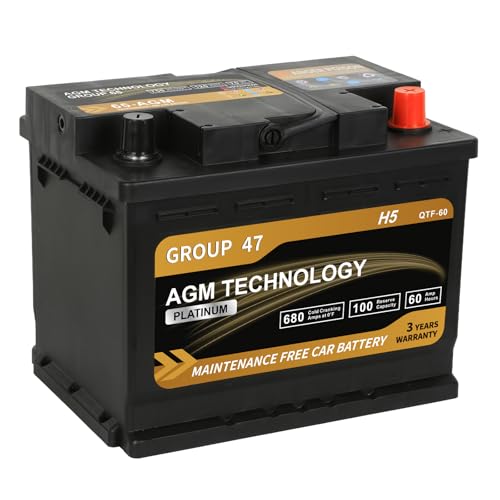
Platinum AGM Car Battery Group Size 47 H5 12V 60Ah 680 CCA

HQST 12V 60Ah AGM Car Battery Group 47 H5 680CCA 100RC
More Details On Our Top Picks
Auxiliary batteries live in the background until they don’t, and this ACDelco fits that quiet job well. The AGM design, meaning absorbed glass mat, suits vehicles that want spill resistance and a maintenance-free setup, especially in tight engine bays or stop-start systems.
That smaller footprint makes sense for daily drivers with a dedicated aux slot, though you still need to match the original group and terminal layout carefully. Compared with the larger Group 94R ACDelco below, this one is the more targeted choice for compact auxiliary roles rather than full-size main battery duty.
Strong Points
- AGM construction keeps the battery sealed and maintenance-light for day-to-day ownership.
- 200 CCA gives it enough starting support for auxiliary applications without excess bulk.
- The compact format works well in vehicles that use a separate support battery.
- ACDelco’s OE-style positioning makes it a steady fit for owners replacing a factory auxiliary unit.
Small Caveats
- This is not the right choice for drivers who need a full-size main battery.
- Auxiliary fitment can be picky, so matching size and terminal position matters.
- The benefit shows up most in vehicles designed around an auxiliary battery, not in generic swaps.
Feature Card
Who It Suits Best
Drivers replacing a factory auxiliary battery in a vehicle that asks for a compact AGM unit will get the most from this pick.
A Better Fit Elsewhere
Autocessking Group Size 65 AGM Automotive Car Battery 12V 70Ah 750 CCA suits larger vehicles that need more reserve and stronger output.
This ACDelco steps up from the auxiliary-only feel of the AUX14 and moves into full Group 94R territory. The AGM build matters here because stop-start systems and frequent charging cycles put more stress on a battery than simple weekend driving.
For commuters with a newer sedan or crossover, the maintenance-free layout is the part you’ll appreciate most once it’s installed. The trade-off is that a Group 94R battery only fits vehicles that were designed for that size, so the appeal is strong but specific.
Highlights
- Group 94R sizing makes it a straightforward replacement for compatible vehicles.
- AGM chemistry supports repeated cycling better than a basic flooded battery.
- The sealed design helps reduce upkeep in everyday use.
- Its fit for start-stop vehicles makes it a practical match for modern driving patterns.
Points To Note
- Group fit matters, so this is only useful for vehicles that call for 94R.
- AGM replacements usually cost more than simple flooded units, which may matter on older cars.
- Space around the tray and terminals should be checked before ordering.
Core Details
Built With In Mind
You’ll get the best match from this battery in a vehicle that originally calls for Group 94R and uses start-stop logic or heavier electrical demand.
Swap It Out When
MARXON Group 47 H5 L2 Car Battery 12v 60AH 660CCA AGM fits better for shoppers who need a smaller Group 47 case and do not want the larger 94R footprint.
The MARXON takes a familiar Group 47 footprint and keeps the spec sheet focused, which suits a lot of everyday replacements. At 12V, 60Ah, and 660 CCA, it’s built for drivers who want a direct AGM swap rather than extra size or flash.
That mix works especially well in stop-start cars where charge acceptance matters more than headline size. Compared with the ACDelco 94RAGM, it gives you a smaller case and a lower-output profile, so the fit is narrower but often easier to manage in compact bays.
Reasons To Buy
- Group 47 and H5 naming make fitment easier to match against the original battery.
- 60Ah capacity gives it useful staying power for routine driving and short trips.
- 660 CCA is a solid figure for a midsize AGM replacement.
- The maintenance-free design keeps ownership simple once installed.
- Its size suits cars that need a tighter battery box without moving up to a larger case.
Room For Improvement
- Drivers with larger electrical loads may want a higher-capacity option.
- The shorter, denser footprint means careful measuring is still a good habit.
- It is less suited to oversized trucks or vehicles that ask for a bigger reserve.
Details At A Glance
Whose Shelf It Belongs On
This makes sense for daily drivers with a Group 47 H5 slot who want an AGM replacement without moving into a bigger or heavier battery class.
Reach For A Different Pick When
HQST 12V 60Ah AGM Car Battery Group 47 H5 680CCA 100RC suits drivers who want similar sizing but a stronger cold-start figure and longer reserve capacity.
Goodyear’s AUX14-AGM is aimed at the same kind of auxiliary role as the first ACDelco, but it adds a few useful numbers that help you judge fit and function. The 12V, 14Ah, 22RC, and 200 CCA mix points to a small support battery built for vehicle-specific jobs rather than broad-use replacement.
You may find the multiple mounting positions useful in cramped installations, provided the battery is not turned upside down. Compared with the ACDelco AUX14, this one leans a bit more into a specialty fit for vehicles that need a compact AGM support unit with clear reserve-capacity detail.
Plus Points
- Its small auxiliary format makes it easier to place in tight support-battery spaces.
- 22RC gives you a usable reserve figure for accessory support.
- 200 CCA provides clear starting output for the intended auxiliary role.
- Multiple mounting positions can help in awkward battery compartments.
Worth Noting
- The upside is strongest in vehicles that truly use an auxiliary battery.
- Mounting flexibility still leaves one important limit, since upside-down placement is excluded.
- It asks for careful fit checking, which is normal for small auxiliary batteries.
Technical Sheet
The Right Fit
Shoppers replacing a purpose-built auxiliary battery in a vehicle with limited space will probably get the most value from this format.
Another Choice May Suit
ACDelco Gold AUX14-200 Auxiliary AGM Battery is the cleaner match for drivers who want a similarly sized auxiliary unit with a more established OE-style feel.
Group 35 batteries sit in a sweet spot for plenty of mainstream cars, and this Autocessking keeps the spec sheet straightforward. With 12V, 55Ah, 650 CCA, and 100RC, it gives you a workable mix of starting strength and reserve without pushing into larger, less common sizes.
That balance suits school runs, commuting, and short urban errands where the battery gets a lot of starts and not much highway time. Compared with the MARXON Group 47, this one uses a different case size, so the better pick is the one that matches your tray first and your power needs second.
Standout Traits
- Group 35 sizing fits a wide set of common passenger vehicles.
- 55Ah capacity gives it a practical middle ground for routine use.
- 650 CCA is a useful starting figure for many everyday cars.
- 100RC adds some breathing room for accessory use and short trips.
Areas To Watch
- You still need to confirm the exact Group 35 fit before ordering.
- The reserve and output are solid, but not aimed at heavy-duty applications.
- AGM batteries usually reward careful charging, so the vehicle’s charging system should be in good shape.
At A Glance
Perfect Match For
Drivers with a Group 35 tray and typical commuter duty will find this format easy to live with.
Look Elsewhere When
Autocessking Group Size 65 AGM Automotive Car Battery 12V 70Ah 750 CCA is the stronger choice for larger vehicles and higher electrical demand.
Group 65 is a larger, more demanding format, and this Autocessking leans into that role with 70Ah, 750 CCA, and 120RC. That combination fits trucks, larger SUVs, and vehicles with more electrical load, where a smaller battery can feel thin during cold starts or accessory use.
The tapered terminal layout also gives you a concrete fit detail to check before ordering, which matters more here because Group 65 swaps are less forgiving than smaller replacements. Compared with the Group 35 Autocessking, this one is clearly the stronger match for bigger vehicles and longer electrical demands.
Best Bits
- 750 CCA gives it a stronger starting figure than the smaller batteries in this list.
- 70Ah capacity supports vehicles that draw more from the electrical system.
- 120RC offers useful reserve for accessory-heavy driving.
- The AGM format suits start-stop use and frequent cycling better than plain flooded batteries.
Softer Spots
- Group 65 fitment can be very specific, so measuring first still matters.
- The larger case is less convenient for compact engine bays.
- Tapered terminals add another detail to verify against the original battery.
Quick Facts
Who Should Grab It
You’ll get the best match from this battery in a full-size SUV, truck, or other vehicle that asks for a Group 65 AGM with stronger output.
Where A Sibling Pick Shines
Autocessking Group Size 35 AGM Automotive Battery 12V 55Ah 650 CCA is easier to place in smaller passenger cars that do not need Group 65 dimensions.
This Platinum-branded Group 47 sits in the same size lane as the MARXON, but it brings a slightly stronger 680 CCA figure and a 100RC reserve rating. That makes it a tidy fit for start-stop sedans that need a balanced mix of starting strength and day-to-day staying power.
Because the dimensions are almost exactly what Group 47 shoppers expect, fit feels more straightforward than it does with larger batteries. The honest read is that it suits drivers who want a mainstream AGM replacement without moving up to truck-sized hardware.
Bright Spots
- 680 CCA adds a little more starting headroom than the MARXON Group 47 pick.
- 100RC helps support accessory use and repeated stops in traffic.
- Group 47 H5 sizing keeps the fit familiar for many midsize cars.
- The AGM setup works well for start-stop driving patterns.
Trade Offs
- It still only suits vehicles built for Group 47 dimensions.
- The stronger spec sheet doesn’t change the need to confirm terminal layout.
- It may be more battery than very basic commuter cars need.
Core Details
Best Suited To
Commuters with a Group 47 H5 slot who want a straightforward AGM replacement with a little extra starting room will like this one.
Not Your Match When
HQST 12V 60Ah AGM Car Battery Group 47 H5 680CCA 100RC is the better fit for shoppers who want a similar size with a more weather-focused spec sheet.
The HQST keeps the Group 47 formula familiar, then adds a winter-friendly note with 680 CCA and a wide stated operating range. That makes it appealing for drivers in places where mornings can be rough and daily driving never really lets the battery rest.
It also speaks to start-stop systems with faster charge recovery than a conventional flooded battery, which matters in traffic-heavy commutes. Compared with the Platinum Group 47 above, this one leans harder into climate range and cycle-life language, so the fit is about conditions as much as size.
Positives
- 680 CCA gives it steady cold-start support for winter use.
- The 100RC figure helps in vehicles that sit idling or cycle frequently.
- Its Group 47 H5 size keeps replacement planning simple for the right vehicles.
- Start-stop support makes it a practical match for modern commuting.
- The stated size works for sedans, SUVs, and some trucks that call for this format.
Honest Caveats
- You still need to check the exact tray size before ordering.
- The strongest appeal comes in colder climates or stop-start traffic, so it’s more specialized than it first looks.
- The advertising leans on durability language, but the real fit still depends on your vehicle’s electrical needs.
Spec Overview
Who Will Love This
Drivers who face colder mornings, steady stop-start traffic, or a commute that puts a lot of strain on the battery should feel comfortable with this format.
Where A Sibling Pick Shines
Platinum AGM Car Battery Group Size 47 H5 12V 60Ah 680 CCA suits shoppers who want a similar fit with a more straightforward mainstream spec profile.
How To Choose The Right Automotive Car Batteries
Match The Group Size First
Group size is the fit code, and it matters before anything else. A Group 35, 47 H5, 65, AUX14, or 94R battery only belongs in a vehicle built for that footprint and terminal layout. A strong battery in the wrong tray is still the wrong battery, so measuring the case and checking cable position saves a lot of hassle.
That same rule matters for auxiliary batteries too, since the aux slot often has tighter clearance than a main battery bay. If your car uses a start-stop system, the original battery type usually gives the cleanest clue about what belongs there.
Look Beyond CCA
Cold cranking amps, or CCA, tells you how much starting power the battery can deliver in cold conditions. It’s useful, but it’s only part of the picture, because reserve capacity and amp-hour rating say a lot about how the battery handles traffic, accessories, and short trips. A commuter in a colder region may care more about CCA, while a vehicle with lots of electronics benefits from stronger reserve figures.
AGM batteries usually cost more because the internal glass mat structure supports better cycling and a sealed design. That upgrade matters most in stop-start cars, delivery-style driving, or any vehicle that spends plenty of time idling with lights, screens, and climate control running.
Pick The Right Fit For Your Drive Pattern
Short errands, school runs, and stop-and-go traffic are hard on batteries because they leave little time to recover charge. A maintenance-free AGM option fits that pattern better than a basic flooded design, especially in vehicles that shut off and restart at traffic lights. The trade-off is that you need the proper charging system and the right fit, since AGM batteries are less forgiving of sloppy replacement choices.
Larger vehicles usually need more reserve and higher CCA, while compact cars often do fine with a smaller footprint and moderate output. That’s why the right choice is rarely the biggest battery on the page, it’s the one that matches your vehicle’s exact job.
Things Worth Knowing First
Mistakes Worth Dodging
The most common slip-up is chasing output numbers before checking fit. Battery size, terminal position, and vehicle requirements matter just as much as CCA or reserve capacity.
Another common miss is buying a general automotive battery for a vehicle that needs a specific auxiliary unit or start-stop AGM format. That mismatch can turn a simple replacement into a return-and-reorder exercise.
What The Higher Tier Buys
More expensive AGM batteries usually bring stronger cycling ability, better reserve, and a sealed construction that handles repeated use more comfortably. You also tend to get more confidence for start-stop driving, colder starts, and vehicles with bigger electrical loads.
That upgrade is worth it when your car works hard every day, especially in traffic, winter weather, or mixed city use. For a lightly driven older car, a simpler match can make more sense.
Closing Thoughts
The right automotive battery feels invisible when it’s doing its job, and that’s the point. Match the group size, check the terminals, and choose AGM when your vehicle asks for more cycling or stop-start support. From compact auxiliary units to larger Group 65 options, this list covers a wide spread of real-world needs. Pick the one that fits your car first, then let the spec sheet confirm the rest.
