Understanding the differences between upstream and downstream O2 sensors is crucial for maintaining your vehicle’s efficiency. The upstream O2 sensor measures the air-fuel mixture before combustion, optimizing engine performance and reducing emissions. In contrast, the downstream O2 sensor monitors the catalytic converter’s effectiveness, ensuring compliance with emissions regulations. Both sensors play essential roles in enhancing vehicle performance and controlling emissions, making regular checks vital for your car’s health.
Key Takeaways
The upstream O2 sensor optimizes engine performance by measuring the air-fuel mixture before combustion.
The downstream O2 sensor monitors the catalytic converter’s efficiency, ensuring compliance with emissions regulations.
Regular checks and replacements of O2 sensors can prevent costly repairs and maintain vehicle efficiency.
Neglecting O2 sensor maintenance can lead to decreased fuel efficiency and potential engine damage.
Replacing a faulty O2 sensor is more cost-effective than risking expensive repairs to the catalytic converter.
Upstream O2 Sensor Overview
Function of Upstream O2 Sensor
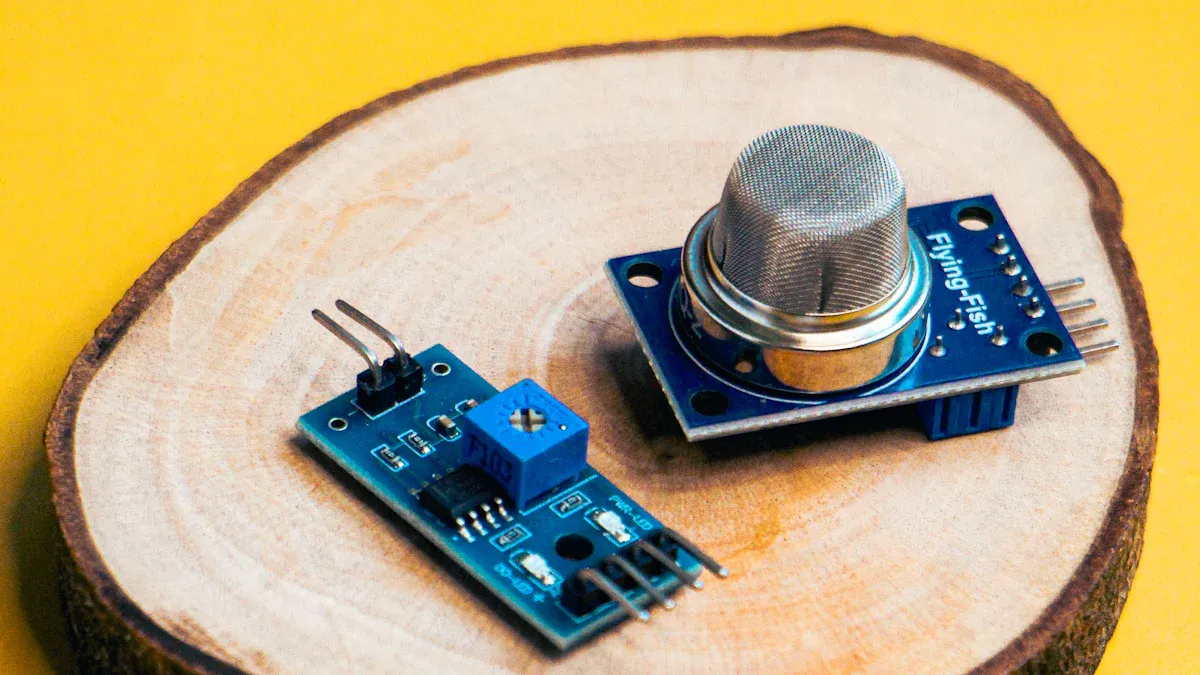
The upstream O2 sensor plays a vital role in your vehicle’s engine management system. It measures the oxygen levels in the exhaust gases before they reach the catalytic converter. This information is crucial for the engine control unit (ECU) to optimize the air-fuel mixture. Here are some key functions of the upstream O2 sensor:
It helps the ECU fine-tune the air-fuel mixture for better combustion efficiency.
The sensor monitors oxygen levels to determine if the mixture is too rich (too much fuel) or too lean (too little fuel).
By providing real-time data, the upstream O2 sensor allows the ECU to adjust the air-fuel ratio to maintain the ideal stoichiometric ratio of approximately 14.7 parts air to 1 part fuel.
This precise control enhances engine performance and reduces harmful emissions, making the upstream O2 sensor essential for modern vehicles.
Location of Upstream O2 Sensor
You can typically find the upstream O2 sensor positioned before the catalytic converter, closer to the engine. Its location allows it to monitor the exhaust gases directly as they exit the engine. Here are some details about its placement:
The upstream O2 sensor is located in the exhaust manifold or just after it, depending on the vehicle’s design.
This positioning ensures that the sensor can accurately measure the oxygen content in the exhaust gases before they undergo any treatment in the catalytic converter.
In most vehicles, you will find the upstream O2 sensor on the exhaust pipe leading away from the engine.
Understanding the location and function of the upstream O2 sensor helps you appreciate its importance in maintaining your vehicle’s performance and emissions control.
Downstream O2 Sensor Overview
Function of Downstream O2 Sensor
The downstream O2 sensor plays a crucial role in monitoring your vehicle’s emissions system. It measures the oxygen levels in exhaust gases after they pass through the catalytic converter. This information is vital for the engine control unit (ECU) to assess the catalytic converter’s performance. Here are some key functions of the downstream O2 sensor:
It helps the ECU determine if the catalytic converter is working efficiently.
If the sensor detects unconverted exhaust gases, it signals a potential failure in the converter’s efficiency.
By providing real-time data, the downstream O2 sensor ensures that your vehicle meets emissions regulations.
This monitoring helps maintain your vehicle’s performance while reducing harmful emissions.
Location of Downstream O2 Sensor
You can typically find the downstream O2 sensor positioned after the catalytic converter in the exhaust system. Its location allows it to accurately measure the exhaust gases once they have been treated. Here are some details about its placement:
For California emissions cars, the downstream O2 sensor is located in the exhaust pipe within the driver side wheel well.
For Federal emissions cars, the downstream O2 sensor is positioned after the main catalytic converter in the exhaust pipe.
Understanding the location and function of the downstream O2 sensor helps you appreciate its importance in maintaining your vehicle’s emissions control system.
Difference Between Upstream and Downstream O2 Sensors
Impact on Engine Performance
The upstream and downstream O2 sensors significantly affect your vehicle’s engine performance. The upstream O2 sensor directly influences how efficiently your engine runs. It measures the air-fuel mixture before combustion. If this sensor malfunctions, it can lead to several issues:
The engine may run too rich, meaning it gets too much fuel. This situation decreases fuel economy and can cause rough idling.
Alternatively, if the engine runs too lean, it gets insufficient fuel. This condition can lead to poor acceleration and even engine stalling.
In contrast, the downstream O2 sensor does not directly affect fuel delivery. Instead, it monitors the catalytic converter’s performance. If this sensor fails, you might notice:
A check engine light may illuminate, indicating a problem.
The vehicle may consume more fuel, especially during city driving.
You could experience unstable combustion, leading to engine stumbles or shakes.
Both sensors work together to ensure optimal engine performance. The upstream sensor adjusts the air-fuel mixture, while the downstream sensor checks the effectiveness of the catalytic converter.
Role in Emissions Control
Emissions control is another critical area where the difference between upstream and downstream O2 sensors becomes evident. The upstream O2 sensor plays a vital role in reducing harmful emissions. It ensures that the air-fuel mixture is optimal before combustion. This process helps minimize pollutants released into the atmosphere. Here are some key points:
The upstream sensor helps maintain the ideal air-fuel ratio, which is crucial for efficient combustion.
By optimizing combustion, it reduces harmful emissions, helping your vehicle meet government-mandated emissions standards.
On the other hand, the downstream O2 sensor monitors the exhaust gases after they pass through the catalytic converter. Its role is equally important:
It checks whether the catalytic converter is functioning correctly. If it detects unconverted gases, it signals a potential failure.
This monitoring ensures that your vehicle complies with emissions regulations, preventing excessive pollutants from being released.
Both sensors provide essential feedback to the engine control unit (ECU). This feedback allows the ECU to adjust the fuel mixture, ensuring that your vehicle meets emissions standards while maintaining performance.
Sensor Type | Location | Purpose |
|---|---|---|
Front O2 Sensor | Before the catalytic converter | Measures air-fuel ratio in real time, adjusts fuel delivery for optimal performance. |
Rear O2 Sensor | After the catalytic converter | Monitors catalytic converter performance, does not affect fuel trims directly. |
Identifying Upstream and Downstream O2 Sensors
Visual Identification
Identifying upstream and downstream O2 sensors can be straightforward if you know what to look for. Here are some tips to help you visually distinguish between the two:
Connector Color: The connectors for each sensor often differ in color.
Wiring Details: The wiring for each sensor can also provide clues about their location.
Here’s a quick reference table to help you identify the connectors and wiring details:
Sensor Type | Connector Color | Wiring Details |
|---|---|---|
Upstream | Green | Red/White & Gray/Light Blue (Passenger Side), Red/Black & Yellow/Light Blue (Driver Side) |
Downstream | Blue | White/Black & Red/Light Green (Passenger Side), Violet/Light Green & Tan/Yellow (Driver Side) |
Tools for Identification
Using the right tools can make identifying O2 sensors easier. Here are some recommended tools and their purposes:
Diagnostic Tool | Purpose |
|---|---|
OBD-II Scan Tool | Retrieve diagnostic trouble codes (DTCs) and identify sensor positions. |
Visual Inspection | Check sensor wires and connectors for damage or corrosion. |
Sensor Heater Circuit Check | Use a multimeter to confirm heater functionality. |
Live Data Monitoring | Verify sensor voltage signals for healthy operation. |
Professional mechanics often use scan tools to differentiate between upstream and downstream O2 sensor faults. For example, a P0142 code indicates an issue with the O2 sensor circuit in Bank 1 (Sensor 3), which is the third sensor downstream from the engine. This information helps mechanics pinpoint whether the problem lies with an upstream or downstream sensor.
By understanding these visual cues and utilizing the right tools, you can effectively identify both upstream and downstream O2 sensors in your vehicle.
Replacing Upstream and Downstream O2 Sensors
Safety Precautions
Before you start replacing O2 sensors, take some important safety precautions to protect yourself and your vehicle. Here are key steps to follow:
Work on a cooled exhaust system: Always allow the engine and exhaust to cool for at least 30 minutes before starting work to prevent burns.
Disconnect the negative battery cable: This prevents accidental electrical shocks and protects sensitive electronics during the replacement process.
Inspect wiring and connectors: Check for any damage or corrosion to ensure proper function of the new sensor.
Step-by-Step Replacement Process
Replacing O2 sensors can be straightforward if you follow these steps. Here’s how to replace an upstream O2 sensor in a typical passenger vehicle:
Gather necessary tools, including:
O2 sensor socket
Ratchet
Torque wrench
Gloves
Small screwdriver
Trim tool set
7mm and 10mm sockets
Complete Torx bit set
Locate the upstream O2 sensor on the vehicle. It is usually found in the exhaust manifold before the catalytic converter.
Disconnect the old sensor’s wiring harness. Use a small screwdriver or your thumb to release the connector.
Remove the old sensor using the appropriate socket and ratchet. Be careful not to damage surrounding components.
Install the new sensor by hand to avoid cross-threading. Then, tighten it with a torque wrench to ensure a secure fit.
Reconnect the wiring harness and ensure it clicks into place and is secure.
For the downstream O2 sensor, the process is similar but may vary slightly in location. Follow these steps:
Disconnect the wiring harness from the O2 sensor.
Remove the O2 sensor from the exhaust pipe using an O2 sensor socket and ratchet.
Install the new O2 sensor by hand, then tighten it with a ratchet.
Reconnect the wiring harness, ensuring it is secure.
If applicable, clear any check engine codes and take the vehicle for a road test.
By following these steps, you can successfully replace both upstream and downstream O2 sensors, ensuring your vehicle runs efficiently and meets emissions standards.
Understanding the differences between upstream and downstream O2 sensors is essential for maintaining your vehicle. The upstream sensor optimizes engine performance by measuring the air-fuel mixture before combustion. In contrast, the downstream sensor monitors the catalytic converter’s efficiency.
Regular checks and replacements can prevent costly repairs. Here are some key points to remember:
Recommended maintenance interval for O2 sensors is around 100,000 miles.
Replacing a $100 sensor is far less expensive than risking a $1,200 catalytic converter replacement.
Neglecting O2 sensor maintenance can lead to decreased fuel efficiency and engine damage.
By staying proactive with your O2 sensors, you can ensure optimal vehicle function and compliance with emissions standards. car speeding
FAQ
What is the lifespan of an O2 sensor?
O2 sensors typically last around 100,000 miles. However, factors like driving conditions and maintenance can affect their lifespan. Regular checks can help you identify when to replace them.
How do I know if my O2 sensor is failing?
Signs of a failing O2 sensor include poor fuel economy, rough idling, and a check engine light. If you notice these symptoms, consider having your sensors checked.
Can I drive with a faulty O2 sensor?
Driving with a faulty O2 sensor is not recommended. It can lead to decreased fuel efficiency and increased emissions. You should replace it as soon as possible to avoid further damage.
How much does it cost to replace an O2 sensor?
The cost to replace an O2 sensor varies by vehicle and location. On average, you can expect to pay between $100 and $300, including parts and labor.
Do I need to reset my check engine light after replacing an O2 sensor?
Yes, you should reset the check engine light after replacing an O2 sensor. This can often be done with an OBD-II scanner or by disconnecting the battery for a short time.