The average gas tank size for cars in the U.S. ranges from 12 to 16 gallons. Compact cars typically hold around 12 gallons of gas, while mid-sized sedans can accommodate up to 16 gallons. Understanding fuel capacity is crucial for you as a car owner or buyer. It helps you gauge fuel efficiency and plan refueling needs. Factors like vehicle type and engine size can influence how many gallons of gas a car can hold.
Key Takeaways
The average gas tank size for cars in the U.S. ranges from 12 to 16 gallons, depending on the vehicle type.
Compact cars usually hold around 12 gallons, while larger sedans can hold up to 20 gallons, affecting how often you need to refuel.
Understanding your car’s fuel capacity helps you plan trips better and manage fuel costs effectively.
Driving smoothly can improve fuel efficiency, regardless of tank size, leading to better mileage.
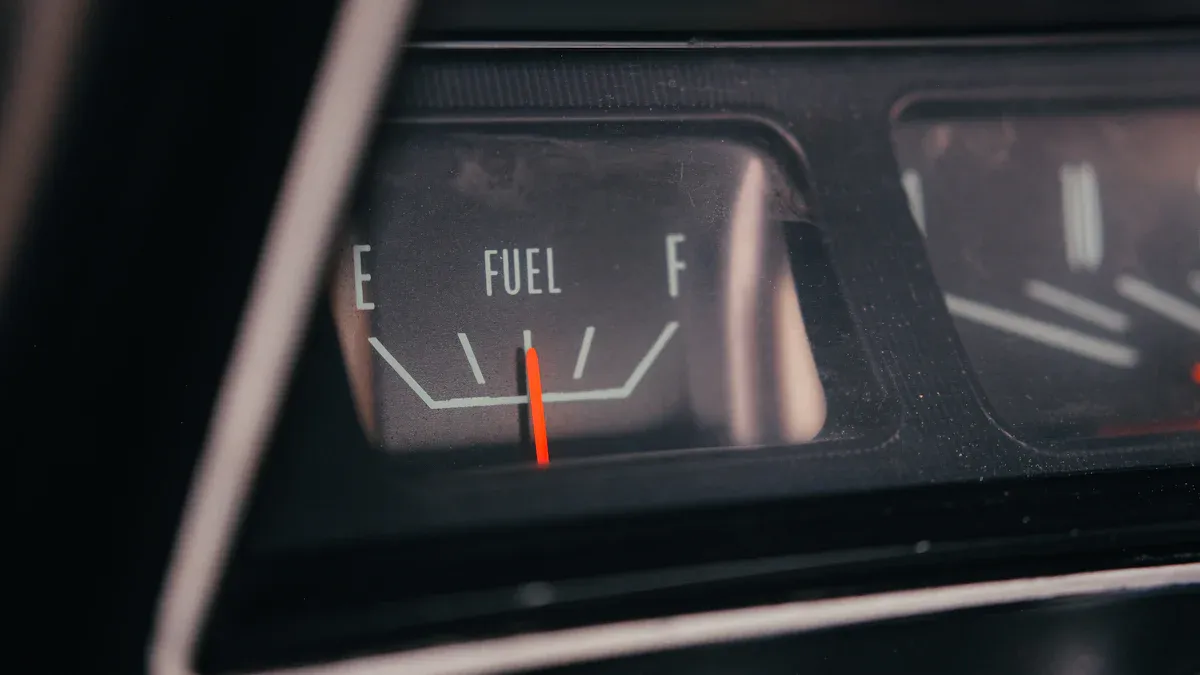
Always check your fuel gauge and refill when it reaches a quarter full to avoid running out of gas.
Average Fuel Capacity
Compact and Subcompact Cars
When you consider compact and subcompact cars, you typically find smaller fuel tank capacities. These vehicles usually hold around 12 gallons of gas. However, some larger compact models can accommodate up to 15 gallons. Here are a few examples of compact car fuel tank sizes:
Honda Civic: 12.4 gallons
Toyota Corolla: 13.2 gallons
Ford Focus: 12.4 gallons
These smaller tanks help keep the overall weight of the car down, which can improve fuel efficiency.
Sedans and Larger Cars
As you move up to sedans and larger cars, the average fuel tank size increases significantly. Mid-sized sedans typically have a fuel tank capacity ranging from 14 to 18 gallons. Full-sized sedans can hold even more, with capacities between 18 to 20 gallons. Here are some examples:
Toyota Camry: 15.8 gallons
Honda Accord: 14.8 gallons
Chevrolet Impala: 18.5 gallons
This increase in fuel tank capacity allows you to drive longer distances without needing to refuel frequently.
SUVs and Trucks
SUVs and trucks generally feature the largest fuel tank capacities. These vehicles are designed for both power and utility, often requiring more fuel for their larger engines. Below is a table showcasing the fuel tank capacities of some popular SUV and truck models:
SUV/Truck Model | Fuel Tank Capacity (gallons) |
|---|---|
Chevrolet Equinox | 14.9 |
Chevrolet Suburban | 31 |
GMC Yukon XL | 31 |
Cadillac Escalade ESV | 31 |
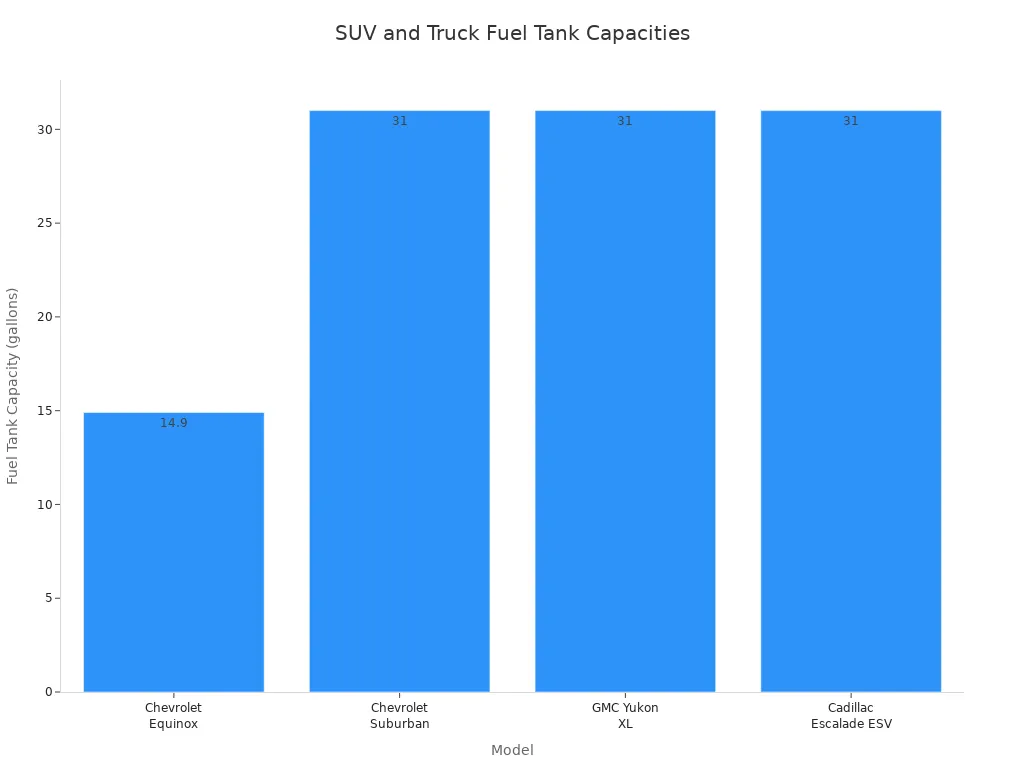
These larger tanks are essential for long road trips or towing heavy loads. As you can see, the average fuel tank capacities vary significantly based on the type of vehicle you choose.
Factors Affecting Fuel Tank Capacity
Vehicle Type
The type of vehicle you choose plays a significant role in determining its fuel tank capacity. Manufacturers often design vehicles with specific purposes in mind. For instance, compact cars typically have smaller tanks, while SUVs and trucks feature larger tanks. Here are some key points to consider:
Weight Reduction: Manufacturers may reduce fuel tank capacity to decrease vehicle weight. This reduction helps meet regulatory standards and improves fuel efficiency.
Safety Considerations: Vehicle design often prioritizes safety. Designers aim to avoid insufficient capacity, which can lead to choices that affect the actual fuel tank capacity.
Design Choices: Different vehicle types require different design considerations. For example, a sports car may have a smaller tank to maintain a lightweight structure, while a family SUV needs a larger tank for longer trips.
Engine Size
Engine size also influences the fuel tank capacity of a car. Generally, larger engines require more fuel, leading to larger tanks. Here’s how engine size affects tank capacity:
Smaller cars usually have a fuel tank capacity of about 12 gallons.
Larger cars can accommodate 15 gallons or more. This increase allows for better performance and longer driving ranges.
Understanding these factors helps you make informed decisions when purchasing a vehicle. You can better assess how much fuel your car can hold and how that impacts your driving habits.
Regulation | Impact on Fuel Tank Design and Capacity |
|---|---|
GB 44495-2024 (China) | Mandates energy consumption labeling, influencing tank capacity to optimize range ratings. |
U.S. CAFE Standards | Encourages manufacturers to enhance fuel efficiency and optimize tank capacity for better fuel economy. |
Stringent emission norms globally push manufacturers to adopt advanced fuel tank technologies. These regulations often include limits on fuel vapor emissions, leading to the development of innovative fuel tanks that incorporate features like improved sealing and vapor recovery systems.
Fuel Efficiency and Mileage
Understanding MPG
Miles per gallon (MPG) measures how efficiently your car uses fuel. It tells you how far you can drive on a gallon of gas. To calculate your MPG, follow these steps:
Drive your vehicle for about 100 miles with a full tank.
Refill the tank to the top with gas.
Divide the number of miles driven by the gallons of gas used.
This calculation helps you understand your vehicle’s fuel efficiency. Keep in mind that the size of your fuel tank does not directly affect your MPG. Instead, it determines how far you can travel before needing to refuel. A larger tank may extend your driving range, but it won’t improve your fuel efficiency.
Impact of Tank Size on Range
The size of your fuel tank plays a crucial role in determining how far you can drive before refueling. A larger tank can potentially increase your driving range. However, fuel economy, or MPG, is essential in determining your actual range. For example, a smaller tank in a fuel-efficient car can achieve a comparable range to a larger tank in a less efficient vehicle.
Consider the following points:
A larger tank means fewer stops for gas, which is convenient for long trips.
A smaller tank may require more frequent refueling, but if your car is fuel-efficient, you might not notice a significant difference in your overall travel distance.
Manufacturers balance fuel tank size with fuel efficiency goals. They often use lighter materials to construct tanks, allowing for larger capacities without significantly increasing vehicle weight. This innovation helps improve fuel efficiency while providing the necessary range for drivers.
In summary, understanding your car’s fuel capacity is essential. The average gas tank size ranges from 12 to 16 gallons, varying by vehicle type. Here are some key points to remember:
Knowing your gas tank size helps you estimate refueling frequency and budget fuel costs.
Driving behavior significantly impacts fuel consumption. Smooth driving leads to better fuel efficiency.
A larger tank provides a longer driving range but may add weight, affecting fuel efficiency.
Consider your driving habits when evaluating your vehicle’s fuel capacity. This knowledge can enhance your trip planning and ensure you never run out of gas unexpectedly.
FAQ
How do I find out my car’s fuel tank capacity?
You can check your car’s owner manual or look for a label inside the fuel door. Many websites also provide specifications for different car models.
Does a larger gas tank mean better fuel efficiency?
Not necessarily. A larger gas tank allows for longer trips without refueling, but fuel efficiency depends on the vehicle’s design and engine performance.
Can I increase my car’s fuel tank capacity?
You cannot easily increase your car’s fuel tank capacity. Modifications may require significant changes to the vehicle’s structure and could affect safety and performance.
What happens if I run out of gas?
Running out of gas can damage your fuel pump and lead to costly repairs. Always keep an eye on your fuel gauge to avoid this situation.
How often should I fill my gas tank?
You should fill your gas tank when it reaches a quarter full. This practice helps prevent sediment buildup in the tank and ensures you have enough fuel for emergencies.