

Dead batteries rarely arrive with warning. A good trickle charger gives you a calmer routine for winter storage, weekend toys, and vehicles that sit between drives, without forcing you to guess about charge level or battery type.
The strongest options here cover different jobs, from dual-voltage garage use to small-maintenance setups for motorcycles and lawn equipment. You get a clearer match when you care about battery chemistry, charging speed, and whether you need to manage one battery or several at once.
Quick Look at the Shortlist

PCHH 12V 24V Car Battery Charger Heavy Duty

PZ.P 15-Amp 12V/24V Smart Battery Charger

4-Pack 1.75A Car Battery Charger 6V 12V

2-Bank 4A 2A Bank Trickle Charger

Battery Tender 6V 12V 2 AMP

1.5A 6V 12V Car Battery Charger
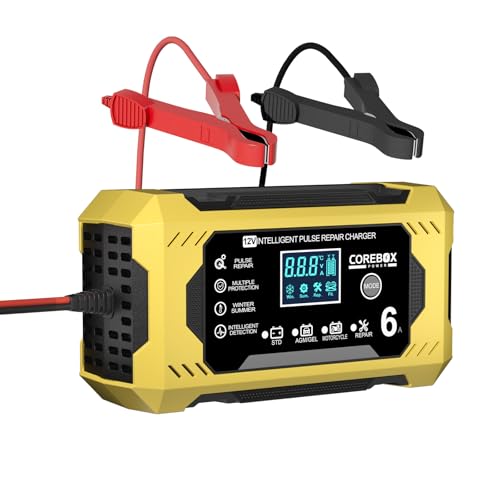
Corebox Battery Charger 6-Amp 12V
More Details On Our Top Picks
PCHH leans into versatility, with 12V and 24V coverage plus a 0 to 15A output range that suits everything from a car left in the driveway to a truck or boat that sits through the season. The metal, ABS, and copper-coil build points to a heavier-duty profile, so it makes more sense in a garage than in a glove box.
The trade-off is size and weight, because a 12.2 lb charger is not something you casually move around every weekend. That said, the automatic maintainer behavior, winter mode, and shutoff logic make it a sensible match for mixed vehicle ownership, especially when you want one unit to handle more than a single battery type.
Strong Points
- Covers both 12V and 24V batteries.
- 0 to 15A output supports different charging needs.
- Automatic maintenance helps with parked vehicles.
- Winter mode fits cold-season storage.
- Heavy build suits garage use.
Things To Consider
- Its weight makes portable use less convenient.
- More charger than a casual weekend driver may need.
- Best kept in a dry storage spot after use.
Feature Snapshot
Who It Suits Best
Garage owners with a truck, car, motorcycle, or boat in the mix will get the most from it, especially during winter storage.
A Better Fit Elsewhere
PZ.P 15-Amp 12V/24V Smart Battery Charger suits shoppers who want a faster, more chemistry-flexible setup for LiFePO4 and lead-acid batteries.
That 9-stage charging system is the real point here, because it gives the charger a more deliberate sequence than a plain maintainer. In plain terms, a stage is a charging step, and more steps usually mean more control over how the battery is brought up and held.
The mix of 12V 15A and 24V 8A output makes it a strong fit for a garage that sees both everyday vehicles and heavier equipment. Compared with the heavier PCHH unit, this one reads as more focused on smart control and chemistry support, especially for LiFePO4 alongside lead acid.
What We Like
- Supports both LiFePO4 and lead-acid batteries.
- 9-stage charging gives finer control.
- 12V and 24V support adds flexibility.
- Temperature compensation helps in changing weather.
- Faster output suits larger batteries well.
Worth Noting
- Its feature set can be more than a simple upkeep user needs.
- Better suited to a fixed charging spot than carry-around use.
Core Details
Made For
You get the most from it in a garage that sees both lithium and lead-acid batteries, plus trucks, cars, and powersport gear.
Swap It Out When
Battery Tender 6V/12V, 2 AMP Lead Acid & Lithium Selectable Battery Charger makes more sense for a simpler long-term storage routine with less charging speed pressure.
This NEXPEAK set stands out because the value comes from the count, not just the charger design. Four units make sense for households with multiple toys in rotation, especially a car, a boat, and a couple of seasonal batteries that need light upkeep.
The LCD screen is useful in a real garage because it lets you see charging status without guessing, and the compact shape makes storage easier than with a heavier utility charger. Compared with the single-unit options above, this is less about brute force and more about spreading coverage across several low-demand batteries.
Upsides
- Four-pack format suits multi-vehicle homes.
- 6V and 12V support broadens compatibility.
- LCD screen improves status visibility.
- Compact size is easier to store.
- Automatic operation keeps use simple.
Minor Gripes
- Lower current means slower charging on larger batteries.
- Four units only matter when you have several batteries to cover.
- Best kept organized, since small chargers can get misplaced.
Details At A Glance
Who Will Love This
You get the best value from it when several motorcycles, boats, or lawn machines need steady, low-rate upkeep.
Another Choice May Suit
Corebox Battery Charger 6-Amp 12V works better for a single garage setup that needs more charging pace in one unit.
Dual-bank charging changes the use case completely, because you can manage two batteries at the same time instead of rotating one charger around the garage. For households with a motorcycle and a lawn mower, or a small workshop with paired batteries, that saves time and keeps things more orderly.
Its 2A-per-bank output is modest, but that suits maintenance better than aggressive charging. Compared with the PZ.P and Corebox models, this one feels less about speed and more about steady attention to two batteries that need to stay ready.
Bright Spots
- Two independent banks add real convenience.
- 6V and 12V support widens compatibility.
- Works for lead-acid and lithium batteries.
- Compact form suits shelf storage.
Areas To Watch
- 2A per bank is better for upkeep than fast recovery.
- More useful in paired-battery setups than solo use.
- Two leads mean a little more cable management.
Technical Sheet
Best Suited To
You benefit most when two batteries live in the same shed, garage, or trailer area and need regular upkeep.
Where A Sibling Pick Shines
PCHH 12V 24V Car Battery Charger Heavy Duty is the better fit for larger single-battery jobs that call for more output and voltage range.
This Battery Tender model is built around slow, careful battery care rather than speed. The 4-step charging routine, including a float stage, suits people who keep a powersports battery parked for stretches and want a charger that settles into maintenance mode after filling it.
Compared with PZ.P’s faster output and Corebox’s broader 6-amp pace, this is the calmer option. The honest read is that you give up charging speed, but you get a familiar low-maintenance approach that works well for seasonal storage and regular top-offs.
Positives
- Selectable support for lead-acid and lithium batteries.
- Float mode suits long storage periods.
- 4-step charging keeps the process orderly.
- Good fit for powersports batteries.
Points To Note
- 2A output is modest for larger batteries.
- Storage-friendly, not built for fast recovery.
- Best used where the battery sits for a while.
Quick Facts
The Right Fit
You should look at it for motorcycles, ATVs, and seasonal equipment that spend more time parked than running.
Look Elsewhere When
Corebox Battery Charger 6-Amp 12V makes more sense for a single battery that needs a little more pace without jumping to a heavy-duty charger.
VibeXtr keeps the output modest at 1.5A, which makes the unit more of a maintenance tool than a fast restore solution. That slower pace suits small batteries in motorcycles, compact cars, and seasonal equipment where gentle charging is the more useful path.
The temperature compensation matters more than it first looks, because cold garages and hot sheds can change how a battery accepts charge. Compared with the Battery Tender unit, this one adds desulfation and recovery focus, so it gives you a little more reach when an older battery has sat too long.
Best Bits
- 1.5A output is gentle for upkeep.
- Works with LiFePO4 and lead-acid batteries.
- Recovery mode helps with very low battery states.
- Temperature compensation supports seasonal use.
Softer Spots
- Slow output is not meant for hurry-up charging.
- Recovery features suit some cases more than others.
- Best kept paired with small or aging batteries.
Core Details
Whose Shelf It Belongs On
It suits you best when small vehicles or weekend machines need patient upkeep in changing weather.
Skip It When
PZ.P 15-Amp 12V/24V Smart Battery Charger is the stronger pick for faster charging and more demanding garage work.
Corebox lands in a practical middle zone, with 6A charging that feels more useful than a tiny maintainer but less intense than the heavier garage units. That balance works well for a car, truck, motorcycle, lawn mower, or marine battery that needs regular attention without a complicated setup.
The winter-friendly angle is easy to understand here, because temperature compensation and desulfator support make the charger more suited to long idle stretches than quick top-offs. Compared with the 1.5A VibeXtr, it should feel noticeably quicker; compared with the PCHH and PZ.P units, it stays simpler to live with.
Highlights
- 6A output gives a solid middle pace.
- Temperature compensation suits changing seasons.
- Works across car, truck, and marine use.
- Desulfator function adds maintenance support.
Small Caveats
- Single-voltage focus keeps it narrower than dual-voltage units.
- Best for one battery at a time.
- Storage works better in a dry, protected spot.
Feature Rundown
Made With In Mind
You get the best match here for a garage that needs a single dependable charger for several 12V vehicles across the year.
Where Shoppers Go Wrong
Battery Tender 6V/12V, 2 AMP Lead Acid & Lithium Selectable Battery Charger suits slower storage care better, especially for powersports batteries left alone for long stretches.
How To Choose The Right Trickle Battery Chargers
Match Voltage And Chemistry First
Start with battery voltage, because a 6V charger and a 12V charger are not interchangeable. Chemistry matters just as much, since some units support lead-acid only while others also handle LiFePO4, the lithium iron phosphate battery type used in many newer setups.
That difference changes who benefits most. A motorcycle owner with one sealed lead-acid battery needs a very different charger from someone maintaining a mixed garage that includes lithium and flooded batteries.
Pick Output To Fit The Job
A lower amp rating is kinder for storage batteries and small powersport units, while a higher output helps when the battery needs more active charging. The trade-off is simple, faster charging usually means less portability or more charger bulk.
For a vehicle that sits for weeks, a 1.5A or 2A unit can make sense. For a truck, boat, or larger garage battery, 6A, 9A, or 15A is a more practical range.
Look For Maintenance Features That Matter
Float mode, auto shutoff, temperature compensation, and desulfation each solve a different problem. Float mode holds charge for storage, temperature compensation adjusts for heat or cold, and desulfation is aimed at battery buildup that can reduce usable capacity.
You do not need every extra feature, but the right mix saves frustration over time. A seasonal vehicle owner may value float and temperature handling most, while a mixed-equipment garage benefits more from broader chemistry support.
Think About Storage And Setup
Wall-mounted or heavier chargers suit permanent spots in a garage, shed, or workshop. Lighter units and compact packs work better when you move between a boat slip, driveway, and storage shelf.
Lead length, clamps, and bank count also change the day-to-day experience. A two-bank charger is worth more than a single-bank unit only when you actually maintain multiple batteries at once.
What To Weigh Before You Choose
Common Shopping Slip Ups
One common mistake is buying around battery type alone and forgetting voltage. Another is choosing a tiny maintainer for a battery that really needs a higher-output charger after sitting unused for months.
Storage habits matter too. A charger that looks neat on paper can feel clumsy in a crowded garage if the cord length, weight, or bank layout doesn’t match your space.
The Upgrade Payoff
Higher-tier models usually cost more because they add smarter charge stages, wider battery support, temperature adjustment, or multi-bank control. Those features are not decorative, they solve specific ownership problems that basic units leave untouched.
The upgrade is worth it when you maintain several vehicles, manage lithium alongside lead-acid, or charge through cold winters. For a single weekend car in mild weather, a simpler charger is often enough.
Closing Thoughts
The right charger depends less on brand names and more on how your battery sits in real life. A heavy-duty garage unit, a small maintainer, and a two-bank setup all solve different problems, and the best match comes from that difference. Choose around voltage, chemistry, and how often you actually need to move the charger. That keeps the purchase practical instead of overbuilt.
