

Home charging changes the shape of daily EV ownership. You stop planning around public stations and start planning around your driveway, garage wall, or a parking spot that sees real use every night.
The six chargers below cover portable entry-level charging, hardwired wall units, Tesla NACS models, and app-connected units for tighter control. You’ll see clear trade-offs in cable length, plug style, amperage, and installation style, so you can match the charger to your car and your home setup.
Quick Look At The Shortlist

EVDANCE Level 1&2 EV Charger 25FT Cable

EMPORIA Level 2 EV Charger 48 Amp White
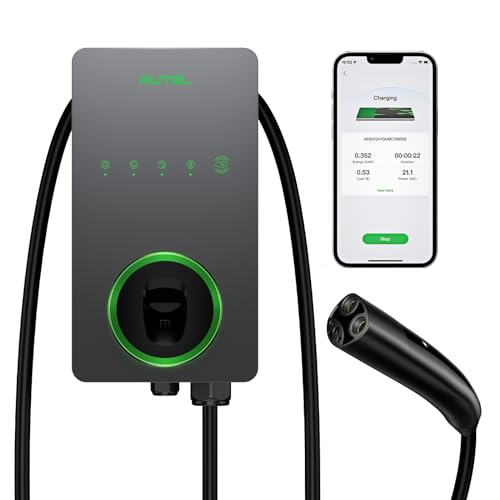
Autel Level 2 Home Smart EV Charger NACS

Autel MaxiCharger Level 2 EV Charger

EVIQO Level 2 EV Charger NACS 40A

Autel 40A Level 2 EV Charger WiFi
More Details On Our Top Picks
The EVDANCE unit makes sense for a home that still needs flexibility more than raw speed. Its 25-foot cable gives you room to reach a driveway, side garage, or awkward outlet location without parking like a puzzle piece.
Because it supports both 120V and 240V use, it suits commuters who want one charger that can travel and stay at home. The trade-off is obvious: portable convenience beats fixed-wall speed, so it’s a smarter match for mixed charging routines than for a dedicated high-output garage setup.
Strong Points
- Long cable reach helps with imperfect parking angles.
- Dual-voltage support covers common home outlet situations.
- Portable format suits garages, shops, and travel stops.
- J1772 compatibility fits many non-Tesla EVs and PHEVs.
Things To Consider
- Portable charging usually means less convenience than a hardwired wall unit.
- The lower-voltage use case will feel slower for daily long-distance driving.
- Carrying and storing the unit takes a little more routine care.
Who It Suits Best
Drivers who split time between home, a garage, and occasional travel stops get the most from this setup.
A Better Fit Elsewhere
Autel 40A Level 2 EV Charger WiFi suits homeowners who want a steadier plug-in wall setup with a J1772 cable and smarter control.
EMPORIA leans into the home garage user who wants more control than a plain plug-in station usually offers. The hardwired format and 48-amp ceiling point it toward fixed installs, especially in a space where charging becomes part of the nightly routine.
That WiFi connection matters because it opens the door to app-based monitoring and scheduling, which is handy for utility-rate timing and general charge tracking. You do give up portability, so this is better suited to a committed wall position than to a setup that moves between locations.
Upsides
- 48-amp output supports a stronger home charging pace.
- WiFi enables app control and session visibility.
- 25-foot cable helps reach varied parking positions.
- Hardwired installation keeps the setup tidy once in place.
Worth Noting
- Hardwired setup usually means a more involved installation process.
- The white finish may show garage dust sooner than darker housings.
- It’s less convenient for households that need a movable charger.
Who It Suits Best
Homeowners with a dedicated parking spot and a desire for app control should look here first.
A Better Fit Elsewhere
EVDANCE Level 1&2 EV Charger 25FT Cable suits drivers who still want a portable charger for mixed outlet use.
For Tesla households, this Autel lands in a useful middle ground: smart enough for modern scheduling, but still straightforward in daily use. The built-in NACS plug means you avoid adapter clutter, and the 25-foot cable gives you room to work around real garage layouts.
Because it’s hardwired and built for indoor or outdoor placement, it fits a fixed charging spot that needs a cleaner long-term setup. One thing worth considering is that the model favors NACS-equipped vehicles, so non-NACS homes will want to check compatibility before leaning in.
Positives
- NACS connection removes adapter hassle for Tesla owners.
- 50-amp ceiling supports strong home charging potential.
- Indoor and outdoor placement broadens installation options.
- Long cable helps with side-entry parking or offset mounts.
Points To Note
- Hardwired installation is less casual than a plug-in unit.
- Non-NACS vehicles need an adapter to make use of it.
Who It Suits Best
Tesla owners planning a permanent garage or exterior mount will get the cleanest fit here.
A Better Fit Elsewhere
EVIQO Level 2 EV Charger NACS 40A works better for Tesla homes that want a simpler plug-in wall station instead of a hardwired setup.
Feature Rundown
This is the heavy-duty option in the group, aimed at homes where charging speed and control matter more than simplicity. The 80-amp ceiling and cloud-linked AI features put it closer to a serious garage system than a basic wall box.
It fits best in households with multiple EVs or a schedule that leaves little room for slow overnight top-offs. The trade-off shows up in setup complexity and the fact that this much capability only makes sense when your electrical plan can support it.
Bright Spots
- High amperage gives you room for strong charging performance.
- Cloud and AI features support scheduled, data-aware use.
- Hardwired format suits a permanent garage installation.
- Indoor and outdoor use broadens placement choices.
Small Caveats
- The advanced feature set adds setup and planning overhead.
- Higher-output hardware is more than many households need.
- Hardwired installs usually call for a more committed setup.
Who It Suits Best
Households with high daily mileage or more than one EV can justify the extra capability here.
A Better Fit Elsewhere
EMPORIA Level 2 EV Charger 48 Amp White suits families that want smart charging without stepping all the way up to 80 amps.
Core Details
EVIQO keeps the setup simple by leaning on a NEMA 14-50 plug and a built-in NACS connector. That combination works well for Tesla homes that want a cleaner wall station without committing to hardwiring.
The 40-amp ceiling sits in a comfortable middle zone, strong enough for daily charging without pushing into the heavier install territory of the Autel 80-amp model. The catch is compatibility: non-Tesla J1772 vehicles need an adapter, so this is a focused choice rather than a universal one.
What We Like
- Plug-in design avoids a more involved hardwired install.
- NACS connector suits Tesla-style charging directly.
- 40-amp output fits many home charging routines.
- Wall-mounted form keeps the garage organized.
Areas To Watch
- Non-Tesla drivers need an adapter to use it.
- Plug-in units can feel less permanent than hardwired stations.
- It’s more specialized than the J1772 choices in this list.
Who It Suits Best
Tesla owners with a standard 240V receptacle and a simple garage layout will feel right at home with this pick.
A Better Fit Elsewhere
Autel Level 2 Home Smart EV Charger NACS suits Tesla owners who want hardwired installation and a slightly higher ceiling.
Among the J1772 units here, this Autel feels like the most straightforward all-rounder. You get a 40A ceiling, WiFi control, and a 25-foot cable, which covers the basics cleanly for many garages.
That balance suits households that want app connectivity without stepping into the more complex cloud-and-AI end of the range. It’s a sensible match for standard wall mounting, though you won’t get the portability of the EVDANCE unit or the higher output of the EMPORIA and MaxiCharger models.
Reasons To Buy
- WiFi adds remote visibility and schedule control.
- 40-amp output covers everyday home charging well.
- 25-foot cable makes awkward parking easier to manage.
- J1772 compatibility fits a wide set of EVs.
Points To Note
- NEMA 14-50 plug use depends on the right outlet already being in place.
- It lacks the portability of a plug-in travel charger.
- Some households may want more output for higher-mileage driving.
Who It Suits Best
Drivers who want a dependable wall charger with app access and broad vehicle compatibility should start here.
A Better Fit Elsewhere
EMPORIA Level 2 EV Charger 48 Amp White suits shoppers who want a harder-charging wall unit with stronger power headroom.
Feature Snapshot
What Matters Most Before Choosing Home Level 2 Chargers
Hidden Buying Traps
Plug type is the first place people go wrong. J1772, NACS, hardwired, and NEMA 14-50 all solve different home setups, so the charger has to match both the car and the outlet plan.
The Case For Spending Up
Higher-tier chargers usually bring stronger amperage, smarter app controls, and longer cables. That extra cost makes sense for long commutes, more than one EV, or garages where clean fixed installation matters more than portability.
A Quick Reality Check
Common Shopping Slip Ups
Many households focus on output first and forget installation. A 48A or 80A unit only helps when the wiring and wall setup are ready for it.
Where The Extra Money Goes
More expensive models usually buy you tighter control, better scheduling, and a sturdier mount-and-forget feel. For daily use, that matters most in busy garages where charging has to work around parking, weather, and routine.
Closing Thoughts
For mixed use and portable charging, the EVDANCE stands out. For fixed wall installs, the EMPORIA, Autel, and EVIQO choices each cover a different lane, from smart control to Tesla-specific convenience. Match the charger to your car, outlet, and parking spot, and the right pick becomes obvious fast.
