

Heavy-duty charging gear matters most when a dead battery can’t wait, whether that’s a truck in the driveway, a tractor in the barn, or a weekend vehicle that sits too long. The right pick saves time, handles different battery types more cleanly, and gives you enough control to match the job instead of forcing a one-setting compromise. These nine options cover quick starts, maintenance charging, and fuller workshop setups, so you can match the charger to the way you actually use your vehicle.
Quick Look At The Shortlist

DEWALT DXAEPS14 Jump Starter with Compressor

Schumacher Electric Wheeled 6A Charger Maintainer SC1364

Associated Equipment US20 6/12 Volt Battery Charger

Schumacher Electric Wheeled 6A Charger Maintainer SC1353

PCHH 12V 24V Heavy Duty Battery Charger
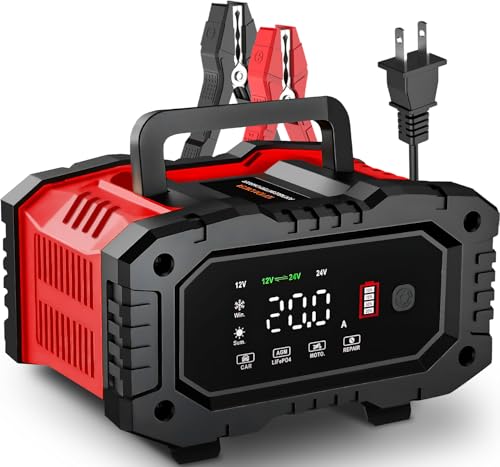
Huiaipaic 20-Amp Car Battery Charger

CRAFTSMAN 15A Car Battery Charger CMXCESM162
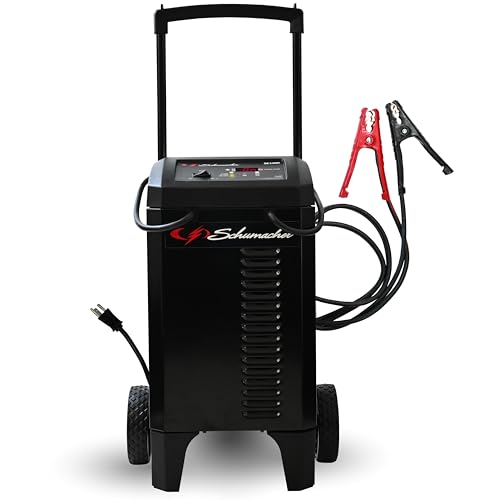
Schumacher Electric Wheeled 6A Charger Maintainer SC1400
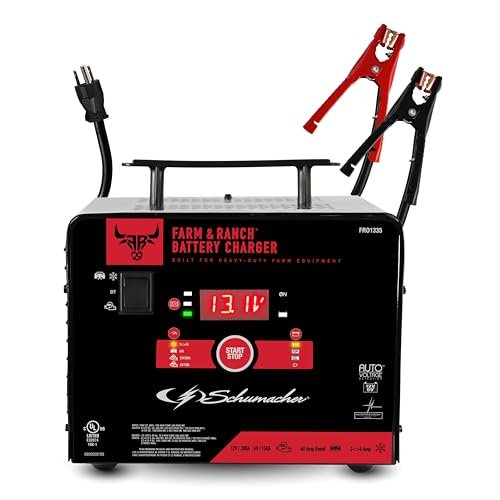
Schumacher Electric 6A Charger Maintainer FR01335
More Details On Our Top Picks
For roadside kits, this one stands out because it does more than wake up a dead battery. The built-in compressor, AC output, and USB charging make it useful on long drives, at a campsite, or in a truck bed where a single box has to cover a few jobs.
The trade-off is size and complexity, so it suits you better than a bare-bones maintainer only when you want backup power as part of the package. Compared with the simpler Schumacher units below, it leans hard toward emergency flexibility rather than garage permanence.
Strong Points
- Jump-start support and air inflation in one unit.
- 500W AC inverter gives you small-device backup power.
- USB outlets help keep phones and tablets moving.
- Handy for road trips, tailgates, and campground use.
- Useful as a stored trunk emergency kit.
Things To Consider
- More of a multi-tool than a simple charger.
- Likely overbuilt for basic battery upkeep.
- Stored accessories and cords can take extra space.
Feature Snapshot
Who It Suits Best
You get the most from this pick in a vehicle where emergency power, inflating tires, and charging gadgets all matter at once.
Where A Sibling Pick Shines
Schumacher Electric SC1364 fits you better for garage-only battery care, since it keeps the focus on charging instead of roadside extras.
This wheeled Schumacher setup suits you well in a garage or workshop where rolling the charger around is part of the routine. Compared with the DEWALT above, it gives up the all-in-one roadside extras and puts its effort into battery charging and maintenance.
The honest read is that the 6-amp pace is deliberate rather than flashy, which works nicely for routine upkeep on a car, SUV, or marine battery. For someone who values easy positioning, that trolley-style body is a quiet advantage.
What We Like
- Wheeled body makes shop movement easier.
- Good fit for charging and maintaining at home.
- More focused than a jump-starter combo unit.
- Useful for vehicles that sit between drives.
Worth Noting
- Six amps is modest for a large battery bank.
- Wheel-based storage needs more floor room.
- Less useful for travel than compact portable picks.
Core Details
Built With In Mind
You’ll appreciate this most in a home garage, especially when the charger stays in one place more than it travels.
Look Elsewhere When
Associated Equipment US20 suits a smaller shop better if you want a more compact, fixed-position charger with a stronger shop-tool feel.
This Associated unit feels aimed at the small shop first, not the casual trunk kit. Compared with the wheeled Schumacher models, it gives you a more straightforward bench-style approach and a tighter footprint for fixed work areas.
The fan cooling is the detail that matters most here, because extended use in a hot garage can be harder on a charger than most people expect. For anyone who keeps batteries on rotation in a workshop, that sort of thermal management is a practical bonus.
Highlights
- Fits a bench or shop counter well.
- Supports both 6V and 12V use.
- Cooling fan helps during longer sessions.
- Cranking assist adds useful starting support.
- Made for hands-on mechanical spaces.
Small Caveats
- More workshop-centric than travel-friendly.
- Shorter cord reach can matter in larger bays.
- Less versatile than combo units with added power features.
Quick Facts
Whose Shelf It Belongs On
You get the best fit here in a small repair bay or home shop where the charger stays put and works hard.
Skip It When
DEWALT DXAEPS14 makes more sense for mobile use, especially when you want jumping, inflating, and device charging in one case.
SC1353 lands in the same wheeled Schumacher family as SC1364, but it leans a bit more toward broad garage utility. That makes it appealing for people who keep older vehicles, tractors, or weekend machines in regular rotation.
The built-in mobility helps in a barn or workshop, though you’ll still want dedicated storage space because wheeled units are never especially shy about footprint. That trade-off makes sense here, since the whole point is easy placement beside the vehicle.
Positives
- Wheeled design helps in busy spaces.
- Useful for charging, maintaining, and starting support.
- Feels well matched to garage and farm routines.
- Good fit for vehicles that spend time parked.
Areas To Watch
- Floor space matters more than with compact chargers.
- Less portable than smaller maintenance units.
- May feel like overkill for a single sedan.
At A Glance
Best Suited To
You’ll like this most if your garage or farm shed needs a charger that stays ready and rolls into position easily.
Another Choice May Suit
CRAFTSMAN CMXCESM162 fits you better for a cleaner middle-ground setup, especially if you want stronger everyday flexibility without going fully shop-heavy.
PCHH is the broad-coverage option in this group, and that’s the main reason it stands out. You get support for 12V and 24V systems, plus a wide spread of lead-acid battery styles, which suits mixed garages and households with more than one kind of machine.
The 12.2-pound body suggests a more substantial bench tool than a featherweight maintainer, so storage and moving it around are part of the ownership picture. For someone who wants one charger to cover cars, bikes, lawn gear, and a boat battery, that trade-off feels reasonable.
Reasons To Buy
- Works across 12V and 24V systems.
- Covers a wide range of lead-acid types.
- Fast and trickle modes serve different jobs.
- Useful for mixed garage setups.
- Substantial build suits regular use.
Minor Gripes
- Heavier body makes storage less casual.
- More charger than grab-and-go accessory.
- Best fit depends on having the right battery chemistry.
Details At A Glance
Right Fit For
You’re the best match for this charger when your garage mixes vehicles and equipment with different voltage needs.
Reach For A Different Pick When
Huiaipaic 20-Amp Car Battery Charger suits you better if faster charging matters more than a broad, all-purpose build.
This Huiaipaic unit is built for speed and breadth, which makes it the strongest-output choice in the list. Unlike the slower 6-amp wheeled models, it gives you a 20-amp 12V mode and a 24V mode for heavier charging jobs.
The chemistry support is the other major reason it matters, especially in garages with LiFePO4 alongside lead-acid batteries. That variety helps you cover more equipment without swapping chargers every time the battery type changes.
Upsides
- Higher output suits bigger charging jobs.
- Works with LiFePO4 and lead-acid batteries.
- Automatic behavior reduces guesswork.
- Good fit for trucks, boats, and utility gear.
- Desulfator function adds maintenance value.
Points To Note
- More power can mean more attention to battery fit.
- Overkill for a lightly used sedan.
- Feature count may feel busy for simple maintenance.
Core Details
Made For
You’ll get the most from this pick in a work area where faster recovery matters and battery types vary from vehicle to vehicle.
Swap It Out When
Associated Equipment US20 is the calmer choice for a compact shop that wants fewer modes and a more traditional charger layout.
CMXCESM162 lands in a very useful middle ground, especially for everyday vehicle care. Compared with the heavier-output Huiaipaic, it keeps the focus on a practical 15-amp 12V charge, along with lower-maintenance modes for 12V and 6V batteries.
That makes it a comfortable fit for someone who wants one charger for a car plus a second machine that still uses 6V. You may find the balance reassuring rather than flashy, and that’s exactly the point here.
Best Bits
- 15-amp 12V charging offers solid everyday speed.
- Maintenance modes help with stored vehicles.
- 6V support broadens the use case.
- Good middle ground between simple and heavy-duty.
Softer Spots
- Less aggressive than higher-output units.
- Not as mobile as a trunk-friendly power pack.
- Better for routine care than rescue work.
Feature Rundown
Who Should Grab It
You’re a good match here if you want a steady-use charger that handles both common car batteries and older 6V gear.
Where Shoppers Go Wrong
Schumacher Electric SC1400 fits you better when you need a larger workshop-style unit with broader start-and-recondition duties.
SC1400 is the Schumacher model that feels most at home in a serious workshop, since it combines charging, maintaining, and reconditioning in one wheeled body. Compared with SC1364, it brings more breadth to the table, so it suits you better when the charger has to do more than simple upkeep.
That broader role comes with the same practical reality as the other wheeled units, namely more storage room and a more permanent setup. For garages, farms, and workshop corners, though, that’s often a fair exchange.
Standout Traits
- Four-in-one function supports varied battery care.
- Wheeled design helps in larger spaces.
- 300-amp 12V start mode adds serious utility.
- 200-amp 6V start mode helps older equipment.
- Good fit for seasonal vehicles and work machines.
Room For Improvement
- Bulk makes it less suited to casual storage.
- Wheeled format needs dedicated space.
- More charger than a simple maintainer.
Quick Facts
The Right Fit
You’ll appreciate this most if your space looks more like a workshop than a driveway, and the charger stays in regular rotation.
Not Your Match When
Schumacher Electric SC1364 makes more sense for lighter garage duties, especially when you want a simpler wheeled maintainer.
FR01335 is the most work-oriented Schumacher in this list, and that shows in how it’s framed for larger equipment as well as everyday vehicles. Compared with the smaller 6A maintainers, it feels like the one you keep around when the battery jobs are less forgiving.
The automatic microprocessor control is the practical appeal here, because it shifts the charger toward hands-off management instead of constant guessing. That’s useful in farm and ranch settings, where you want a charger that keeps up with the task instead of asking for much attention.
Positives
- Built for large equipment and everyday vehicles.
- Automatic control helps manage charge flow.
- Supports both 6V and 12V batteries.
- Useful for farm, truck, and SUV duty.
- Strong fit for heavy-use battery upkeep.
Honest Caveats
- More machine than casual maintainer.
- Probably more charger than a city car needs.
- Works best in a dedicated utility space.
Technical Sheet
Built With In Mind
You’ll get the most from this charger in a barn, utility shed, or garage where larger equipment needs routine battery support.
A Better Fit Elsewhere
CRAFTSMAN CMXCESM162 is the easier match for everyday car care, especially if your needs are lighter and less equipment-heavy.
How To Choose The Right Heavy Duty Battery Chargers
Match Output To The Job
Output matters because a 6-amp maintainer and a 20-amp charger solve different problems. Lower output is gentler and often better for storage, while higher output helps more when you need faster recovery or you’re dealing with larger batteries in trucks, boats, or equipment.
Look at your normal use first, not the flashiest number on the box. A family sedan that sits in the driveway may be fine with a modest charger, while a mixed garage with heavier gear usually benefits from more headroom.
Check Battery Types Before Anything Else
Battery chemistry changes the game more than many people expect. Lead-acid covers common styles such as AGM, Gel, and flooded batteries, while some chargers also handle LiFePO4, which is a lithium iron phosphate battery chemistry often found in newer equipment.
That compatibility detail matters because the wrong charger can make your routine awkward or force you to keep separate gear on hand. The practical move is to match the charger to the battery families already sitting in your garage or workshop.
Think About Portability And Placement
Wheeled units make sense in a garage, barn, or repair bay where the charger stays in one place but still needs to roll across the floor. Compact bench-style units are easier to stash, though they usually give up the easy movement that wheeled models bring.
For trunk storage, roadside work, or travel, a combined power station style option fits better than a larger shop charger. The shape of the charger should follow the space around it, or it starts fighting your routine instead of helping it.
Look Past Charging Alone
Some heavy-duty chargers stop at charge and maintain modes, while others add jump-start support, reconditioning, or even air compression and USB output. Those extras are useful only when they match how you actually use the vehicle.
Extra functions usually mean a bigger body, more controls, and more storage needs. That’s a fair exchange for someone who wants one tool to do several jobs, but it can feel busy for anyone who only wants to keep batteries healthy.
Things Worth Knowing First
Common Shopping Slip Ups
One common mistake is chasing output without checking battery compatibility. A fast charger is nice, but it won’t help much if it doesn’t match the voltage or chemistry in your vehicle or equipment.
Another easy miss is underestimating where the charger will live. Wheeled models and heavier units need floor space, while compact chargers are easier to store but usually offer fewer extras.
What The Higher Tier Buys
More expensive chargers usually bring more than higher amperage. You’re often paying for broader chemistry support, automatic control, reconditioning modes, stronger housings, or added functions like jump-start support and compressed-air capability.
That upgrade makes sense when you maintain several vehicles, work around larger batteries, or want one unit to cover roadside and shop duties. For simple seasonal upkeep, a lighter model often does the job without extra clutter.
Final Thoughts
The right heavy-duty charger depends less on marketing language and more on the way you keep vehicles running. For a garage or farm setup, wheeled Schumacher models and the Associated Equipment US20 make a lot of sense, while the DEWALT power station serves a very different role for travel and emergency support. If you want one tool that fits your routine instead of forcing a new one, the best choice is usually the one that matches your battery types, storage space, and how often you actually use it.
