

Group 35 batteries sit in that awkward but important spot where fit, terminal layout, and starting power all have to line up. You care about that most on cold mornings, in stop-and-go traffic, or any time your vehicle asks a lot from the battery. This roundup focuses on AGM and flooded options with the Group 35 footprint, so you can sort out the right match without wading through marketing fluff. A little care up front saves a lot of roadside annoyance later.
Nine Group 35 Options Worth Comparing
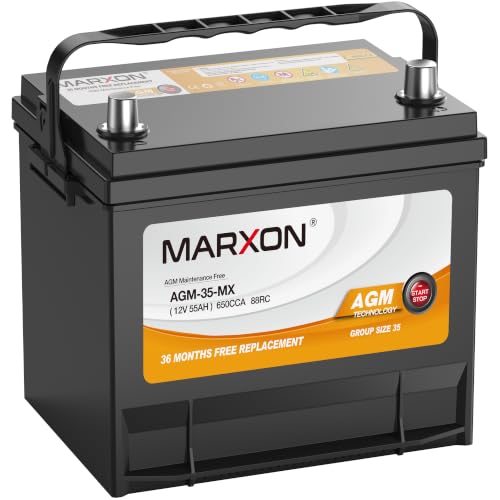
MARXON Group 35 Car Battery 12V 55Ah 650CCA AGM

UPLUS BCI Group 35 AGM Car Battery 12V 55Ah

Goodyear 35-AGM BCI Group Size 35 12V 55 Ah

Autocessking Group Size 35 Start and Stop AGM Battery
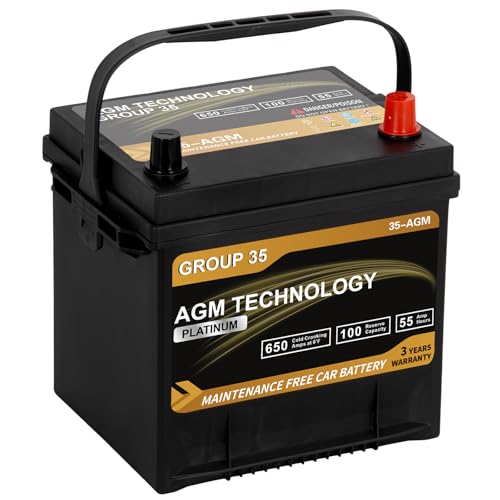
Platinum AGM Car Battery Group Size 35 12V 55Ah

Interstate Batteries Group 35 Car Battery Replacement MT-35 12V

Mighty Max Battery MM-G35 Group Size 35 12V 55Ah
Mighty Max Battery MM-G35 Group Size 35 12V 55Ah

Weize Platinum AGM Battery BCI Group 35 100RC
More Details On Our Top Picks
MARXON keeps the pitch straightforward, and that helps here. You get a Group 35 AGM battery with 55Ah, 650CCA, and 88RC, which fits the sort of daily driving where reliable starts matter more than flashy extras. The left-negative, right-positive layout and stated dimensions make it a practical match for vehicles that already call for this footprint. That said, you still want to compare your old unit carefully, because Group 35 cases can look close while the terminals and height tell a different story.
For commuters and family cars that see regular short trips, the maintenance-free AGM format is the main draw. AGM, or absorbed glass mat, keeps the acid held inside separators rather than sloshing around like a traditional flooded battery, so the battery page reads like a cleaner ownership choice for rougher road use. The trade-off is simple, you pay for that sealed design and should expect to verify fit before ordering. It sits well as a no-nonsense replacement for vehicles that already want 55Ah and 650CCA.
What We Like
- 55Ah and 650CCA give you a familiar middle-ground spec for many everyday vehicles.
- AGM construction suits stop-and-go driving and frequent engine restarts.
- 88RC, or reserve capacity, gives you a useful buffer for accessory use or brief delays.
- The listed left-negative, right-positive layout helps narrow fitment checks fast.
Things To Consider
- Fit still depends on matching dimensions and terminal placement, not just Group 35 naming.
- The listing leans on broad replacement language, so you may want extra care with vehicle confirmation.
- AGM batteries usually cost more than basic flooded units, which can matter on a tight budget.
Feature Snapshot
Who It Suits Best
You get the most from this pick in a standard commuter, crossover, or family sedan that already calls for a Group 35 AGM battery with these exact size and terminal requirements.
Where A Sibling Pick Shines
WEIZE Platinum AGM Battery BCI Group 35 fits better for you when exact dimensions and a longer warranty note matter more than the simpler MARXON listing.
UPLUS follows the same Group 35 formula as MARXON, but the listing leans harder into start-stop use. That matters in city driving, where the battery gets asked to restart the engine again and again instead of just cruising down open roads. The stated 55Ah and 650CCA keep it in the same practical lane, so the real decision comes down to the fit, the feature set, and how much you value the start-stop focus. For most daily drivers, that balance is exactly what you want from a replacement battery page.
The maintenance-free AGM build also suits vehicles that spend a lot of time in traffic or on short errands. Because AGM batteries keep electrolyte absorbed in glass mats, they tend to handle vibration and repeated cycling better than a basic flooded design, though the trade-off is typically a higher upfront outlay. The listing also emphasizes support and claim handling, which can matter more than it sounds when a heavy part arrives damaged or you need help sorting a compatibility question. That said, you still have to confirm the tray space and terminal orientation yourself.
Bright Spots
- Start-stop focus lines up well with modern commuter vehicles.
- 55Ah and 650CCA keep the spec sheet familiar and easy to compare.
- AGM construction is a sensible match for vibration and frequent restart cycles.
- Support language on the listing may reassure first-time replacement shoppers.
Small Caveats
- Like the MARXON, it still depends on exact fitment, not just Group 35 naming.
- The broader listing style does not replace a careful vehicle check.
- AGM can be more expensive than simpler flooded batteries.
Core Details
Made For
You fit this pick best when your vehicle uses start-stop driving often and you want a familiar Group 35 AGM replacement without stepping up to a more specialized battery.
Swap It Out When
Go with MARXON Group 35 Car Battery 12V 55Ah 650CCA if you want the same core size with a more straightforward replacement feel and fewer model-specific cues.
Goodyear stands out here because the reserve capacity is listed at 100 minutes, which gives you a little more breathing room than the MARXON and UPLUS entries. Reserve capacity means the battery’s ability to keep supplying power for a period of time under a defined load, and that can matter in vehicles with more electrical accessories or slower charging patterns. The battery also supports multiple mounting positions, as long as it is not installed upside down, which helps in tighter engine bays. For some vehicles, that flexibility is the difference between an easy fit and a headache.
The trade-off is that this is still a battery you should match by dimensions, terminal layout, and vehicle requirement rather than by name alone. In most garages, that extra reserve capacity will feel more useful than a spec sheet brag, especially during short commutes with heated seats, infotainment, and dash tech drawing power. It also makes sense for drivers who want a little cushion without jumping into a specialty setup. The honest read is that it feels a bit more capable than the two 88RC picks, but the fit check still comes first.
Upsides
- 100RC gives you more reserve time than the earlier 88RC options.
- Multiple mounting positions add flexibility in crowded engine bays.
- 55Ah and 650CCA stay in a familiar replacement range.
- AGM construction suits repeated starts and accessory use.
Areas To Watch
- You still need to verify exact dimensions and terminal orientation.
- Multiple mounting positions help, but they do not solve every fit issue.
- The extra reserve capacity is useful, though not every vehicle needs it.
Details At A Glance
Whose Shelf It Belongs On
You’ll appreciate this most in a vehicle with extra electronics, a tricky battery location, or a daily route that asks for a bit more reserve than the basic 88RC options provide.
Look Elsewhere When
Interstate Batteries Group 35 Car Battery Replacement MT-35 fits better for a simpler non-AGM replacement in a car, truck, or minivan that does not need the extra reserve focus.
Autocessking broadens the fitment conversation a bit because the listing mentions several other group sizes alongside Group 35. That can help you sort through replacement options for a vehicle family with shared battery trays, but it also means you need to stay disciplined about exact sizing before you order. The 12V, 55Ah, 650CCA, 100RC setup keeps it in line with the better-equipped choices in this roundup. For owners who value a broad compatibility note, that mix can be useful.
The AGM design should suit modern vehicles that see frequent starts, short errands, and mixed-weather driving. AGM batteries are sealed and usually cleaner to handle than flooded types, though they still benefit from careful storage and the usual tray cleaning during installation. The catch is that a wider fitment list can tempt hasty decisions, so this is really a battery for methodical shoppers. It feels especially relevant for households maintaining more than one vehicle in the same garage.
Standout Traits
- Broad group-size references may help with replacement cross-checking.
- 100RC gives you a bit more running cushion than the 88RC entries.
- AGM construction fits stop-start use and frequent engine cycles.
- The spec set stays competitive with the stronger options here.
Points To Note
- The longer fitment list still calls for careful confirmation against your tray and terminals.
- Less vehicle-specific framing can make quick decisions a little harder.
- AGM convenience usually comes with a more serious replacement cost.
Quick Facts
Right Fit For
You get the most value from this pick when you already know your vehicle can take a Group 35 AGM battery and you want a spec sheet with a little more reserve than the basic versions.
A Better Fit Elsewhere
Goodyear 35-AGM BCI Group Size 35 12V 55 Ah suits you better when multiple mounting positions matter more than broad compatibility notes.
Daakmax leans into the long-view ownership angle here, and the 36-month warranty note stands out in a category where many shoppers are comparing beyond raw starting power. The dimensions are slightly different from the MARXON and UPLUS entries, so this is a battery that rewards careful measuring rather than casual replacement. You still get the familiar 12V, 55Ah, 650CCA, 100RC setup, which keeps it aligned with higher-reserve Group 35 choices. That makes it feel like a thoughtful option for someone replacing a tired battery in a car they plan to keep.
For vehicles with start-stop systems, the AGM format is the main reason to look here. The sealed design is a better fit for repeated starts and general under-hood vibration than a standard flooded unit, though the trade-off is that installation needs a proper fit check and a little more budget room. The battery page also signals a tapered terminal layout, which helps narrow compatibility but should never replace a quick look at your old unit. In a long-term ownership scenario, that extra attention is worth the minute it takes.
Reasons To Buy
- 36-month warranty language adds confidence for longer ownership plans.
- 100RC is helpful for vehicles with accessories or short charging windows.
- AGM construction suits start-stop use and repeated restarts.
- Stated dimensions and tapered terminals make fit checks more precise.
Worth Noting
- Its dimensions differ from some other Group 35 picks, so measure first.
- The premium-style spec sheet may push it above basic replacements.
- AGM batteries still demand a careful installation and terminal check.
At A Glance
Best Suited To
You suit this battery best when you want a Group 35 AGM replacement with a longer warranty note and you’re comfortable checking dimensions with care.
Another Choice May Suit
Weize Platinum AGM Battery BCI Group 35 is the cleaner match for you if exact listed dimensions matter more than the Daakmax warranty-forward angle.
Interstate takes a different route from the AGM-heavy group above, because MT-35 is a flooded non-AGM battery with 550CCA instead of 650CCA. That lower cranking figure tells you this pick is more about straightforward replacement use than accessory-heavy or start-stop duty. The 24-month warranty note and the brand’s broad vehicle fitment claim make it easy to understand why many people start here for conventional cars, trucks, SUVs, and minivans. In hot to moderate climates, that simpler setup can be enough.
The trade-off is obvious, you give up some reserve and starting headroom compared with the higher-output AGM options. Flooded batteries usually ask for a bit more care around corrosion and spill risk, though they also tend to be easier on the budget. For a vehicle that only needs a dependable replacement without modern stop-start demands, that’s a sensible compromise. The honest read is that it’s less fancy, but that’s exactly why it fits some garages so well.
Highlights
- Flooded construction keeps the replacement straightforward.
- 550CCA is enough for many standard vehicles in mild climates.
- The broad vehicle fitment focus helps simplify shopping.
- It suits common daily-driving needs without extra complexity.
Softer Spots
- It offers less starting power than the 650CCA AGM picks.
- Flooded batteries may need more attention around installation and maintenance.
- It is less suited to start-stop or accessory-heavy use.
Feature Rundown
Whose Shelf It Belongs On
You fit this battery best if you drive a conventional vehicle in a moderate climate and want a simpler replacement rather than a stop-start specialist.
Where A Sibling Pick Shines
UPLUS BCI Group 35 AGM Car Battery fits better for commuters who want the stronger 650CCA AGM setup for frequent starts and heavier electrical use.
Mighty Max gives you a more car-specific angle than most of the list, and that matters for WRX STI owners who want fitment tied to a known model range. The 12V, 55Ah, 650CCA, 100RC setup lands in the same strong AGM bracket as the Goodyear and Daakmax entries, but the compatibility cue makes it feel more targeted. In a performance car, battery fit is less about generic sameness and more about tray space, terminal positioning, and steady output under load. That’s where this one earns attention.
The sealed AGM design also fits the kind of driving that brings vibration, quick acceleration, and a lot of electrical demand into the picture. AGM’s absorbed electrolyte format helps reduce mess concerns versus flooded batteries, and the high-discharge profile is useful for drivers who want consistent starting behavior. The trade-off is that a vehicle-specific listing can be brilliant for one model family and less useful outside it. For the right Subaru owner, though, that specificity is a strength, not a limit.
Best Bits
- Model-range compatibility makes fitment research easier for WRX STI owners.
- 100RC adds welcome reserve time for spirited or accessory-heavy use.
- AGM construction suits vibration and frequent starting demands.
- 650CCA keeps starting output in line with the stronger Group 35 set.
Room For Improvement
- The vehicle-specific angle makes it less universal than the broader picks.
- It still deserves a careful tray and terminal check before ordering.
- The performance-focused setup may be more than a basic commuter needs.
Technical Sheet
The Right Fit
You suit this pick best if your Subaru WRX STI falls within the stated range and you want a Group 35 AGM battery built around that kind of application.
Reach For A Different Pick When
Weize Platinum AGM Battery BCI Group 35 is the broader choice for drivers who want a more general Group 35 fit with explicit dimensions listed up front.
This Mighty Max version follows the same 55Ah, 650CCA, 100RC formula, but the Nissan Murano fitment note gives it a different kind of utility. For Murano owners, the appeal is less about chasing higher specs and more about getting a focused replacement path. That can save time in a category where one wrong measurement sends you back to square one. The AGM build still gives you the sealed, maintenance-light approach that suits modern crossover ownership.
The honest read is that this is a model-specific battery first and a general Group 35 option second. That makes it a smart choice for a household SUV that sees school runs, errands, and weekend trips, because the battery needs to do its job quietly rather than draw attention. The trade-off is the same one you see with the Subaru-tied Mighty Max pick, narrower reach in exchange for easier fit confidence. For a Murano, that’s often exactly the trade you want.
Positives
- Compatibility cue helps Murano owners narrow the search quickly.
- 100RC gives useful backup time for accessory use.
- AGM construction keeps the battery sealed and easier to handle.
- 650CCA sits in the stronger half of the Group 35 field.
Minor Gripes
- The vehicle-specific angle narrows its appeal outside the Murano range.
- Exact fit still depends on matching your tray and terminal layout.
- It may be more battery than a basic commuter actually needs.
Core Details
Who Will Love This
You get the best fit from this pick when your Nissan Murano falls inside the listed range and you want a replacement that already points you toward the right vehicle family.
Skip It When
Goodyear 35-AGM BCI Group Size 35 12V 55 Ah makes more sense for you if you want the same reserve-focused AGM setup with broader under-hood flexibility.
Weize ties several of the smarter comparison points together, and that’s why it sits at the end of the list so naturally. You get 100RC, 650CCA, and a 36-month warranty note, plus explicit dimensions, which makes the fit conversation more concrete than most. In everyday ownership, that clarity matters almost as much as raw starting power because it reduces the odds of ordering the wrong battery. For a lot of Group 35 shoppers, that mix is the safest kind of practical.
The AGM build should suit start-stop systems, short-trip use, and vehicles that want a cleaner, sealed replacement. Compared with the Interstate flooded battery, this one is the more modern-feeling choice, and compared with the model-specific Mighty Max options, it keeps the appeal broad. The trade-off is that the more complete spec sheet can make it feel a little more expensive in spirit, even before you factor in installation. Still, for a vehicle that needs a well-matched, measured replacement, this is the clearest all-around choice in the set.
Strong Points
- Explicit dimensions help reduce fitment guesswork.
- 100RC and 650CCA keep the performance side competitive.
- 36-month warranty language adds a useful ownership marker.
- AGM construction works well for modern start-stop setups.
- Broad fitment framing makes it easier to compare against other Group 35 options.
Honest Caveats
- The broader spec sheet still calls for a careful match with your current battery.
- AGM replacements usually sit above basic flooded units in overall cost.
- Some drivers may not need the extra reserve capacity.
Feature Card
Built With In Mind
You fit this battery best when you want a broad-use Group 35 AGM option with exact dimensions on hand and a longer warranty note in the mix.
Where Another Pick Suits Better
Interstate Batteries Group 35 Car Battery Replacement MT-35 is the better route for you if a simpler flooded battery makes more sense for your car, truck, or minivan.
How To Choose The Right Group 35 Battery
Start With Fit, Not Hype
Group 35 only tells you the general case size, so the tray length, width, height, and terminal position still decide whether the battery belongs in your car. That matters most in vehicles with tight engine bays, because a battery that looks close on paper can still sit wrong in the tray or force the cables into an awkward angle.
The safest habit is simple, compare your old battery’s label and measurements before you think about reserve capacity or branding. Left-negative, right-positive layouts are common here, but not universal enough to skip a look under the hood.
Choose AGM Or Flooded With Your Driving Pattern In Mind
AGM batteries, short for absorbed glass mat, hold electrolyte in fibrous separators, which usually makes them better suited to stop-start driving, vibration, and accessory-heavy use. Flooded batteries are simpler and often easier on the budget, but they can ask for more care and may feel less suited to modern cars with frequent restart cycles.
Your commute matters here. City driving, short errands, and vehicles with lots of electronics tend to favor AGM, while a plain commuter in a mild climate can often live happily with a conventional flooded unit like the Interstate MT-35.
Use CCA And Reserve Capacity As Clues
Cold cranking amps, or CCA, measure starting strength in cold conditions, so a higher figure usually helps when winter mornings get stubborn. Reserve capacity, or RC, tells you how long the battery can keep supplying power under a defined load, which becomes more relevant for short drives, heavier accessories, or delayed charging.
For most daily drivers, 650CCA and around 88RC to 100RC land in a sensible middle zone. That range gives you enough starting confidence without pushing you into a battery that feels overbuilt for a basic commute.
Match The Battery To Your Ownership Style
Some shoppers want a simple, low-fuss replacement, while others care more about warranty length, model-specific fitment, or extra reserve. A battery with a broader spec sheet can be a smarter long-term choice for a car you plan to keep, especially when exact dimensions are listed clearly.
On the other hand, a straightforward flooded battery can be the calmer path for a second vehicle or a mild-climate driver who mainly wants the car to start without drama. The right pick is the one that fits your vehicle and your routine together.
Things Worth Knowing First
Wrong Turns To Avoid
One common mistake is treating Group 35 as the whole answer and skipping the dimension check. Another is overlooking terminal layout, which can turn a close fit into a frustrating install.
You also want to avoid picking only by starting amps. A higher CCA number helps, but the battery still needs the right physical size and the right chemistry for your driving pattern.
The Case For Spending Up
Higher-tier Group 35 batteries usually cost more because they use AGM construction, add stronger reserve capacity, or include more exact fitment information. That extra material and design work can pay off in vehicles that live through short trips, frequent restarts, or heavier electrical use.
The upgrade makes the most sense when your current battery gets worked hard or when you want fewer compromises on a car you plan to keep for years. For a basic runabout in mild weather, the premium may feel unnecessary.
Bottom Line
A good Group 35 battery should do three things well: fit correctly, start reliably, and match the way you drive. The AGM choices here suit modern daily use better, while the Interstate flooded option keeps things simple for a more conventional setup. If you measure carefully and match the chemistry to your routine, you should end up with a battery that feels like a quiet fix instead of a gamble. That’s the sort of replacement worth taking seriously.
