

You need a battery box that matches the space, the battery style, and the kind of abuse your setup sees on the road or water. Group 24 Battery Boxes sound simple, but the differences between a tray, a vented case, a steel relocation kit, and a larger shell can change how neatly everything fits and how much hardware you have to manage. The right pick keeps a battery steady, makes service easier, and avoids the awkward wrestling match that comes with a bad match.
That’s why this roundup leans on shape, material, included hardware, and use-case fit. You’ll see options for RV bays, marine installs, trolling-motor setups, and a few larger cases that give you extra room without turning the setup into a puzzle.
Quick Look at the Shortlist
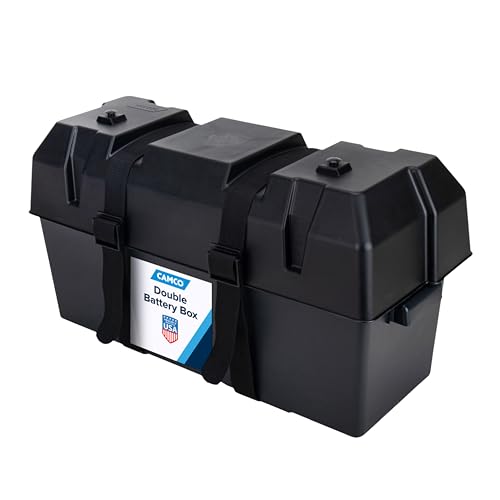
Camco Double Battery Box 55375

Camco Heavy Duty Battery Box Group 24 55362
NOCO Snap-Top BG27 Battery Box

NOCO BT24S Group 24 Battery Tray

Attwood 9069-1 Standard Non-Vented Battery Box

Peastorm Trailer RV Marine Battery Box Group 24 Black

VEVOR Battery Box Group 24-27

VEVOR Battery Box Group 24-31

Seachoice Marine Group 24 Battery Box
More Details On Our Top Picks
Camco’s double box makes sense for setups that need two batteries in one footprint, especially in an RV bay or a marine compartment where space is already doing enough work. The corrosion-resilient polymer body keeps the focus on practical durability, while the interior size gives you a clearer path for matching a pair of 6V GC2 batteries or a pair of Group 24 style batteries.
The trade-off is straightforward, it’s a larger enclosure, so you need room to spare and you need to plan the strap layout carefully. Compared with the slimmer Camco Group 24 box later in this list, this one is for shoppers who care more about capacity and less about keeping the footprint tiny.
What We Like
- Handles two batteries in one housing, which helps cut down on clutter in crowded RV or boat storage areas.
- Polymer construction gives you a lighter feel than metal while still aiming for everyday toughness.
- Interior dimensions are generous enough to support common dual-battery layouts without squeezing everything together.
- Included straps and clamps help you finish the job without hunting for extra hold-down parts.
- Good fit for people who want a tidy, fixed battery spot instead of loose pieces shifting around in transit.
Small Caveats
- The larger body needs more installation space than a single-battery tray or standard box.
- Pairing and securing two batteries takes more planning than a simple one-battery enclosure.
- Like most polymer boxes, long-term appearance can depend on sun exposure and routine cleaning habits.
Feature Snapshot
Who It Suits Best
You’ll get the most from this box if your RV, boat, or utility setup needs two batteries housed together and you have the space to mount a larger case.
Where A Sibling Pick Shines
Camco Heavy Duty Battery Box Group 24 55362 is the cleaner fit for a single Group 24 battery in a more compact bay.
This is the straightforward choice for a single Group 24 battery, and that simplicity helps in cramped RV compartments or standard marine installs. The polypropylene body keeps maintenance simple, while the included lid, strap, clamps, and screws make it feel like a complete little hardware package instead of a bare shell.
Compared with the Camco double box, this one asks for less room and less planning, though you give up the flexibility of a dual-battery setup. The honest read is that it suits ordinary battery swaps well, especially for someone replacing an old case and wanting the mounting pieces in one box.
Highlights
- Group 24 sizing keeps the fit focused and easy to understand.
- Lift-off lid makes routine battery access simpler in tight compartments.
- Polypropylene construction keeps weight down and resists everyday wear better than flimsy thin shells.
- Strap and hardware are included, which helps you finish the install with fewer extra parts.
Points To Note
- It is built around a single battery, so it won’t suit dual-battery layouts.
- The compact form leaves less breathing room than the larger Camco double box.
- Maintenance is simple, though dirt and corrosion residue still call for regular wipe-downs around the terminals and lid area.
Quick Facts
Whose Shelf It Belongs On
You’re looking at a good match for standard Group 24 battery replacement work in boats, RVs, and general-purpose vehicles.
Swap It Out When
Camco Double Battery Box 55375 makes more sense for anyone who needs to store two batteries together in a larger compartment.
The NOCO Snap-Top BG27 feels built for people who want a more rigid case and a cleaner mounting process than a basic box usually gives. Its snap-top format and pilot-hole layout are the real story here, because they can make installation feel less fussy in a boat, RV, or camper bay.
Unlike the Camco boxes above, this one is aimed at Group 27 batteries rather than Group 24, so it suits a slightly different size class. You may find that extra rigidity useful in travel-trailer or marine setups where movement and handling can be more demanding than a parked, low-vibration install.
Strong Points
- Rugged snap-top design helps the case feel more structured during handling and installation.
- Pre-drilled pilot holes can simplify mounting in custom or awkward spaces.
- Group 27 sizing opens the door to a different battery class than the Camco Group 24 boxes.
- Useful for boats, RVs, campers, and travel trailers that need a tidy enclosed battery spot.
Areas To Watch
- It fits a different battery size than the Group 24 boxes, so matching matters.
- The more rigid shell may not matter much in very simple, low-demand installs.
- Custom mounting is easier than a loose fit, but you still need to line up the battery and cable path carefully.
At A Glance
Built With In Mind
You’ll appreciate this more in a travel trailer, camper, or marine setup where a firmer shell and easier mounting path matter.
A Better Fit Elsewhere
Attwood 9069-1 Standard Non-Vented Battery Box stays the simpler route for a standard Group 24 battery in a boat compartment.
Some battery spots don’t need a full box, they need a tougher, simpler platform that keeps a single Group 24 battery planted. That’s the lane the NOCO tray fills, and the 42-inch hold-down strap gives it a more industrial feel than the enclosed Camco and Attwood cases.
Because it’s a tray rather than a full shell, you get less bulk and a more open layout around the battery. The trade-off is obvious enough, you lose the complete enclosure that some marine or RV owners prefer, so this suits people who already have a controlled mounting space.
Upsides
- Tray format keeps the installation lean and avoids unnecessary enclosure bulk.
- Designed for one Group 24 battery, which keeps fit decisions simple.
- Long hold-down strap helps secure the battery in place for travel or rough roads.
- Works well in utility-minded builds where access matters more than a covered box.
Worth Noting
- Open-tray construction offers less surrounding coverage than a full battery box.
- It’s a better match for prepared mounting spaces than for casual drop-in installs.
- Cleaning around the battery can be easier, though exposed setups usually need a bit more attention to cable routing.
Feature Rundown
Best Suited To
You’ll get the most out of this tray in a trailer, RV, or marine compartment where you want a secure single battery without the footprint of a closed box.
Another Choice May Suit
Camco Heavy Duty Battery Box Group 24 55362 is the better fit for a shopper who wants a full enclosure instead of an open tray.
The Attwood box is the straightforward, non-vented option in this roundup, and that matters in boats where you already know the compartment layout you’re working with. Its acid-resistant polypropylene body keeps the design focused on containment, not on extra styling or moving parts.
Compared with the Camco Group 24 box, this one feels like a slightly more marine-leaning solution for a fixed install. The honest read is that it suits people who want a familiar battery case with a mounting strap and don’t need a more complex enclosure.
What We Like
- Non-vented format fits installations that do not require a vented case.
- Group 24 compatibility keeps the fit focused on a common battery size.
- Acid-resistant polypropylene is a practical material choice for marine service.
- Mounting strap adds the kind of stability you want on water or rough roads.
Minor Gripes
- Single-battery design means it won’t suit larger paired setups.
- The simple format is useful, though it offers less room for experimentation than the NOCO snap-top case.
- Like any enclosed battery box, cable routing still deserves a careful look before you tighten everything down.
Details At A Glance
Who Should Grab It
You’re in the sweet spot here if you want a simple Group 24 marine battery box that fits an established mounting space.
Look Elsewhere When
NOCO Snap-Top BG27 Battery Box is the stronger fit for someone who wants a more rigid shell and a Group 27 footprint.
The Peastorm unit stands apart because it leans into steel rather than the polymer-and-polypropylene route used by several other picks here. That gives it a more hardware-forward feel for a battery relocation job in a boat, trailer, kayak, or RV where mounting points matter as much as the case itself.
You’ll also notice side handles, a lockable cover, rubber-rimmed openings, and reserved mounting holes, which make it feel more like a purpose-built relocation kit than a plain box. The trade-off is that steel can be more commitment-heavy than plastic, so it suits people who want a fixed, sturdy setup more than a lightweight drop-in shell.
Reasons To Buy
- Steel construction gives the box a more substantial feel for relocation work.
- Side handles can make placement and adjustment easier during installation.
- Lockable cover and covered openings support a tidier, more intentional layout.
- Reserved mounting points help you build around the box instead of improvising everything on the fly.
Softer Spots
- Steel adds complexity and weight compared with the polymer models earlier in the list.
- The relocation style is more suited to custom work than to basic replacement.
- Painted finishes usually benefit from occasional cleaning and attention around scratches or hardware edges.
Core Details
The Right Fit
This suits hands-on installers who want a battery relocation kit for a boat, RV, trailer, or trolling-motor setup.
Where Another Pick Suits Better
Camco Heavy Duty Battery Box Group 24 55362 is easier territory for a simple battery replacement without the extra steel hardware vibe.
VEVOR’s Group 24-27 box pushes toward versatility, which helps if your battery plans change between boats, RVs, or solar-oriented setups. The PP shell, dual straps, and circuit-breaker layout point to a more feature-heavy case than the simpler Camco and Attwood options.
That extra range is useful, but only when your battery size and wiring plan match the box. You may find it most appealing in setups where you want one case that can cover more than one battery class without moving up to the larger Group 24-31 version.
Bright Spots
- Supports more than one battery class, which adds flexibility for changing setups.
- Dual straps help the battery stay put in mobile environments.
- PP shell gives you a practical, impact-minded housing without the weight of metal.
- Useful for 12V and 24V layouts across marine, RV, and solar applications.
Things To Consider
- The feature set is more involved than a basic Group 24 box, so setup takes a little more attention.
- Size matching still matters, even with the broader compatibility range.
- More parts can mean more to inspect during routine maintenance.
Feature Card
Best Suited To
You’re a strong match for this model if you want a versatile battery box for trolling motors, RV use, or mixed battery planning.
A Better Fit Elsewhere
NOCO BT24S Group 24 Battery Tray is the cleaner choice for a simple single-battery setup that doesn’t need a broader size range.
The Group 24-31 version is the most flexible VEVOR box in this roundup, and that extra range matters when your battery compartment has to serve more than one build plan. It shares the PP shell and dual-straps idea with the smaller VEVOR unit, but the broader size range makes it easier to think about larger marine, RV, or solar setups.
Compared with the Group 24-27 model, this one gives you more breathing room at the top end, which is helpful for owners who don’t want to repaint themselves into a corner later. The catch is the same one that comes with any larger fit window, you still need to confirm the physical space before assuming it’ll slot in neatly.
Best Bits
- Group 24-31 range gives you the widest fit flexibility in this list.
- Works across 12V and 24V battery setups.
- Dual straps support steadier placement in moving vehicles and marine gear.
- PP shell keeps the case lighter than the steel relocation option while still feeling purpose-built.
- Useful for larger battery planning in boats, RVs, and solar-linked systems.
Room For Improvement
- The larger size window makes fit checks more important before installation.
- More versatility can also mean more setup choices to sort through.
- Routine upkeep still involves checking straps, terminals, and nearby hardware for looseness.
Core Details
Who Will Love This
You’ll appreciate this most if you want one box that covers a wider range of battery sizes for marine, RV, or solar use.
Reach For A Different Pick When
Camco Heavy Duty Battery Box Group 24 55362 is the neater choice for a standard single Group 24 battery and a simpler install.
Seachoice keeps the formula nicely familiar, a molded box, a strap, and mounting hardware for a single Group 24 battery. That makes it a comfortable fit for many boat setups where you want the battery held in place without a lot of extra complication.
Compared with the Attwood box, this one feels equally focused on marine duty, with a lid designed to give cables and wires room to pass cleanly. It’s a sensible choice for boaters who want a basic, tidy enclosure and don’t need the broader fit range of the VEVOR models.
Positives
- Molded high-density polyethylene gives the case a solid, marine-minded feel.
- Designed for one Group 24 battery, which keeps the fit straightforward.
- Lid shape helps cables and wires route more cleanly around the battery area.
- Includes strap and mounting hardware, which helps you get to a finished install faster.
Softer Spots
- It stays focused on a single battery, so it won’t suit dual-battery plans.
- The box is simple, which is useful, though it gives up the extra structure of the NOCO snap-top case.
- Plastic boxes are easy to live with, but they still benefit from a periodic check for wear at the strap points.
Feature Snapshot
Built With In Mind
This belongs with boat owners who want a standard Group 24 battery enclosure with the usual strap-and-hardware setup.
Skip It When
VEVOR Battery Box Group 24-31 makes more sense for someone who wants more size flexibility across a wider battery range.
How To Choose The Right Group 24 Battery Boxes
Match The Battery First
Battery size sets the whole search. A Group 24 battery wants a case or tray that actually fits its footprint, while a Group 27 or Group 31 option only makes sense when your battery is that size or your setup genuinely needs the extra room. A too-tight shell makes cable routing clumsy, and too much empty space can leave the battery wandering more than it should.
For most RV and marine installs, the better move is to check the battery label first, then the inner dimensions, then the hardware included. That order saves you from buying a case that looks right in a photo but fights you at installation time.
Choose The Right Material For The Environment
Polymer and polypropylene boxes suit people who want light weight and easy upkeep. Steel adds a sturdier, more build-it-in feel, which helps in custom relocation jobs but usually brings more weight and a little more maintenance attention.
Boaters often lean toward molded plastic or high-density polyethylene because those materials are easier to clean after spray, salt residue, or grime. Steel makes more sense when the mounting point is fixed and the owner wants a harder-working enclosure for a custom layout.
Think About Mounting Style And Access
Some setups need a full box with strap hardware, while others work better with an open tray and a long tie-down strap. The difference matters in cramped compartments, because a tray can keep the installation lean while a closed box gives more surrounding coverage.
Access matters too. A lift-off lid, snap-top design, or wire-friendly opening can save time during maintenance, especially in an RV bay or boat compartment where you don’t want to fight the whole setup just to inspect a terminal.
Plan For The Way You Actually Use It
A weekend camper, a daily tow vehicle, and a trolling-motor boat ask for different things. The first may value simple hardware and easy access, while the second may care more about vibration control, and the third usually benefits from a case that stays steady under motion. That’s why the broader VEVOR models and the Peastorm relocation kit sit in different lanes from the plain Camco box.
Space, moisture, and service frequency should guide the final choice. In a tight compartment, a compact single-battery box often wins on practicality, while larger dual-battery or multi-size options make sense only when the extra capacity is part of the real plan.
Things Worth Knowing First
Mistakes Worth Dodging
One common slip is shopping by brand name alone and ignoring the actual battery size. A Group 24 case won’t solve a Group 27 or Group 31 fit problem, and a tray won’t replace a full enclosure where you really need one.
Another frequent miss is skipping the hardware list. A box may look complete in a photo, but straps, clamps, lids, and mounting pieces change how easy the install feels once you’re in a tight compartment.
What The Higher Tier Buys
Higher-priced models usually spend the extra on stronger shell design, better mounting flexibility, and more included hardware. That matters most in rough-use marine or trailer setups where the battery sees movement, moisture, or repeated service.
Paying up makes sense when the enclosure has to do more than simply sit there. A rigid snap-top case, a steel relocation kit, or a larger dual-strapped box can justify the step up for people who need a cleaner install and a more controlled battery mount.
Closing Thoughts
The best Group 24 Battery Boxes for you come down to size, mounting style, and how much protection your setup really needs. A simple Camco or Attwood box suits a standard battery swap, while NOCO, VEVOR, and Peastorm make more sense when the install is custom, larger, or more demanding. Keep the battery size honest, match the material to the environment, and the rest gets much easier. That’s usually the difference between a tidy install and a weekend of backtracking.
