

Battery maintenance gets a lot easier once you stop treating every charger like the same tool. You need different levels of current, voltage support, and repair logic depending on whether you keep a motorcycle over winter, maintain a boat, or manage a mixed garage full of lead-acid and lithium packs. This roundup focuses on chargers that can also desulfate, meaning they use repair-style charging behavior to help address sulfate buildup on lead-acid batteries. The right one can save you from guesswork and help your batteries stay ready in real-life use.
Quick Look At The Shortlist

BatteryMINDer 1510 12 Volt-1.5 Amp Smart Battery Charger

Haisito 16-Amp Smart Battery Charger (6V/12V/24V)

C20 Adjustable Battery Charger 12V 24V 36V 48V

PCHH 12V 24V Car Battery Charger Heavy Duty

NOCO GENIUSPRO50 50A 6/12/24V Battery Charger & Maintainer

PZ.P 15-Amp 12V/24V Smart Battery Charger, Maintainer

VEVOR Smart Battery Charger, 20-Amp
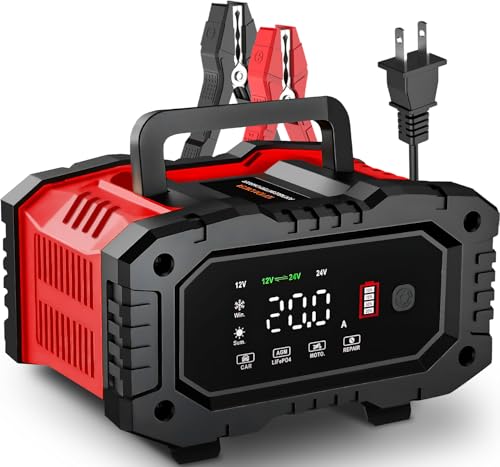
20-Amp Car Battery Charger, 12V/20A and 24V/10A

Multi-Voltage 48V Battery Charger: BLB-C30 14A Max Adjustable Charger
More Details On Our Top Picks
BatteryMINDer 1510 makes sense for a vehicle that spends long stretches parked, especially a motorcycle, classic car, or boat battery that only gets occasional use. The 1.5-amp output is gentle, so it leans more toward maintenance than fast recovery, and that slower pace suits storage better than a busy shop needing quick turnaround.
The built-in ambient temperature sensor matters because battery charging needs shift with weather, and a winter garage can be very different from a warm shed. Reverse-polarity, short-circuit, and over-temperature protection add peace of mind, though the modest current means this is not the pick for someone chasing speed.
What We Like
- Low-current charging helps long-term storage stays calmer on smaller batteries.
- Automatic desulfation gives tired lead-acid packs a better maintenance path.
- Temperature sensing helps charging behavior better match seasonal shifts.
- Protection features suit garages where connections are made in a hurry.
Worth Noting
- 1.5 amps is slow for larger batteries or urgent top-ups.
- It fits maintenance work better than daily heavy-duty charging.
- Smaller output can feel limited for multi-vehicle households.
Feature Snapshot
Who It Suits Best
You get the most value from this charger for a garage battery that sits for weeks at a time and needs careful upkeep rather than quick turnaround.
Where A Sibling Pick Shines
Haisito 16-Amp Smart Battery Charger (6V/12V/24V) suits you better when you want a broader voltage range and more charging speed for a mixed setup.
Haisito lands in a useful middle ground for someone managing cars, boats, RV batteries, and lawn gear without wanting a separate charger for each voltage. The 16-amp ceiling gives it more pace than BatteryMINDer 1510, and the 6V, 12V, and 24V coverage gives you room to keep different battery types in rotation.
The repair logic is aimed at sulfation and acid layering, which matters most for batteries that have sat too long or have started to act unevenly. The trade-off is simple, it is a charger and maintainer, not a jump starter, so a battery that is fully flat or physically damaged still needs a different plan.
Highlights
- Three voltage options cover a wide range of common garage batteries.
- 16 amps gives faster charging than the gentler storage-first units.
- Works across lithium LiFePO4, AGM, gel, and deep-cycle lead-acid types.
- Useful for mixed equipment sheds where one cord needs to do more.
- Repair mode adds value for batteries that have sat unused.
Small Caveats
- It still depends on the battery being recoverable enough for charging.
- The broader feature set adds complexity for first-time shoppers.
- Storage is less convenient than a simpler low-amp maintainer.
Core Details
Built With In Mind
You fit this charger best when your garage includes more than one battery style and you want a single tool that can handle routine upkeep plus repair-minded charging.
Look Elsewhere When
BatteryMINDer 1510 is the calmer choice for long-term storage on one small battery, especially for winter parking where very low current is enough.
C20 stands out because it reaches far beyond the usual 12V garage charger and moves into 36V and 48V territory. That makes it appealing for golf carts, forklifts, and similar equipment where battery systems are larger and more specialized than the average car setup.
The adjustable current and pulse high-voltage mode give you more control than the simple maintainer style used by BatteryMINDer 1510. The honest trade-off is that more control also means more attention, so it suits someone who is comfortable matching the charger to the battery instead of just plugging in and walking away.
Reasons To Buy
- Wide voltage support reaches 12V through 48V systems.
- Pulse repair mode adds a more aggressive recovery option.
- Adjustable current helps tailor charging to different battery packs.
- Well matched to carts, lifts, and other utility equipment.
Areas To Watch
- Broader voltage control can feel like overkill for basic car use.
- Setup makes more sense for hands-on owners than casual users.
- Large equipment charging usually needs more storage space and cable room.
Details At A Glance
Whose Shelf It Belongs On
You get the most from this model if your battery work includes golf carts, shop equipment, or other higher-voltage systems that need more than a basic 12V charger.
Swap It Out When
NOCO GENIUSPRO50 fits better for shop owners who want a more polished high-output charger with clear power supply support and a stronger brand reputation in the category.
PCHH feels built for a garage where durability matters as much as charging behavior. The copper coil, metal, and ABS housing add weight and a more substantial feel, so it suits workshop storage better than a glovebox or travel bag.
Its 12V and 24V auto-detection keeps the routine simple, and the 0 to 15 amp range gives you a middle path between slow maintainer and stronger charger. That said, the heavier build makes sense on a bench, not on a shelf you move around often.
Bright Spots
- Heavy-duty construction suits regular garage use.
- Automatic voltage detection reduces setup guesswork.
- Fast and trickle charge modes cover two common jobs.
- Works with several lead-acid battery styles, including AGM and gel.
- Useful for owners who want one sturdy unit for multiple vehicles.
Points To Note
- Weight makes it less convenient to move around often.
- It is more at home on a bench than in a compact storage area.
- The broader housing feels like extra value only when you need that durability.
Quick Facts
The Right Fit
You match this charger best when you keep it in one place and want a tougher unit for cars, motorcycles, boats, or lawn gear.
Reach For A Different Pick When
PZ.P 15-Amp 12V/24V Smart Battery Charger, Maintainer works better for someone who wants a lighter automatic option with a simpler 9-stage charge path.
NOCO GENIUSPRO50 is aimed at the person who needs serious charging speed and a more professional toolset. With 50A support on 6V and 12V systems, plus 24V coverage, it is far more aggressive than the lower-amp units in this roundup.
The power supply mode, force mode, temperature compensation, and desulfator function make it feel like a shop-grade tool rather than a casual maintainer. The catch is that this level of capability often costs more in space, attention, and overall complexity, so it makes the most sense for frequent use.
Standout Traits
- Very high output suits demanding charging jobs.
- Power supply mode adds flexibility for workshop tasks.
- Temperature compensation helps charging stay more adaptive.
- Force mode can help in situations where standard charging needs a nudge.
- Works with lead-acid and lithium packs across multiple voltages.
Honest Caveats
- More capability means more charger than many households need.
- The premium feature set makes sense mainly for frequent users.
- It is a heavier commitment for simple storage maintenance.
Core Details
Who Should Grab It
You fit this model best if you maintain several vehicles, work in a shop, or want one charger that can handle larger tasks without feeling underpowered.
A Better Fit Elsewhere
BatteryMINDer 1510 makes more sense for a single winter-stored battery that needs slow, gentle upkeep instead of high-output charging.
PZ.P takes a balanced path for people who want a charger that feels straightforward without being bare-bones. The 9-stage charging flow and temperature compensation add a more measured approach, which suits cars, motorcycles, boats, and lawn equipment that spend time parked between uses.
Compared with the heavier PCHH unit, this one reads as easier to keep in a normal garage drawer or cabinet. It still brings enough current for regular battery upkeep, but the trade-off is that it does not chase the raw output of the more aggressive models here.
Positives
- 9-stage charging gives a more structured upkeep routine.
- Handles both 12V and 24V batteries.
- Temperature compensation helps in garages that swing warm or cool.
- Works with LiFePO4 and lead-acid batteries.
Areas To Watch
- Not built for the fastest charging jobs in the group.
- Less rugged than the heavier bench-style PCHH unit.
- Best suited to routine use rather than more demanding recovery work.
At A Glance
Right Fit For
You get the best match here for routine upkeep on a few vehicles, especially when you want automatic charging without a heavy, shop-style unit.
Where A Sibling Pick Shines
NOCO GENIUSPRO50 suits frequent mechanics better, especially when high output and power supply mode matter more than compact simplicity.
VEVOR gives you a clearer view of what the charger is doing thanks to the LCD display, which is handy in a dim garage or during quick checks between other tasks. The 20-amp rating adds useful speed, and the ability to handle lithium and lead-acid batteries makes it flexible for a mixed household.
Compared with PZ.P, this one leans more toward direct feedback and faster turnaround. The trade-off is that the display and multiple battery modes can feel like extra information for someone who only wants a simple maintainer for one stored vehicle.
Best Bits
- LCD display helps you read charging status at a glance.
- 20 amps gives strong everyday charging pace.
- Handles both lithium and lead-acid families.
- Useful for boat, motorcycle, and mower batteries.
Things To Consider
- The display adds value most when you check status often.
- More modes can feel busy for a simple storage setup.
- It suits mixed battery ownership better than a single-use garage.
Feature Card
Made For
You benefit most from this charger when you need one unit for several battery types and you like having a clear display during routine checks.
Another Choice May Suit
BatteryMINDer 1510 is better for a single battery that spends long periods in storage and needs slow, careful maintenance instead of faster charging.
This charger makes a strong case for anyone who wants more output without jumping all the way to a premium shop unit. The 12V 20A and 24V 10A ratings give you a useful speed boost for cars, trucks, and outdoor equipment that need regular attention.
It also covers common battery families, including LiFePO4 and several lead-acid styles, so it fits a busy home garage better than a single-purpose charger. The trade-off is that the feature set stays more utilitarian than polished, which is fine so long as you want function over frills.
Standout Traits
- Strong current output helps larger batteries move along faster.
- Fits a broad mix of vehicles and power equipment.
- Automatic trickle behavior supports maintenance as well as charging.
- Good match for households with several outdoor tools and vehicles.
Minor Gripes
- More utilitarian styling than the cleaner premium units.
- It feels built for function rather than a refined desktop presence.
- The higher output is most useful when the battery size justifies it.
Feature Rundown
Perfect Match For
You fit this pick best when you want practical charging speed for regular household use and you do not need a luxury feature set.
Where Top Tier Costs More
NOCO GENIUSPRO50 costs more because it moves into far higher output, adds power supply mode, and offers a more complete toolset for serious shop work.
BLB-C30 is the broadest-voltage option in the roundup, and that alone makes it worth a close look for people managing golf carts, solar storage, or mixed battery banks. The 12V through 72V range is unusually wide, so it cuts down on the need to own separate chargers for each system.
Its normal and high-voltage pulse modes give you a more involved approach to repair-minded charging than the simpler maintainers in this list. The trade-off is that this kind of flexibility is best for someone who knows the battery system well and wants a single tool for several voltage families.
Reasons To Buy
- Very wide voltage range supports several battery systems.
- Useful for golf carts and solar setups.
- Pulse repair mode adds a stronger recovery option.
- Adjustable design helps one charger serve multiple packs.
Trade Offs
- More specialized than a simple automotive maintainer.
- Best value shows up in larger or mixed voltage setups.
- Less straightforward for casual users who only own one car.
Core Details
Best Suited To
You get the most from this charger when you manage several battery voltages and want one unit that can cover carts, storage banks, and other larger systems.
Another Choice May Suit
C20 Adjustable Battery Charger 12V 24V 36V 48V suits you better if you need a multi-voltage charger but want a slightly simpler ceiling and a more focused utility setup.
How To Choose The Right Desulfating Battery Chargers
Match Voltage To The Batteries You Own
The first filter is voltage, because a charger that fits 12V car batteries may do nothing useful for 24V or 48V equipment. Desulfating chargers tend to look similar on a listing page, but their real value depends on whether you keep one vehicle, a boat, a golf cart, or a mixed garage of battery systems. A wider voltage range costs more and adds flexibility, yet that extra range matters only when your equipment actually needs it.
Pick The Right Charging Pace
Amp rating tells you how quickly current can move into the battery, and it matters more than many shoppers expect. Lower-amp units, like the BatteryMINDer 1510, suit storage and gentle upkeep, while higher-amp models such as NOCO GENIUSPRO50 or the 20-amp options fit busy garages and larger battery banks. Faster is not always better, though, because a slow maintainer often makes more sense for winter storage or seasonal equipment that sits for months.
Look Closely At Repair Modes
Desulfating is the feature that separates this category from basic chargers, but the details vary a lot. Some units use pulse repair or high-voltage modes aimed at sulfate buildup, while others lean more toward gentle maintenance and temperature-aware charging. That difference matters most for lead-acid batteries that have been neglected or stored too long, yet it also means you should treat the repair function as a helpful tool, not a promise.
Favor The Shape Of Your Routine
A charger only feels right when it matches how you actually live with your equipment. If you keep a motorcycle tucked away all winter, a small maintainer with temperature compensation makes sense; if you rotate among a truck, lawn mower, and boat, a midrange smart charger gives you more room to work. The best choice is the one that fits the way your battery gets used, stored, and checked.
A Quick Reality Check
Hidden Buying Traps
A common mistake is buying a charger for the battery type before checking the voltage range, which creates a mismatch that wastes money and shelf space. Another easy miss is choosing a repair-focused model for a battery that is simply too far gone, because desulfation can help with maintenance-minded recovery but it cannot solve every failure. Storage matters too, since heavier chargers are less pleasant to move around a crowded garage than compact maintainers.
The Upgrade Payoff
Higher-tier models usually cost more because they bring stronger output, wider voltage coverage, temperature compensation, and more charging modes. That extra money starts to make sense once you manage multiple vehicles, work on larger batteries, or want one charger to double as a more serious workshop tool. For a single seasonal battery, the upgrade can be overkill, but for a mixed garage it often pays back in convenience.
Final Thoughts
You do not need the flashiest charger here, you need the one that matches your batteries and your routine. A low-amp maintainer works well for winter storage, while a stronger multi-voltage unit earns its keep in a garage with cars, boats, carts, or utility gear. The short version is simple: pick for the battery you own today, not the one you hope never fails tomorrow.
