

Long drives, van builds, boats, and RV setups all run into the same problem, your auxiliary battery needs steady charging without turning the wiring into a headache. A good Dcs To Dc Battery Charger helps you move power from an alternator or solar input into a house battery in a way that fits real travel, not just driveway planning.
Some options are built for simple dual-battery jobs, while others add Bluetooth, MPPT solar handling, or broader battery compatibility. The picks below make those differences easier to compare so you can match the unit to your vehicle, your battery chemistry, and how much control you want.
Quick Shortlist For Different Installations
Victron Energy Orion-Tr Smart DC to DC Charger 12/12V 30A

Victron Energy Orion-Tr Smart DC to DC Charger 12/12V 18A

Victron Energy Orion-Tr Smart DC to DC Charger 12/12V 30A

BLUETTI Charger 1 560W Alternator Charger
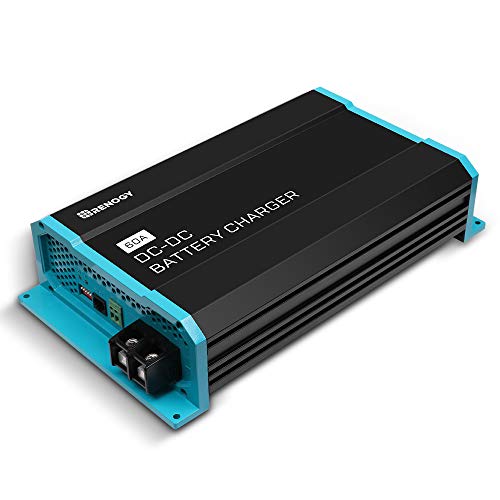
Renogy 60A DC-DC Battery Charger 12V for Lithium/AGM/Gel

Victron Energy Orion-Tr DC to DC Converter 12/12-Volt 9 amp

Renogy Smart 30A DC-DC MPPT Battery Charger 12V Dual Input
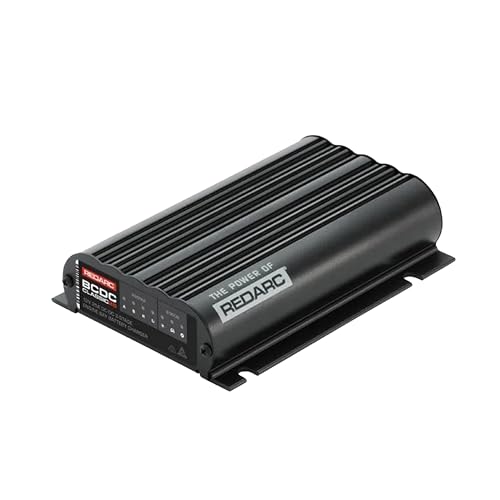
REDARC Dual Input 25A in-Vehicle DC to DC Battery Charger
More Details On Our Top Picks
Bluetooth control gives this Victron a practical edge for van builds, boats, and service batteries tucked into hard-to-reach places. The 30A rating suits setups that need stronger charging than a lighter 18A unit, while the non-isolated design keeps the package focused and direct.
That makes sense for travelers who want app visibility without turning the install into a science project. The honest trade-off is that non-isolated wiring fit is narrower, so this version belongs in systems that already match that layout.
Strong Points
- Bluetooth monitoring is handy for checking charge behavior from a phone or tablet.
- 30A output supports faster replenishment for larger auxiliary batteries.
- Three-stage charging suits owners who want a more controlled charge profile.
- Non-isolated construction can simplify planning in the right dual-battery setup.
Points To Note
- Non-isolated design limits where it fits best.
- App-based control adds convenience, but it also adds another layer to manage during setup.
- The more advanced feature set makes it a less casual choice than the simpler 9A converter below.
Feature Snapshot
Who It Suits Best
You get the most from this unit in a dual-battery vehicle, camper, or boat where app oversight and stronger output matter more than bare-bones simplicity.
Where A Sibling Pick Shines
Victron Energy Orion-Tr Smart DC to DC Charger 12/12V 18A suits you better when the install is tighter and you do not need the extra charging headroom.
This isolated version is the quieter, more cautious sibling in the Victron lineup. The 18A output gives you a gentler pace than the 30A units above, which can suit compact auxiliary systems where you want separation between circuits.
That isolation matters in vehicles or boats with more complicated grounding needs, and it’s the sort of detail you appreciate later rather than on day one. The trade-off is simple, less output means slower charging, so this is not the pick for large batteries that need fast recovery after long stops.
Highlights
- Isolated design helps keep input and output circuits separated.
- Bluetooth support gives you easier day-to-day visibility.
- 18A output fits lighter auxiliary charging jobs without overcommitting space.
- Victron’s three-stage approach should suit careful battery management in routine travel use.
Worth Noting
- Output is lower than the 30A Victron options in this list.
- It is better matched to modest charging needs than high-demand RV banks.
- The isolated build can add planning complexity during installation.
Core Details
Built With In Mind
You fit this best in a smaller van, boat, or auxiliary battery setup where circuit separation matters more than charging speed.
Look Elsewhere When
Victron Energy Orion-Tr Smart DC to DC Charger 12/12V 30A makes more sense for you when a bigger house bank needs stronger replenishment on the move.
Same 30A output as the first Victron, but this isolated version is built for situations where you want cleaner separation between charging circuits. That is a real advantage in mixed vehicle electrical systems, especially on boats or upfit rigs where wiring paths can be less predictable.
Bluetooth still gives you the convenience of app-based monitoring, and the three-stage charging profile keeps the unit in the more technical end of the category. The catch is that isolation and app control add value, yet they also place this squarely in the hands of people who will use those features.
Upsides
- 30A output offers solid charging speed for larger service batteries.
- Isolated design helps in setups that call for electrical separation.
- Bluetooth support adds visibility without opening the enclosure.
- Three-stage charging suits more deliberate battery care.
- Strong fit for vehicles and boats with more involved wiring plans.
Small Caveats
- It asks more from the installer than the simpler non-isolated version.
- The feature set may be more than a basic commute build needs.
- Maintenance is mostly about keeping the install tidy and protected, not the unit itself.
Details At A Glance
Whose Shelf It Belongs On
You should look here if your build needs stronger charging and isolated circuitry in the same package.
Swap It Out When
Victron Energy Orion-Tr Smart DC to DC Charger 12/12V 18A is the calmer fit for smaller systems that do not need as much output.
BLUETTI takes a different route from the Victron units above, because this one is built around charging portable power stations from a vehicle alternator. The 560W rating gives it a much stronger road-trip profile, and that matters when you rely on stored power for camping gear, job-site tools, or long weekends away from outlets.
Compatibility with a wide range of power stations helps, though you still want to verify your exact model before planning the install. The trade-off is that this is less about traditional dual-battery simplicity and more about fast energy transfer for portable systems.
Reasons To Buy
- 560W output is built for faster charging on the move.
- Made for portable power stations, not just standard house batteries.
- Works with a broad range of third-party power stations, according to the listing.
- Useful for travel days where alternator power would otherwise go unused.
Areas To Watch
- You need to confirm fit with your exact power station.
- It is less of a plain dual-battery charger than the Victron and Renogy picks.
- Installation planning matters more because of the higher output and system-specific use case.
Core Details
Perfect Match For
You suit this best when your travel setup revolves around a portable power station rather than a classic auxiliary battery bank.
Another Choice May Suit
Renogy Smart 30A DC-DC MPPT Battery Charger 12V Dual Input fits better for van owners who want both solar and alternator charging in one unit.
Renogy’s 60A unit is the muscle car in this roundup, built for RV and boat installations that need serious output. The three-stage charging approach and broad battery-chemistry support make it a practical fit for lithium, AGM, and gel banks, so you’re not boxed into a narrow setup.
That higher current can shorten recharge time for bigger house batteries, which is exactly why full-time travelers often look in this direction. The trade-off is size and install complexity, since a high-output charger asks more from the electrical layout and from cable planning.
Best Bits
- 60A output is strong enough for demanding auxiliary battery banks.
- Supports lithium, AGM, and gel chemistries.
- Three-stage charging helps keep the charging process controlled.
- Protection features add peace of mind in more demanding vehicle systems.
- Smart alternator readiness makes it a solid match for modern rigs.
Room For Improvement
- The higher current level can be more than smaller builds need.
- Installation planning matters, especially for cable routing and enclosure space.
- Owners who want compact, simple charging may prefer the Victron 18A or 9A picks.
Key Specs
Best Suited To
You get the most from this model in RVs, expedition rigs, or boats that carry larger house banks and need more charging muscle.
Where A Sibling Pick Shines
Victron Energy Orion-Tr Smart DC to DC Charger 12/12V 30A is the easier fit for you if the install is smaller and app visibility matters more than raw output.
This is the smallest, simplest option in the group, and that’s exactly where it earns its place. With 9A output and a 110W rating, it suits modest dual-battery setups where space is tight and you want a quieter electrical footprint than the larger chargers above.
Victron also lists IP43 protection, which means splash resistance when it’s installed correctly, and that matters in compartments that may see a little moisture. The trade-off is obvious, lower output and a more modest feature set, so it’s a careful fit rather than a heavy-duty answer.
Bright Spots
- Compact size works well where mounting space is limited.
- 9A output suits light auxiliary charging needs.
- IP43 protection adds some reassurance in damp-adjacent locations.
- Simple design keeps the setup focused.
Softer Spots
- Lower output means slower charging for larger batteries.
- It will feel basic next to the Bluetooth-equipped Orion-Tr Smart models.
- Keeping the unit clean and the surrounding install dry helps preserve that compact setup.
At A Glance
Right Fit For
You fit this best in a compact vehicle build or a small auxiliary system where space and simplicity matter more than speed.
Reach For A Different Pick When
Victron Energy Orion-Tr Smart DC to DC Charger 12/12V 30A suits you better if your battery bank is larger and you want Bluetooth oversight.
This Renogy stands out because it blends alternator charging with solar input, which is a smart layout for off-grid vans and RVs. MPPT, or maximum power point tracking, helps the solar side work more efficiently by keeping the panel input near its best operating point, and that’s the sort of detail that pays off over long travel days.
The 30A charge rate is a middle ground between the smaller Victron units and the heavy-duty 60A Renogy above. That balance makes it attractive for people who want flexibility more than raw force, though the extra input options do mean a more involved install.
Positives
- Dual input gives you alternator and solar charging in one unit.
- MPPT support helps the solar side work more efficiently.
- 30A output keeps charging practical for mid-sized systems.
- Supports several common battery types, including lithium, AGM, gel, and flooded.
- Well suited to travel rigs that spend time off-grid.
Minor Gripes
- More inputs usually mean more wiring decisions.
- The setup is less straightforward than a simple alternator-only charger.
- Routine upkeep is mostly about keeping the install tidy and the vents clear.
Feature Card
Who Should Grab It
You suit this best if your RV or van setup leans on both driving and solar power for the house battery.
Where Another Pick Fits Better
REDARC Dual Input 25A in-Vehicle DC to DC Battery Charger suits you better when solar-first charging priority matters more than a simpler alternator-plus-solar balance.
REDARC goes after the more thoughtful end of the market, where solar priority and battery flexibility matter as much as raw output. The 25A rating is modest beside the Renogy 60A model, but the MPPT solar regulator and Green Power Priority approach make it appealing for rigs that want solar to carry more of the load.
Support for 12V and 24V systems, plus a wide battery list that includes LiFePO4, gives it unusual range for an in-vehicle charger. You may find it especially appealing in mixed-use adventure vehicles, though the more capable feature set also puts it in a higher-complexity bracket than the simple Victron 9A converter.
What We Like
- Dual input supports both alternator and solar charging.
- Green Power Priority favors solar first, which can reduce alternator reliance.
- MPPT helps the solar side work more efficiently.
- 12V and 24V compatibility broadens where it can be used.
- Battery support spans lithium, AGM, gel, lead acid, calcium, and LiFePO4.
Honest Caveats
- It is more complex than a single-input charger.
- 25A output is not aimed at the fastest large-bank recovery.
- The install deserves careful planning so the dual-input design works cleanly.
Feature Rundown
The Right Fit
You fit this best if you want a serious in-vehicle charger that treats solar as a first-class power source.
Skip It When
BLUETTI Charger 1 560W Alternator Charger is the more direct fit for travelers who care more about fast portable-station charging than battery-system flexibility.
How To Choose The Right Dcs To Dc Battery Charger
Match Output To Your Battery Size
Output current, measured in amps, shapes how quickly the charger can move energy into your auxiliary battery. A 9A unit like the Victron Orion-Tr DC to DC Converter fits light use, while 30A and 60A models make more sense for larger house banks in RVs, boats, and expedition builds.
More amps usually means faster recovery after a drive, but it also asks more from cabling, mounting space, and the rest of the electrical system. The right choice is the one that matches your battery size instead of forcing a heavy charger into a small setup.
Decide Whether Isolation Matters
Isolation means the input and output circuits stay electrically separated, which helps in some vehicle and marine systems. Victron’s isolated 18A and 30A models suit those layouts well, while the non-isolated 30A option is cleaner for setups already designed that way.
That difference sounds technical, but it shows up in real ownership, especially during installation and troubleshooting. If your wiring plan is already mapped out, the non-isolated route can stay simpler; if the system is more complex, isolation can be worth the extra planning.
Think About Solar And Monitoring
Some chargers do nothing but move alternator power, and that is enough for plenty of daily drivers. Others, like the Renogy Smart 30A DC-DC MPPT Battery Charger and REDARC Dual Input 25A in-Vehicle DC to DC Battery Charger, also accept solar, which helps in off-grid vans and RVs that park for long stretches.
Bluetooth matters too, especially when the charger sits under a seat, in a rear compartment, or inside a packed utility bay. App visibility does not make the install easier by itself, but it does make it easier to understand what the charger is doing once everything is in place.
Choose For The Way You Travel
Commuters and weekend campers often do fine with a smaller or midrange unit, since they only need the house battery topped up after driving. Full-time travelers and larger rigs usually benefit from stronger output, dual-input flexibility, or both.
That is why the BLUETTI Charger 1 suits portable power stations so well, while the Renogy 60A model makes more sense for larger battery banks. The best fit is the charger that matches how often you drive, how much you store, and how hands-on you want the system to be.
Things Worth Knowing First
Wrong Turns To Avoid
A common mistake is choosing output based only on size, then overlooking the battery chemistry and wiring layout. Another is buying a dual-input unit for a build that never gets solar, which adds cost and complexity for no real benefit.
It also helps to check whether your travel setup needs Bluetooth, isolated circuits, or a plain alternator-to-house-battery path. A charger that sounds impressive on paper can turn awkward fast if it does not match the actual vehicle layout.
The Upgrade Payoff
Higher-tier models usually cost more because they pack in stronger output, more charging stages, isolation, app control, or solar management. Those features matter most in vehicles and boats that spend long hours away from shore power and need the system to do more on its own.
That extra spend makes sense when the charger becomes part of daily life rather than an occasional backup tool. For a simple weekend setup, the smaller Victron and BLUETTI options keep things easier and cheaper in practical terms, without asking you to overspec the build.
Closing Thoughts
You have a lot of room to match this category to your real travel pattern, and that is the good news. A compact converter suits a simple auxiliary battery, a Bluetooth-equipped Victron fits a more hands-on install, and the higher-output Renogy and REDARC units give you more headroom for bigger off-grid plans. Choose the one that fits your wiring, your battery type, and how much control you want once you’re already on the road.
