

You need the right coating for the job, not just another can of marine paint. The picks below cover hull cleaning, bilge protection, bottom paint, barrier coating, and touch-up work, so you can match the product to the part of the boat that actually needs attention.
That matters most before launch season, after a long haul in brackish water, or during a cockpit-to-keel refresh that has to hold up to grime, salt, and abrasion. The list leans toward practical choices for owners who want fewer surprises and cleaner results.
Quick Look At The Shortlist

STAR BRITE Instant Hull Cleaner 32 Oz Gel Spray

TotalBoat TotalBilge Marine Epoxy Bilge Paint

TotalBoat Thinner 100 Brushing Solvent

Rust-Oleum Marine Boat Bottom Flat Black Antifouling Paint

TotalBoat JD Select Water-Based Boat Antifouling Bottom Paint

Tuff Coat Medium Texture Rubberized Non-Skid Deck Coating
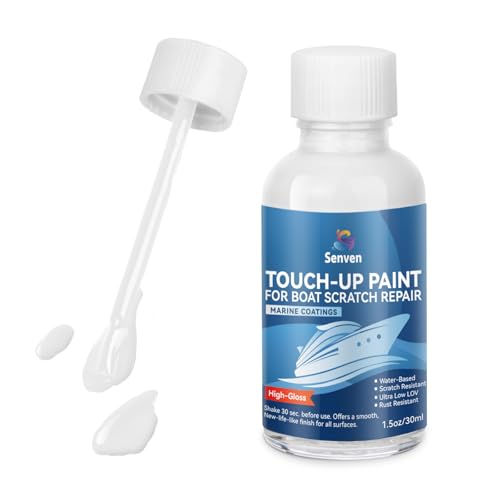
SENVEN Boat Paint Touch Up Pen High-Gloss Boat Scratch Repair

TotalBoat TotalProtect Marine Barrier Coat Epoxy Primer
More Details On Our Top Picks
Hull cleanup is where gel formulas earn their keep, and this STAR BRITE bottle is built for that kind of work. The thicker consistency helps it stay where you put it on fiberglass, plastic, or painted surfaces, which matters on vertical sides that shed thin liquids fast.
For boats that pick up scum lines, dock grime, or stubborn discoloration during a season in the water, that cling time is the main draw. The trade-off is simple, though, since a hull cleaner solves surface buildup and not coating wear, so it belongs in your maintenance kit rather than your paint shelf.
Strong Points
- Gel texture helps the cleaner stay on vertical hull sections.
- Works across fiberglass, plastic, and painted surfaces.
- Good fit for seasonal washdowns after dock exposure.
- Targets the kind of grime that sticks around a waterline.
Things To Consider
- It cleans hull surfaces, but it does not replace protective coating work.
- Gel cleaners usually need careful rinse control around hardware and trim.
Feature Snapshot
Who It Suits Best
You get the most from this on a boat that needs regular hull cleaning between haul-outs or before a sale-ready refresh.
Where A Sibling Pick Shines
TotalBoat TotalProtect Marine Barrier Coat Epoxy Primer is the smarter companion for owners who need surface preparation and underwater protection rather than cleanup alone.
Bilges and engine spaces see a harsher kind of wear than topsides, so the epoxy coating here is aimed at the messy end of ownership. It’s designed for brush, roller, or spray application, which gives you some flexibility during a refit in tight compartments or on larger open areas.
The hard finish matters because those spaces take oil mist, moisture, and cleaning chemicals far more often than the rest of the boat. The honest read is that prep still matters, and an epoxy bilge paint rewards careful surface work more than it forgives shortcuts.
Highlights
- Epoxy build suits greasy, damp service areas.
- Works in bilges, lockers, engine rooms, and bulkheads.
- Can be applied by brush, roller, or spray.
- Better fit than a general topside coating for wet interior zones.
Small Caveats
- Epoxy systems usually ask for patient prep before application.
- Best results depend on getting into corners and seams cleanly.
Core Details
Who Should Grab It
This fits boat owners tackling bilge repainting, storage compartments, or engine-room refresh work where a durable coating matters more than decorative finish.
Another Choice May Suit
Rust-Oleum Marine Boat Bottom Flat Black Antifouling Paint is a better match for below-waterline hull protection, since it addresses a different part of the boat entirely.
A thinner is the quiet helper in a bottom-paint project, and this one is aimed at brush and roller work with solvent-based marine coatings. It improves flow, which can matter a lot on warm days or when you’re trying to keep lap marks under control along a hull side.
Compared with the coating products around it, this bottle doesn’t create protection on its own, but it can make the application step less fussy. Owners who already keep TotalBoat paint or primer on hand will probably see the cleanest fit here, while one-off projects may not need a dedicated thinner at all.
Positives
- Helps solvent-based coatings level out during brush or roller application.
- Useful for smoother coverage on larger painted sections.
- Pairs naturally with several TotalBoat marine coating lines.
Areas To Watch
- It is an accessory, not a coating, so it only makes sense with a paint job.
- The fit is narrower than a general-purpose solvent, especially for one-off use.
Details At A Glance
Whose Shelf It Belongs On
This belongs with owners who regularly use solvent-based marine coatings and want a better application feel on hand.
Swap It Out When
TotalBoat JD Select Water-Based Boat Antifouling Bottom Paint is the better choice when you need the actual bottom coating rather than a supporting solvent.
Bottom paint has a very specific job, and this Rust-Oleum formula is aimed squarely below the waterline. It can go on fiberglass, wood, or steel, which gives it broader hull compatibility than some more specialized coatings, especially on mixed-material maintenance projects.
The copper-release approach is the meaningful part here, because it’s built to help resist marine growth during a season in the water. You’ll want to plan around the stated recoat and launch timing, though, since bottom paint works best when the schedule around it is just as organized as the coating itself.
What We Like
- Made for below-waterline use on common hull materials.
- Copper-release formula targets fouling pressure from marine growth.
- Recoat and launch timing give you a workable maintenance window.
- Flat black finish looks tidy on older hull surfaces.
Points To Note
- Bottom paint is project-specific, so it only makes sense where fouling control matters.
- Timing around launch needs planning rather than a last-minute rush.
Technical Sheet
Built With In Mind
You get the most value from this on sailboats or powerboats that spend real time in fresh or salt water and need below-waterline defense.
Look Elsewhere When
TotalBoat TotalBilge Marine Epoxy Bilge Paint is the better match for greasy interior compartments, since Rust-Oleum is focused on the hull exterior.
This TotalBoat bottom paint leans toward seasonal use and simpler cleanup, thanks to its water-based build. For a boat that lives in fresh water part of the year and salt water the next, that flexibility is handy, and soap-and-water cleanup makes the job feel less punishing after the rollers and brushes come out.
The ablative style matters because it wears gradually, which is useful on boats that need controlled bottom maintenance instead of a heavy hard coat. You may find it especially practical on fiberglass, wood, or steel hulls where ease of application and lower odor matter as much as the coating itself.
Upsides
- Water-based formula simplifies cleanup after the paint job.
- Ablative action suits seasonal bottom maintenance.
- Works in both fresh and salt water settings.
- Fits fiberglass, wood, and steel hulls.
Minor Gripes
- Ablative coatings wear by design, so they need planned renewal over time.
- Water-based cleanup is convenient, but you still need orderly prep and drying time.
Feature Rundown
Perfect Match For
This suits practical boat owners who want a bottom paint that handles seasonal upkeep without a complicated cleanup routine.
A Better Fit Elsewhere
Rust-Oleum Marine Boat Bottom Flat Black Antifouling Paint is a stronger choice for owners who want a more traditional below-waterline antifouling path with stated timing details.
Grip is the whole story here, and Tuff Coat goes after it with a rubberized, medium-texture finish. The material mix uses water-based chemistry with rubber granules, so the surface feels built for traffic rather than decoration alone, especially on wet docks, ramps, and boat decks that see repeated footwork.
Compared with the bottom paints in this list, this one serves a different job entirely, since it is about traction on exposed surfaces. The trade-off is that texture can trap dirt more easily than a smooth coating, so you’ll want to accept a little more cleaning in exchange for a more secure walking surface.
Best Bits
- Textured surface gives wet-area footing a more confident feel.
- Useful on docks, ramps, patios, and high-traffic marine zones.
- Single-component format keeps mixing out of the equation.
- Rubberized build helps the finish absorb everyday wear.
Room For Improvement
- Texture can hold grime more than a smoother deck finish.
- It is a surface coating, not a hull or antifouling product.
Core Details
The Right Fit
This belongs with dock owners, marina crews, and boaters who need safer footing on ramps or deck areas rather than hull protection.
Another Choice May Suit
Rust-Oleum Marine Boat Bottom Flat Black Antifouling Paint fits better for below-waterline hull work, because it solves growth control instead of traction.
Small cosmetic damage is where a touch-up pen earns its place, and this SENVEN option is built for localized repair rather than broad repainting. The water-based formula and compact 30 ml size make sense for chips, scratches, and tiny gouges on boats, docks, or aluminum accessories that need a neat visual fix.
That narrower use case is also the main limit, since you’re not getting a full coating system here. For owners who keep a working boat and just want to tidy up visible nicks between larger maintenance jobs, it’s a handy thing to keep around.
Positives
- Good fit for chips, scratches, and small surface defects.
- Water-based makeup keeps the repair step straightforward.
- Works across several boat-related materials, including wood and aluminum.
- Handy for quick visual touch-ups between bigger projects.
Areas To Watch
- Touch-up pens are for small repair zones, not full hull coverage.
- Color matching can matter a lot on visible trim and topside areas.
Feature Card
Best Suited To
This suits boat owners who want a compact repair tool for spot fixes rather than a full repainting project.
Reach For A Different Pick When
TotalBoat TotalBilge Marine Epoxy Bilge Paint is the better match for interior compartments that need full-surface coating rather than touch-up work.
Barrier coat primer sits at the foundation layer, and that makes this TotalBoat option more serious than a simple paint can. It’s a two-part epoxy system with a 3-to-1 mix ratio, so you get a more technical prep step, but you also get a coating built for use above and below the waterline.
That sort of primer matters most when fiberglass blistering or underwater metal prep is part of the job, because the coating is meant to sit between the surface and the paint layers that follow. The catch is that two-part systems ask for more planning than single-can products, so this is the right move for larger refits rather than casual touch-ups.
Highlights
- Works as a barrier coat above and below the waterline.
- Useful under topside paint, bottom paint, and fairing compound.
- Two-part epoxy format supports a more formal refit workflow.
- Made for fiberglass and underwater metal prep.
Honest Caveats
- Two-part mixing adds another step to the job.
- Better suited to planned projects than quick patch work.
Quick Facts
Who Will Love This
You get the most value from this on a serious hull-prep project where a barrier layer belongs under later coating work.
Where A Sibling Pick Shines
TotalBoat JD Select Water-Based Boat Antifouling Bottom Paint is the simpler route for seasonal bottom coating, especially when you want a less technical application.
How To Choose The Right Bottom Paints For A Boat
Match The Coating To The Boat’s Exposure
Bottom paint only makes sense once you know where the boat spends its time. Freshwater slips, saltwater marinas, and trailered storage create different pressure from algae, barnacles, or plain hull staining, so the coating should match the water and the storage pattern.
Fiberglass, wood, and steel also change the equation, because adhesion and prep vary by surface. A coating that suits one hull material can feel like overkill or underfit on another, and that’s where the product label matters more than marketing language.
Separate Hull Growth Control From Other Maintenance
Antifouling paint is for the bottom of the hull, bilge paint is for interior wet spaces, and barrier primer sits under the finish layers. Those jobs overlap in a project plan, but they are not interchangeable, and mixing them up leads to sloppy results.
Touch-up pens and hull cleaners solve narrower problems. They help with cosmetic marks or surface grime, while the paint layers do the structural work of keeping the boat ready for use.
Think Through Application and Cleanup
Brush, roller, and spray compatibility changes how smoothly a project goes, especially on a dockside schedule. A water-based coating often brings simpler cleanup, while a two-part epoxy gives you a tougher system but asks for more careful mixing and timing.
Dry-to-launch windows matter too, because a coating that needs a long wait can throw off a weekend refit. The smart move is to match the product to the time you actually have, not the time you wish you had.
Plan For The Surface You Live With
A smooth hull coating, a textured deck finish, and a hard epoxy bilge layer each serve a different part of ownership. One behaves like a maintenance coat, one adds traction, and one protects utility spaces that take abuse from fuel residue and moisture.
That’s why the best choice often looks less like a single answer and more like a set of related products. Once you split the job into hull, deck, and interior zones, the rest of the decision gets much easier.
What To Weigh Before You Choose
Traps First Timers Fall Into
Many projects go sideways because the coating type does not match the job. Hull cleaner is not bottom paint, bottom paint is not bilge paint, and a touch-up pen cannot replace a full barrier coat.
Another common miss is ignoring prep time. Even a strong marine coating struggles on dirty, oily, or poorly dried surfaces, so surface work deserves as much attention as the can itself.
Where The Extra Money Goes
Higher-tier marine coatings usually cost more because they use more specialized chemistry, more targeted application windows, or more durable film build. Two-part epoxy systems and textured rubberized coatings are good examples, since they ask more of the materials and the process.
That extra spend pays off most on boats that live in the water, see repeated foot traffic, or need a cleaner long-term maintenance cycle. For a small cosmetic repair, a simpler product is often the more sensible route.
Final Thoughts
Your best match depends on the job sitting in front of you, not on the broad label of bottom paint. A hull cleaner handles buildup, an antifouling coating handles underwater fouling, a barrier primer sets the stage for a stronger system, and a touch-up pen takes care of the small stuff. Choose the product that fits the surface, the water, and the schedule, and the maintenance work gets a lot less frustrating.
