

Battery maintenance gets a lot easier once you stop treating every battery like the same job. Some setups need a simple maintainer for a weekend car, while others call for multi-voltage charging, desulfation, or jump-start help in the same box. This roundup focuses on the kinds of chargers that fit garage shelves, truck beds, sheds, and boat storage with less guesswork.
You’ll see options for lead-acid, AGM, gel, LiFePO4, and lithium use, plus a few models that handle higher output for bigger batteries and faster turnarounds. The right pick depends on what sits in your driveway, how often it sits idle, and how much control you want over the charge cycle.
Quick Look At The Shortlist

C20 Adjustable Battery Charger 12V 24V 36V 48V 12A

PCHH 12V 24V Car Battery Charger Heavy Duty 0-15A

NOCO GENIUSPRO50 50A 6/12/24V Battery Charger Maintainer

PZ.P 15-Amp 12V/24V Smart Battery Charger Maintainer

VEVOR Smart Battery Charger 20-Amp LCD Display
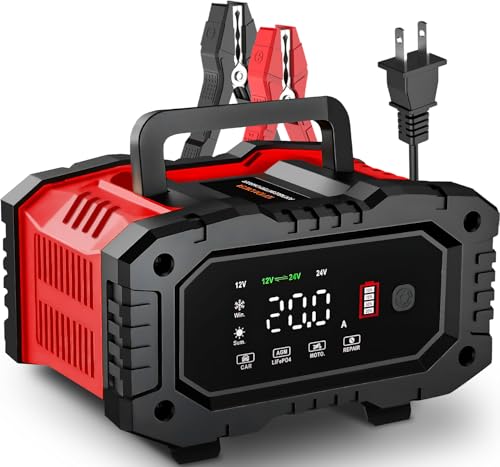
20-Amp Car Battery Charger 12V 20A 24V 10A

E-FAST Battery Charger 0-20A 12/24V

VEVOR Smart Battery Charger 35-Amp LCD Display
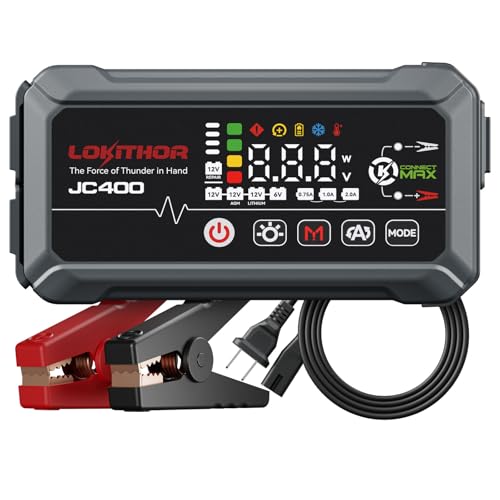
LOKITHOR JC400 2A Car Battery Charger and 2500A Jump Starter
More Details On Our Top Picks
For a garage that sees more than one battery type, this Beleeb model feels unusually flexible. The 12A ceiling, multi-voltage range, and pulse repair mode make it a useful match for someone juggling golf carts, motorcycles, and lawn equipment without wanting three separate chargers.
The honest trade-off is that this much range asks for a little more attention from you, especially with batteries that need the right mode selected before charging starts. Still, for mixed-use storage spaces and seasonal equipment, it covers a lot of ground without looking cramped on the shelf.
Strong Points
- Supports 12V, 24V, 36V, and 48V batteries, so one unit can serve several machines.
- Pulse repair mode adds extra usefulness for batteries that need recovery-oriented charging.
- The adjustable output gives you more control than a basic plug-in maintainer.
- Fits well for garages where golf carts, trucks, and small power equipment all share the same space.
Things To Consider
- The broad range is handy, but it also means you need to pay attention to the setting before use.
- It leans more toward a utility tool than a simple set-it-and-forget-it charger.
- Storage is easier in a workshop than in a glove box, since this is not a compact travel piece.
Feature Rundown
Who It Suits Best
You benefit most here if your space includes several lead-acid or lithium batteries across different vehicles and yard equipment.
Where A Sibling Pick Shines
NOCO GENIUSPRO50 is the better fit for professional shop use, since it offers far more output and suits heavier battery service work.
This PCHH charger feels built for routine garage duty, not just occasional rescue work. The metal, ABS, and copper-coil construction points to a sturdier profile than lighter plastic units, and the 12V to 24V automatic handling makes it easier to keep a truck or motorcycle battery on a sensible charging path.
For a busy shed or driveway, the fast and trickle options matter because you can choose between a quicker turnaround and gentler maintenance. The trade-off is simple enough, it’s heavier than compact keep-in-the-car gear, so it suits a fixed spot better than a mobile kit.
What We Like
- The copper coil and metal body give it a more grounded, heavy-use feel.
- Automatic 12V and 24V detection keeps the routine straightforward.
- Fast and trickle modes let you match the battery’s immediate need.
- Works across common lead-acid battery types, including AGM and deep-cycle use.
- The tougher build suits garages where tools get handled often.
Minor Gripes
- At 12.2 lb, it’s not the kind of charger you toss into a small emergency bag.
- The bulk makes wall or shelf storage more sensible than trunk storage.
- Its strength is utility, so it feels less travel-friendly than smaller chargers.
Core Details
Made For
You suit this pick best if you want a sturdier charger for a truck, boat, mower, or garage battery routine.
Another Choice May Suit
PZ.P 15-Amp 12V/24V Smart Battery Charger is a cleaner fit for someone who wants a lighter automatic maintainer with a more streamlined charging sequence.
Among this group, the NOCO stands out for sheer charging authority. With 6V, 12V, and 24V support plus a 50A rating on the lower-voltage modes, it suits shop environments where time matters and the batteries are larger, more varied, or simply more demanding.
Features like power supply mode, temperature compensation, and force mode give it a more technical feel than the simpler household chargers in this roundup. That extra control is useful for experienced hands, though it can feel like more tool than some casual garage setups really need.
Highlights
- High output makes it well suited to larger batteries and service-oriented use.
- Power supply mode adds flexibility beyond ordinary charging.
- Temperature compensation helps the charger adapt to changing conditions.
- Force mode can help in cases where a battery needs more direct attention.
- Its support for lead-acid and lithium makes it broad enough for serious mixed-use setups.
Points To Note
- The advanced feature set asks for more familiarity than a simple maintainer.
- Its output level is more than many casual garages need.
- It makes the most sense in a dedicated charging space rather than a tiny storage shelf.
Technical Sheet
Who Should Grab It
You fit this charger best if you manage larger batteries, multiple vehicle types, or a workshop where speed and control both matter.
Swap It Out When
Beleeb C20 is the cleaner match for a home garage that wants broader voltage coverage without moving into pro-level output.
This PZ.P model leans into straightforward automatic charging, which is useful for someone who wants less fuss around seasonal storage. The 9-stage sequence and temperature compensation make it feel more considered than a bare-bones trickle unit, especially for a car, motorcycle, or small boat that sits between uses.
Compared with the heavier PCHH charger, this one appears easier to live with in a tighter garage, and it covers both LiFePO4 and lead-acid batteries. The trade-off is that it’s built for sensible household duty rather than the bigger, rougher jobs that call for a heavier chassis.
Reasons To Buy
- The automatic 9-stage process gives you a more structured charging routine.
- 12V and 24V support keeps it useful across common garage equipment.
- Temperature compensation adds helpful consistency across changing weather.
- Works with both LiFePO4 and lead-acid batteries, which broadens its use.
Worth Noting
- Its strengths sit in routine maintenance more than heavy shop output.
- You’ll likely appreciate it most in a calm storage setup, not a rough work bay.
At A Glance
Built With In Mind
You’ll get the most from this if you want a dependable home charger for everyday battery upkeep across cars, motorcycles, and small watercraft.
Reach For A Different Pick When
NOCO GENIUSPRO50 suits you better if your batteries are larger and you want more aggressive output with deeper control.
The LCD display gives this VEVOR a more hands-on feel than the simpler chargers above it. That matters in a workshop where you want a quick read on status without guessing, and the adjustable current makes it easier to match the battery instead of forcing a one-rate solution.
Its range across lithium, LiFePO4, and common lead-acid chemistries makes it useful for households with a few different machines, from a boat battery to a mower pack. The only real catch is that the extra information and settings make it better for someone who likes a little more oversight than a plug-in maintainer usually offers.
Bright Spots
- LCD feedback helps you follow charging status at a glance.
- Adjustable current gives you more control over the session.
- Supports multiple battery chemistries, which suits mixed-use garages.
- Maintenance and desulfation functions add useful depth for storage batteries.
- Works well for anyone who wants more visibility than a basic charger provides.
Areas To Watch
- The extra controls may feel more involved than a simple maintainer setup.
- It’s better suited to a dedicated charging spot than to casual carry use.
Feature Snapshot
Who Will Love This
You fit this charger well if you want practical control, visible status, and support for several battery styles in one place.
Look Elsewhere When
PZ.P 15-Amp 12V/24V Smart Battery Charger is a simpler choice for someone who wants a lighter, more straightforward automatic routine.
Some chargers settle into the middle ground, and this Huiaipaic unit leans a little harder toward speed. The 20A and 10A outputs give it a stronger turn than the smaller maintainers in the roundup, which is useful for truck owners, farm equipment, and larger garage batteries that don’t benefit from waiting around.
Its broad support for lead-acid and LiFePO4 chemistries keeps it practical, but the real appeal is the faster turnaround paired with automatic operation. In a busy workshop, that combination saves you from babysitting the process while still keeping the battery care side of the job in view.
Upsides
- The higher output helps cut charging time for bigger batteries.
- Automatic smart behavior keeps day-to-day use fairly simple.
- Works with a wide range of vehicle and equipment batteries.
- The 300W rating points to a more serious charging setup.
- Fits users who want speed without moving into a full pro charger.
Small Caveats
- Faster output can be more than a small lawn mower battery really needs.
- It makes the most sense where you have enough space to keep it parked.
- The stronger pace is useful, though not every battery wants that much urgency.
Details At A Glance
The Right Fit
You’ll like this best if you want quicker charging for larger batteries and a single charger that still handles routine maintenance.
Where A Sibling Pick Shines
E-FAST Battery Charger 0-20A 12/24V feels easier for someone who prefers a more compact, all-around charger with a gentler everyday profile.
This E-FAST model sits in a comfortable middle zone for home garages that want one charger to do several jobs. The 0 to 20A range, 12V and 24V support, and pulse repair function make it flexible without pushing you into the more technical feel of the NOCO.
It’s the kind of unit that suits a shelf in the garage or shed, where you keep a car battery, mower battery, and maybe a small boat battery in rotation. The trade-off is that it’s still a charger first, so anyone wanting jump-start help will need a different tool.
Best Bits
- The 0 to 20A range gives you a useful spread for different battery sizes.
- Pulse repair mode adds a recovery-minded feature without overcomplicating the unit.
- Works with both LiFePO4 and lead-acid batteries.
- Feels like a sensible all-rounder for seasonal storage and routine upkeep.
Softer Spots
- It doesn’t include jump-start capability, so it stays focused on charging duties.
- Its value is strongest in a home setup, not as a roadside all-in-one tool.
Quick Facts
Whose Shelf It Belongs On
You fit this charger well if you want an easy all-round garage unit for cars, small equipment, and seasonal battery maintenance.
Where Another Pick Suits Better
LOKITHOR JC400 makes more sense for a road kit, since it adds jump-start support and more emergency-minded tools in one compact body.
With 35A in the name, this VEVOR is aimed at heavier charging tasks than the 20A models above it. That extra headroom can matter for larger batteries, especially in a workshop where you want a faster path from low charge to ready-to-use without juggling multiple tools.
The LCD display keeps it from feeling like a blind power brick, and the maintainer plus desulfator functions make it useful for long-term battery care too. The trade-off is straightforward, this is the pick for someone who wants more muscle and is comfortable making room for a larger, more capable charger.
What We Like
- The 35A output gives it strong pace for larger battery jobs.
- LCD feedback helps you track charging without guesswork.
- Fits LiFePO4 and common lead-acid battery types.
- Maintenance and desulfation functions add long-term usefulness.
- Works well for boat, motorcycle, and mower batteries that need more attention than a tiny maintainer can give.
Room For Improvement
- It’s more charger than casual carry gear.
- The higher output makes it better suited to larger batteries than tiny ones.
- You’ll get the most from it in a dedicated garage or workshop space.
Core Details
Perfect Match For
You’ll appreciate this most if your batteries are larger, more demanding, or part of a setup that needs faster turnover.
Not Your Match When
PZ.P 15-Amp 12V/24V Smart Battery Charger is the easier fit for smaller home battery routines and lighter day-to-day handling.
The LOKITHOR JC400 solves a different problem from the rest of the list, because it combines charging, maintenance, desulfation, and jump-start duties in one portable unit. For roadside kits, that matters a lot, since you get more than one layer of backup without packing a separate charger and booster.
The 750mA, 1A, and 2A settings make it useful for slower charging and battery upkeep, while the 2500A jump starter spec shifts it into emergency territory. It’s a smart fit for drivers who want one compact tool in the trunk, though serious garage users may still prefer a dedicated charger with more output.
Positives
- Combines a charger and jump starter in one compact package.
- The low-amp charging options work well for gentle maintenance.
- Has extra functions like voltage detection and LED lighting, which help in roadside use.
- Fits neatly into an emergency kit where space matters.
Honest Caveats
- The charging side is modest, so it’s not built for fast garage recovery work.
- Its broad feature set makes sense for travel, but it’s more tool-dense than a simple wall charger.
- Storage is easiest when you keep the cables organized in the same bag.
Feature Card
Who Should Grab It
You suit this best if you want a portable emergency kit that can charge, maintain, and help with dead-battery situations on the road.
A Better Fit Elsewhere
NOCO GENIUSPRO50 is the stronger choice for workshop charging, since it brings much more output and better suits regular battery service.
How To Choose The Right Battery Desulfator Chargers
Match Voltage And Chemistry First
Start with the battery you already own, not the charger you wish you had. A good match covers the right voltage, whether that means 12V, 24V, or a wider spread such as 6V through 48V, and it also supports the battery chemistry in front of you, such as lead-acid, AGM, gel, LiFePO4, or lithium.
That matters because the charger’s job changes with the battery type. A charger that works beautifully on a mower battery may be a poor fit for a golf cart pack or a lithium setup, and the wrong mode can turn a simple task into a frustrating one.
Look At Output, Not Just Labels
Amps describe charging pace, and they make a real difference in daily use. Lower-output units suit maintenance and storage, while higher-output models help more when you’re dealing with larger batteries, deeper discharge, or a busy shop where time matters.
A 20A or 35A unit can save waiting time for truck or boat batteries, yet that extra muscle is unnecessary for a small lawn mower battery that just needs gentle upkeep. The sweet spot comes from the size of your batteries and how often they sit idle.
Decide How Much Control You Want
Some chargers keep things plain, while others add LCD readouts, adjustable current, temperature compensation, or recovery modes like pulse charging and desulfation. Those extras are useful when you want more visibility or when a battery needs a bit more coaxing after long storage.
The trade-off is simplicity. A stripped-down maintainer is easier to live with, but a feature-rich model gives you better control if you manage multiple vehicles, seasonal equipment, or batteries that get used hard and then parked for weeks.
Think About Where You’ll Store It
Weight, size, and cable management matter more than most people expect. A heavier charger fits a permanent garage spot, while a smaller unit with jump-start support may be better for a trunk, trailer, or emergency bin.
That practical fit often decides whether a charger gets used often or sits untouched. The right one feels easy to grab, easy to connect, and easy to put away without turning the job into a chore.
Things Worth Knowing Before You Choose
Mistakes Worth Dodging
A common slip is chasing output before checking battery compatibility. Another is assuming every battery labeled “12V” wants the same charging behavior, which is where chemistry support and mode selection really matter.
Storage matters too. A heavy, shop-style charger can be a pain in a cramped trunk, while a compact roadside unit may feel too light-duty for a garage full of larger batteries.
Where The Extra Money Goes
Higher-tier chargers usually pay for wider voltage support, stronger output, more detailed displays, and extra control over the charging process. That’s why they make sense for mixed fleets, larger batteries, and people who want a clearer picture of what the charger is doing.
You’re also paying for convenience in the day-to-day sense. Better controls, smarter automation, and more flexible modes can save time and reduce second-guessing, especially in a busy workshop or shared garage.
Closing Thoughts
Your best match depends on what sits in your garage and how hands-on you want to be. For a broad, flexible charger, the Beleeb C20 and VEVOR options give you plenty to work with, while the NOCO GENIUSPRO50 leans harder into pro-level control and output. For portable backup, the LOKITHOR JC400 brings a different kind of usefulness. Pick the one that fits your batteries and your space, and the rest gets easier.
