

Battery disconnects solve a very ordinary problem that turns annoying fast, a parked vehicle, boat, or RV slowly draining power while it sits. The right switch gives you a cleaner shutdown point, easier storage, and less fuss under the hood or in a compartment. You’ll also care about fit, stud style, current headroom, and how much room you actually have to reach the knob or lever. That’s where these nine stand out for different setups, from tight engine bays to marine panels and top-post battery posts.
The Shortlist At A Glance

Spurtar Battery Disconnect Switch 12V 24V 48V Heavy Duty Battery Shut Off
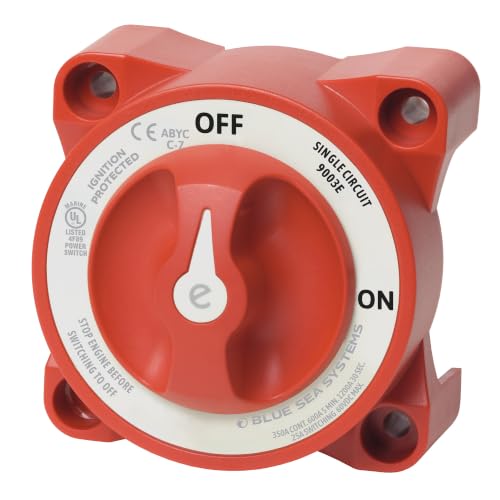
Blue Sea Systems e-Series Battery Switch Single Circuit 9003e

Top Post Battery Disconnect Switch 12V Car Battery Disconnect Switch

Car Battery Power Cut-Off Switch Breaker Pure Copper Stable Transmission

Joinfworld 12V Battery Disconnect Switch with Side Post Mounting Bracket

Car Battery Power Cut-Off Switch Breaker Adjustable Pure Copper 12v-24v

AWBLIN Top Post Battery Disconnect Switch with Voltmeter

Nilight 600A High Current Battery Switch 12V-48V

Battery Disconnect Switch 12V-48V Top Post 300A/900A Compact Size
More Details On Our Top Picks
Spurtar’s switch fits the practical middle ground nicely, especially for mixed vehicle setups that move between 12V, 24V, and 48V systems. The 200A continuous rating gives you a clearer sense of headroom than a tiny weekend-only isolator, while the 1000A intermittent figure matters for short bursts in tougher starts or heavier accessories.
The honest read is that this sort of switch makes the most sense on a truck, boat, RV, or ATV that sits for stretches and then returns to regular use. You get one straightforward cut-off point instead of pulling cables by hand, though you still need enough mounting space and sensible wiring discipline to make it feel tidy.
Strong Points
- Handles several common DC voltages, so you can use the same style across more than one vehicle type.
- The 200A continuous rating suits larger electrical loads better than lighter-duty compact switches.
- Works well for storage periods, because a clean disconnect helps keep parked equipment from slowly draining down.
- Good fit for mixed recreational use, from a tow vehicle to a marina-ready craft.
Points To Note
- Heavy-duty ratings do not remove the need to match wiring, terminals, and installation space carefully.
- The listing language is broad, so the real value depends on whether your setup truly needs the higher current range.
Feature Card
Who It Suits Best
Shopper profiles with one switch covering several battery-powered machines will get the most from this model.
Where A Sibling Pick Shines
Blue Sea Systems e-Series Battery Switch Single Circuit 9003e suits marine setups better when you want a more purpose-built single-circuit control point.
Blue Sea Systems leans more marine-specific than Spurtar, and that matters because a boat compartment asks for tidy control, dependable isolation, and a switch layout that doesn’t waste space. Single-circuit design means you’re controlling one battery bank, which keeps the job simple for storage or maintenance days.
The compact footprint is a real plus in cramped panels, and the surface or rear-panel mounting flexibility makes planning easier around existing hardware. For someone outfitting a sailboat or small powerboat, that combination feels calmer and cleaner than a more generic vehicle-first switch.
What We Like
- Single-circuit operation keeps battery control straightforward.
- Compact size helps in tight marine panels and narrow equipment bays.
- Surface or rear-panel mounting options make placement more flexible.
- Ignition protection is especially relevant in gasoline-powered engine spaces.
Softer Spots
- Its marine focus may feel more specialized than a general truck or RV switch.
- Single-circuit control is simple, though it offers less flexibility than a multi-use setup.
Core Details
Who Should Grab It
Boaters who want a clean, space-conscious control switch for one battery bank are the best fit here.
Look Elsewhere When
Spurtar Battery Disconnect Switch 12V 24V 48V Heavy Duty Battery Shut Off works better for mixed land-based equipment that needs broader voltage coverage.
This one speaks to tight battery trays right away, because the angled swivel ends are meant to help where straight terminal access gets awkward. That shape can matter more than a fancy rating in a cramped car bay, especially on older vehicles with little room above the battery.
The removable knob adds a simple layer of control for seasonal storage, and that can be useful for cars that sit through travel, school breaks, or a long off-season. Compared with the more marine-oriented Blue Sea switch, this feels more car-first and more direct, which suits ordinary under-hood work better.
Positives
- Angled swivel ends help in crowded battery compartments.
- The removable knob gives you a straightforward way to isolate power during storage.
- 1000A cranking support gives it room for demanding starts.
- Well suited to small engine bays where terminal access is tight.
Room For Improvement
- The compact format is helpful, though it also means installation fit matters a lot.
- Storage use is the strongest story here, so drivers wanting more advanced monitoring may want another style.
Technical Sheet
The Right Fit
Car owners with a cramped battery area and a simple storage disconnect need will feel at home with this one.
Swap It Out When
AWBLIN Top Post Battery Disconnect Switch with Voltmeter suits you better when battery monitoring matters more than a purely mechanical cut-off.
Pure copper construction is the headline here, and that usually matters because copper is prized for carrying current with less resistance than many cheaper metals. In a truck, boat, or RV where the cable run can be longer, that kind of current path can feel like the sensible part of the design.
Compared with the previous top-post option, this HINGTAI model reads as more conduction-focused and less about shape tricks or convenience extras. The trade-off is simple, the value lives in the material story, so you’ll want to judge it by how much you care about cleaner power transfer in a no-nonsense layout.
Highlights
- Pure copper construction supports strong current flow.
- Good match for systems where clean power transfer matters.
- Fits a wide range of vehicle and marine setups.
- The straightforward design should be easy to keep tidy.
Minor Gripes
- The listing centers on material and flow quality, so feature extras are limited.
- Anyone wanting a display or bracket-driven install will need a different style.
Feature Rundown
Best Suited To
Drivers and owners who care more about the current path than extra features will get the most from this switch.
Another Choice May Suit
Nilight 600A High Current Battery Switch 12V-48V fits better for shoppers who want a more clearly stated high-current ceiling.
The side-post bracket gives Joinfworld a very specific edge, because mounting hardware can save time and guesswork during installation. That matters on vehicles where you don’t want to improvise around battery terminal geometry or search for a clean mounting point after the fact.
The 200A rating and 1000A intermittent figure make it feel more serious than a tiny maintenance-only switch, while the metal housing and buttons point toward a more durable daily reality. For a car, boat, RV, ATV, or UTV that needs a straightforward isolate-and-go setup, this is easy to understand and easy to place.
Reasons To Buy
- The side-post bracket can simplify installation.
- 200A continuous capacity gives it useful everyday headroom.
- Metal housing and controls should hold up well in regular use.
- Works across several vehicle categories, which keeps it versatile.
Areas To Watch
- Side-post focus makes it less universal than a broader top-post design.
- The installation story is strong, though your available space still needs a careful look.
Details At A Glance
Built With In Mind
Shoppers working with side-post batteries and wanting a cleaner install path are the best match here.
Reach For A Different Pick When
Top Post Battery Disconnect Switch 12V Car Battery Disconnect Switch fits better for tight under-hood setups that use traditional top terminals.
This HINGTAI version keeps the same copper-first idea but adds an adjustable layout, which helps when the mounting situation isn’t perfectly standard. That can matter on a truck, small boat, or RV compartment where the cable path and bracket orientation rarely line up as neatly as the diagram suggests.
Compared with the earlier HINGTAI pick, this one broadens the voltage range to 12V-24V and feels a little more flexible for mixed-use equipment. The honest read is that the adjustment feature is more useful than flashy, and that’s usually the right kind of upgrade in this category.
Upsides
- Adjustable form gives you more room to solve awkward installs.
- Pure copper build supports cleaner current transfer.
- Works across 12V and 24V systems.
- Good fit for vehicles and equipment that see regular switching.
Worth Noting
- The broader fit is useful, though it still rewards careful planning around space and terminal layout.
- Like most rotary isolators, it makes the most sense when you want a simple power cut rather than extra monitoring tools.
Quick Facts
Who Will Love This
People balancing a more complex install with a simple cut-off need will appreciate the flexibility here.
Where Shoppers Go Wrong
Blue Sea Systems e-Series Battery Switch Single Circuit 9003e is the better fit for dedicated marine use with a more polished panel-first layout.
The voltmeter changes the feel of this switch right away, because you’re not only cutting power, you’re also getting a voltage readout from the same point. That helps in a truck, camper, or boat where a quick glance at battery condition can be useful before a day trip or a long sit.
Compared with the simpler top-post switches above, this one trades some plainness for a more information-rich setup. The LED screen draws a small amount of current while active, so the benefit is real, but the trade-off shows up for anyone wanting the most stripped-down disconnect possible.
Bright Spots
- The built-in voltage display adds quick battery visibility.
- DC 5V to 80V coverage makes it unusually broad for this category.
- No standby current in the off state keeps the cut-off concept clean.
- Useful in vehicles where battery status checks matter before travel.
Small Caveats
- The display adds function, but it also adds another component to think about.
- Owners who want a completely plain disconnect may prefer a simpler switch.
Feature Snapshot
Perfect Match For
Vehicle owners who like seeing voltage right at the switch will get the clearest value here.
A Better Fit Elsewhere
Top Post Battery Disconnect Switch 12V Car Battery Disconnect Switch suits you better when a basic, mechanical top-post cut-off is all you want.
Nilight goes after higher current handling than most of the list, and that matters for truck, trailer, RV, marine, and yacht setups with more demanding electrical needs. The 600A continuous figure gives you a stronger ceiling than the 200A options earlier, which is exactly why this one sits in the heavy-duty lane.
The rear cover and copper terminals point toward a more protected, more complete hardware package, and that usually helps when you want the switch to feel like part of a serious install rather than an add-on. You may find the ABS housing less flashy than metal, but it suits the job by keeping the package practical and contained.
Best Bits
- 600A continuous capacity gives it generous current headroom.
- Works across 12V to 48V systems.
- Rear cover adds a more enclosed terminal area.
- Included mounting hardware and accessories help round out the install.
Areas To Watch
- The larger current rating can be more than some casual vehicle setups actually need.
- ABS housing is practical, though it won’t feel as premium as a more metal-heavy switch body.
Spec Overview
Whose Shelf It Belongs On
Shopper setups with heavier loads and a need for broader voltage coverage belong here.
Where Shoppers Go Wrong
Joinfworld 12V Battery Disconnect Switch with Side Post Mounting Bracket fits better when side-post battery hardware is the main challenge.
MOTOFLEX keeps this one low-profile, and the 1-1/2-inch height is the detail that stands out for cars with tight hood clearance. That compact shape matters more than it sounds, because a switch can be electrically useful and still be a headache if the hood or cover barely closes around it.
The SAE top-post fit and waterproof construction make it a sensible choice for straightforward automotive storage use, especially where you want a clean negative disconnect without pulling cables every time. Compared with the more feature-heavy AWBLIN option, this feels simpler and more space-conscious, which is often exactly the point.
Positives
- The compact height makes it friendlier to limited clearance installs.
- Fits SAE battery terminals directly.
- Waterproof construction adds confidence for exposed or damp environments.
- The high and continuous current figures give it useful headroom for everyday vehicle use.
Things To Consider
- The compact size is helpful, though it leaves less room for careless cable routing.
- It is designed around top-post fit, so it’s less useful for side-post setups.
Core Details
Made For
Drivers with top-post batteries and very little clearance under the hood will appreciate this design most.
Where A Sibling Pick Shines
AWBLIN Top Post Battery Disconnect Switch with Voltmeter is the smarter route for anyone who wants battery readout alongside the disconnect function.
How To Choose The Right Battery Cuts Off Switch
Match The Switch To The Vehicle
Voltage is the first filter, because a switch made for 12V use may not suit a 24V truck or a 48V marine system. Current rating matters next, and continuous amperage is the figure that tells you how much everyday load the switch can handle without feeling undersized. Think of it as the backbone of the choice, since a neat case and a shiny knob won’t help much if the electrical match is off.
Top-post and side-post fit decide a lot of the rest. A top-post switch works naturally on many cars and some RVs, while a side-post mounting bracket can save time on batteries that don’t leave much room for improvisation. The cleanest install is usually the one that matches the battery terminal style instead of forcing adapters and awkward cable bends.
Look At The Real Use Case
Seasonal storage asks for a simple on-off disconnect, while marine setups often benefit from a switch that feels more protected and panel-friendly. If you commute daily, a low-profile model with easy access keeps the routine painless. For a long-haul camper or boat, the small details, like terminal cover design or a built-in voltmeter, can matter more than they first appear.
Maintenance habits matter too. A switch that lives in a dusty compartment or damp dock area should be easy to reach and simple to keep clean, because grime around terminals slowly turns into a nuisance. You’re choosing a part that will likely sit quietly for months, then need to work cleanly the day you need it most.
Decide How Much Feature Weight You Need
Basic rotary shut-offs are usually enough for straightforward battery isolation. Higher-tier models cost more because they may add copper-heavy construction, better terminal protection, display screens, stronger current ceilings, or installation hardware that saves time during setup. Those upgrades matter most for work trucks, boats, and larger RVs where the switch sees more use and a little extra fit-and-finish pays off.
Simple jobs do not need every extra. A compact top-post switch for a garage-kept car can be the smarter spend than a feature-rich model with a display you’ll never check. The best match is the one that solves your storage, access, and load needs without adding clutter you won’t use.
Things Worth Knowing First
Hidden Buying Traps
Many people focus on amperage and skip terminal style, which is how a promising switch turns into an awkward install. Hood clearance causes a similar problem, especially on top-post designs that look small online but still crowd nearby hardware in the car bay. You also want to think about whether the switch is meant for a single battery bank or a broader setup.
Another common miss is buying too much feature set for a simple need. A voltmeter or heavier-duty enclosure is useful in some cases, but a plain disconnect often works better for a parked sedan, lawn-equipment shed, or small trailer. Keep the use case front and center, and the choice gets much easier.
The Upgrade Payoff
Spending more usually buys stronger current capacity, better materials, or a design that fits more gracefully in tight spaces. In this category, that can mean copper terminals, a rear cover, a display, or a bracket that saves you an installation headache. Those details matter most when the switch sits in a hard-to-reach compartment or supports a larger electrical system.
For a weekend car, basic is enough. For a boat, RV, or work vehicle that sees regular attention, the extra spend can feel justified because the switch is easier to use and easier to live with. You’re paying for smoother ownership, not just a bigger number on the box.
Closing Thoughts
The right battery disconnect is usually the one that fits your battery style, your available space, and the way you actually park or store the vehicle. Some of these picks lean toward compact automotive installs, while others make more sense on boats, RVs, or heavier-duty rigs. Keep the current rating honest, match the terminal type, and choose the level of detail you’ll actually use. That simple filter tends to leave you with the right switch without much second-guessing.
