

Dead batteries rarely happen at a convenient time. You feel it in a cold driveway, a packed garage, or a trunk full of groceries, and that’s when the right battery charger or jump starter earns its keep. This roundup focuses on practical picks for daily drivers, long-term storage, roadside peace of mind, and garage work. You’ll see compact jump packs, wheeled chargers, and a few hybrid options that cover more than one job without turning your trunk into a toolbox.
The Shortlist At A Glance

LOKITHOR J400 Portable Jump Starter 2000A

Schumacher Electric Wheeled 10A Charger Maintainer SC1446
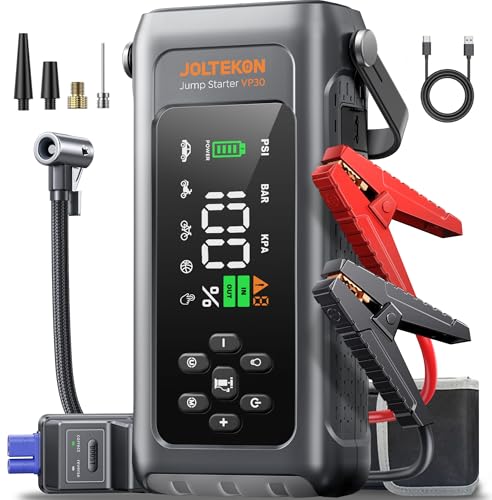
Joltekon Car Battery Jump Starter With Air Compressor 4500A

DEWALT DXAEPS14 2000 Amp Jump Starter With Compressor

Schumacher Electric Wheeled 6A Charger Maintainer SC1364

DBPOWER 5000A Jump Starter 74Wh

DeWalt DXAEC100 30 Amp Battery Charger

DEWALT DXAEJ14 1600 Amp Jump Starter With Compressor

Schumacher Electric DSR Pro Series DSR118
More Details On Our Top Picks
For daily driving, the LOKITHOR J400 lands in a useful middle ground, because it keeps the setup simple while still covering larger gas and diesel engines. The smart display helps you read status at a glance, and the 300-lumen light is handy during a dark shoulder stop or a cluttered garage start.
Compared with the wheeled Schumacher chargers later in this list, this one is built for compact storage and fast roadside use rather than long bench sessions. The ConnectMax connection detection adds a little reassurance, though a jump pack still asks you to keep it charged and stored sensibly between uses.
What We Like
- 2000A peak output gives you a strong starting cushion for many 12V vehicles.
- The compact jump-pack format fits better in a trunk than a wheeled charger.
- Smart display feedback helps you understand status without guesswork.
- The built-in light helps during night roadside work or dim garage corners.
- It suits commuters, family cars, and weekend drivers who want a portable backup.
Things To Consider
- It’s a jump starter first, so it doesn’t replace a true battery maintainer.
- Like most lithium jump packs, it needs periodic charging to stay ready.
- Very large diesel setups can stretch a compact pack faster than smaller engines.
Feature Rundown
Who It Suits Best
It suits drivers who want a compact jump starter for a car, SUV, or light truck, especially those who keep a roadside backup in the trunk.
A Better Fit Elsewhere
Schumacher Electric Wheeled 10A Car Battery Charger Maintainer SC1446 fits garage users better, especially for deep battery recovery and longer charging sessions.
This Schumacher leans into hands-on charging, which makes sense for older vehicles, tractors, and garage projects that need patience more than speed. The wheeled design matters more than it sounds, because moving a charger around a shop or barn gets old fast when the unit sits on a shelf all day.
Compared with the LOKITHOR J400, you trade portability for control and a more workshop-friendly layout. The manual style suits experienced DIY users, though it asks for more attention than a smart maintainer and may feel busy if you only want a simple trunk backup.
Highlights
- Wheeled construction makes it easier to move around a garage or workshop.
- Manual control gives you more say over how the charging process runs.
- It fits older batteries that can confuse some automated chargers.
- The 10A charging level is a useful middle ground for steady recovery work.
Worth Noting
- It takes up more storage space than a compact jump starter.
- Manual operation asks for more attention and a little more know-how.
- It’s a poor match for someone who wants a grab-and-go roadside kit.
Core Details
Who Will Love This
It suits DIY mechanics and property owners who keep aging batteries in a shop, garage, or farm setting.
Another Choice May Suit
LOKITHOR J400 Portable Jump Starter 2000A makes more sense for commuters who want compact emergency power in the car.
Your roadside kit gets a lot more useful when one box can cover both a dead battery and a low tire. That’s the main appeal here, since the compressor, pressure gauge, flashlight, SOS signal, and strobe functions fold into a single portable unit instead of living in separate compartments.
Unlike the simpler LOKITHOR and DBPOWER jump packs, this one makes more sense for drivers who want fewer loose tools in the trunk. The trade-off is a busier interface, so a person who wants only one quick start tool may find the extra functions more than they need.
Strong Points
- The built-in air compressor cuts down on the number of tools you need to carry.
- Its 4500A rating gives it a larger reserve for tougher starting jobs.
- The pressure gauge helps you handle tire checks without guessing.
- Light, SOS, and warning-strobe modes add practical roadside visibility.
- It fits well in a trunk kit for long drives and travel days.
Points To Note
- The extra features make it less straightforward than a plain jump pack.
- More functions usually mean more menu familiarity and more things to keep track of.
- The compressor side will matter most to drivers who actually monitor tire pressure often.
Feature Card
Made For
It suits road-trippers and family drivers who want one portable device for battery trouble and light tire care.
Reach For A Different Pick When
Schumacher Electric Wheeled 6A Car Battery Charger Maintainer SC1364 is a better fit for storage charging and slower maintenance work.
This DEWALT reads like the road trip version of a mini utility station, because it combines jump-starting, air, AC output, and USB charging in one case. For truck beds, camping, or a car that doubles as a mobile work base, the mix of ports and outlets gives it more staying power than a simple jump pack.
Compared with the Joltekon, it feels more geared toward multi-purpose use than sheer feature count, and the brand’s layout is easy to understand at a glance. The size and extra hardware are the trade-off, so it’s a stronger match for drivers who expect to use the power station side, not just the clamps.
Upsides
- The 500W AC outlet opens up small-device charging away from wall power.
- USB-A and USB ports make it useful for phones and accessories.
- The compressor adds another layer of roadside usefulness.
- It suits camping, tailgating, and truck storage better than a basic starter.
Small Caveats
- The added power-station features raise the size and storage burden.
- It makes more sense for mixed use than for a glovebox emergency kit.
- Anyone who only wants a jump start may pay for functions they rarely touch.
Details At A Glance
Best Suited To
It fits campers, truck owners, and weekend travelers who want one unit to cover batteries, devices, and light inflation.
Swap It Out When
LOKITHOR J400 Portable Jump Starter 2000A is the cleaner fit for drivers who want a smaller, simpler emergency pack.
The SC1364 is the kind of charger that makes sense in a garage where vehicles sit for stretches between uses. Its wheeled body and 4-in-1 approach help with dead batteries, long-term upkeep, and heavier shop routines, so it feels more like a steady helper than an emergency-only device.
Compared with the SC1446, this one shifts a bit toward maintenance and routine use rather than control-heavy recovery. For seasonal cars, boats, and work vehicles, that balance is useful, though the larger footprint means you’ll want a real place to park it between jobs.
Best Bits
- Wheels make the charger easier to move around a shop or garage.
- It suits maintenance work as well as recovery work.
- The 6A charging pace is friendly for slower, steadier battery upkeep.
- It fits drivers who store vehicles through parts of the year.
Areas To Watch
- It takes more storage room than a compact portable starter.
- It’s less handy for glovebox or trunk emergency carry.
- The wheeled format is useful, but only where floor space exists.
Feature Snapshot
Whose Shelf It Belongs On
It belongs with owners who keep a garage, workshop, or storage bay and want a charger that can stay put.
A Better Fit Elsewhere
DEWALT DXAEJ14 1600 Amp Jump Starter With Compressor suits drivers who need a more portable emergency kit with added tire support.
The DBPOWER unit leans hard into raw starting reserve, which is what makes it feel useful for larger engines, boats, RVs, and tractors. The display, LED light, jumper cables, and storage case round it out as a ready-to-carry kit rather than a loose pile of parts.
Compared with the LOKITHOR J400, it gives you more starting headroom, though that usually comes with a chunkier presence in the trunk. The 74Wh battery size also gives you a clearer sense that this is meant for serious portable duty, not just occasional sedan support.
Bright Spots
- The 5000A rating leaves a wide cushion for demanding start jobs.
- It covers up to 10.0L gas and 8.0L diesel engines.
- The included storage case helps keep the kit organized.
- Owners who keep it in trucks or RVs get useful peace of mind.
Honest Caveats
- Higher output usually means a larger unit to store and carry.
- It focuses on jump-starting, so it doesn’t replace a wall charger.
- The accessory bundle is useful, though it adds a little more packing to manage.
Technical Sheet
The Right Fit
It suits drivers of large gas engines, diesel trucks, and recreational vehicles who want more reserve than a commuter-size pack.
Look Elsewhere When
Schumacher Electric Wheeled 6A Car Battery Charger Maintainer SC1364 makes more sense for stationary maintenance and seasonal storage.
This DEWALT works well for a garage that needs one device to do several jobs. The 100A engine start, 30A charger, and 3A maintainer cover quick recovery, faster charging, and longer-term battery care, so you don’t have to keep swapping between separate boxes.
Compared with the SC1446, it feels a bit more straightforward in role but broader in day-to-day usefulness for common 12V batteries. The alternator check and reverse-pulse style features add helpful diagnostic value, though they also make the unit a better match for people who like knowing more about what’s happening under the hood.
Reasons To Buy
- Three functions in one unit reduce clutter in a garage or shop.
- The alternator check adds a useful layer of troubleshooting.
- It suits WET, GEL, and AGM battery types.
- The 30A charge mode is a strong fit for faster battery recovery.
Room For Improvement
- It’s more of a garage tool than a carry-everywhere emergency pack.
- The broader feature set asks for a little more familiarity.
- Users who only need a trunk backup may find it bigger than necessary.
Quick Facts
Perfect Match For
It fits home mechanics and garage owners who want a single charger, starter, and maintainer for routine vehicle care.
Where A Sibling Pick Shines
LOKITHOR J400 Portable Jump Starter 2000A is the better travel companion for commuters who want compact jump-starting gear.
This DEWALT lands in a nice middle lane for someone who wants more than a plain jump pack but less bulk than a full power station. The compressor, USB-A, and USB-C charging give it useful everyday range, while the 1600A jump rating keeps the core job clear and focused.
Compared with the larger DXAEPS14, it feels easier to stash in a hatch, trunk, or truck storage bin. That lighter footprint matters on long commutes and weekend trips, though the smaller profile naturally means fewer power-station extras.
Positives
- Compact enough for regular trunk storage without taking over the space.
- The compressor adds practical tire support for road trips.
- USB-C and USB-A outputs help with modern charging needs.
- It suits drivers who want an upgraded kit without going oversized.
Softer Spots
- It offers fewer extras than the DXAEPS14 power-station model.
- Drivers who want only a tiny emergency pack may still want something smaller.
- The extra functions are helpful, though not every commute needs them.
Core Details
Right Fit For
It suits commuters and travelers who want a compact jump starter with a compressor and modern charging ports.
A Better Fit Elsewhere
DEWALT DXAEPS14 2000 Amp Jump Starter With Compressor is better for drivers who also want AC power and a more station-like setup.
The DSR118 is built for serious charging work, not light weekend duty. The 125A engine start, 15A and 40A boost modes, and support for both 6V and 12V batteries make it a strong fit for garages that deal with a wide spread of vehicles and deeply drained batteries.
Compared with the DXAEC100, this one feels more specialized and a touch more industrial, which suits demanding shop use. The microprocessor control helps the charger adjust its behavior, though that same depth means it belongs with someone who expects to use it often enough to justify the size and complexity.
Best Bits
- The high engine-start rating supports demanding recovery jobs.
- Boost modes give you flexibility for different battery states.
- Support for both 6V and 12V batteries broadens its use.
- It suits professional garages and heavy home-use setups.
Worth Noting
- It’s more tool than travel accessory, so storage space matters.
- The feature depth is useful, but it’s not the simplest box in this list.
- Light-duty drivers may not use enough of its capacity to justify the scale.
Core Details
Built With In Mind
It suits experienced home mechanics and shop users who need a heavy-duty charger for a range of battery jobs.
Skip It When
DEWALT DXAEJ14 1600 Amp Jump Starter With Compressor is the easier carry for drivers who want portable emergency coverage.
How To Choose The Right Battery Charger And Jump Starters
Match The Tool To The Job
A jump starter is the quicker, smaller option for roadside surprises, while a battery charger or maintainer suits longer battery recovery and storage care. That difference matters more than brand names, because a compact pack in a trunk won’t replace a wheeled garage charger when a battery sits dead for days. If you commute daily, a portable jump starter with a display and light often feels like the safer carry. For seasonal cars, tractors, boats, and shop vehicles, a charger with boost and maintain modes usually earns its space.
Check Power Against Vehicle Size
Engine size and battery type tell you a lot about fit. Larger gas engines and diesel setups benefit from higher peak output, while smaller sedans can live happily with less. A 6V/12V charger adds flexibility for mixed garages, and AGM, GEL, and WET support can matter more than flashy extras if you keep different vehicles. The honest read is simple: bigger numbers help, but only when they match the machines you actually own.
Look At Convenience Features
A wheeled body helps in a shop, a built-in compressor helps on the road, and USB ports matter when your phone is also your map, flashlight, and contact list. Those extras sound small until you’re dealing with a dark shoulder, a slow tire leak, or a vehicle that sits far from an outlet. Storage size matters too, because a compact pack is easier to keep ready than a heavy unit that never leaves a shelf. You’ll usually feel the difference most in everyday use, not on the product page.
Think About Maintenance And Access
Battery tools work best when they’re easy to reach, easy to read, and easy to put back where you found them. Clear displays, simple clamps, and sensible cable storage reduce hassle, which is worth a lot in a cold garage or a crowded trunk. For garage users, maintenance modes and boost functions can save time by reducing the number of tools you pull out. For travel kits, the better choice is the one you’ll actually keep charged and close at hand.
Things Worth Knowing First
Common Shopping Slip Ups
A common mistake is choosing a jump starter for a battery that really needs a charger or maintainer. Another one is ignoring engine size, because a unit that suits a compact car can feel underpowered in a truck or diesel. Storage gets overlooked too, and a bulky wheeled charger can be a headache in a tight apartment garage or small shed. Match the format to the space you have, not just the label on the box.
Where The Extra Money Goes
Higher-tier models usually pay for stronger output, more charging modes, better displays, and extra functions like compressors or AC outlets. That added versatility matters for drivers who want one box to cover a lot of situations, especially in a shop or during road trips. The upgrade makes sense when you’ll use those extras often enough to justify the larger footprint. For simple sedan backup, a leaner model often makes more sense.
Closing Thoughts
The right battery charger or jump starter depends on where you use it most, not on how impressive the spec list looks. A trunk-ready jump pack handles sudden starts with less fuss, while a wheeled charger suits a garage that sees batteries in rough shape or long storage periods. For a lot of homes, one compact starter and one steady maintainer cover the ground well. Choose the tool that fits your space, your vehicles, and the kind of trouble you actually want to avoid.
