

Dead batteries never happen at a convenient time, which is why a solid charger or engine starter earns space in a garage, workshop, or farm shed. Some of these picks are better for quick roadside starts, while others are built for slow, careful charging, battery upkeep, or long-term storage. You’ll see the differences fast here, especially in how much control, power, and portability each unit gives you.
Quick Look At The Shortlist

LOKITHOR J400 Portable Jump Starter 2000A Lithium Car Battery Jump Pack

Schumacher Electric Wheeled 10A Car Battery Charger & Maintainer SC1446

Schumacher Electric Wheeled 6A Car Battery Charger & Maintainer SC1364

DBPOWER 5000A Jump Starter 74Wh Portable Jump Starter with Display

CRAFTSMAN 12A Car Battery Charger & Maintainer CMXCESM258

DeWalt DXAEC100 30 Amp Battery Charger 100 Amp Engine Start

Schumacher Electric Wheeled 6A Car Battery Charger & Maintainer SC1353
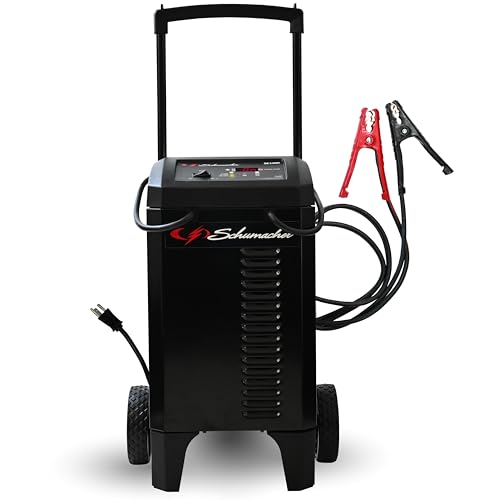
Schumacher Electric Wheeled 6A Car Battery Charger & Maintainer SC1400
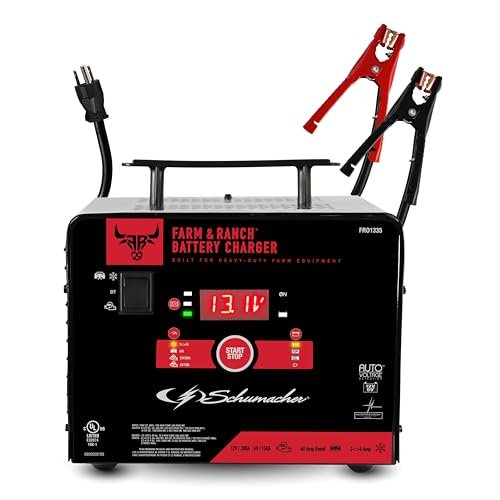
Schumacher Electric 6A Car Battery Charger & Maintainer 6V/12V FR01335
More Details On Our Top Picks
The J400 leans hard into portability, which makes sense for daily drivers who want a jump pack in the trunk instead of a heavy cart in the garage. The 2,000A peak output and support for up to 8.0L gas or 6.0L diesel engines give it useful range for common roadside situations.
ConnectMax tech, the smart display, and the 300-lumen LED add convenience without turning the unit into a gadget for gadget’s sake. The trade-off is simple, you get compact emergency power rather than the slower, hands-on charging control of a wheeled Schumacher unit like the SC1446.
Strong Points
- Portable size makes it easy to keep in a trunk, glove box, or storage bin.
- 2,000A peak output covers a broad spread of 12V starting needs.
- ConnectMax connection detection helps reduce guesswork before a start.
- The digital display gives you quick status feedback without extra setup.
- The built-in LED helps in dark parking lots or roadside stops.
Things To Consider
- It is a jump starter, not a full charger, so battery maintenance still needs a separate unit.
- High-output packs like this tend to benefit from regular recharging so they are ready when needed.
- The feature set is focused on emergency starts, not workshop-level battery diagnostics.
Core Details
Who It Suits Best
Commuters and road-trippers who want a compact emergency starter with a clear display will get the most from it.
Where A Sibling Pick Shines
Schumacher Electric Wheeled 10A Car Battery Charger & Maintainer SC1446 makes more sense for garage owners who want a bench-style charger with more hands-on control.
This model fits the garage role that a compact jump pack cannot really replace. The wheeled body, 10-amp charging rate, and manual approach suit someone who wants direct control over how a battery comes back to life.
It stands apart from the LOKITHOR J400 because it is built for deliberate charging, not pocketable emergency use. The honest read is that the old-school layout works very well in a shop or farm bay, though it asks for more space and a little more patience.
What We Like
- The wheeled design makes it easier to move around a garage or workshop.
- 10 amps gives you a stronger charging pace than smaller maintainers.
- Manual control appeals to hands-on users who want to manage the process themselves.
- It can help with deeply discharged batteries that smart units sometimes hesitate to address.
Worth Noting
- It takes up more room than a compact jump starter.
- Manual operation is useful, but it also means less automation for casual users.
- Wheels and cables add storage bulk, so tidy garage organization helps.
Feature Snapshot
Built With In Mind
Garage owners, DIY mechanics, and farm users who want a charger with direct control are the clearest fit.
Reach For A Different Pick When
DBPOWER 5000A Jump Starter 74Wh Portable Jump Starter with Display suits drivers who need a lighter emergency pack for the trunk.
The SC1364 sits in the middle of the Schumacher wheeled lineup, and that middle ground is its strength. A 6-amp charging rate is gentler than the 10-amp SC1446, which makes it a calmer fit for regular upkeep and long-term battery care.
For a car, SUV, or marine battery that sits for stretches between uses, this kind of controlled pace feels sensible. You give up some charging speed, but you gain a more relaxed tool for maintenance-minded ownership.
Highlights
- 6-amp output is a practical fit for routine charging and maintenance.
- The wheeled body helps keep the charger mobile in a garage or shed.
- It suits vehicles that spend time parked between uses.
- Less aggressive charging can be easier to live with for regular upkeep.
Small Caveats
- It is slower than higher-output options in this roundup.
- The wheeled format means more storage space than a handheld pack.
- It is aimed at upkeep first, so roadside convenience is not the main story.
Details At A Glance
Whose Shelf It Belongs On
You get the most from it in a garage, marina, or home shop where batteries sit unused for stretches.
Another Choice May Suit
Schumacher Electric Wheeled 10A Car Battery Charger & Maintainer SC1446 works better for someone who wants a faster, more aggressive charging pace.
The DBPOWER pack is built for stronger starting demands, and that matters for larger gas engines or work vehicles that need more punch from a portable unit. A 74Wh battery pack and 5,000A peak current make it feel closer to a serious emergency tool than a casual backup.
Compared with the LOKITHOR J400, this one pushes harder on output and engine coverage, while still staying portable enough for daily carry in the vehicle. The storage case and jumper cables round out the package nicely, though you still need to remember that portable packs work best when you keep them charged and stored neatly.
Reasons To Buy
- 5,000A peak output gives you serious starting headroom.
- 74Wh capacity adds useful reserve for repeated emergency starts.
- The included display helps you keep tabs on status at a glance.
- Storage case and cables make it easier to keep the kit together.
- It covers a wide range of vehicle types, from motorcycles to RVs.
Areas To Watch
- High-output packs need routine recharging so they stay ready.
- It is focused on starting, not on battery maintenance or slow charging.
- Large power packs can feel bulky compared with slimmer trunk kits.
Technical Sheet
Who Will Love This
Truck owners, RV users, and anyone who wants a stronger portable starter will appreciate the extra headroom.
Swap It Out When
LOKITHOR J400 Portable Jump Starter 2000A Lithium Car Battery Jump Pack is the neater choice for drivers who care more about compact carry than maximum output.
The CRAFTSMAN CMXCESM258 stands out for range, not just output. It handles standard, AGM, LiFePO4, and deep-cycle batteries, so it works across a wider spread of ownership situations than simpler chargers in this list.
That flexibility matters in a mixed garage where a weekend car, a utility vehicle, and a backup battery may all need different care. The trade-off is that the feature set feels more technical, so someone who just wants a basic turn-it-on and walk-away charger may not need everything it offers.
Plus Points
- Broad battery compatibility makes it useful for more than one vehicle type.
- 12-amp rapid charge mode helps shorten long wait times.
- Separate maintain modes suit long-term storage and seasonal vehicles.
- Automatic voltage detection reduces manual guesswork in everyday use.
- It fits neatly into a garage that has several battery chemistries.
Room For Improvement
- The wider feature set can feel more involved than a basic maintainer.
- Users who only need one simple car battery solution may not use every mode.
- Like most multi-mode chargers, it rewards careful cable storage after use.
Core Details
Best Suited To
Home mechanics and mixed-vehicle households who want one charger for several battery types will get the most use from it.
Look Elsewhere When
Schumacher Electric Wheeled 6A Car Battery Charger & Maintainer SC1364 makes more sense for simpler maintenance work with less feature overhead.
The DeWalt DXAEC100 leans into the kind of versatile garage use that keeps a tool on standby for more than one job. A 100-amp engine start, 30-amp charging mode, and 3-amp maintainer setting give you a broader toolkit than the smaller maintenance-focused units in this roundup.
It also includes alternator checking and a pulse function for battery plate buildup, which makes it feel more like a serious shop helper than a simple charger. The trade-off is straightforward, more capability usually means more complexity, so casual users may find the interface more involved than the wheeled Schumacher options.
Bright Spots
- Strong 100-amp engine start support helps in tougher recovery situations.
- The 30-amp charge mode gives you faster recovery than smaller maintainers.
- 3-amp maintenance mode is useful for storage periods and seasonal use.
- Alternator checking adds diagnostic value in a home garage.
- The pulse feature adds another layer of battery care capability.
Points To Note
- The broader feature set takes a little more attention to learn.
- It makes more sense in a garage than in a trunk.
- Users who only need basic charging may not need the extra modes.
Feature Rundown
Who Should Grab It
You get the most from it in a workshop or garage where diagnostics and charging both matter.
Where A Sibling Pick Shines
CRAFTSMAN 12A Car Battery Charger & Maintainer CMXCESM258 is easier to live with for someone who wants broad compatibility without as much diagnostic depth.
The SC1353 feels built for hands-on jobs where a wheeled charger earns its keep. For a garage, small workshop, or farm space, that format makes more sense than carrying a jump starter around for repeated battery work.
It sits close to the SC1364 in purpose, but the SC1353 leans more toward general utility than compact convenience. The honest read is that this style suits someone who wants the charger to stay in the work area rather than ride along in a vehicle.
Standout Traits
- The wheeled setup helps with movement across larger work spaces.
- 6-amp output is a steady fit for maintenance and regular charging.
- It suits garages, sheds, and farm use where battery care happens in one place.
- Its workhorse design feels familiar if you prefer a simple, visible charger.
Trade Offs
- It is not as portable as a compact jump pack.
- 6 amps keeps things manageable, but not especially fast.
- Wheels and cords mean you’ll want a dedicated storage spot.
At A Glance
Right Fit For
You’ll appreciate it most in a garage or farm setting where a charger can stay parked and ready.
Skip It When
LOKITHOR J400 Portable Jump Starter 2000A Lithium Car Battery Jump Pack is the better fit for a driver who wants roadside portability first.
The SC1400 is the most broadly useful of the wheeled Schumacher chargers in this list, especially for garages that need starting, charging, maintenance, and battery reconditioning in one unit. That combination makes it feel less specialized than the SC1364 and more like a daily shop companion.
Its 300-amp 12V engine start and 200-amp 6V engine start support give it real usefulness in heavier-duty situations. The trade-off is size and complexity, which are fair prices to pay for a unit that handles more than routine top-offs.
Best Bits
- Four functions make it useful for starting, charging, maintaining, and reconditioning.
- The higher engine-start figures suit tougher work than basic maintainers.
- Its wheeled layout keeps it practical for shop or garage use.
- It works well for owners who want one unit to cover several battery tasks.
Minor Gripes
- It takes more space than a hand-carry jump starter.
- The broader feature set is better for regular users than casual ones.
- Like other wheeled units, cable organization matters for clean storage.
Feature Card
The Right Fit
Garage owners and mechanics who want a single wheeled unit for multiple battery jobs will get the most from it.
Where Another Pick Fits Better
Schumacher Electric Wheeled 6A Car Battery Charger & Maintainer SC1364 makes more sense for someone who wants a simpler maintenance-first setup.
The FR01335 is shaped for farm and ranch work, which makes it feel more purposeful than the smaller, car-first chargers above it. A 6-amp charger with 6V and 12V support, plus a 200-amp engine starter, gives it a practical role for larger equipment and vehicles that sit idle for stretches.
Compared with the SC1400, this one narrows its appeal a bit but leans harder into agricultural use. That focus is useful, though it means you are paying for a tool that makes the most sense around tractors, trucks, and similar equipment rather than as a general household charger.
Positives
- Farm-focused design suits heavier equipment and larger batteries.
- 200-amp engine start support helps with tougher start situations.
- 6V and 12V support broadens its day-to-day usefulness.
- Automatic control makes it easier to use for regular charging and maintenance.
- It fits well in a barn, garage, or rural workshop.
Points To Note
- Its farm-first focus may be more than a casual car owner needs.
- The wheeled format asks for room to store and roll it around.
- It is better suited to fixed-location use than grab-and-go travel.
Quick Facts
Who Will Love This
You get the most value from it in a farm, ranch, or workshop setting where larger equipment needs battery care.
Swap It Out When
DeWalt DXAEC100 30 Amp Battery Charger 100 Amp Engine Start is the better choice for a shop user who wants more charging speed and diagnostic depth.
How To Choose The Right Battery Charger And Engine Starters
Match The Tool To The Job
Portable jump starters and wheeled chargers solve different problems. A jump starter like the LOKITHOR J400 or DBPOWER 5000A is for instant help in a parking lot, while a wheeled charger like the Schumacher SC1400 is better for planned work in a garage or barn. That split matters more than brand name, because the wrong form factor can leave you with power on paper and not much help in practice.
Output matters next, but only in context. Peak amps tell you how much starting help a unit can deliver, while charge amps tell you how fast it can refill a battery over time. For a daily commuter, a compact pack with a smart display may be enough, while an owner of trucks, tractors, or seasonal vehicles usually gets more value from a sturdier charger with maintenance modes.
Think About Battery Type And Voltage
Voltage support is easy to miss and hard to ignore later. Several picks here handle both 6V and 12V batteries, which helps if your shed, garage, or farm space includes older equipment alongside modern vehicles. Lithium iron phosphate, often shortened to LiFePO4, appears in some charging setups too, so compatibility needs a careful look before you settle on a charger.
Battery chemistry matters because different batteries want different charging behavior. AGM batteries, for example, are sealed absorbed-glass-mat units that often show up in modern vehicles, while deep-cycle batteries are built for repeated discharge and recharge. A multi-mode charger such as the CRAFTSMAN CMXCESM258 earns its keep in mixed households, while a simpler unit may suit a one-vehicle garage better.
Space, Storage, And Handling Still Count
Wheeled chargers bring convenience in a shop, but they also claim floor space and need cable storage that stays tidy. Portable packs fit in a trunk or under a seat, which is handy for commuters and long-haul drivers, yet they need regular charging so they are ready before an emergency shows up. That trade-off is easy to miss until you’re standing in a cramped garage or trying to find the pack after a battery failure.
Controls matter too. Manual chargers reward users who want direct oversight, while automatic units reduce the learning curve and lower the chance of guesswork during routine use. In most homes, an automatic maintainer is easier to live with, but a manual or multi-function unit can be worth the extra effort for older vehicles and more complicated setups.
What To Weigh Before You Click
Hidden Buying Traps
One common mistake is confusing starting power with charging comfort. A jump starter may rescue a dead battery in a minute, yet it will not replace a charger that can maintain a vehicle through winter storage. Another easy miss is overlooking cable length, wheel clearance, and where the unit will live between uses.
Storage habits matter more than the box art suggests. A portable pack is only helpful when it stays charged, and a wheeled charger only helps when the garage layout leaves room to roll it around. Think about the spot where it will sit most of the year, then work backward from there.
The Upgrade Payoff
Higher-tier models usually cost more because they add stronger engine-start output, more charging modes, smarter voltage handling, or diagnostic extras like alternator checking. That extra money also tends to buy thicker housings, wheels, better displays, and more flexible battery support. In practice, you are paying for fewer compromises, not just more numbers on a box.
The upgrade makes sense for mixed garages, farm use, or vehicles that sit for long stretches. For a single commuter car, a simpler maintainer may be enough, but truck owners, mechanics, and owners of older equipment usually get more long-term usefulness from a richer feature set. Think about how often the tool will earn its keep, not just how dramatic the spec sheet looks.
Bottom Line
You’ve got two clear paths here, portable jump packs for roadside peace of mind, and wheeled chargers for garages, workshops, and farms. The right choice comes down to how you live with the tool, not just how much output it advertises. For everyday drivers, a compact starter makes sense; for long-term battery care, a wheeled Schumacher or a versatile DeWalt-style unit feels more at home. Pick the one that fits your space and routine, and it’ll be there when the battery decides to sulk.
