

Keeping the lights on, the fridge cold, and a phone charged matters most when a storm rolls through or a campsite feels farther from town than it looked on the map. This roundup focuses on portable power stations and one inverter generator that fit that backup role in different ways, from light travel use to whole-home essentials. You’ll see where each model makes sense, where it asks for a compromise, and which one fits your space, load needs, and storage habits.
Quick Look At Our Shortlist

Jackery Explorer 2000 v2 Portable Power Station 2042Wh 2200W AC Output

Jackery HomePower 3000 and 2x200W Solar Panels 3072Wh 3600W AC Output 7200W Surge
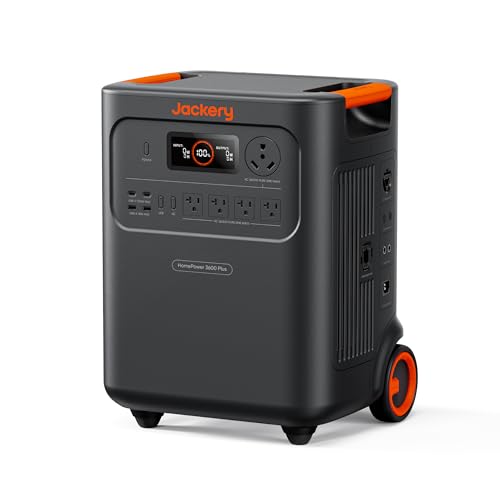
Jackery HomePower 3600 Plus Portable Power Station 3600W AC Output 3584Wh LFP Solar Generator

Jackery Solar Generator 300 and 40W Solar Panel 292Wh 300W AC Pure Sine Wave AC Outlet

Anker SOLIX S2000 Portable Power Station 2010Wh 3000W Peak Home Backup

Genkins 8000W Portable Quiet Inverter Generator Gas Electric Start 120/240V 30A

Jackery Explorer 300 Portable Power Station 292Wh Backup LiFePO4 Battery

Jackery Explorer 1000 v2 Portable Power Station 1070Wh 1500W LiFePO4 Battery

Anker SOLIX C1000 Gen 2 Portable Power Station 1024Wh 2000W Camping
More Details On Our Top Picks
For a house that needs more than phone charging, this Jackery sits in a practical middle ground. The 2,042Wh battery means you’re not babysitting the gauge after a single appliance, and the 2,200W AC output gives you room for everyday loads that make backup power feel usable, not symbolic.
It also stays friendly for camping or workshop use because the 100W USB-C PD port can handle modern laptops and tablets without extra brick clutter. The trade-off is simple, though, heavier capacity usually means you’re storing a larger unit, so it suits a hallway closet or garage shelf better than a tiny apartment nook.
What We Like
- Large 2,042Wh capacity gives you a stronger cushion for outages, not just a quick top-off.
- 2,200W AC output helps cover common household gear with less juggling.
- USB-C PD at 100W keeps newer laptops and devices charging cleanly.
- The LiFePO4 battery chemistry points to a chemistry type known for steadier long-term ownership, which matters for backup gear that may sit between outages.
- Useful for home backup, camping, and small business tasks, so it does not feel locked into one job.
Points To Note
- Its size makes more sense for a fixed storage spot than for frequent hauling across long distances.
- You still need to match appliance draw carefully, because larger capacity does not turn every heavy tool into a casual load.
- The solar panel is optional, so off-grid recharging depends on the setup you choose.
Feature Snapshot
Who It Suits Best
You’re the best match for this model if you want a serious portable backup unit for home essentials, weekend trips, or a small office setup.
Where A Sibling Pick Shines
Jackery Explorer 1000 v2 Portable Power Station 1070Wh 1500W LiFePO4 Battery makes more sense for you if you want a lighter midrange unit that’s easier to carry between rooms or into an RV.
This is the model that makes the strongest case for staying ready at home. The 3,072Wh battery and 3,600W AC output give you enough headroom for essentials like a fridge, router, lights, and fans without feeling like every socket is rationed.
The included 2x200W solar panels matter because they turn the setup into a more complete backup path, not just a stored-energy box. The honest read is that the system makes the most sense for a house, garage, or RV base camp, since you’ll appreciate the footprint and output more than a traveler would.
Reasons To Buy
- 3072Wh capacity gives you a strong reserve for household basics during an outage.
- 3600W AC output is suited to more demanding everyday appliances.
- 7200W surge headroom helps with startup spikes from some motor-driven gear.
- Two 200W solar panels add a practical recharge path for longer disruptions.
Small Caveats
- The included panel pair and large body make this much less portable than compact models.
- Storage and setup work best where you can leave it ready instead of moving it constantly.
- Solar performance always depends on sunlight and placement, so the panel package still needs a suitable location.
Core Details
Right Fit For
You’re the best match here if you want a home-focused backup setup that can stay on standby for outages, RV use, or a dedicated utility space.
Another Choice May Suit
Jackery Explorer 2000 v2 Portable Power Station 2042Wh 2200W AC Output is the better fit for you if you want a smaller, lighter unit with less commitment to a fixed home installation.
Compared with the HomePower 3000, this one is built for people who want more headroom and a path to grow later. The 3,584Wh base capacity is already substantial, and the ability to expand up to 21kWh per unit changes how you think about backup power, since it can start as one station and scale into a much larger system.
You also get dual-voltage support in parallel use, which matters for homes with mixed equipment or more demanding circuits. The trade-off is plain, this is not the pick for someone who wants a light carry, but it fits a serious household setup or RV base more comfortably than a casual weekend kit.
Highlights
- 3584Wh base capacity gives you a large reserve right out of the box.
- Expandable storage up to 21kWh per unit lets you build a bigger system over time.
- 3600W AC output supports substantial household loads.
- Dual-voltage support in parallel use helps with a wider range of home equipment.
- Strong fit for long outages, which makes it feel less like a camping accessory and more like a home tool.
Worth Noting
- The expandable setup adds cost and planning, so it suits a committed backup plan more than a casual one.
- Its size and scale make storage and movement less convenient than the smaller Jackery units in this roundup.
- Big systems usually need more careful placement, especially in a garage or utility room.
Details At A Glance
Best Suited To
You should look here if you want a backup station that feels closer to a serious household asset than a portable accessory.
Where Another Pick Shines
Anker SOLIX S2000 Portable Power Station 2010Wh 3000W Peak Home Backup is a better fit for you if you want simpler storage and a more compact footprint for routine household backup.
This one is for lighter packing, not whole-room backup, and that’s exactly why it works. At 7.5 pounds, the unit is easy to carry with camping gear, and the 292Wh capacity gives you enough room for smaller electronics, route planning, and short power gaps away from an outlet.
The pure sine wave AC outlet matters because it gives sensitive electronics a cleaner form of output than a rougher wave shape. You’ll feel the compromise in runtime and overall headroom, so it fits travel, day trips, and emergency charging better than anyone trying to run a full kitchen.
Best Bits
- 7.5-pound build keeps the carry manageable for hikes and travel bags.
- 292Wh capacity covers smaller loads without making the unit bulky.
- Pure sine wave AC output is a helpful touch for electronics with sensitive power needs.
- Included 40W solar panel adds a handy off-grid recharge path.
Areas To Watch
- The smaller battery means you’ll need to plan runtime carefully.
- It’s better for light backup work than for appliance-heavy outage use.
- Frequent travelers may like the size, but anyone wanting long-duration home coverage will outgrow it quickly.
Quick Facts
Whose Shelf It Belongs On
You’re the right match for this pick if you want a compact backup option for travel, short blackouts, or keeping small devices going outdoors.
Swap It Out When
Jackery Explorer 300 Portable Power Station 292Wh Backup LiFePO4 Battery is the better call for you if you want a similar light-duty footprint without committing to the solar bundle.
Some power stations look good on paper but feel oversized for the runtime they deliver, and this Anker tries to avoid that problem. Its 2,010Wh capacity and 3,000W peak output give you enough reach for fridge duty, home essentials, and extended outage chores without stepping all the way into the largest class.
The lower idle draw mentioned in the product details is the part that stands out most for backup use, because standby efficiency matters when the station sits ready for days or weeks. Compared with the Jackery Explorer 2000 v2, this one reads as a more efficiency-minded choice, though the trade-off is that the peak figure is what gets emphasized most, not a huge headline AC number.
Strong Points
- 2,010Wh capacity gives you a practical reserve for everyday outage coverage.
- Peak output is high enough for many household loads that come and go during backup use.
- Low idle draw is useful for standby situations where the unit may sit waiting.
- LiFePO4 battery chemistry is a sensible fit for a backup unit that may see repeated cycling.
- Its focus on fridge coverage makes it easy to picture in a real home emergency setup.
Room For Improvement
- The emphasis on peak output means you should look closely at sustained load needs, not only the headline number.
- It sits in the larger, heavier class, so frequent carrying is not its strong suit.
- Long-term storage still works best in a dry, accessible spot where you can check it easily.
Feature Rundown
The Right Fit
You should look here if you want a home backup station that leans efficient, handles regular essentials, and stays relevant for long standby use.
Look Elsewhere When
Jackery HomePower 3000 and 2x200W Solar Panels 3072Wh 3600W AC Output 7200W Surge suits you better if your backup plan needs more continuous household output and the solar panels to match.
Portable power stations are cleaner and simpler, but sometimes you need raw generator output instead. This Genkins model fits that lane with an electric start, 120/240V support, and a 30A outlet, so it lines up better with home backup tasks that want more conventional generator behavior.
In a backyard or larger property, that split-voltage flexibility can matter more than a tidy battery enclosure. The catch is maintenance and fuel planning, which make this a different kind of commitment from the plug-and-store convenience of the Jackery and Anker units above.
What We Like
- 8000W peak and 6500W rated output give you a much stronger power ceiling than the battery stations here.
- Electric start keeps operation more convenient than a pull-start-only design.
- 120/240V support broadens the range of home and jobsite use.
- The inverter format with pure sine wave output is a practical touch for sensitive electronics.
- It fills a different role from the portable stations, which helps you match the machine to the job instead of forcing one tool to do everything.
Honest Caveats
- Fuel handling and routine upkeep make this less casual than a battery power station.
- Size and weight are typically a bigger concern with this style, so storage matters.
- It makes the most sense where generator operation is already part of your backup plan.
Core Details
Built With In Mind
You’re the right match if you need a generator-style backup source for a home, workshop, or property where higher output matters more than portability.
Another Choice May Suit
Jackery HomePower 3600 Plus Portable Power Station 3600W AC Output 3584Wh LFP Solar Generator is the better fit for you if you want quieter battery-backed backup without fuel logistics.
This Jackery is the stripped-down travel companion in the group, and that’s the point. Its 292Wh battery and 7.5-pound body make it easy to carry for car camping, hunting trips, and short outages where you just need to keep a few devices alive.
Compared with the Solar Generator 300 bundle, this version gives you a similar light-duty footprint without leaning on the included-panel angle. You’ll still want to think in terms of phones, cameras, tablets, and small electronics, since the capacity is meant for convenience rather than long-duration household backup.
Positives
- Light enough to carry without turning packing into a chore.
- 292Wh capacity fits smaller daily backup tasks neatly.
- LiFePO4 battery chemistry is a sensible choice for a compact backup unit.
- Good for travel, camping, and hunting, so it suits more than one outing style.
Minor Gripes
- The battery is small compared with the larger stations in this roundup, so runtime is limited.
- It works best as a personal power source, not a household emergency system.
- Carry-friendly design helps, but regular heavy loads will outpace it fast.
Feature Card
Perfect Match For
You’re the best fit for this model if you want a compact, easy-carry backup source for travel, short outings, or light emergency charging.
A Better Fit Elsewhere
Jackery Explorer 1000 v2 Portable Power Station 1070Wh 1500W LiFePO4 Battery suits you better if you want a more capable mid-size unit for road trips and home outage support.
This one lands in a very useful middle band, bigger than the pocket-size models and easier to live with than the heavy home units. At 1,070Wh and 1,500W, it gives you enough capacity for common outage jobs, weekend travel, and RV power without feeling overbuilt.
The fast-charge feature is the standout because it changes how quickly you can get back to ready status after use. The honest read is that this suits people who want a practical station they can keep moving between the house, vehicle, and campsite, not a permanent whole-home replacement.
Upsides
- 1,070Wh capacity gives you a comfortable middle ground for backup and travel.
- 1,500W output helps with a broad mix of common appliances and devices.
- One-hour full charging is a strong convenience factor for busy schedules.
- LiFePO4 battery chemistry supports repeat-use ownership in a sensible way.
- 100W USB-C output is useful for modern laptops and high-power handheld gear.
Softer Spots
- It still won’t replace a larger house-scale system for long outages.
- At this size, you should think about where you’ll store it between uses.
- Fast charging helps, but matching the charger and available power source still matters.
Feature Rundown
Made For
You’re the right match if you want a mid-size backup battery for road trips, apartment emergencies, and RV life.
Not Your Match When
Jackery HomePower 3000 and 2x200W Solar Panels 3072Wh 3600W AC Output 7200W Surge is the better fit for you if your main goal is household outage coverage with more staying power.
This Anker is the agile all-rounder in the group. With 1,024Wh of storage and 2,000W output, it gives you a very usable amount of power for camping, emergency rooms, and small home backup without drifting into the bulk of the larger stations above.
The fast recharge claim matters because backup gear feels better when it can return to ready state quickly, especially for people who move the unit between an RV, a work area, and a living room. Compared with the Jackery Explorer 1000 v2, this one leans into a slightly different balance of portability and output, so the better fit depends on which brand’s layout and size profile sits more naturally in your space.
Bright Spots
- 1,024Wh capacity gives you a solid portable reserve for common backup needs.
- 2,000W output is strong for a compact station in this class.
- Full charge in 49 minutes is convenient for quick turnaround use.
- LiFePO4 battery chemistry makes it a sensible long-term backup choice for repeat charging.
- Small enough to move around easily, which helps in RVs, apartments, and tailgate setups.
Points To Note
- It still stops short of the house-scale capacity needed for long outages.
- Fast recharge depends on the right power setup, so the charging environment matters.
- Compact size is helpful, but you may still want a dedicated storage spot for cables and accessories.
At A Glance
Who Will Love This
You’re the best fit for this model if you want a compact station that can move from room to room, travel in an RV, or live in a small backup kit.
Reach For A Different Pick When
Jackery HomePower 3000 and 2x200W Solar Panels 3072Wh 3600W AC Output 7200W Surge suits you better if you need a more complete home backup anchor rather than a portable all-purpose unit.
How To Choose The Right Backup Generator Battery
Match Capacity To The Job
Capacity, measured in watt-hours, tells you how much energy sits inside the unit. A 292Wh model like the Jackery Explorer 300 suits light device charging, while 1,024Wh to 2,042Wh moves you into practical backup territory for phones, routers, fans, and some kitchen gear.
Larger homes and longer outages call for the 3,000Wh-plus class. That extra reserve matters because it buys time, not just output.
Check Output Before You Check Features
AC output, measured in watts, matters because it determines what the station can run at once. A 300W model handles small electronics, but a 1,500W to 3,600W unit fits a wider mix of appliances and a more realistic outage routine.
Surge output also deserves attention, since many devices pull extra power at startup. That detail is especially useful for fridges, pumps, and anything with a motor.
Think About Recharge Speed And Chemistry
LiFePO4 means lithium iron phosphate, a battery chemistry commonly chosen for backup gear because it suits repeated charging better than many older pack styles. You’ll see it in several picks here, and it matters most when the station may sit ready for weeks between uses.
Recharge speed matters too. Fast-charge models such as the Jackery Explorer 1000 v2 and Anker SOLIX C1000 Gen 2 are easier to live with when you need the unit back in rotation quickly after a trip or outage.
Choose Portability Or Permanence
A 7.5-pound unit is easy to carry for travel and day trips, while a larger home backup station is better left in a garage, utility room, or RV compartment. The right choice depends on whether you want a carry-everywhere tool or a stay-put reserve.
Generator-style models bring more power, but they also bring fuel planning and upkeep. Battery stations are quieter and simpler, which is why they fit apartments, shared homes, and indoor-adjacent backup plans so well.
Things Worth Knowing First
Common Shopping Slip Ups
Many shoppers focus on battery size alone and forget output limits. That’s how a station with plenty of stored energy still ends up short on appliance support.
Another easy miss is portability. A larger unit sounds convenient until it has to move through stairs, car trunks, or narrow storage spaces.
What The Higher Tier Buys
More expensive models usually bring more capacity, higher output, and better fit for startup-heavy appliances. They also tend to add faster recharge paths, larger battery chemistry packages, or expandability that lets the system grow later.
That extra spend makes sense when you want home outage coverage, an RV base, or a setup that stays useful beyond simple phone charging. For light travel, the added money often buys more size than you need.
Closing Thoughts
Your best backup choice depends on how you plan to use it, not just the largest number on the page. The Jackery HomePower 3000 and HomePower 3600 Plus make the strongest case for household readiness, while the Jackery Explorer 1000 v2 and Anker SOLIX C1000 Gen 2 hit a sweet spot for portable backup. For travel, the smaller Jackery models stay easy to handle, and the Genkins generator fills the higher-output lane where battery stations stop short. Pick the one that matches your space, your load, and how often you want to move it.
