

Choosing the right Automotive Replacement Batteries gets less confusing once you focus on fit, reserve capacity, and how your vehicle actually starts and stops every day. Some of these picks suit a compact commuter with modest electrical loads, while others make more sense for trucks, start-stop systems, or vehicles packed with accessories. You also want a battery that matches the tray size and terminal layout, because a strong unit that does not fit is just extra hassle. The list below keeps those real-world trade-offs in view.
Quick Look At The Shortlist

ACDelco Gold AUX14-200 (88866185) Auxiliary AGM 200 CCA Battery

ACDelco Gold 94RAGM (88864542) AGM Group 94R Battery
ACDelco Gold 48AGM (88864541) AGM Group 48 Battery

OPTIMA YELLOWTOP DH6 Dual Purpose AGM Battery

Goodyear 48-H6-AGM Group 48 AGM Battery
OPTIMA YELLOWTOP DH7 Sealed AGM Battery
Mighty Max Battery MM-G35 Start and Stop AGM Battery

Mighty Max Battery MM-H6 Start and Stop AGM Battery
Weize Platinum AGM Battery Group 47 H5 Battery
More Details On Our Top Picks
The AUX14-200 makes sense for vehicles that need a secondary battery rather than a full-size main unit. AGM means absorbed glass mat, a sealed construction that helps keep maintenance simple and fitment tidy in tight spaces.
You may find it especially useful in a commuter with extra electronics or in a vehicle where the auxiliary slot has limited room. The honest trade-off is obvious, it’s not the battery for high-demand main-start duty, so the fit should match the role.
Strong Points
- AGM construction keeps the battery sealed, which is helpful in cramped auxiliary locations.
- The 200 CCA rating suits lower-demand backup roles rather than heavy cranking jobs.
- ACDelco’s OE-style positioning is reassuring for drivers who want a familiar fit and form.
- It works well for vehicles where the auxiliary battery supports accessories, controls, or memory functions.
Worth Noting
- It’s a specialty fit, so you need to match the vehicle’s auxiliary battery spec closely.
- Compared with the Group 48 and Group 94R options here, it offers less reserve for larger electrical loads.
Core Details
Who It Suits Best
Drivers replacing an auxiliary battery in a vehicle with a factory-matched AGM setup will get the most from this one.
Where A Sibling Pick Shines
ACDelco Gold 48AGM (88864541) fits better for a main starting battery in a common Group 48 slot.
This one steps up from the auxiliary-minded AUX14-200 by serving as a full Group 94R main battery. AGM construction suits start-stop vehicles well, where repeated charging and discharging happen in normal driving.
In a cold climate or a car loaded with infotainment, safety electronics, and convenience features, that kind of cycling tolerance matters. The trade-off is that you need the exact Group 94R fit, so tray size and terminal layout should match before you commit.
Highlights
- Built as a Group 94R battery, so it fits vehicles that specify that case size.
- AGM design handles frequent charge and discharge cycles well.
- The sealed format is easier to maintain than older flooded styles.
- It suits start-stop use, where the battery is asked to work harder than a basic commuter unit.
Points To Note
- Group fit matters here, so measuring the tray and terminal position is worth the extra minute.
- It’s less flexible than the OPTIMA and Goodyear options when you want broader accessory tolerance.
- For simple older vehicles, the AGM upgrade may be more than you really need.
Feature Snapshot
Who Will Love This
Daily drivers with start-stop systems and a confirmed Group 94R battery bay are the best match.
Skip It When
Goodyear 48-H6-AGM works better for you if your vehicle uses Group 48 and you want 120 minutes of reserve capacity.
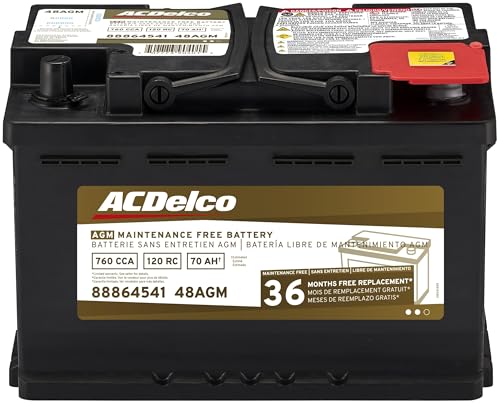
Group 48 is a very common size, and that makes this pick easy to place in a wide range of cars and crossovers. Compared with the 94R above, it feels more universal, which helps during a straightforward replacement.
The AGM build is useful for start-stop vehicles and for cars that see steady accessory use on school runs, errands, and longer commutes. You’ll still want to confirm the case size, but for many standard replacements this is a low-drama fit.
Upsides
- Group 48 sizing covers a broad set of common vehicle applications.
- AGM construction supports stop-and-go driving and repeated charging events.
- Maintenance stays simple because the battery is sealed.
- It works well for drivers who want a familiar, mainstream replacement path.
Softer Spots
- It does not bring the extra reserve and specialty feel of the OPTIMA DH6 or DH7.
- Vehicle fit still needs a quick check, especially around terminal orientation.
At A Glance
Made For
Drivers replacing a standard Group 48 battery in a daily-use vehicle will find this the most straightforward pick in the ACDelco set.
Another Choice May Suit
Mighty Max Battery MM-H6 fits better for a shopper who wants Group 48 size with 760 CCA and 120 reserve minutes at a lower-profile price tier.
The DH6 stands out because it’s built for both starting power and repeated cycling, which suits vehicles that do more than basic commuting. In plain terms, it’s the kind of battery that makes sense when your truck or SUV carries extra electronics, accessories, or a more demanding use pattern.
At 800 CCA, it brings strong cold-start support, and the 54-pound weight tells you it’s not a lightweight piece of kit. That heft can be annoying during installation, but it often signals a more substantial internal build, which serious accessory users tend to appreciate.
Reasons To Buy
- Dual-purpose design supports both engine starts and deeper cycling use.
- 800 CCA gives it a strong edge for cold-weather cranking.
- Versatile mounting opens up more installation options than many standard batteries.
- It fits well in trucks, SUVs, and modified vehicles with extra electrical load.
- Sealed AGM construction keeps ownership simpler than older wet-cell styles.
Areas To Watch
- The 54-pound weight can make installation more awkward in tight engine bays.
- It’s a serious battery, so it may be more than a simple sedan really needs.
- Fit still matters, even with the flexible mounting approach.
Feature Rundown
Best Suited To
Truck and SUV owners with accessory-heavy setups or anyone wanting a more rugged dual-purpose battery will get the most from this one.
Look Elsewhere When
ACDelco Gold 48AGM is the cleaner fit for a standard Group 48 replacement in a regular commuter car.
This Goodyear model lands in a useful middle ground, with Group 48 sizing, 70 Ah capacity, 120 minutes of reserve capacity, and 760 CCA. That mix gives you a battery that feels balanced on paper, especially for daily use with moderate accessory demand.
The multiple-mounting option helps during installation, as long as you avoid upside-down positioning. Compared with the ACDelco Group 48 pick, it leans a bit more toward output and flexibility, which can matter in a sedan or crossover with more powered features.
Bright Spots
- 70 Ah capacity gives it useful energy storage for everyday driving.
- 120 minutes of reserve capacity supports longer accessory use with the engine off.
- 760 CCA is a comfortable starting figure for many common vehicles.
- Multiple mounting positions add installation flexibility.
- AGM construction suits drivers who want a sealed, lower-maintenance battery.
Minor Gripes
- You still need to verify fit carefully because Group 48 layouts can vary by vehicle.
- The upside-down restriction matters during installation planning.
- It’s a solid all-rounder, not a specialty battery for extreme accessory builds.
Details At A Glance
Whose Shelf It Belongs On
Drivers with a Group 48 tray who want a balanced AGM replacement with a little more reserve capacity will find this one appealing.
Reach For A Different Pick When
OPTIMA YELLOWTOP DH6 fits better for trucks or SUVs that need a heavier-duty dual-purpose setup.
The DH7 follows the same dual-purpose logic as the DH6, but it pushes output higher with 880 CCA. That extra margin can be reassuring in a vehicle with bigger electrical demands or a colder operating climate.
Compared with the Goodyear Group 48 battery, this one feels more specialized and more forceful, which is exactly why some truck and SUV owners prefer it. The trade-off is size and fit, so the 94R case should be checked carefully before you plan on it.
Standout Traits
- 880 CCA gives you a strong starting margin for demanding setups.
- Dual-purpose construction supports both cranking and cycling use.
- Versatile mounting gives extra installation options in the right vehicle.
- Maintenance stays simple thanks to the sealed AGM format.
Small Caveats
- The higher output makes sense only when your vehicle really asks for it.
- Group 94R fit should be confirmed before you order anything.
- Like the DH6, it can feel heavy during handling and installation.
Quick Facts
Perfect Match For
Truck and SUV owners with heavier electrical loads, or anyone wanting a more assertive Group 94R AGM replacement, fit this profile well.
A Better Fit Elsewhere
ACDelco Gold 94RAGM makes more sense for a more conventional start-stop replacement with a familiar OEM-style feel.
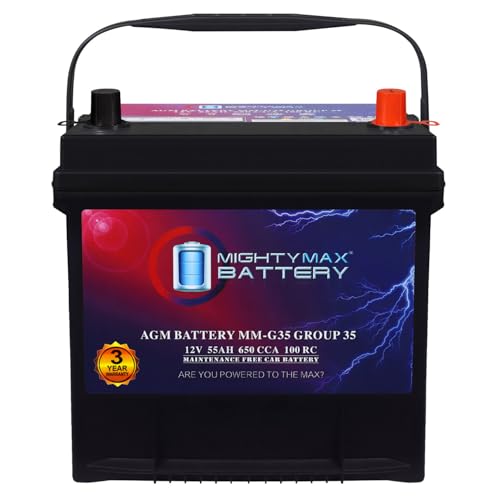
Group 35 is a practical size for smaller start-stop vehicles, and this Mighty Max keeps the spec sheet focused on the essentials. With 55 Ah, 100 minutes of reserve capacity, and 650 CCA, it aims for steady everyday usefulness instead of flash.
That makes it a sensible fit for compact cars, shorter commutes, and drivers who want AGM convenience without moving into the bigger Group 48 crowd. The trade-off is straightforward, it’s not as forceful as the larger batteries in this roundup, so the application should be a clean match.
Best Bits
- Group 35 sizing works well for smaller vehicles with start-stop systems.
- AGM construction helps keep the battery sealed and easier to live with.
- 100-minute reserve capacity supports day-to-day accessory use.
- 650 CCA is adequate for many compact and midsize applications.
Room For Improvement
- It gives up output headroom compared with the Group 48 options here.
- Fitment still needs checking, especially in cars with tightly packaged battery bays.
- Drivers with lots of add-on electronics may want something larger.
Core Details
Built With In Mind
Owners of smaller start-stop cars who want AGM construction without overbuying on size will get the best fit here.
Swap It Out When
Mighty Max Battery MM-H6 fits better for anyone who wants Group 48 sizing and a stronger 760 CCA rating.
This Group 48 Mighty Max looks aimed squarely at the common middle of the market, where daily drivability matters more than extreme output. The 70 Ah capacity, 120 reserve minutes, and 760 CCA line up well for family vehicles that see a mix of school runs, errands, and longer trips.
Compared with the MM-G35, it brings more reserve and a stronger overall footprint, which makes sense for vehicles with a little more electrical demand. It still needs the right battery tray, though, so the clean fit is part of the appeal.
Standout Traits
- Group 48 size suits many common midsize vehicles.
- 70 Ah and 120 RC make it more flexible for accessory use than smaller batteries.
- 760 CCA gives dependable starting support for everyday conditions.
- AGM construction keeps the battery sealed and easier to maintain.
Honest Caveats
- It’s still a fit-first purchase, so tray dimensions and terminal layout matter.
- Drivers with only very basic electrical needs may not use all of its headroom.
At A Glance
Right Fit
Drivers who want a strong all-purpose Group 48 AGM battery for a typical family vehicle will feel at home with this one.
Not Your Match When
Goodyear 48-H6-AGM is the better bet when you want a similar footprint but are interested in a different brand and a slightly different ownership feel.
The Weize slots into the more compact Group 47 and H5 space, which makes it a useful replacement path for vehicles that need a snug fit. With 60 Ah, 100 minutes of reserve, and 680 CCA, it sits in a practical middle lane rather than chasing extreme figures.
One detail worth respecting is the terminal orientation and the dimensions, because that is where fit issues usually appear. For a sedan or crossover with a confirmed Group 47 battery tray, this feels like a sensible, no-drama choice.
Highlights
- Compact Group 47 and H5 sizing helps with tighter battery bays.
- 60 Ah and 100 RC give it useful everyday staying power.
- 680 CCA is a steady fit for many standard vehicles.
- The listed dimensions help make compatibility checks easier.
Things To Consider
- Terminal position matters here, so matching left-negative and right-positive setup is important.
- It’s not the right path for larger vehicles that want more reserve capacity.
- Fit checks matter more than brand preference in this category.
Technical Sheet
The Right Fit
Drivers replacing a Group 47 battery in a compact or midsize vehicle will likely find this the easiest match in the set.
Where Another Pick Suits Better
ACDelco Gold 48AGM is the better alternative for a more common Group 48 replacement with a broader fit profile.
How To Choose The Right Automotive Replacement Batteries
Start With Fit Before Anything Else
Battery group size is the first filter, because the case has to match the tray. Group 35, 47, 48, 94R, and the auxiliary AUX14 each serve different vehicle layouts, so guessing can waste time and create fit problems.
Terminal position matters just as much. Left-negative, right-positive, and the physical height of the case can decide whether the battery sits securely or becomes an awkward near-miss.
Match The Battery To The Vehicle’s Electrical Load
CCA, or cold cranking amps, describes starting force, while reserve capacity shows how long the battery can support loads when the engine is off. A commuter with modest electronics can get by with less than a truck full of add-ons, but a start-stop system or accessory-heavy cabin asks for more.
AGM batteries are sealed, absorbed glass mat units that handle repeated cycling better than many basic flooded designs. That matters in traffic, on short trips, and in vehicles that spend a lot of time restarting.
Think About Daily Use, Not Just The Spec Sheet
A battery that looks strong on paper can still be the wrong choice for your routine. Long winter starts, frequent idling, towing, or parking with accessories on all change what “enough” really means.
For many households, the best value comes from the least dramatic fit, not the biggest number. A clean installation and the right case size usually matter more than chasing the highest figure in one column.
Compare Construction And Ownership Burden
Sealed AGM models usually ask less of you in maintenance and cleanup, which is useful in tight engine bays. Heavier dual-purpose designs can bring more stamina, but they can also be harder to lift and position.
The right call is the one that matches your vehicle’s battery bay, climate, and electronics load. That’s the difference between a replacement that feels invisible and one that becomes a recurring headache.
A Quick Reality Check
Mistakes Worth Dodging
One common slip is treating every Group 48 or Group 94R battery as interchangeable without checking the tray and terminal layout. Another is underestimating the role of reserve capacity in vehicles that sit with accessories running.
It also helps to avoid buying only by brand name. A well-known label still needs the right group size, voltage, and mounting style to make sense in your vehicle.
The Upgrade Payoff
Higher-tier AGM batteries usually cost more because they are built for stronger cycling, better output, and tighter consistency. You’re paying for extra headroom, which matters in start-stop vehicles, trucks, and cars that carry more electronic load.
That upgrade is worth it when your driving life is demanding and repetitive. For a basic sedan with simple usage, the midrange option often gives you the calmer ownership experience.
Closing Thoughts
The best choice here is the one that matches your tray, your driving routine, and the amount of electrical demand your vehicle actually carries. ACDelco gives you the most straightforward OEM-style paths, OPTIMA brings more muscle for heavier use, and Mighty Max covers practical everyday replacements with less fuss. Weize is the neat fit-focused option for the right compact application. Once you narrow the group size first, the rest gets much easier.
